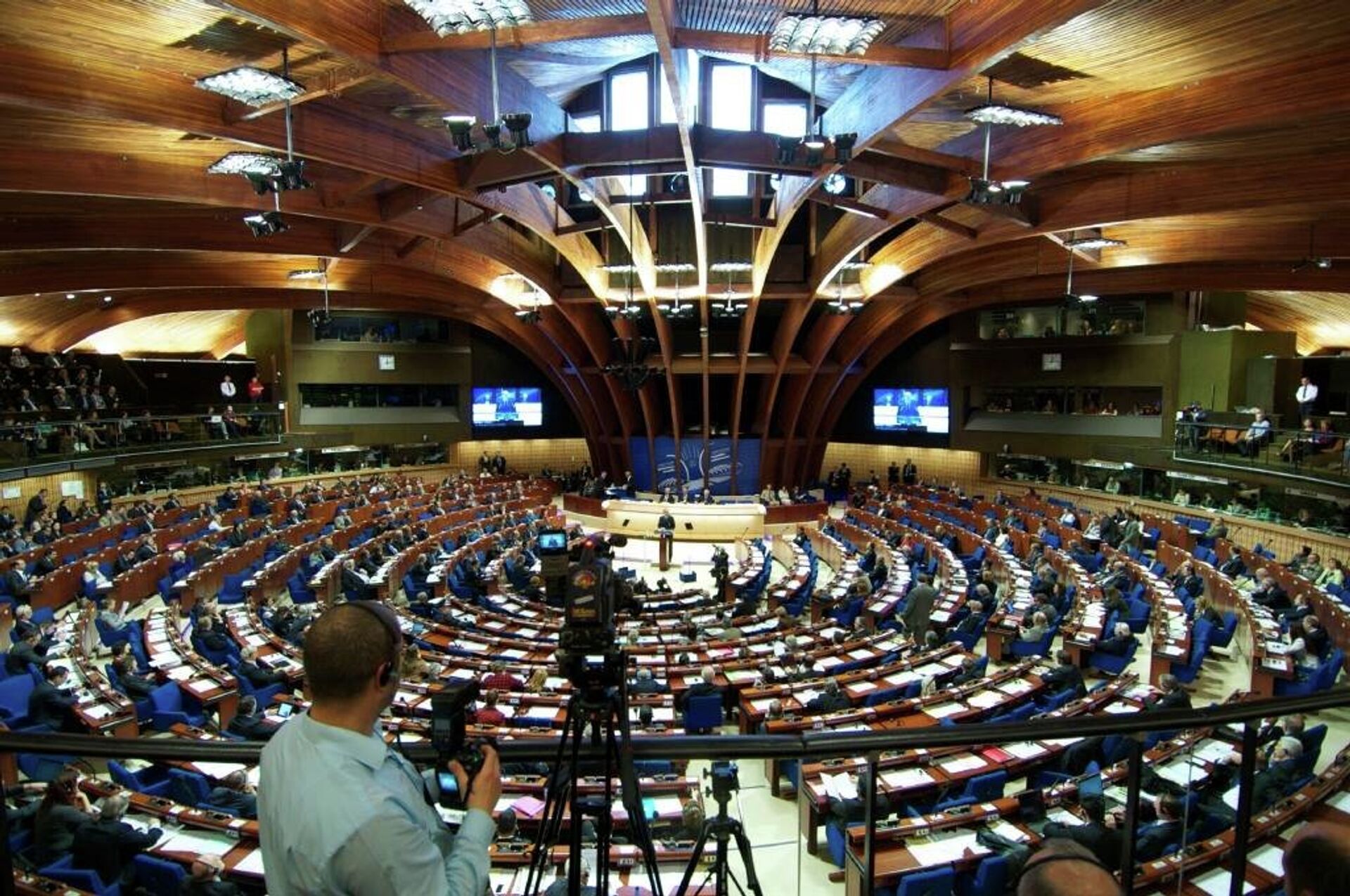
MOSCOW, May 28 (RIA Novosti) – All Russian delegates to the Parliamentary Assembly of the Council of Europe (PACE) would back the call by Russian State Duma Speaker Sergei Naryshkin to restore Russia’s voting rights in the assembly, Senator Anton Belyakov said Wednesday.
“If the members of the Russian delegation at PACE were asked to sign the letter [by Naryshkin] I am absolutely convinced that everyone with no exception and regardless of political affiliation would sign it,” Belyakov told journalists.
Naryshkin, the speaker of Russia’s lower house of parliament, sent a letter to PACE President Anne Brasseur on Tuesday calling on the organization to restore the full rights of the Russian delegation.
PACE voted last month to strip Russia of its right to vote and exclude it from the assembly’s governing bodies through the end of the year, in retaliation for Crimea voting to join Russia. The move excluded Russia from the PACE Bureau, Presidential Committee and Permanent Council.
In protest, the Russian delegation left the spring session, the day before it was to officially end. The Russian parliament said resuming dialogue in the framework of PACE was impossible amid Western sanctions against Russia.
Senator Belyakov said PACE will have to revise its stance towards Ukraine and Crimea when it understands the reality in the region. By that time, the moment may have been missed resulting in both economic and political losses for Europe, he said.
“It is impossible without Russia to stop the conflict escalation, this is the political reality,” the senator said, adding that PACE has long ago stopped being an unbiased organization and Russia’s voice has not been heard there.
“Today I believe it would be right to create other perspective vectors of cooperation. Why not we set up another influential inter-parliamentary venue for an economic and political dialogue in the Asian direction?” Belyakov said, adding that creating parliamentary structures as part of the Asia-Pacific Economic Cooperation (APEC) or the Eurasian Economic Community (EurAsEC) could become a “strong alternative.”
On March 16, Crimea held a referendum which saw over 96 percent of the population voting in favor of reunification with Russia. Following the vote, Crimea declared independence from Ukraine and it was officially declared part of Russia after a treaty signed by Russian President Vladimir Putin.
The referendum triggered a negative international reaction. PACE claiming that Russia violated Ukraine’s territorial integrity and denounced the referendum as illegitimate and unconstitutional.
Moscow insists the referendum fully complied with international law and the UN Charter.