On January 28, 1820, the ships of the first Russian Antarctic expedition of Fabian Gottlieb von Bellingshausen and Mikhail Lazarev on the ships Vostok and Mirny reached the unknown continent near Princess Martha Coast. The first confirmed sighting of the continent of Antarctic is dated this day.
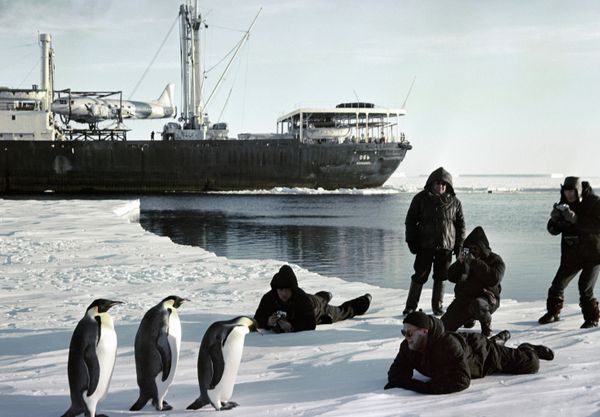
The emperor penguin is endemic to Antarctica. It is the tallest and heaviest of all living penguin species.
Above: Mariners from the icebreaker "Ob" taking photos of penguins.
Above: Mariners from the icebreaker "Ob" taking photos of penguins.
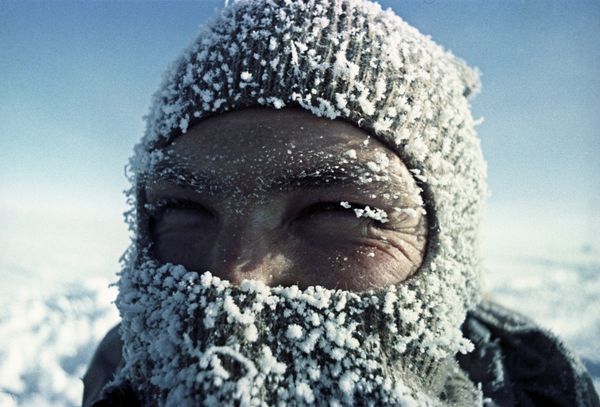
Antarctica is the coldest of Earth’s continents. The coldest natural temperature ever registered on Earth was -89.2 C at the Soviet (now Russian) Vostok Station in Antarctica on July 21, 1983.
Above: Physiologist Alexander Zavadovsky at the Vostok station.
Above: Physiologist Alexander Zavadovsky at the Vostok station.
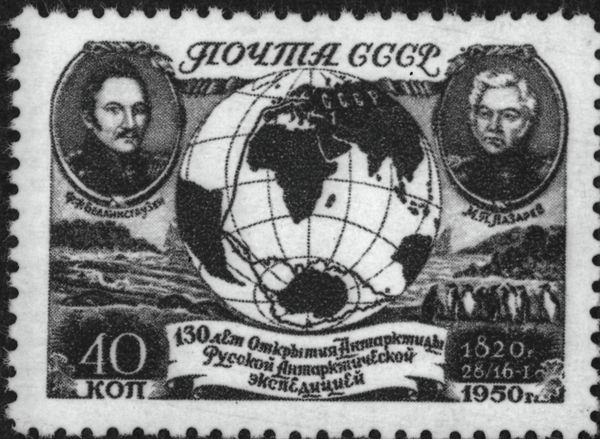
Antarctica is one the most popular themes in philately.
Above: Post stamp "130 Years of Antarctic Discovery of Russian Antarctic Expedition", 1950, reproduction.
Above: Post stamp "130 Years of Antarctic Discovery of Russian Antarctic Expedition", 1950, reproduction.
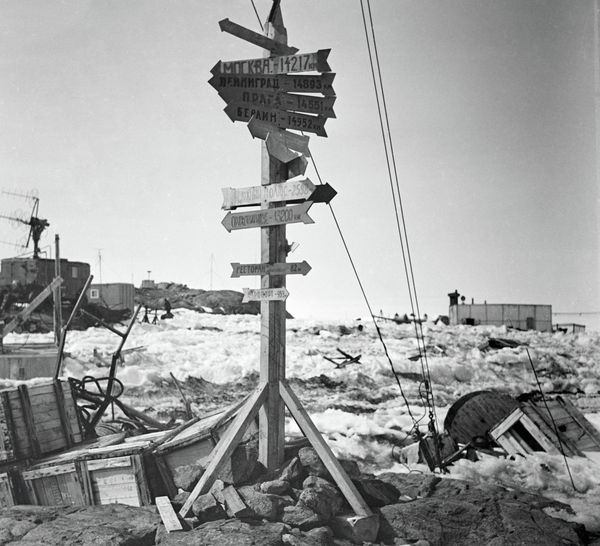
The signs (above) show the distance from Antarctica to the world’s largest cities.
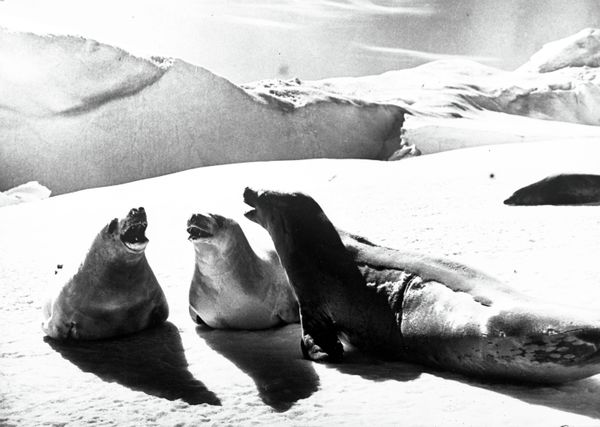
There are several species of seals in Antarctica, including the Weddel seal, the crab-eater seal, the leopard seal, the Ross’ seal and the elephant sea.
Above: Seals, inhabitants of Antarctica.
Above: Seals, inhabitants of Antarctica.
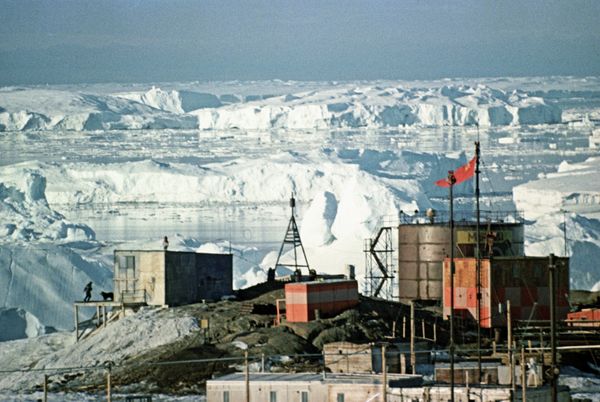
The USSR's Mirny research station (above) was opened by the participants of the 1st Soviet Antarctic Expedition on February 13, 1956.
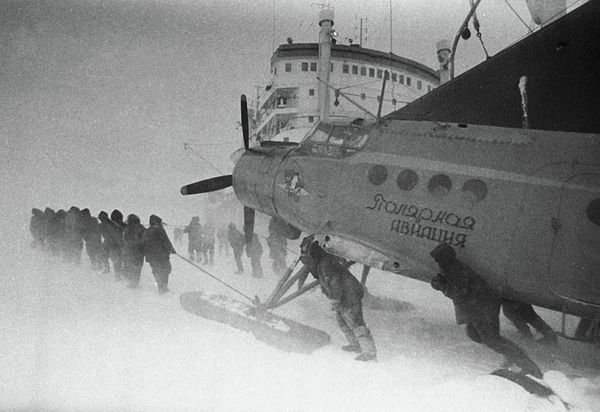
Antarctica is governed by parties to the Antarctic Treaty and has no official owner.
Above: Polar aviation pilots evacuate an aircraft.
Above: Polar aviation pilots evacuate an aircraft.
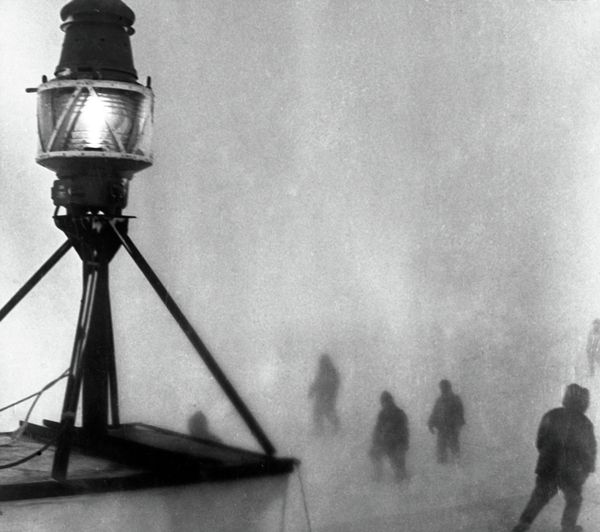
The Antarctic Treaty was signed in 1952 by 12 countries and came into force in 1961. The treaty prohibits any military activities and mineral mining, prohibits nuclear explosions, supports scientific research and protects the ecozone.
Above: Light of a beacon leads to destination in Antarctica.
Above: Light of a beacon leads to destination in Antarctica.
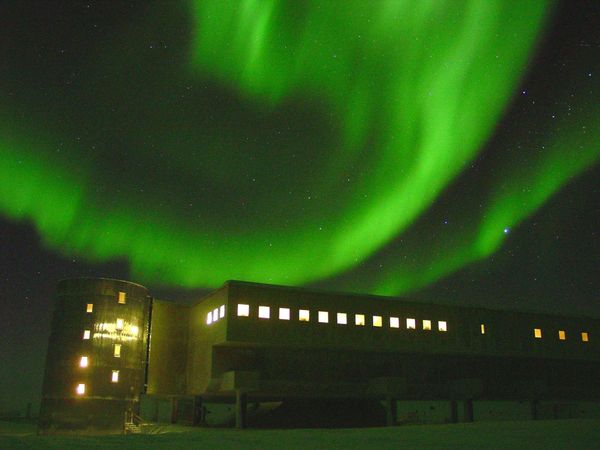
The aurora australis, known as the southern lights (above), is a glow observed in the night sky near the South Pole. It is one of the most amazing and mysterious atmospheric phenomena.
10/17
© AP Photo / John Weller
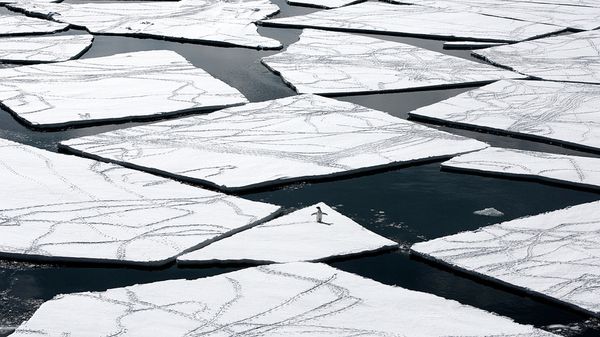
Most of the Antarctic continent is permanently covered by ice and snow; less than 1 percent of the land is exposed.
Above: An emperor penguin on a drifting ice-floe.
Above: An emperor penguin on a drifting ice-floe.
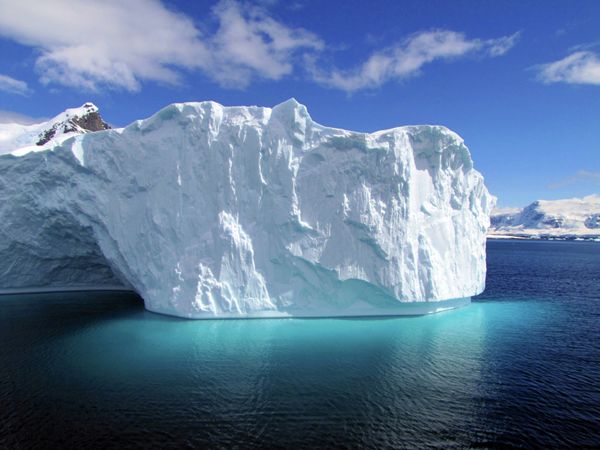
Icebergs are one of the most picturesque sights of Antarctica.
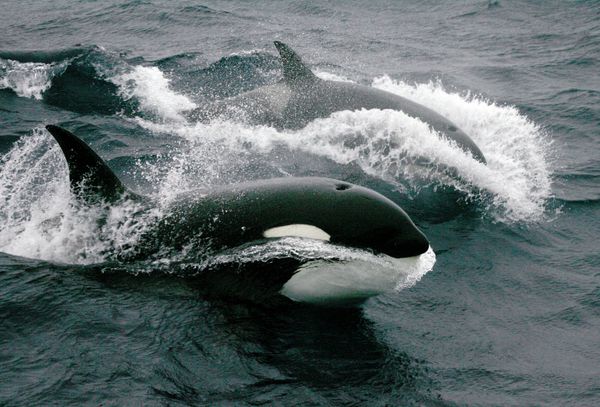
The killer whale (above) can be found in any seas and oceans. However, many of them prefer cold waters, so most of them live in the Antarctic waters. Local populations include 70,000-80,000 individuals.
13/17
© AP Photo / Mike Schirf via The Salt Lake Tribune
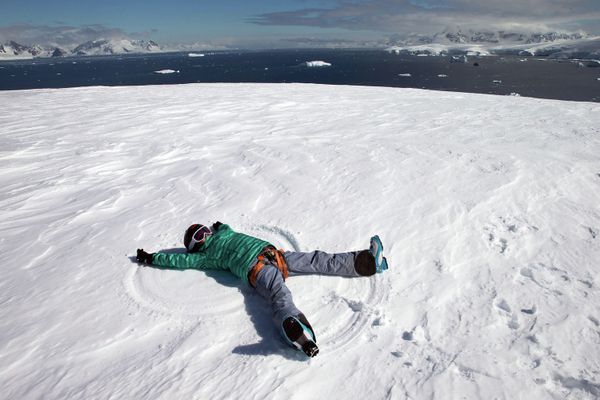
Lilliana Libecki (above) is one the youngest people who ever travelled to Antarctica. In 2014, 11-year-old Lilliana made a trip to Antarctica with her father. She prepared for the journey to the South Pole for two years, ever since she was nine.
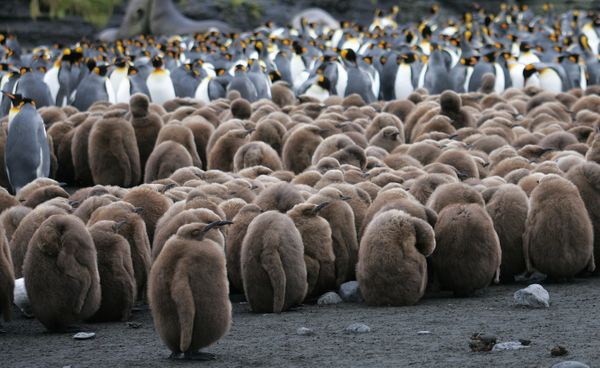
About 45–50 days after hatching, the chicks of the emperor penguin form a crèche, huddling together for warmth and protection. A crèche may comprise up to several thousand birds densely packed together and is essential for surviving the low Antarctic temperatures.
Above: Chicks of a colony of penguins are pictured July 1 2007 on Possession Island in the Crozet archipelago.
Above: Chicks of a colony of penguins are pictured July 1 2007 on Possession Island in the Crozet archipelago.
15/17
© AP Photo
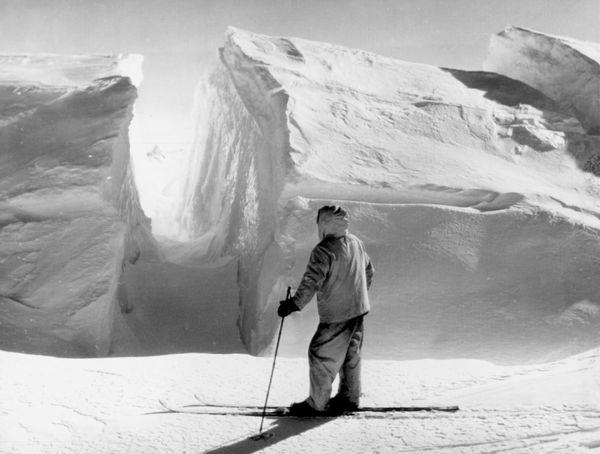
In winter, the temperature in Antarctica can reach -75° C. From March to October powerful storms often occur on the continent.
Above: This is one of the beautiful sights that greeted the eyes of explorers during an expedition to the Antarctic.
Above: This is one of the beautiful sights that greeted the eyes of explorers during an expedition to the Antarctic.
16/17
© East News / imago stock&people
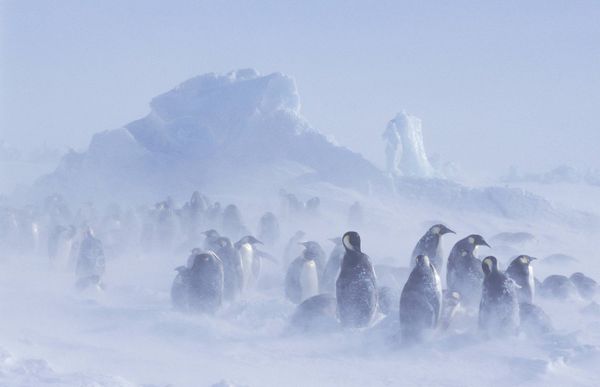
The emperor penguin is a social animal in its nesting and its foraging behavior; birds hunting together may coordinate their diving and surfacing.
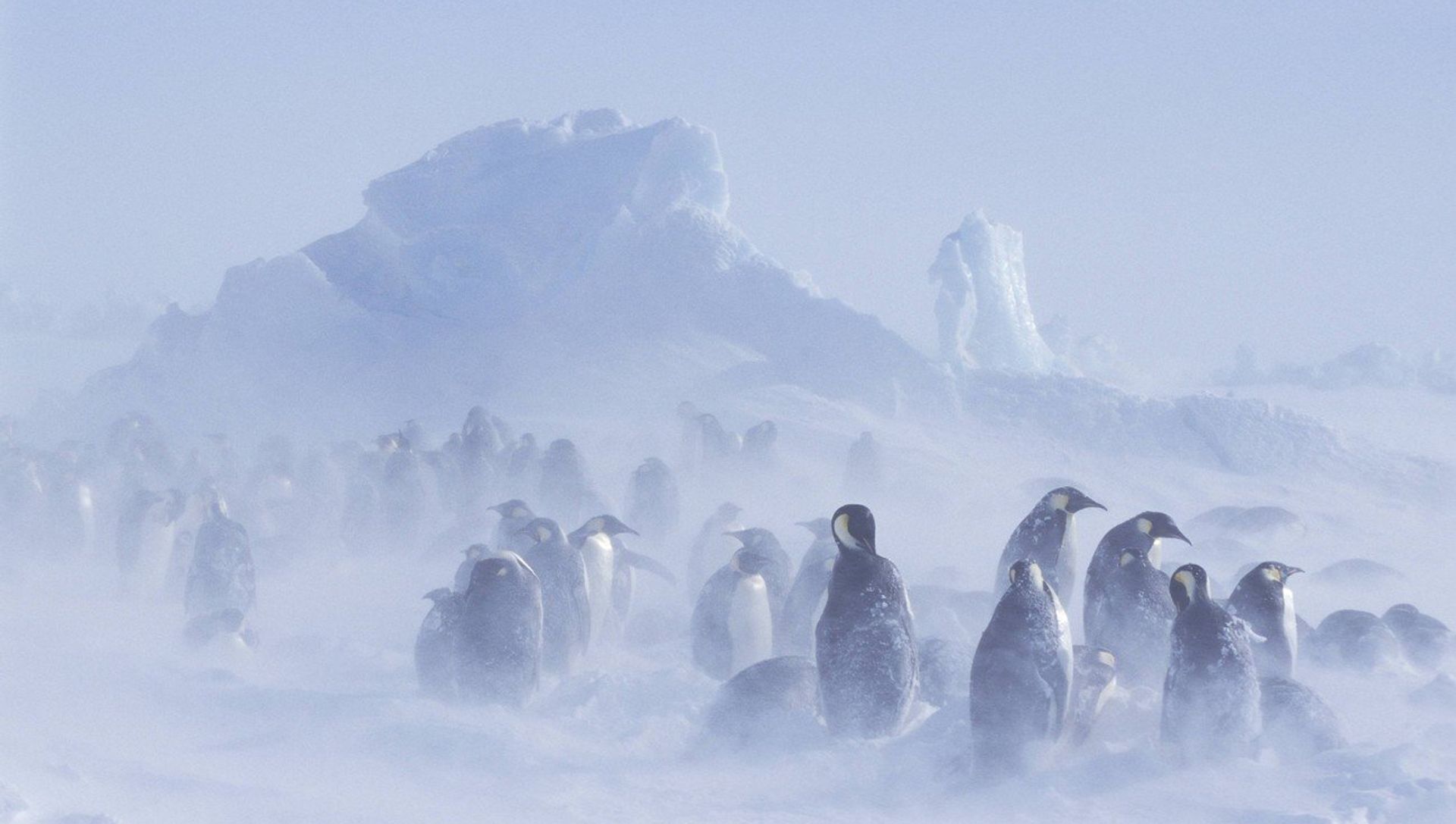
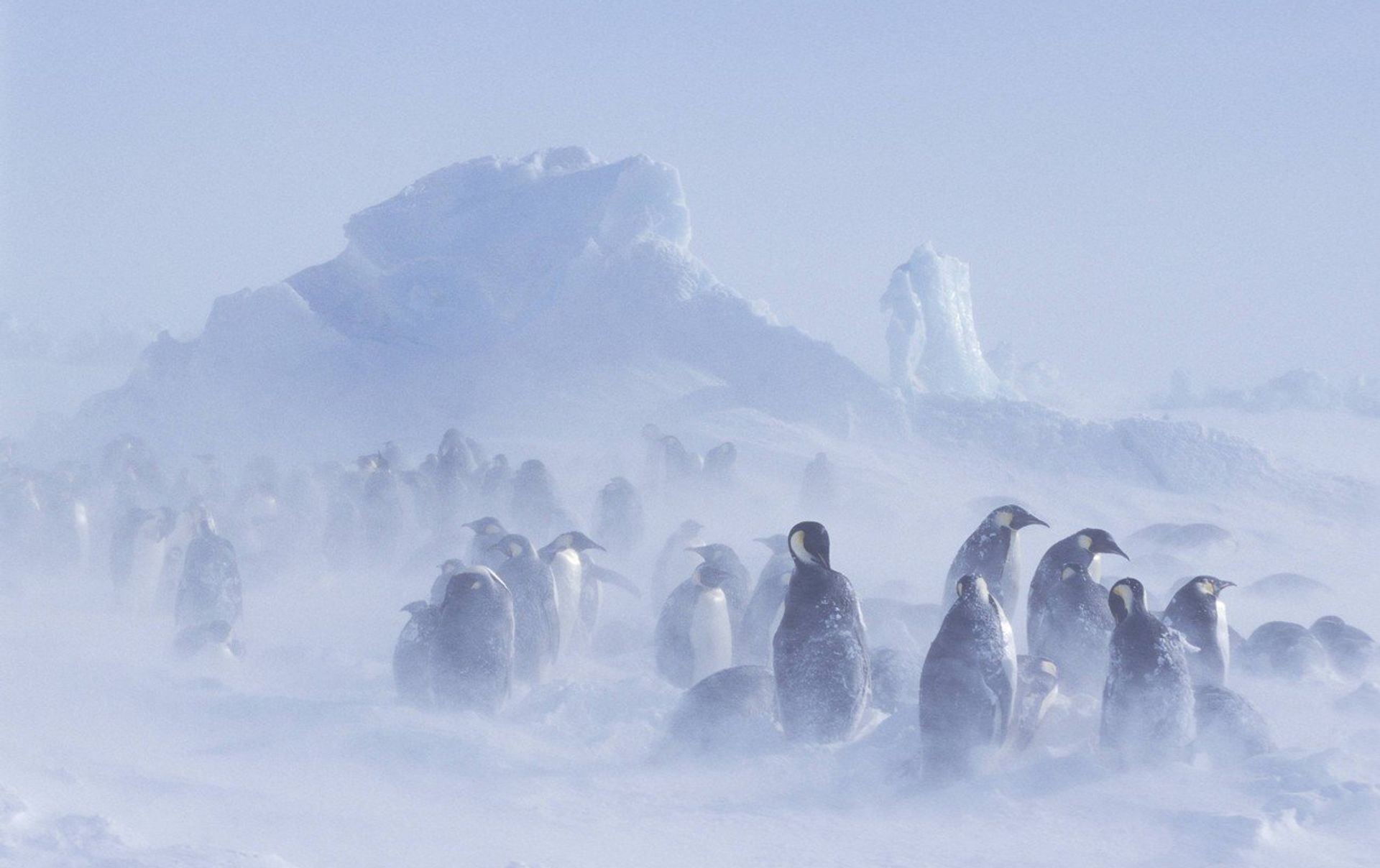
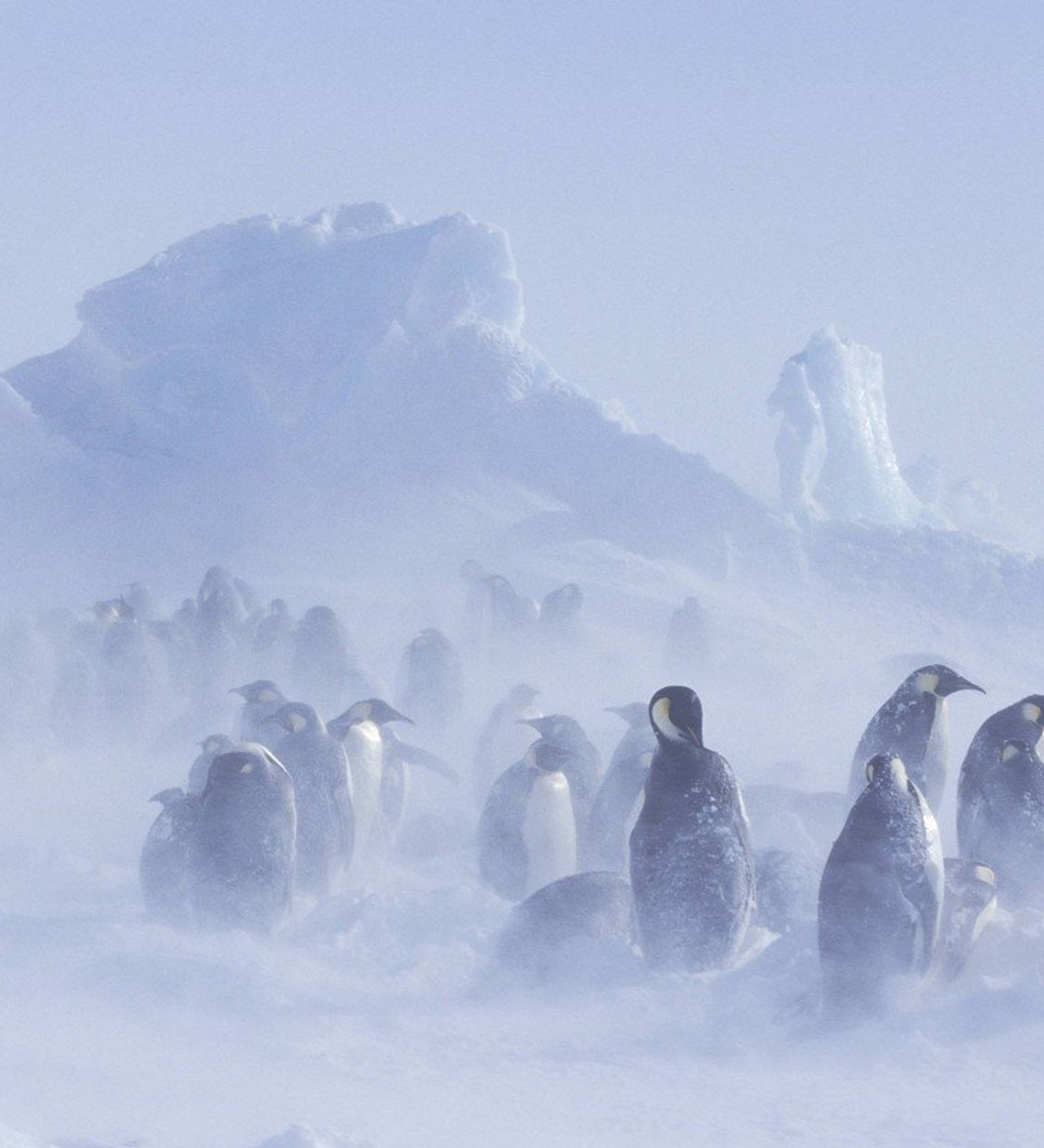
Above: A glacier emperor penguin colony in snowstorm.
Above: A glacier emperor penguin colony in snowstorm.
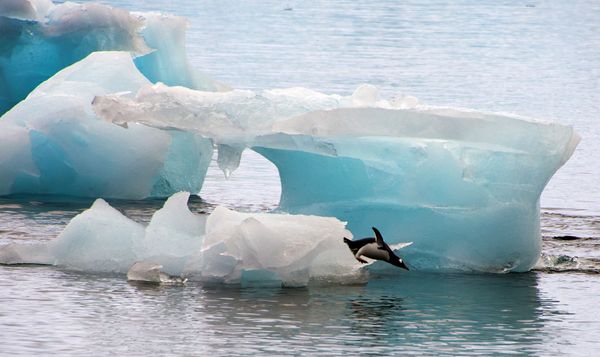
Most penguins feed on krill, fish, squid and other forms of sea life caught while swimming underwater. There are seventeen species worldwide, seven of which exist in Antarctica.
Above: A penguin dives from an ice block in front of Brazil's Comandante Ferraz base, in Antarctica on March 10, 2014.
Above: A penguin dives from an ice block in front of Brazil's Comandante Ferraz base, in Antarctica on March 10, 2014.