Here are some amazing temples, churches, mosques and other religious buildings that will definitely impress you with their breath-taking beauty.
1/13
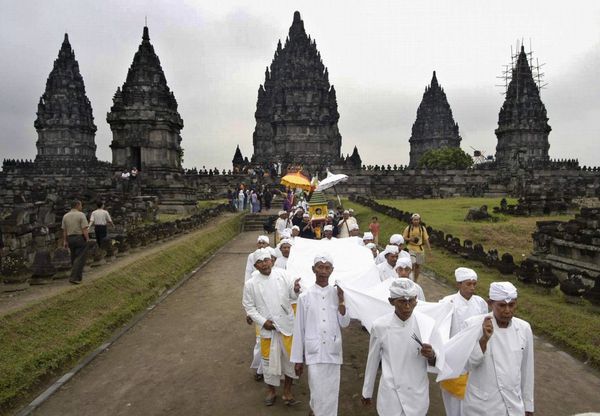
© AP Photo / Wahyu Martono
Prambanan Temple (also called Loro Jonggrang) is a complex consisting of 240 temples, which was built during the heyday of Sailendra’s powerful dynasty in mid-9th century central Java in what would become Yogyakarta, Indonesia. The spectacular temple site is the country’s largest Hindu temple compound and a UNESCO World Heritage Site. Most of the main temples collapsed during earthquakes; some of them have been reconstructed several times, while others are still in ruins.
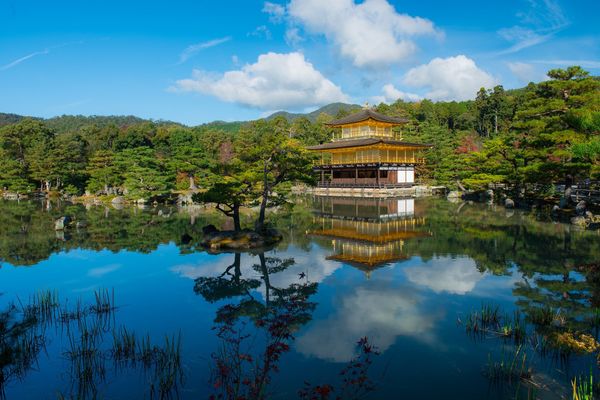
Kinkaku-ji, which translates as “the Temple of the Golden Pavilion” is a Zen Buddhist temple in Kyoto, Japan. The temple, which is designated as a World Heritage Site, is officially known as Rokuon-ji, which literally means "the Deer Garden Temple." It is one of the country’s most popular buildings, attracting a large number of visitors annually. The estate was originally constructed as a retirement pavilion by the shōgun Ashikaga Yoshimitsu in 1397. It was turned into a Zen temple after Yoshimitsu's death in 1408. In 1950, the pavilion was burnt down by a young novice monk. However, it was rebuilt in five years, and the modern building is faithful to the original.
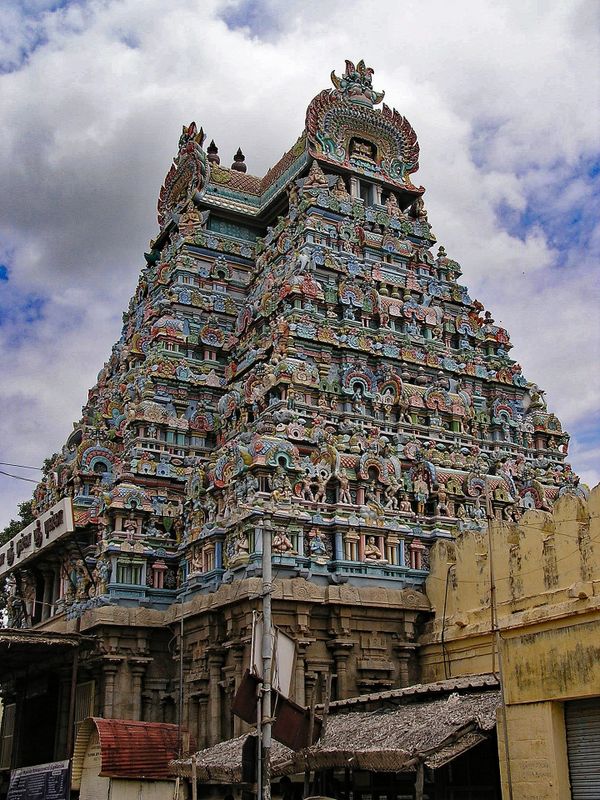
The Sri Ranganathaswamy Temple is considered the first and the most important Hindu temple dedicated to Ranganatha, a reclining form of the Hindu deity Vishnu. The temple, located in Srirangam in the Indian state of Tamil Nadu, is also known by several other names, such as Thiruvaranga Tirupati, Periyakoil, Bhoologa Vaikundam and Bhogamandabam. The oldest structure of the temple is thought to date back to the 10th century.
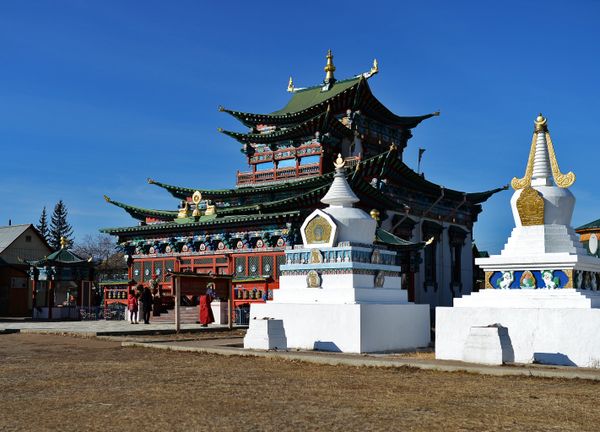
Ivolginsky Datsan, a Buddhist Temple located in the Republic of Buryatia, Russia, was established in 1945 following the end of WWII. It was the first Buddhist shrine in the USSR. Now, the temple serves as the spiritual center of Russia's Buddhist Sangha – the largest Buddhist community in Buryatia. The Dashi Choinkhorling Buddhist University was opened in 1991 attached to the Ivolginsky Datsan, where dozens of students study to become lamas.
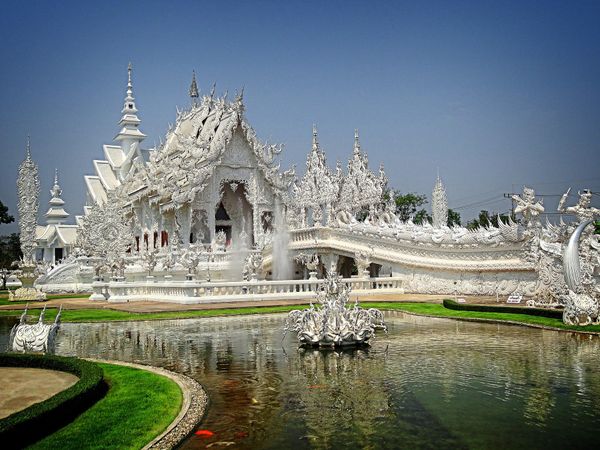
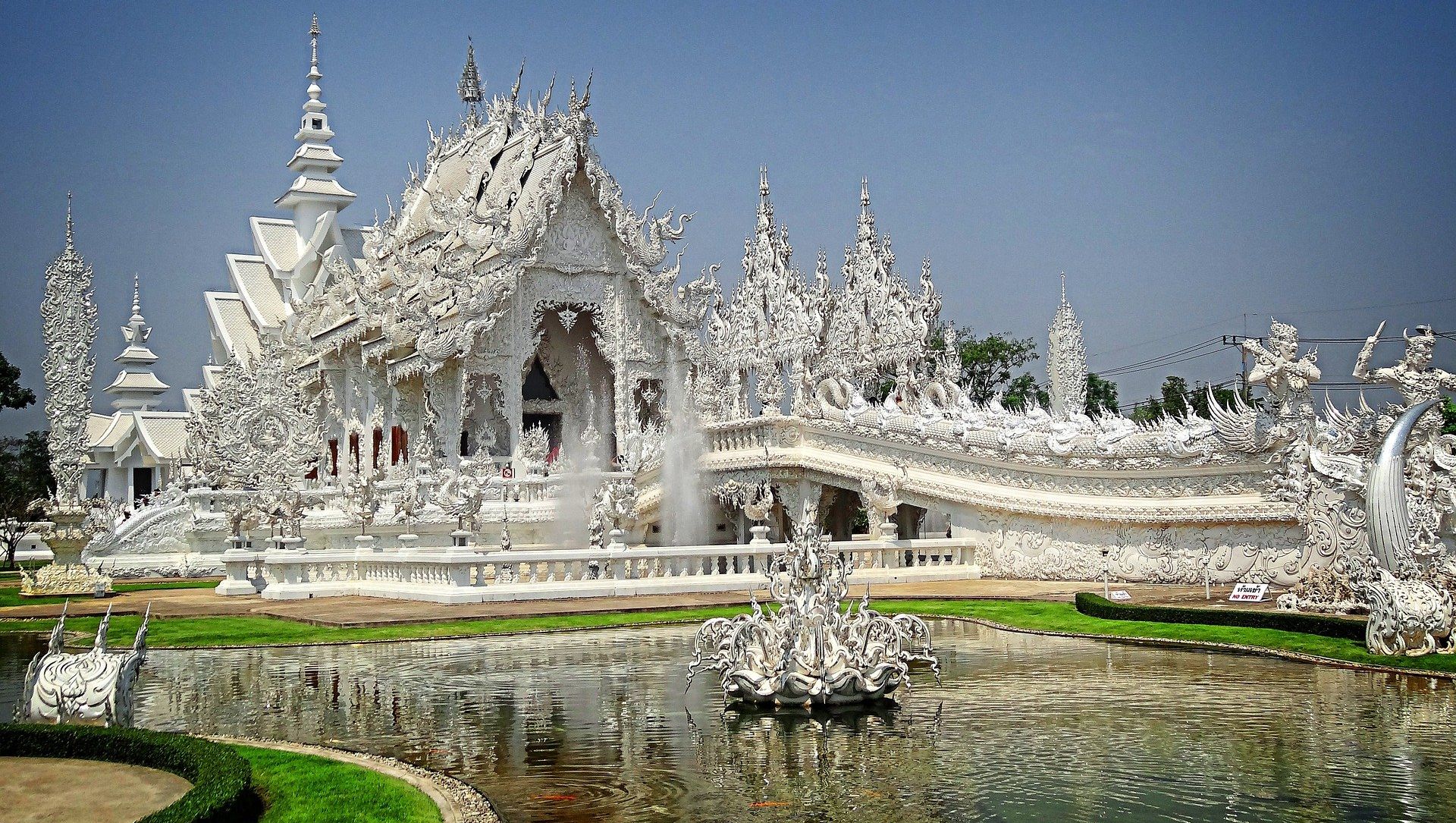
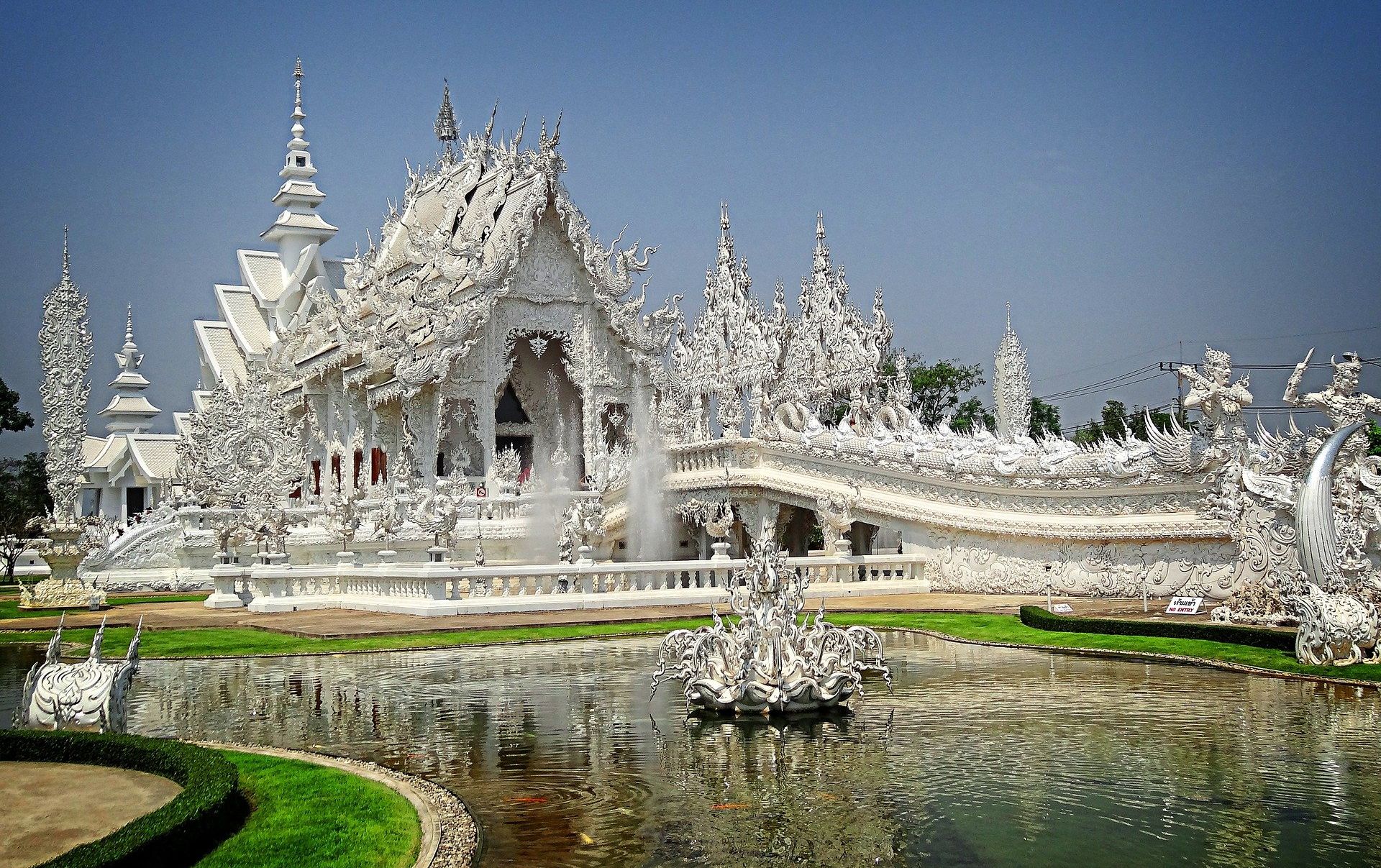
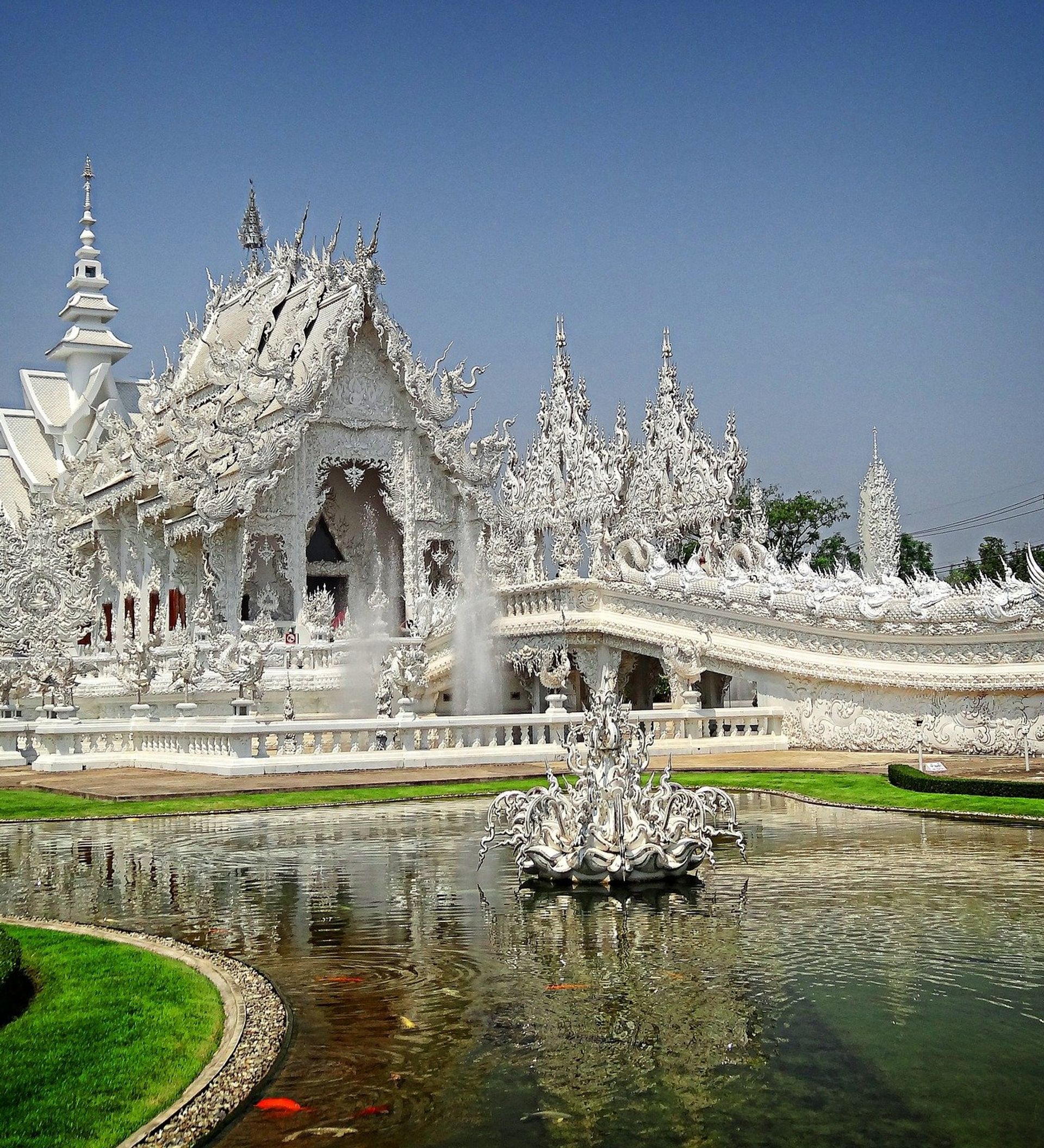
Wat Rong Khun, known globally as the White Temple, is a contemporary, unconventional, privately owned, art exhibit in the style of a Buddhist temple in Chiang Rai Province, Thailand. It is said to be built to resemble the original Wat Rong Khun, which was in a very poor state of preservation. Restoration works on the temple started, but had to be halted due to a lack of funds. That is when Thai visual artist Chalermchai Kositpipat decided to design and construct a new unique temple, putting his own money into it. The shrine was opened to visitors in 1997 and has become one of the most recognizable temples in Thailand. The entirely white temple has an incredible design and welcomes both Buddhist and Hindu traditions. On May 5, 2014, a strong earthquake hit Chiang Rai, and although the temple was badly damaged, Chalermchai Kositpipat decided to restore and further expand it.
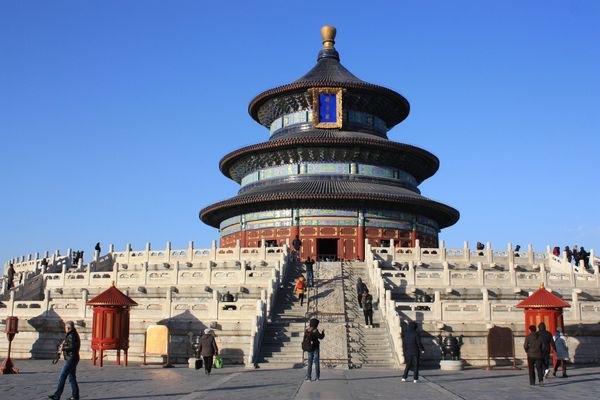
The Temple of Heaven is an imperial complex of religious buildings situated in central Beijing, China. The complex was constructed from 1406 to 1420 and used by the Emperors of the Ming and Qing dynasties for annual ceremonies where they prayed to heaven for a bountiful harvest. This Taoist temple complex was inducted as a UNESCO World Heritage Site. The temple is surrounded by a park; the entire complex totals 267 hectares (660 acres).
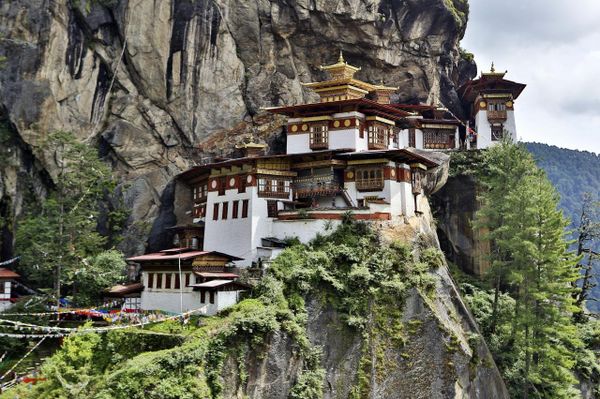
Paro Taktsang, also known as the Taktsang Palphug Monastery and the Tiger's Nest, is a prominent and sacred Himalayan Buddhist site; the temple complex is located on a cliff of the upper Paro valley in Bhutan. The temple complex was first built in 1692, around the Taktsang Senge Samdup cave where an Indian Buddhist master, Guru Padmasambhava, was said to have meditated for three years, three months, three weeks, three days and three hours in the 8th century. Padmasambhava is credited with introducing Buddhism to Bhutan and is the tutelary deity of the country.
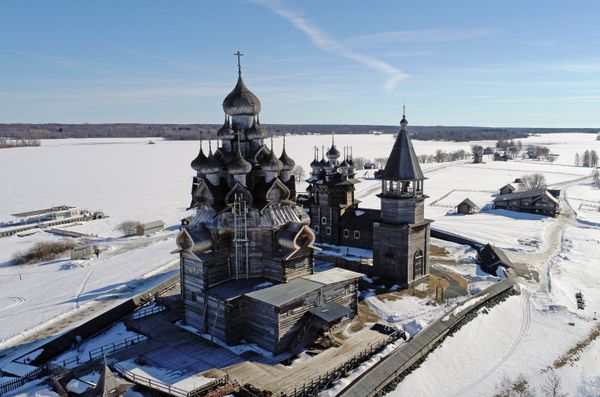
The Church of the Transfiguration of Jesus Church is the most remarkable part of the Kizhi Pogost, a wooden architectural ensemble and open-air museum built in the 17-18th century on Lake Onega in the modern-day Republic of Karelia, Russia. This Russian Orthodox Church has 22 domes and stands 37 meters tall. In 1990, the entire site was included in the UNESCO World Heritage list.
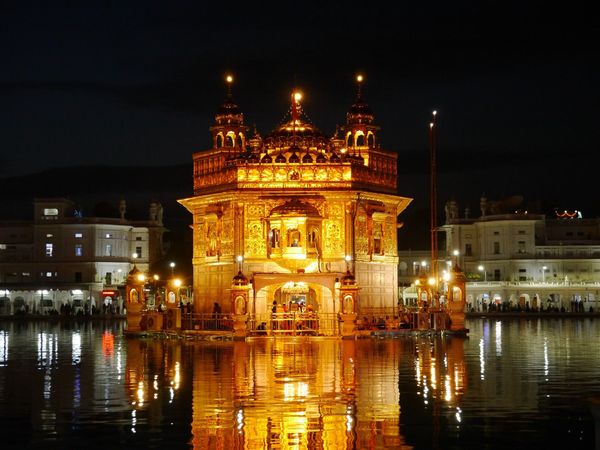
Sri Harmandir Sahib, also known as Sri Darbar Sahib, is the holiest Sikh place of worship; it's located in the city of Amritsar in Punjab, India. It is informally referred to as the Golden Temple because of its distinctive color. The temple was founded in 1577 and was intended to be a place of worship for men and women of all religions, who may worship God there equally. In 1764, the holy shrine was renovated and its upper floors were covered with 750 kilograms of pure gold. The ceiling of Harminder Sahib is also made of gold and precious stones.
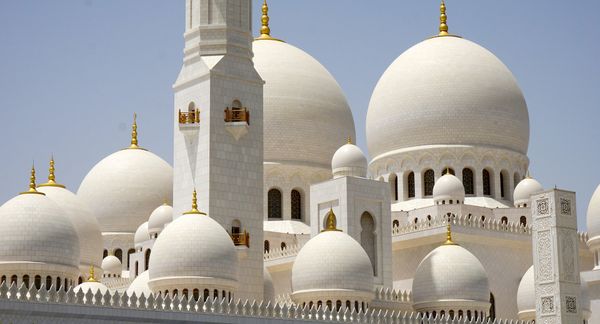
Sheikh Zayed Grand Mosque, located in Abu Dhabi, UAE, is the key worship site of the country. The mosque was designed by Syrian architect Yousef Abdelky and built between1996 and 2007. It is considered the largest mosque in the United Arab Emirates. The building complex measures approximately 290 meters by 420 meters, and covers an area of more than 12 hectares.
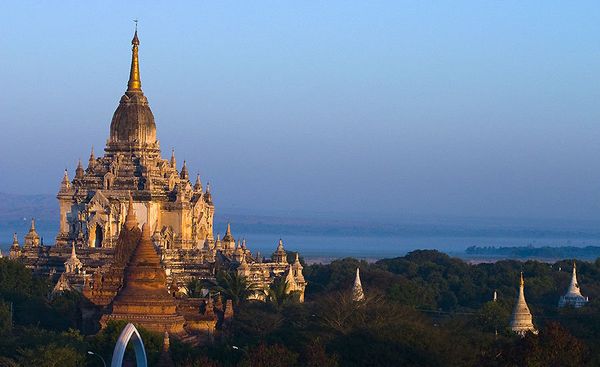
Gawdawpalin Pahto is a 12th-century Buddhist temple in Bagan, Myanmar (Burma). It is used for meditation, devotional worship of the Buddha and other Buddhist rituals. The temple was heavily damaged during the 1975 earthquake and was reconstructed over the following years.
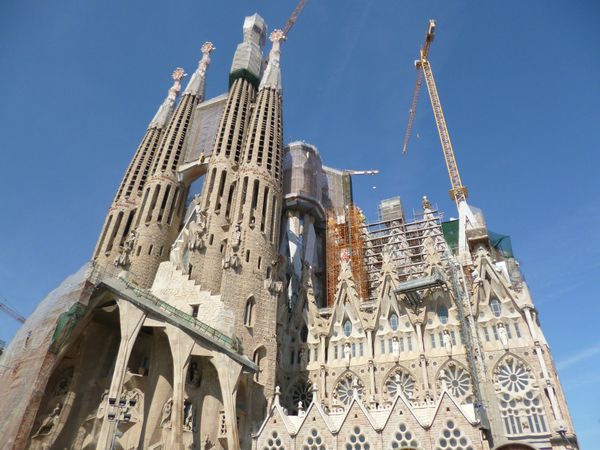
Sagrada Família, or the Basilica and Expiatory Church of the Holy Family, is a large Roman Catholic Church in Barcelona, Spain. The church was designed by renowned Spanish architect Antoni Gaudí , who began work in 1883; it is part of a UNESCO World Heritage Site. Sagrada Familia's construction progressed slowly, as it relied on private donations and was constantly interrupted. In October 2015, Chief architect Jordi Fauli announced that construction is 70% complete and has entered its final phase of raising six immense towers. The towers and most of the church's structure are to be completed by 2026, the centennial of Gaudí's death. Decorative elements should be complete by 2030 or 2032.
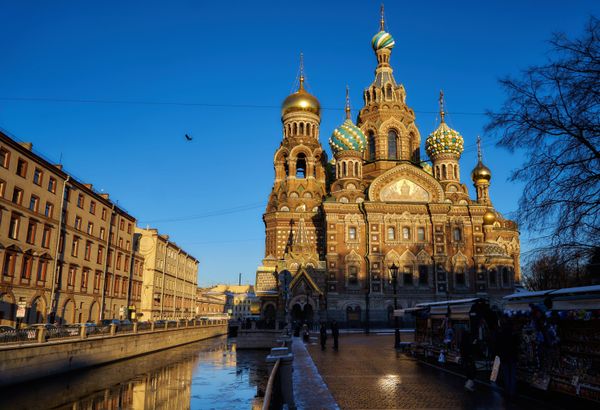
The Church of the Savior on Spilled Blood in St. Petersburg, Russia, is one of the main tourist sights of the city. It was built between 1883 and 1907 on the site where Russia’s Emperor Alexander II was fatally wounded in March 1881. This Russian Orthodox Church contains over 7,500 square meters of mosaics, which is, according to its restorers, more than in any other church in the world.