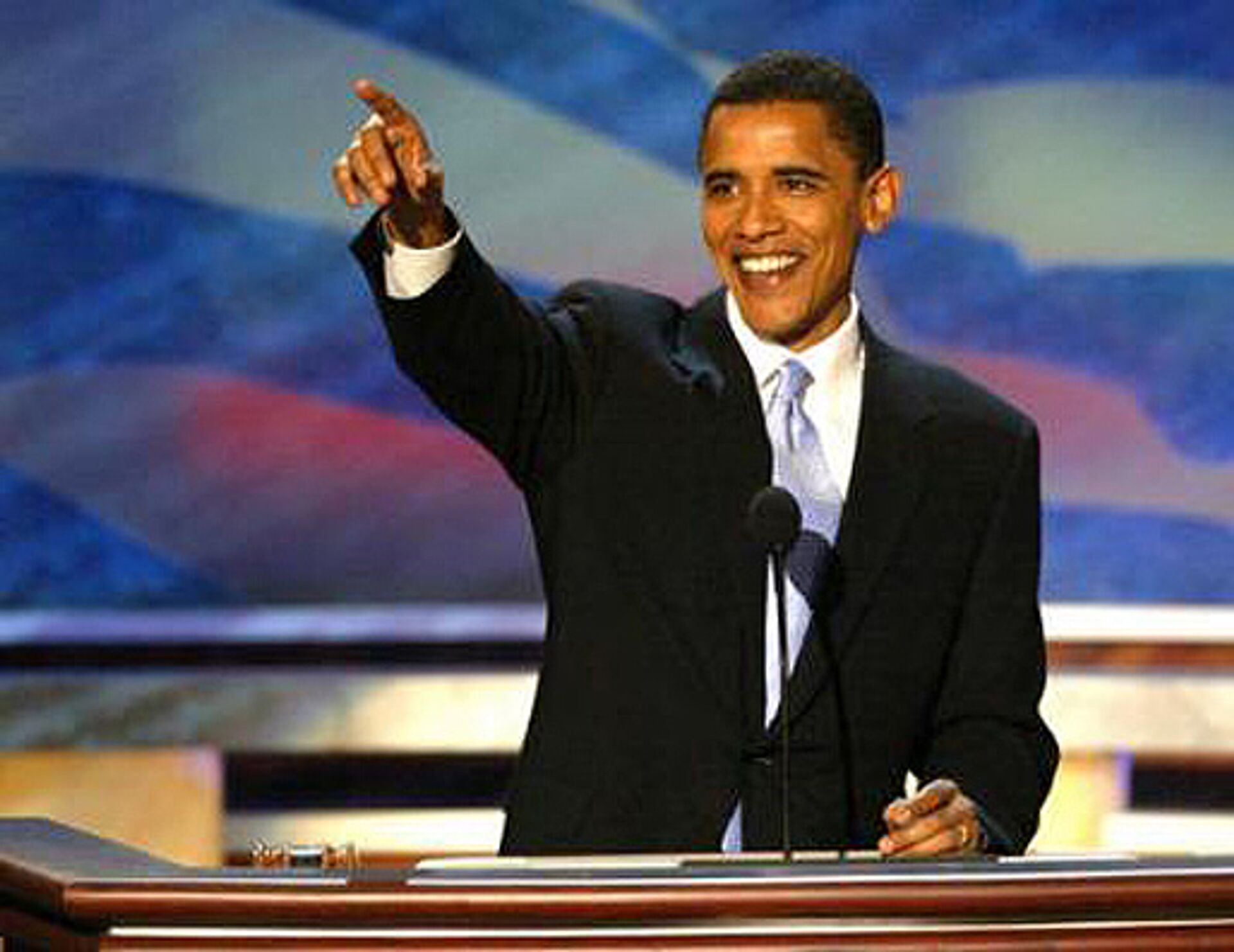
On April 29, the 100th day of Barack Obama's presidency, RIA Novosti wraps up its Letters to Obama project, which gave every reader the chance to send a letter to the 44th president of the United States.
RIA Novosti began the unprecedented project on January 22.
The project gave online users the opportunity to voice their concerns to Barack Obama, to express their wishes, as well as views on the U.S. domestic and foreign policy, and to make questions about the U.S. president's private life.
As part of the project, visitors of the rian.ru website sent over 2,000 letters to Barack Obama in Russian, English, French, German, Spanish and Chinese. All the letters will be processed and forwarded to the U.S. party in the project. As soon as RIA Novosti receives a reply, it will be published at the agency's website.
Timeline of the project
In the first weeks of the project, most letters conveyed congratulations to Barack Obama on his win and wishes to strengthen political and economic ties with Russia. Almost immediately the economic crisis issue became the predominant idea.
The second most popular question was the U.S. political and military presence in various countries. U.S. migration policy was the third most popular issue.
It should be noted that the senders of letters to Obama respond quickly to the evolving political situation. They also showed their interest in twists and turns of political PR and Barack Obama's personality.
Predominant idea
The bulk of the letters to the U.S. president concerned the global financial crisis, which was felt in all regions across the globe without exception, and in a large number of countries, states, cities and households in the world.
The respondents were interested in whether the U.S. was aware of its responsibility for the collapse on global markets, worsening economic situation and the global living standards. And what steps will be taken by the U.S. administration to make things better not only inside the country? Will Obama take into consideration the interests of other countries and peoples or will the U.S. push itself forward again, just as the previous administration did?
However, answers to some of these questions have already arrived.
"We bear a substantial share of the responsibility for what has happened, but factors that made the crisis so acute and so difficult to contain lie in a broader set of global forces that built up in the years before the start of our current troubles," the United States Secretary of the Treasury, Timothy Geithner, said in his speech to the Economic Club of Washington.
"The rest of the world needs the U.S. economy and financial system to recover in order for it to revive... Just as importantly, we need the rest of the world to recover if we are to prosper again here at home," he went on.
Almost at the same time news agencies reported about the tragedy of David Kellerman, the acting chief financial officer of the notorious U.S. mortgage giant Freddie Mac, who committed suicide. It is widely known that the active phase of the crisis began with the troubles at Freddie Mac and another mortgage giant, Fannie Mae. These two companies were the first victims of the mortgage crisis, which later evolved into a global financial meltdown.
Just like Internet users, who sent their letters to Obama, many people in the U.S. are now accusing the heads of large financial corporations of market activities which caused the current crisis.
Meanwhile, the Obama administration now faces hard questions not only from Internet users, but also from experts.
"His Achilles' heel is the spending and that's what ultimately will catch up with him," a Republican strategist, Scott Reed, said. "We're going to be saddled with trillions of dollars in debt and further tax increases staring at us around the corner."
The attitude towards the anti-crisis measures by the U.S. government is also controversial.
"So you really can't say that America approves of big-spending liberalism," said John Zogby, President and CEO of Zogby International, a worldwide research and marketing firm. "But you can say that a majority likes him [Obama] and are willing to believe him."
Not only Americans, but also people from other countries are willing to believe Obama, which shows itself in the large number of letters, posted at the RIA Novosti website - over 2,000 or more than 20 letters daily.
Project statistics
Three thirds of the 2,000 letters to U.S. President Barack Obama were in Russian, and came from Russia, Kazakhstan, Ukraine, Belarus and other former Soviet republics.
The bulk of letters in foreign languages is in English. Over 300 English-speaking users posted letters from Russia, the U.S., Canada, the U.K (including England and Scotland), Ireland, France, Belgium, Italy, Germany, Denmark, Finland, Sweden, Norway, Hungary, Poland, Czech Republic, Slovenia, Slovakia, Cyprus, Bulgaria, Macedonia, Serbia, Kosovo, Latvia, Lithuania, Moldova, Georgia, Armenia, Azerbaijan, Tajikistan, Uzbekistan, Kazakhstan, Belarus, Kyrgyzstan, Ukraine, Israel, Lebanon, Iran, India, Afghanistan, China, Mexico, Cuba, Chile, Peru, Brazil, New Zealand and Nigeria.
About 150 letters in German came from Germany, Austria, Switzerland, Serbia, Kosovo, Armenia, Turkey, Afghanistan.
Over 60 letters in French were sent by residents of France, Belgium, Switzerland, Mali, Congo, Morocco, the U.S., Algeria, Ivory Coast and Russia. Over 50 letters were written by users from Latin American countries, and about 20 letters came from China.