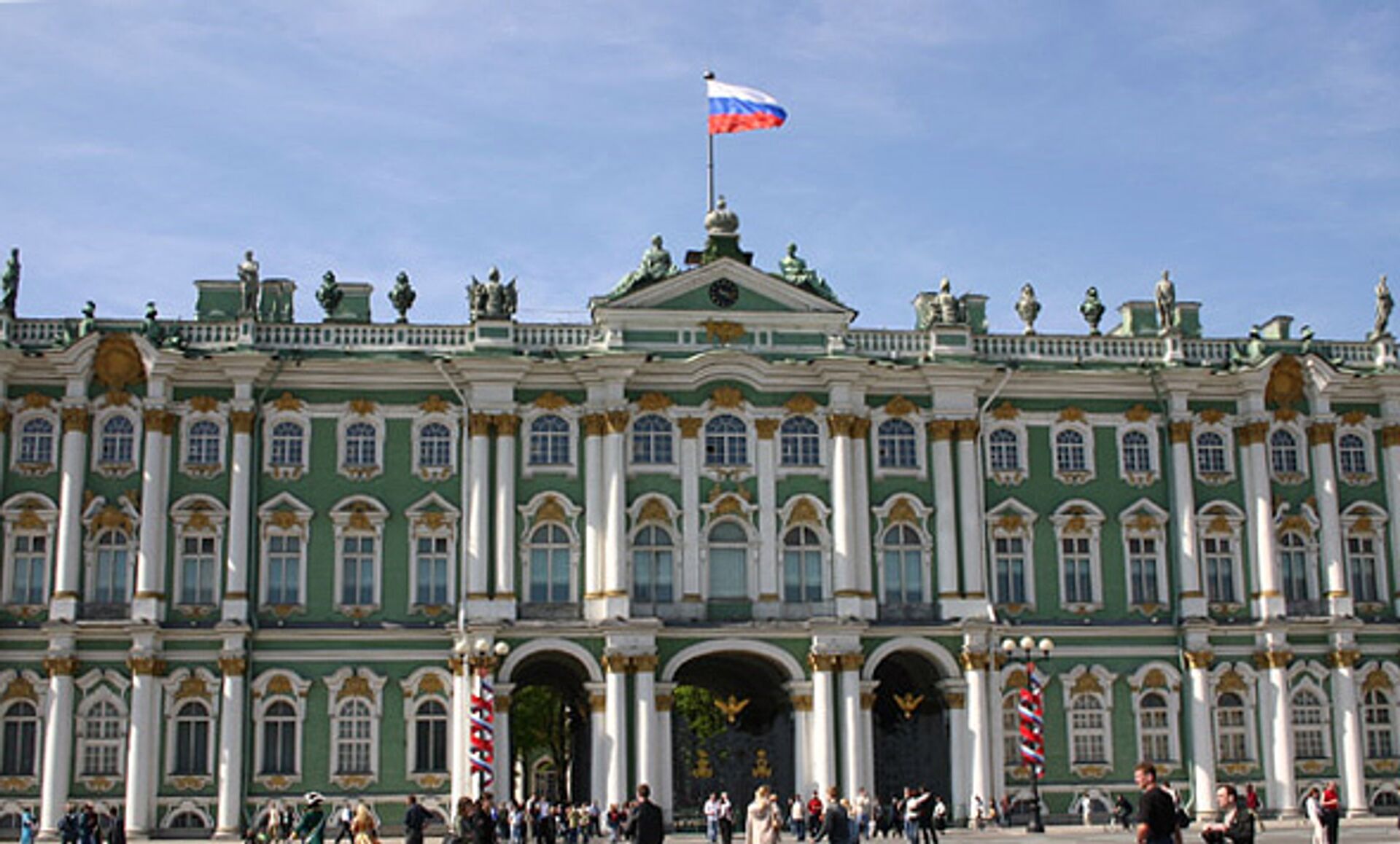
ST. PETERSBURG, June 18 – RIA Novosti, Vitaly Matveyenko. On June 20, the Hermitage Amsterdam, a Dutch affiliate of the Hermitage, Russia’s largest museum, will open in a new building in the Netherlands. The viewing public will be able to see one of the biggest interim exhibitions ever held in Amsterdam, “The Russian Imperial Court of the 19th and Early 20th Century.” In anticipation of the event, Vitaly Matveyenko, reporter from RIA Novosti, interviewed the Hermitage Director Mikhail Piotrovsky.
Q. Why are you opening numerous Hermitage “dependencies” across Russia and abroad, specifically the Hermitage Amsterdam on June 20?
A. The Hermitage is one of the main centers popularizing Russian culture abroad. In St. Petersburg we have three running exhibitions dedicated to Western culture, but told in the Russian language. This is because the Hermitage is an encyclopedic museum, an encyclopedia in Russian.
The Hermitage has been doing this for a long time and has developed its own techniques, which are part of the Great Hermitage program. One of these techniques is establishing permanent Hermitage centers elsewhere – its dependencies.
The State Hermitage is a great world museum. Our mission is above all to make its collections available to the world. This is the main prong of our policy, both here, at the Hermitage, and abroad. This is the main thing: to make everything available to all. Secondly, we want to present to the world our vision of global history and global culture. This can be done very well in Amsterdam, the most fitting place for such a goal.
Q. Is this an innovatory idea or have other museums practised it already?
A. The Hermitage has always considered itself a trailblazer. The Guggenheim is running a parallel project, but the Guggenheim works in a different idiom. They seldom travel with their pieces – they simply hold exhibitions. Now the Louvre is following suit. This means we are the pioneers in Europe and, of course, innovators, always and in everything.
Q. Is the Hermitage planning any new dependencies soon?
A. Dependencies are an ongoing part of our work. We are constantly establishing, opening and launching them. Our next target cities are Vyborg and Vilnius.
Q. What funds do you tap to popularize the Russian angle on art?
A. There are several. These are partly the Hermitage itself, partly its sponsors, and partly the admission money paid by exhibition visitors.
Q. The Hermitage Amsterdam is blessed with a colossal exhibition space. Will it be big enough to fit in such a sprawling show as “The Russian Imperial Court” with its 2,500 showpieces?
A. Our exhibitions are all very large. This one in Amsterdam is, of course, unique, as all others will be smaller. We are using every hall of this center. All our shows are big – this is a normal size for the Hermitage.
Q. For how long will exhibitions typically remain in the Netherlands?
A. They will rotate every six months.
Q. Will the Hermitage have a slice of the attendance pie?
A. We will be receiving one euro from the price of every ticket bought by a person visiting the center.