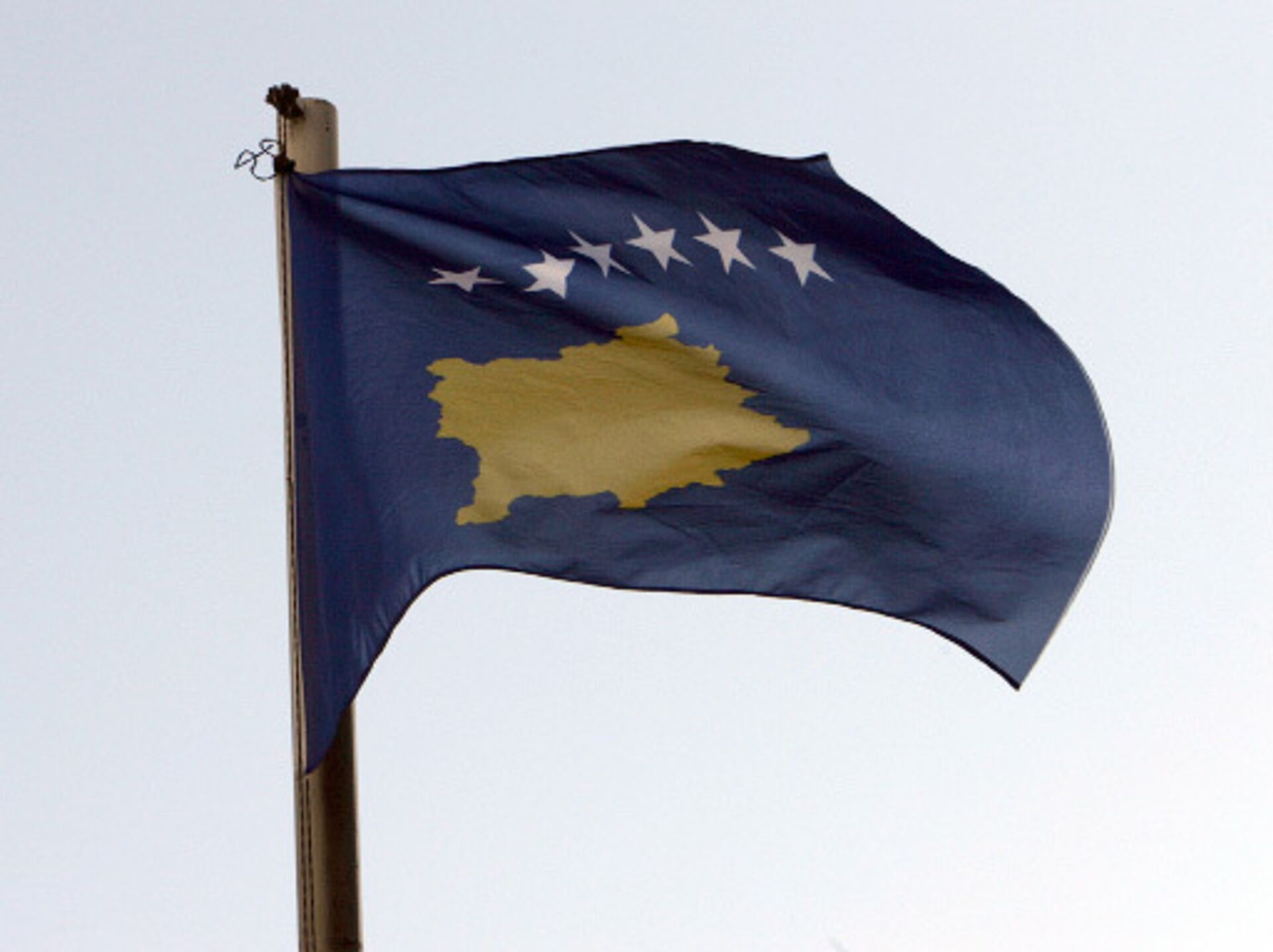
MOSCOW. (Dmitry Babich, RIA Novosti commentator) - The November 15 municipal elections in Kosovo can be seen as a turning point in the region's history.
This was the first vote since Kosovo unilaterally declared independence in February 2008, still unrecognized by Russia and a number of other countries. Moreover, these elections were also the first to be held by local authorities alone, without any help from the UN Mission in Kosovo or the OSCE, which virtually ran the place for a long time.
The elections took part with a fairly large turnout of local Serbs at the polls. This by no means eliminates the totally unfair situation in Kosovo, which Russian President Dmitry Medvedev pointed out during his recent visit to Belgrade. When a breakaway region - a self-declared independent state - is given the green light to international recognition by none other than the United States and the EU, this region knows it is as good as being recognized by the whole international community. But this also creates a dangerous precedent.
Last Sunday's vote did not have to approve Kosovo's independence. The voters had to decide whether it will be further run by Kosovo Albanians alone or local Serbs will preserve some political influence at least on the local level, by having seats on city halls.
With regard to the national level, the Serbs' chances are close to zero. With the Albanian and Serb populations ratio of over 10 to 1 (120,000 Serbs out of the nearly 2 million Kosovo population), the Serbs in parliament have practically no possibility of setting up a party which would have at least some minor influence.
At the November 17, 2007 parliamentary elections, the seats were split between Albanian parties. However, the situation is slightly different at the municipal level - Serbs have a majority in five city governments out of 38.
Two of them are in the north of Kosovo, adjacent to the Serbian border: They have been living virtually independently of the Albanian Kosovo for a while now. They did not even hold elections last Sunday. The remaining three - Gracanica, Klokot, and Ranilug - are "Serb enclaves" in the center and south of Kosovo. Their population had to make a choice: either skip the voting and see hostile Albanians as their city council members and the city mayor, or take part in the illegitimate elections. According to reports, the majority of the local Serbs did go to the polls.
Incidentally, most of the pressure on Serbia to finally choose the lesser of two evils comes from the European Union - which Serbia is so keen to join. The EU officials are the ones forcing the Serbian government to accept several very unpleasant decisions - recognition of the municipal elections in Kosovo, dissociation from Russia and pullout of joint energy projects with Russia. They are using the good old stick and carrot policy, the stick (the tight visa policy) being very real, while the carrot (the much-desired EU membership) a far-fetched and remote possibility.
Ever the most ardent EU supporter in Serbia, or in Russia for that matter, cannot claim that the EU is pursuing some abstract humanistic or democratic goals. Due to its tight visa policy, 70% of young Serbs (who, incidentally, were too young to take part in the ethnic wars during the breakup of Yugoslavia), have never been to any of the EU countries.
According to a survey, the repeated delays of the much-craved EU accession have led to a drop in the number of EU-enthusiasts in Serbia from 72% in 2007 to 63% by the end of 2008. These data are quoted by Pavel Kandel, a research associate of the Institute of Europe of the Russian Academy of Sciences, in the collection of articles "Crisis in Kosovo and International Security." These figures reflect "the Serbs' last hope pinned on Moscow and their outrage at Brussels' anti-Serb policies," he comments.
As for democratic values in the EU policy with regard to Serbia, they are hard to believe in, given the EU officials' open sympathies with the Albanian militants of the Kosovo Liberation Army. Incidentally, the supporters of two KLA leaders, former "prime minister" Ramush Haradinaj and his successor Hashim Thaci, caused a violent clash in one of the Albanian enclaves.
It is worth reminding here that Haradinaj was allowed to leave the Hague occasionally "to rule" Kosovo during his trial, while Thaci was eventually cleared by the Hague Tribunal of all charges of genocide of Serbs.
All the above gives Russia more tools to pressure Belgrade. True, the Serbs were disappointed by Boris Yeltsin's Russia, which promised them support in 1999 and then proposed they give in. But today, EU and NATO officials are in fact doing what Russia would have failed to do even if it had supplied the Serbs with the S-300 anti-aircraft weapons they were asking for in 1999.
Russia can regain influence in the Balkans not because it is so good, but because European bureaucrats have proved far worse.
The opinions expressed in this article are the author's and do not necessarily represent those of RIA Novosti.