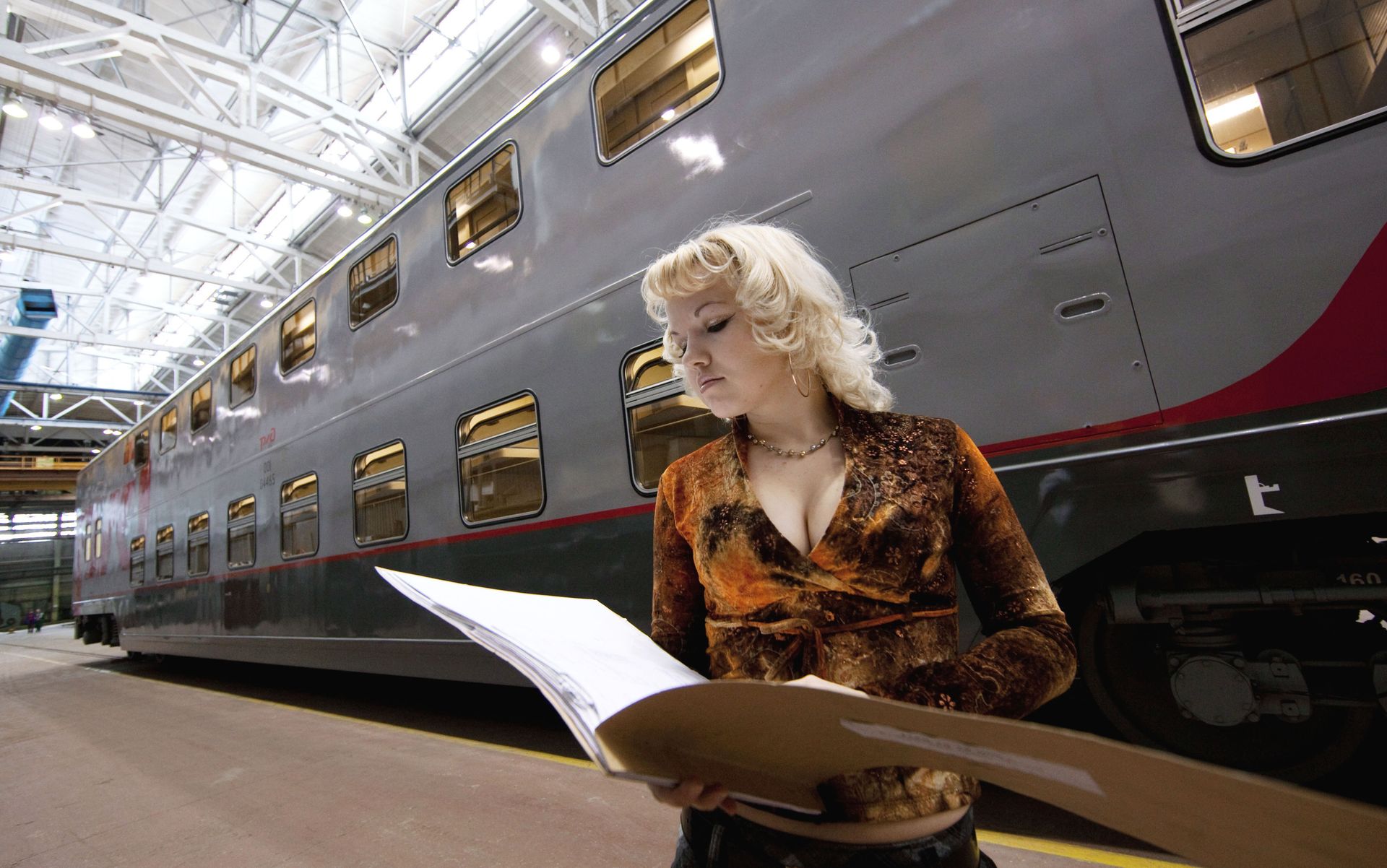
The Tver Railcar Works has presented two bilevel passenger cars with six-seat compartments. The bilevel passenger car is new for Russia and will replace some standard cars.
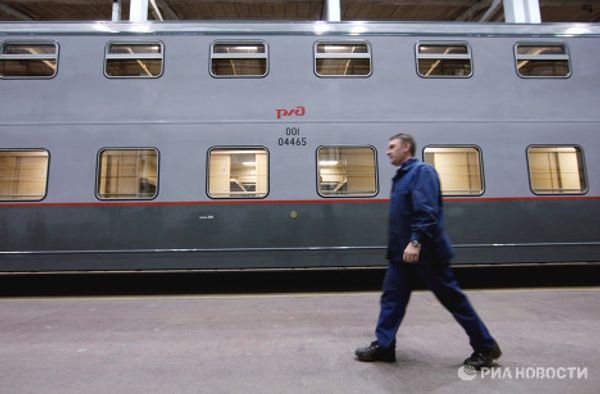
The Tver Railcar Works has presented two bilevel passenger cars with six-seat compartments. The bilevel passenger car is new for Russia and will replace some standard cars.
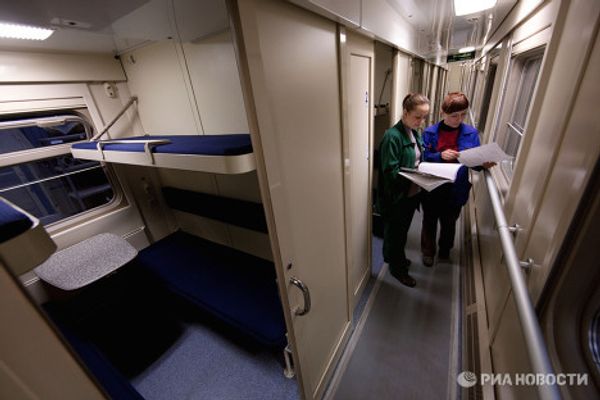
В Двухэтажном пассажирском вагоне, созданном совместно концернами Alstom Transport и "Трансмашхолдинг" на Тверском вагоностроительном заводе.
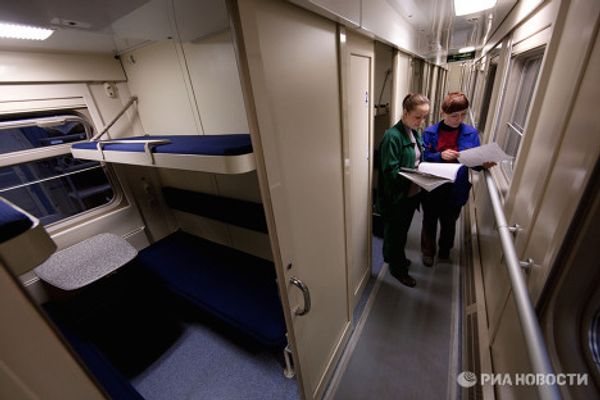
This is a car with 16 four-berth compartments: eight compartments on the upper deck and eight on the lower deck. It has almost twice the capacity of an ordinary sleeping car: 64 places compared with the 36 found on the standard car.
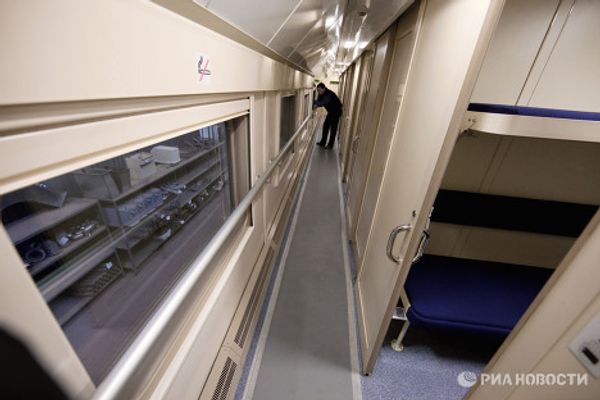
A bilevel car’s compartment is similar to a conventional car’s except that the lower ceiling height results in decreased upper berth space. The new cars also lack storage areas over the aisles for the same reason.
The designers did not include folding berths in the second-class version of the car in order to reduce its size. They also minimized the number of shelves and nets for personal property storage.
The first-class version includes fold-down berths. The car weighs 65 metric tons, which is about 10% heavier than a standard car. It is 26.2 m long, 70 cm more than a conventional car, and 5.25 m high.
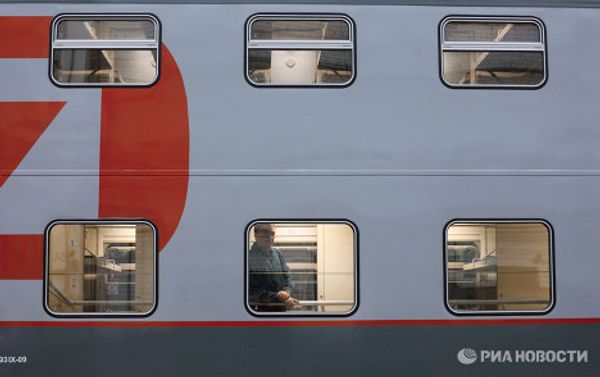
Upper and lower deck aisles are located on opposite sides of the car, so passengers walking through the car can enjoy the view from both sides.
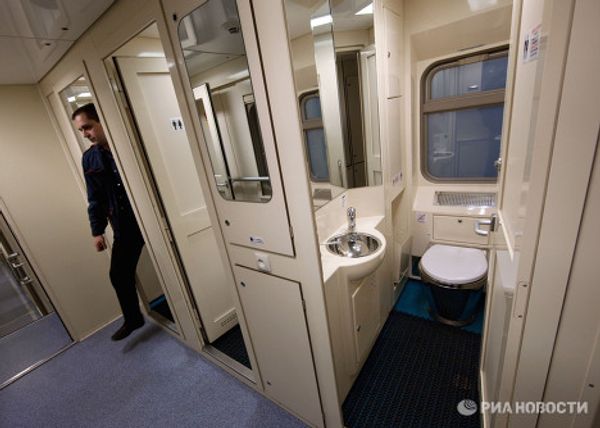
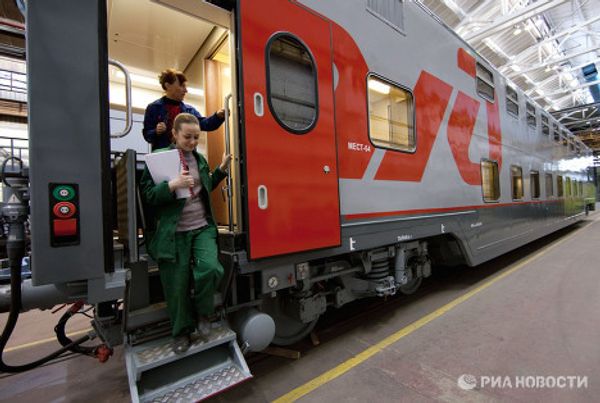
Unlike other Russian passenger cars, the bilevel cars have a door at only one end. To reach their compartment, passengers will have to go up or down a few steps.
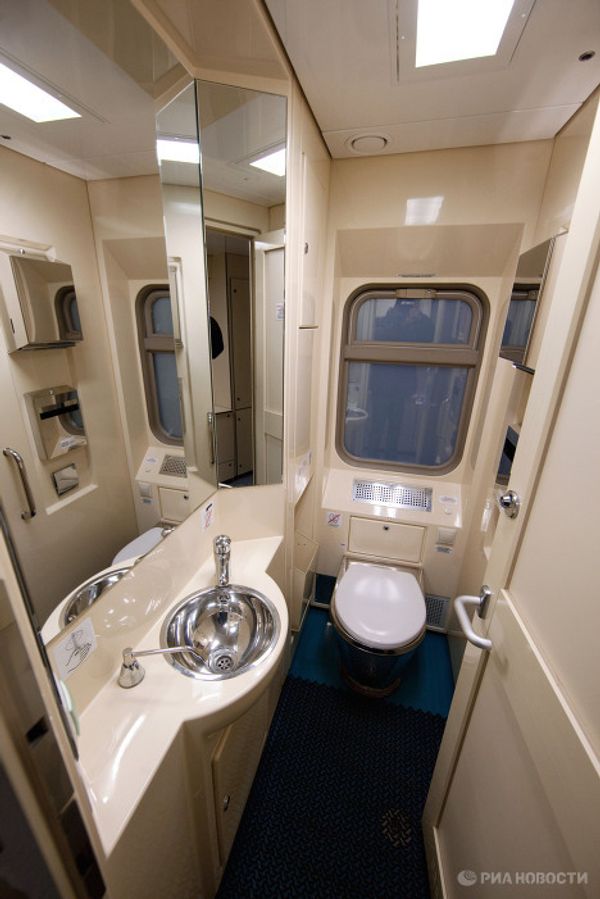
When the new bilevel cars are delivered, they will be assigned to the high traffic routes, for example from Moscow to St. Petersburg.
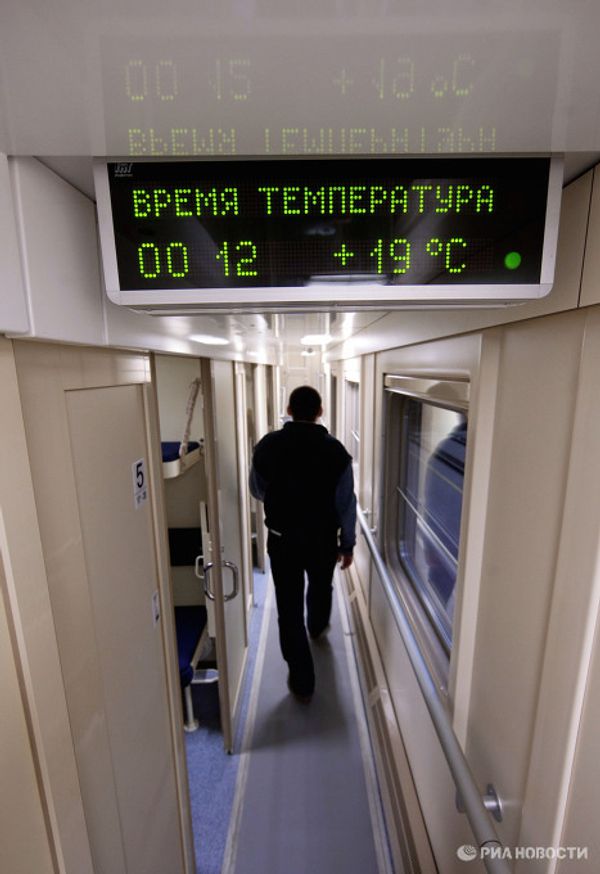
Interior of the new bilevel passenger car built by Alstom Transport and Transmashholding at the Tver Railcar Works.
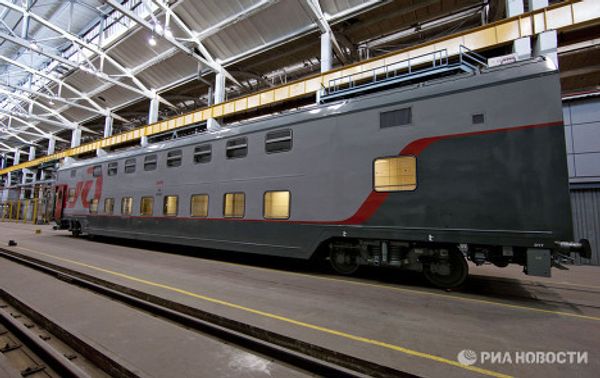
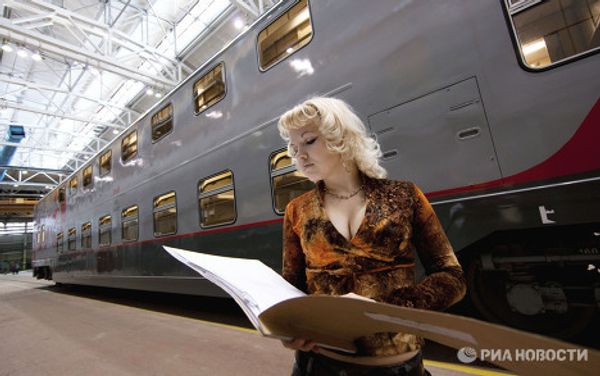
The new bilevel passenger car built by Alstom Transport and Transmashholding at the Tver Railcar Works.