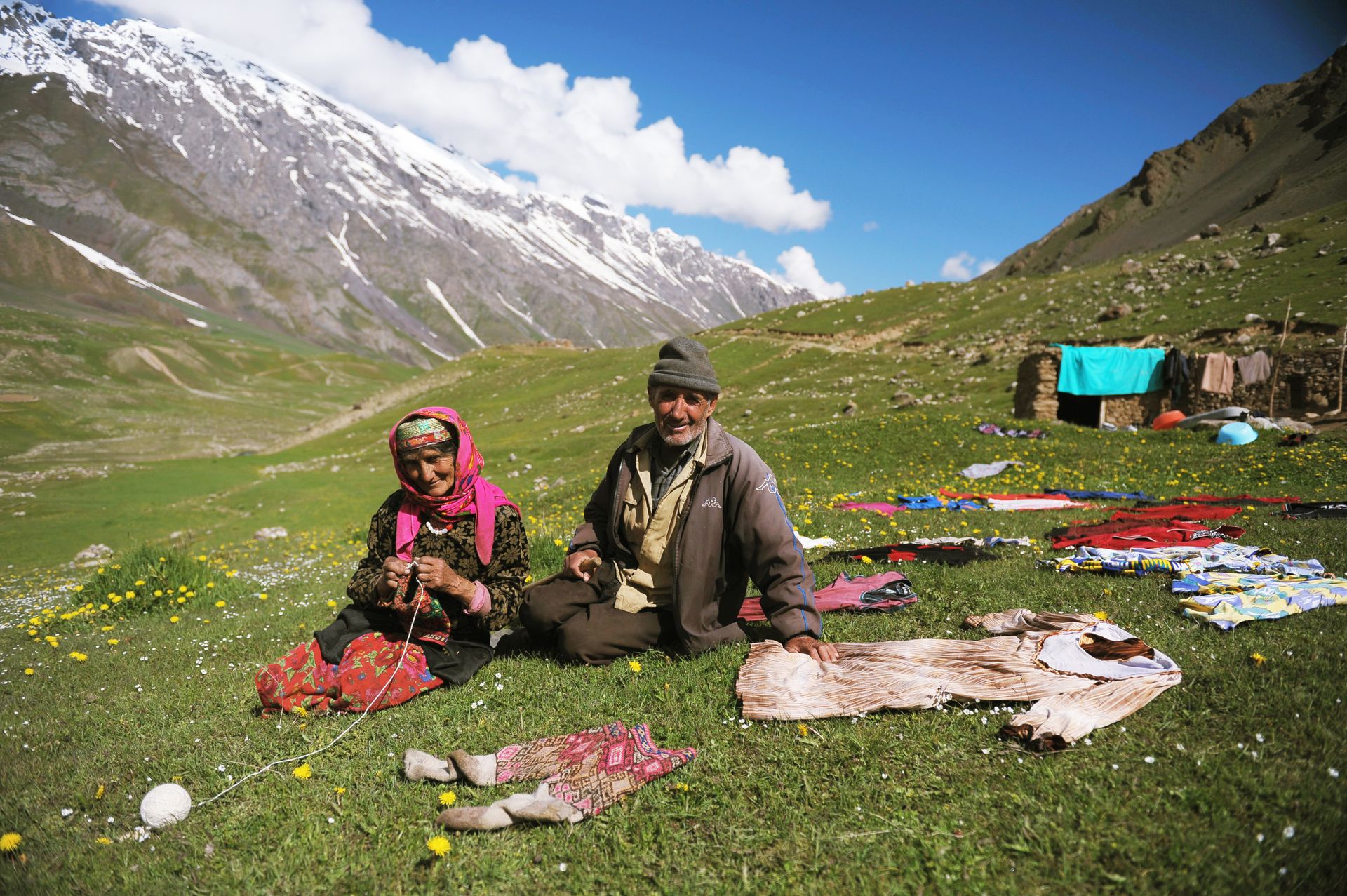
The Afghan-Tajik border divides Badakhshan, a unique cultural crossroads high in the mountains. Local Tajiks are the descendants of ancient East Iranian tribes.
The Afghan-Tajik border divides Badakhshan, a unique cultural crossroads high in the mountains. Local Tajiks are the descendants of ancient East Iranian tribes. A medieval trade route linking Europe with China once crossed this land. Now, Pamir villagers are cut off from the rest of Tajikistan, and the world, by snowfall, landslides and the lack of roads for eight months of the year. Rescue from these regular blockades is provided by the four snowless months when men guard flocks in outlying pastures while women prepare for the next cold season.
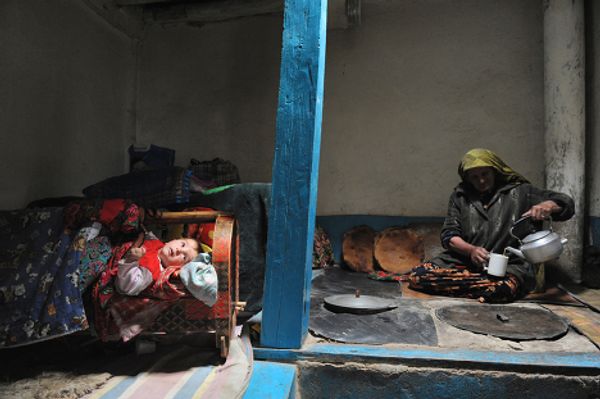
Pamir houses are built of stone. The central room serves as kitchen, bedroom and guest-room all at once. The roof is supported by five pillars in memory of the most worshipped Muslim saints: the Prophet, Fatima his daughter, Ali her husband, and Muhammad’s grandsons Hassan and Hussein. There are no windows in the walls, only a skylight in the roof that also serves as a chimney. It is decorated with three timber rhomboids representing flora, fauna and the mineral world. The lady of the house is serving traditional tea with milk.
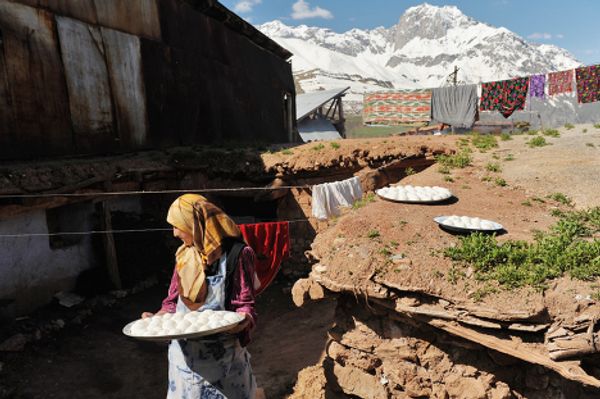
With the opening of the summer grazing season, Tajik women start making kurt, dried and salted cottage cheese. Milk is boiled, yeast added and the mixture is left in a warm spot for several hours. The fresh cheese is then dried and mixed with salt, after which it is made into tiny balls. They are dried in sunlight for three or four days. Kurt is stored suspended from the ceiling.
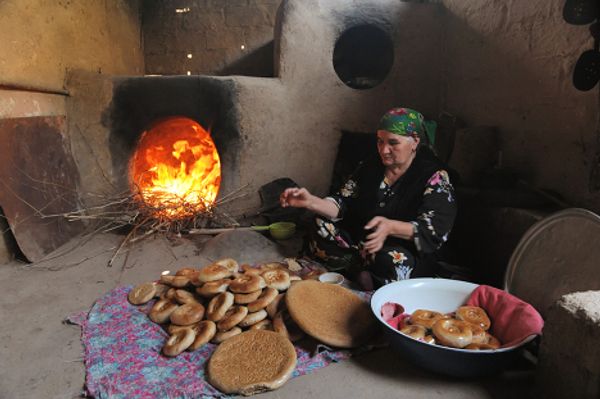
Cereals and tea make up the greater part of the diet of those who live in the mountains. Peas are occasionally added to wheat flour for large loaves.
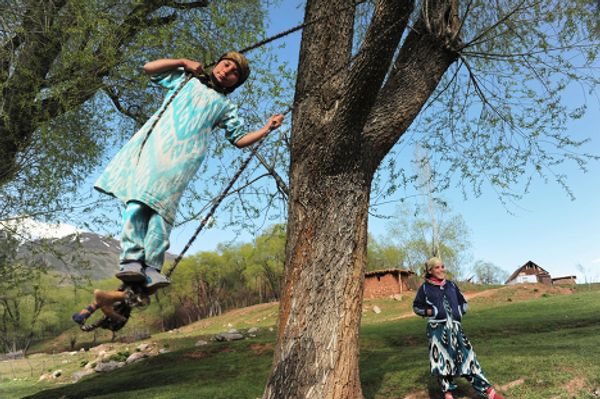
Swings offer a delightfully childish way of seeing spring in.
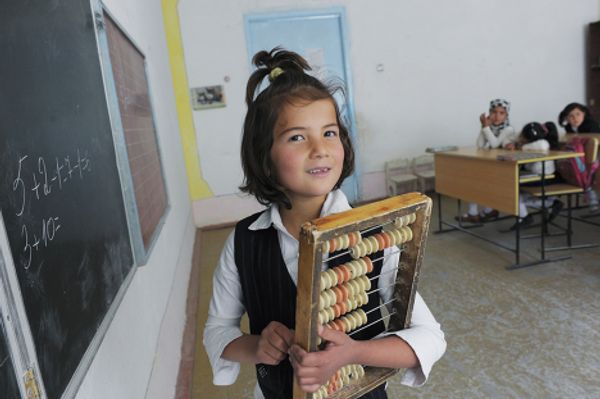
Though every large village has a school, parents all too often prefer to see their children not doing math but busy doing chores at home.
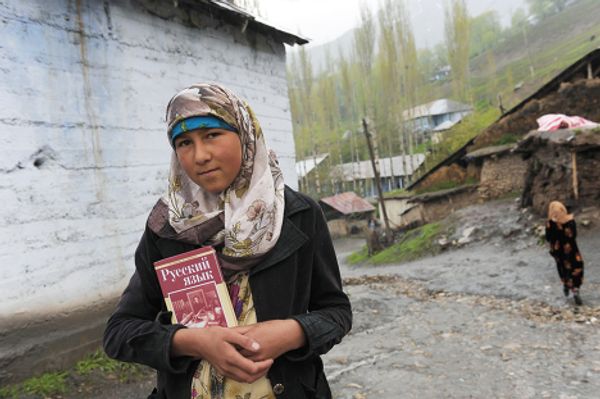
Tajik is the language taught in school. Russian is learnt as a second language, and is sometimes regarded as marginal.
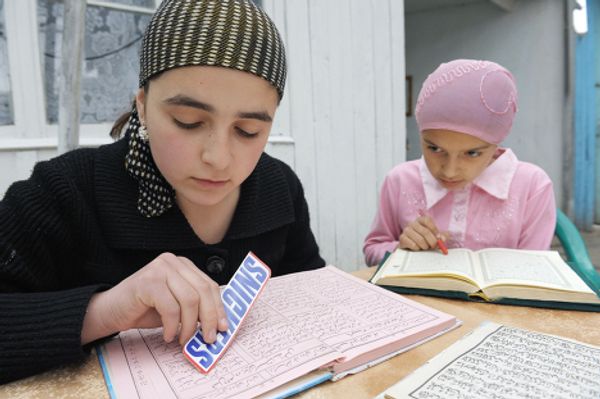
Young Tajiks are skeptical about Russian classes, but Arabic is very popular even though it is not on the school curricula. Volunteers with a fluent or at least primary command of the language offer free classes. Watching television also offers an opportunity to practice foreign languages: Iranian channels are available in Tajikistan.
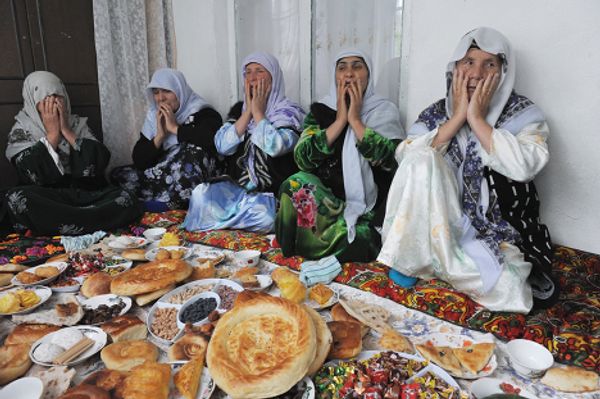
The death of a relative brings villagers together for the funeral meal. For these mountain people, this community spirit serves as a shield protecting them from what is a naturally harsh life.
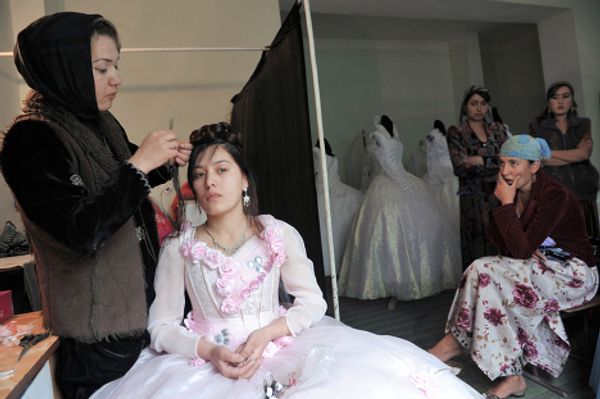
When there is a wedding, all the villagers gather for celebrations lasting three days or even longer. As custom demands, girls gather in the bride’s home for a party on the first day. The hostess is expected to excel in cooking, and be dressed to kill. The next day, the bride meets the groom chosen by her father. Girls are much freer in cities.
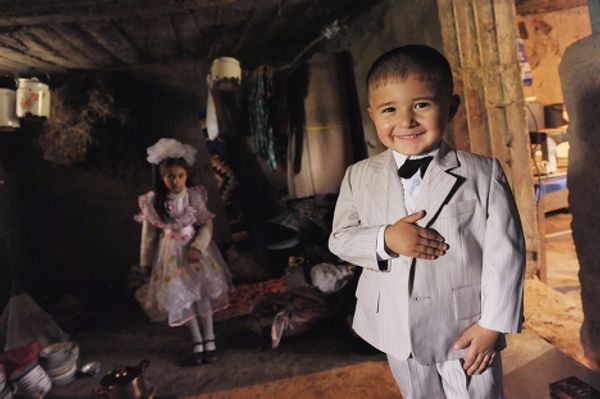
A young bachelor at an older friend’s wedding
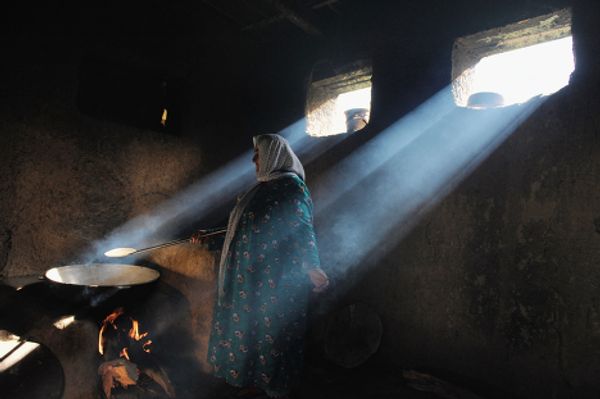
Weddings draw a huge number of guests and so mammoth cauldrons are needed for cooking.