Prime Minister Vladimir Putin visited the Franz Josef Land archipelago, where an expedition from the Russian Academy of Sciences’ Severtsov Institute of... 29.04.2010, Sputnik International
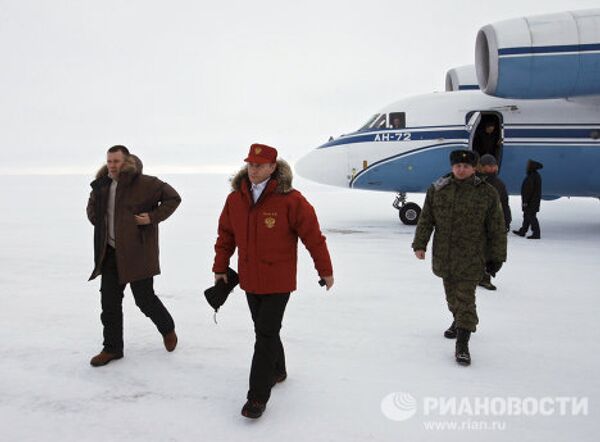
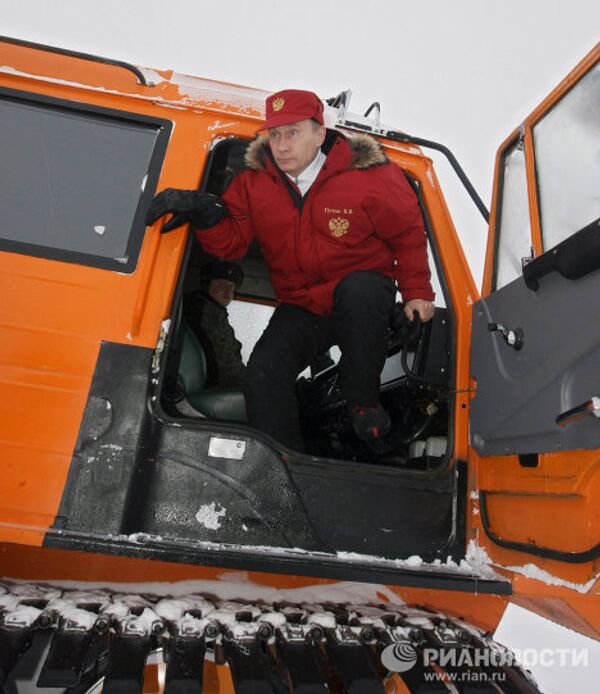
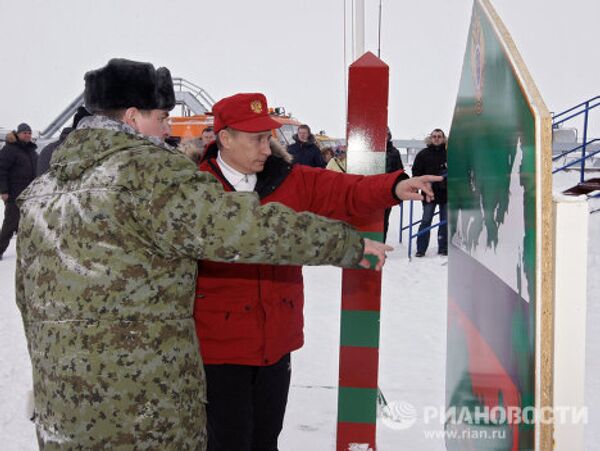
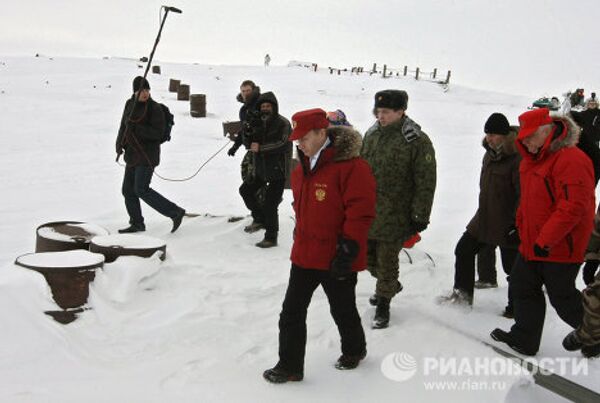
Prime Minister Vladimir Putin visited the Franz Josef Land archipelago, where an expedition from the Russian Academy of Sciences’ Severtsov Institute of Ecology and Evolution are carrying out research on the polar bear population.
Prime Minister Vladimir Putin visited the Franz Josef Land archipelago, where an expedition from the Russian Academy of Sciences’ Severtsov Institute of Ecology and Evolution are carrying out research on the polar bear population.
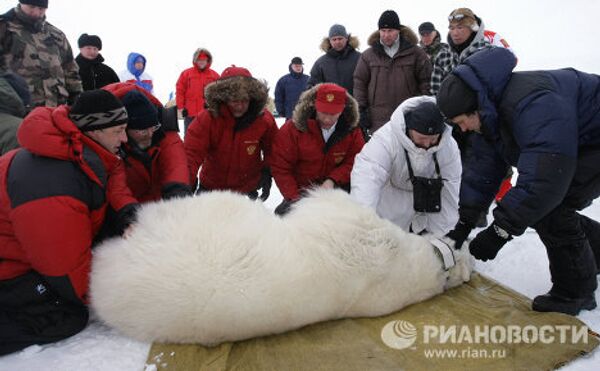
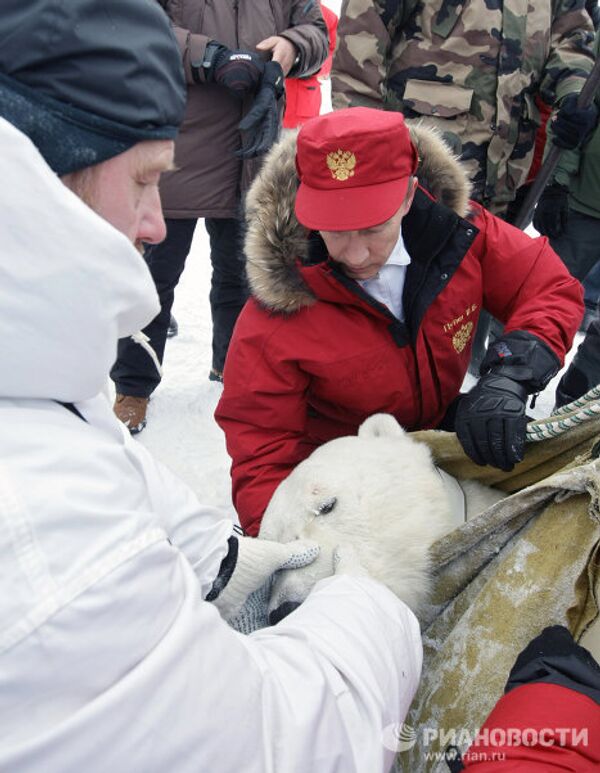
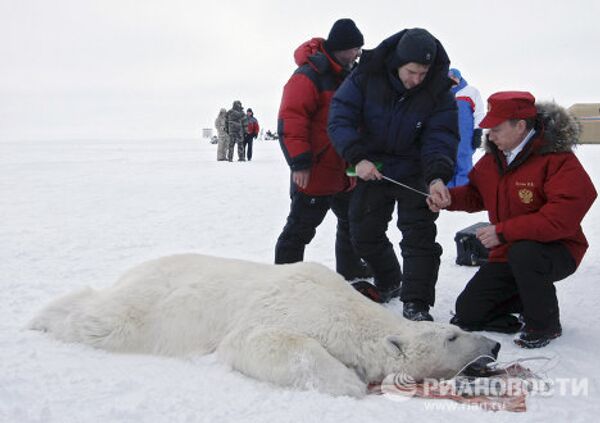
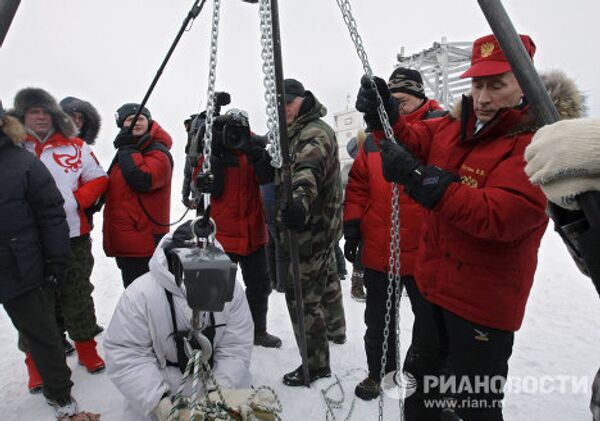
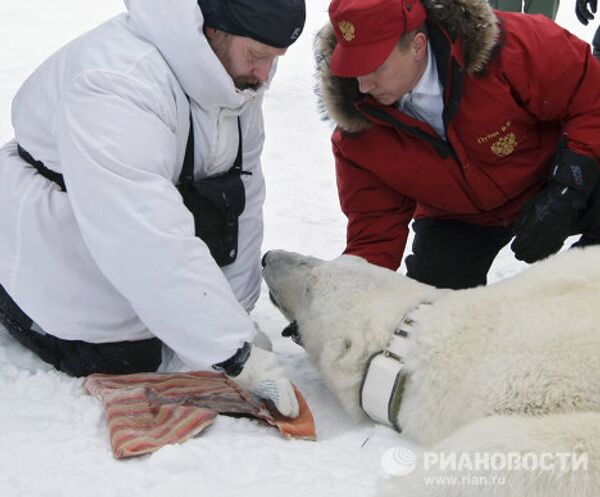
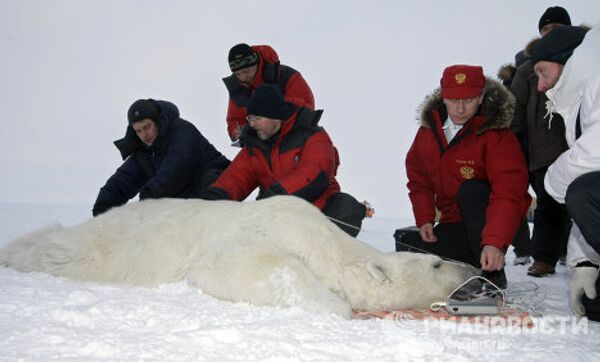
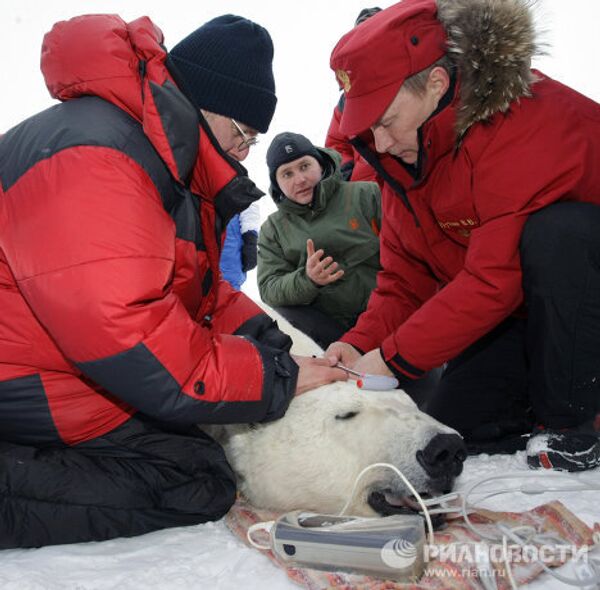
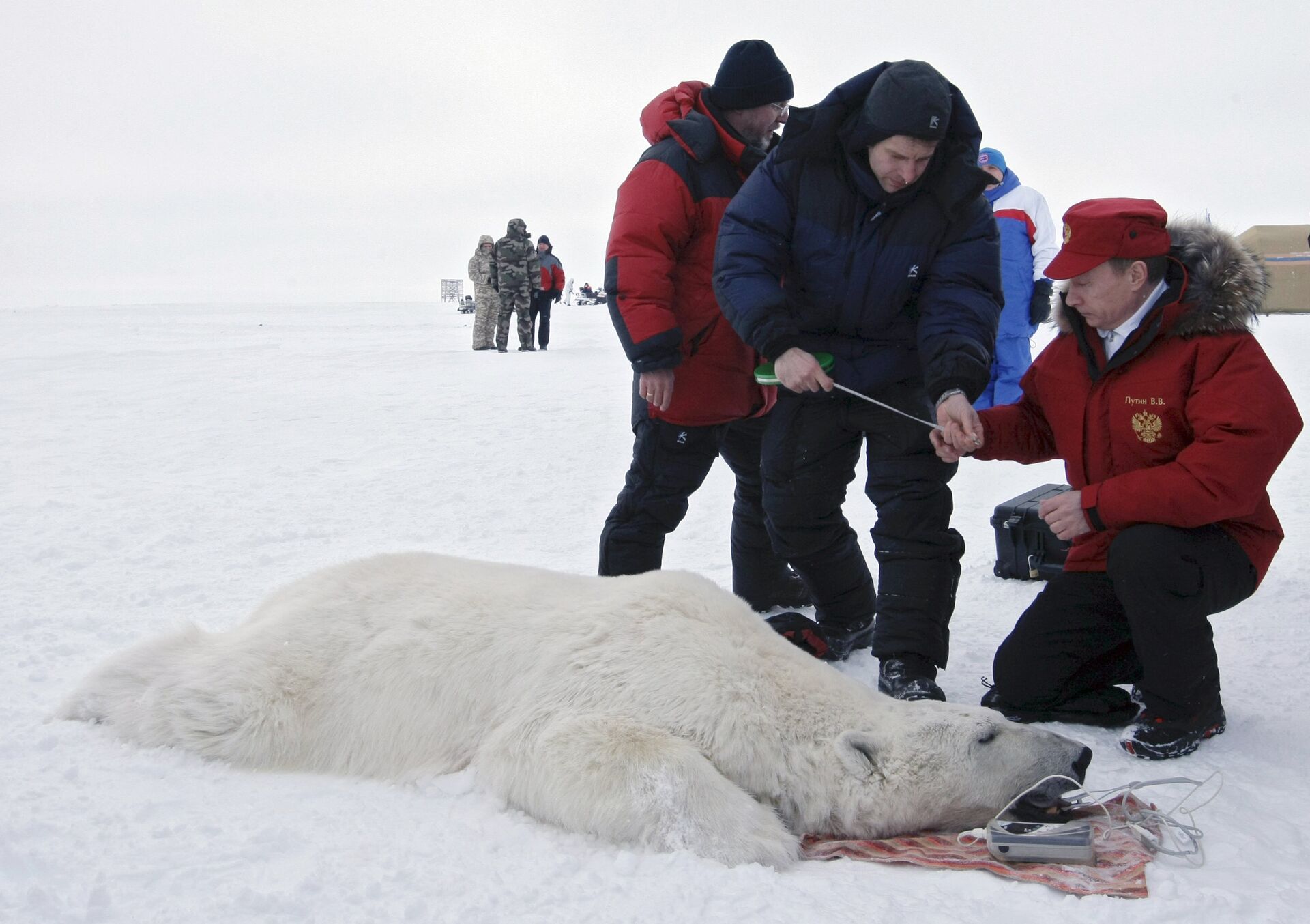
Prime Minister Vladimir Putin visited the Franz Josef Land archipelago, where an expedition from the Russian Academy of Sciences’ Severtsov Institute of Ecology and Evolution are carrying out research on the polar bear population. Together with the scientists, the prime minister fitted a satellite collar on a bear and after that shook the paw with the “master of the Arctic.”
The bear was caught in a special trap. By the time the prime minister arrived, the Arctic’s strongest beast was sleeping peacefully – scientists drugged the bear so it could be approached safely.
The scientists told the prime minister that the experiment marked the first time satellite tracking had been used in Russia to observe the bears. The project is funded by the Russian Geographic Society and should help efforts to preserve and restore the polar bear population.
This is not Putin’s first expedition with scientists from the institute - in September 2008, he put a similar satellite collar on an Amur tiger, and in July last year the prime minister went to the Chkalov Island in the Khabarovsk Territory, where scientists were studying the white whales' migration patterns.
Newsfeed
0
Access to the chat has been blocked for violating the rules .
You will be able to participate again through:∞.
If you do not agree with the blocking, please use the feedback form
The discussion is closed. You can participate in the discussion within 24 hours after the publication of the article.