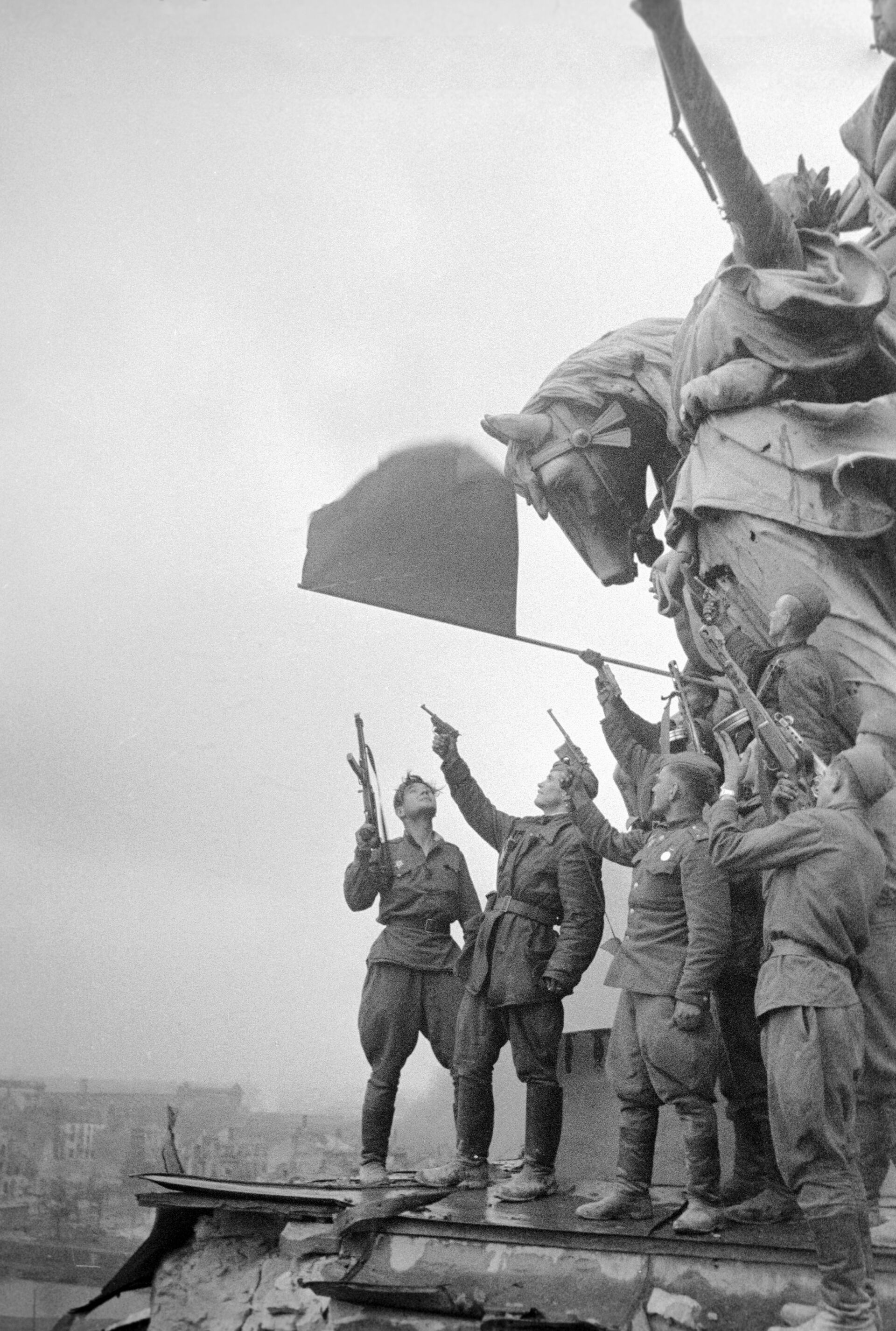
On April 30, 1945, Soviet soldiers raised the red Victory Banner over the Reichstag building in Berlin.
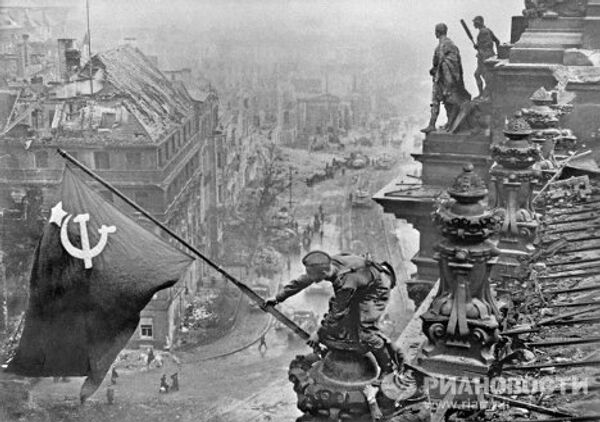
On April 30, 1945, Soviet soldiers raised the red Victory Banner over the Reichstag building in Berlin.
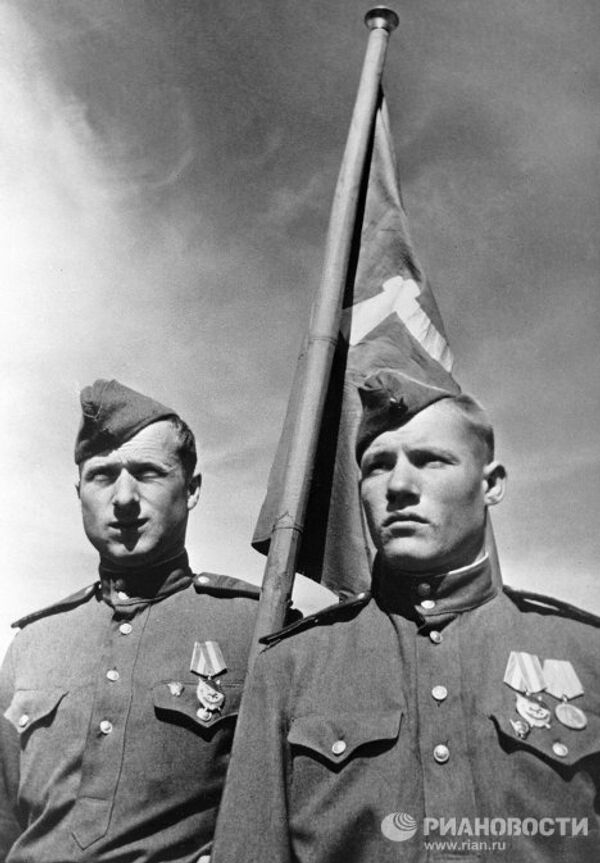
The banner was raised by Mikhail Yegorov and Meliton Kantaria, reconnaissance men from the 150th Rifle Division.
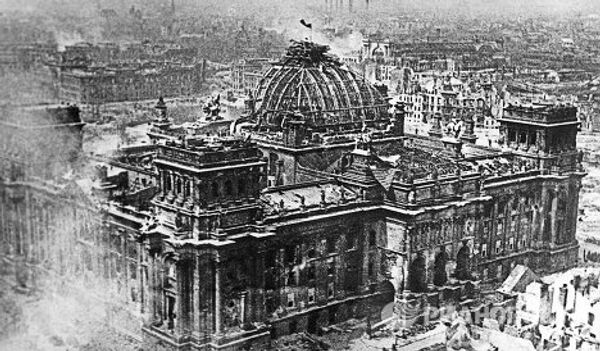
Photographs of the burning Reichstag with the Victory Banner flying over it, published by the newspaper Pravda on May 3, 1945.
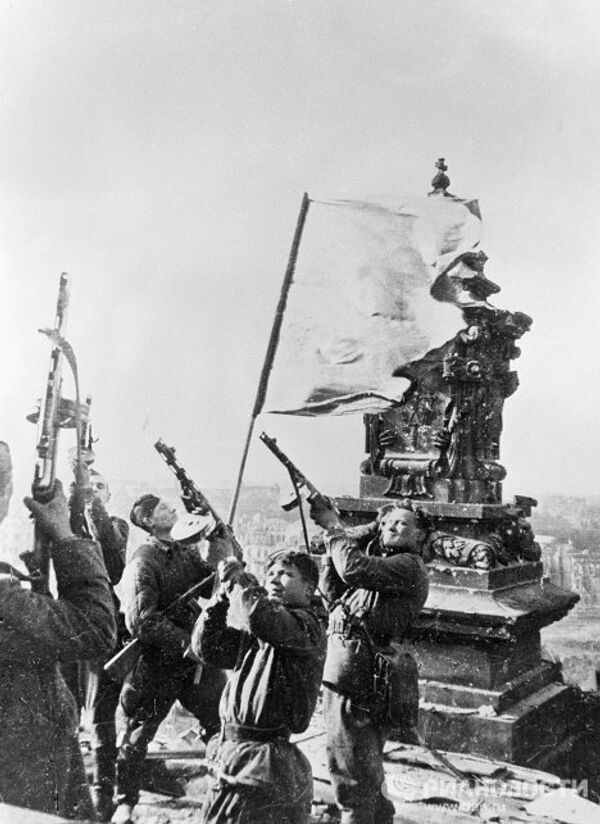
The Soviet flag over the Reichstag building symbolized the final collapse of Nazi Germany. At that time nine flags resembling the state flag of the USSR were quickly produced. There were nine divisions that comprised the 3rd Shock Army that had assaulted the German capital.
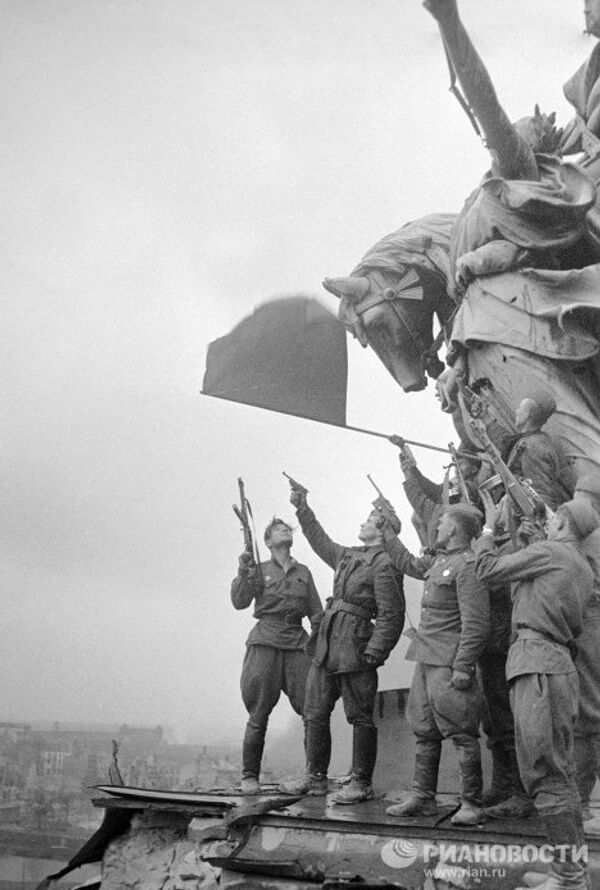
Late on April 30, 1945, a red flag was raised over the Reichstag building. Later the next day, the flag was moved to the Reichstag’s glass dome where it remained until Victory Day.
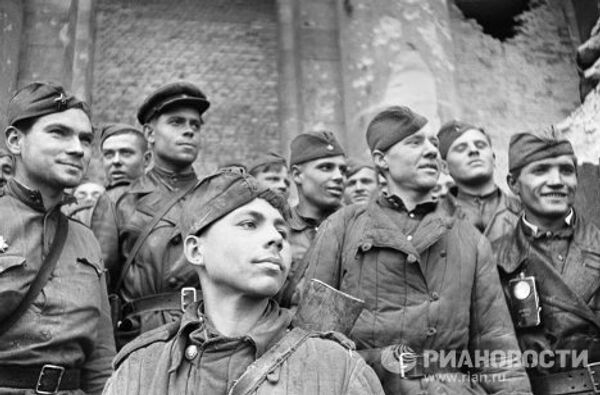
During the final days of the war, the district around the Reichstag saw especially fierce battles. The best SS regiments reinforced with tanks and assault guns defended the district. Photo: Soldiers who attacked the Reichstag.
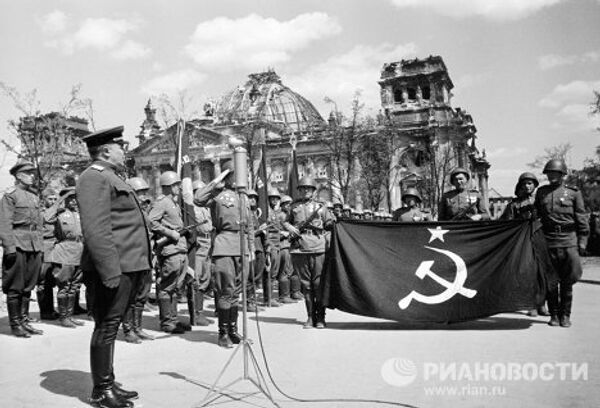
On May 9, the Victory Banner was given to the 150th Regiment and was replaced by another flag on the Reichstag’s dome. On June 20, 1945, the banner was transported by air to Moscow to take part in the Victory Parade. But after a full rehearsal it was decided not to use the Victory Banner. So, despite wide-spread belief, the banner was not displayed during the Victory Parade. The Victory Banner is currently exhibited at the Central Museum of the Armed Forces where it was taken under decree of the Soviet Army’s Main Political Directorate of July 10, 1945. Photo: Berlin’s first commandant Colonel General Nikolai Berzarin ceremonially sending the Victory Banner to Moscow.