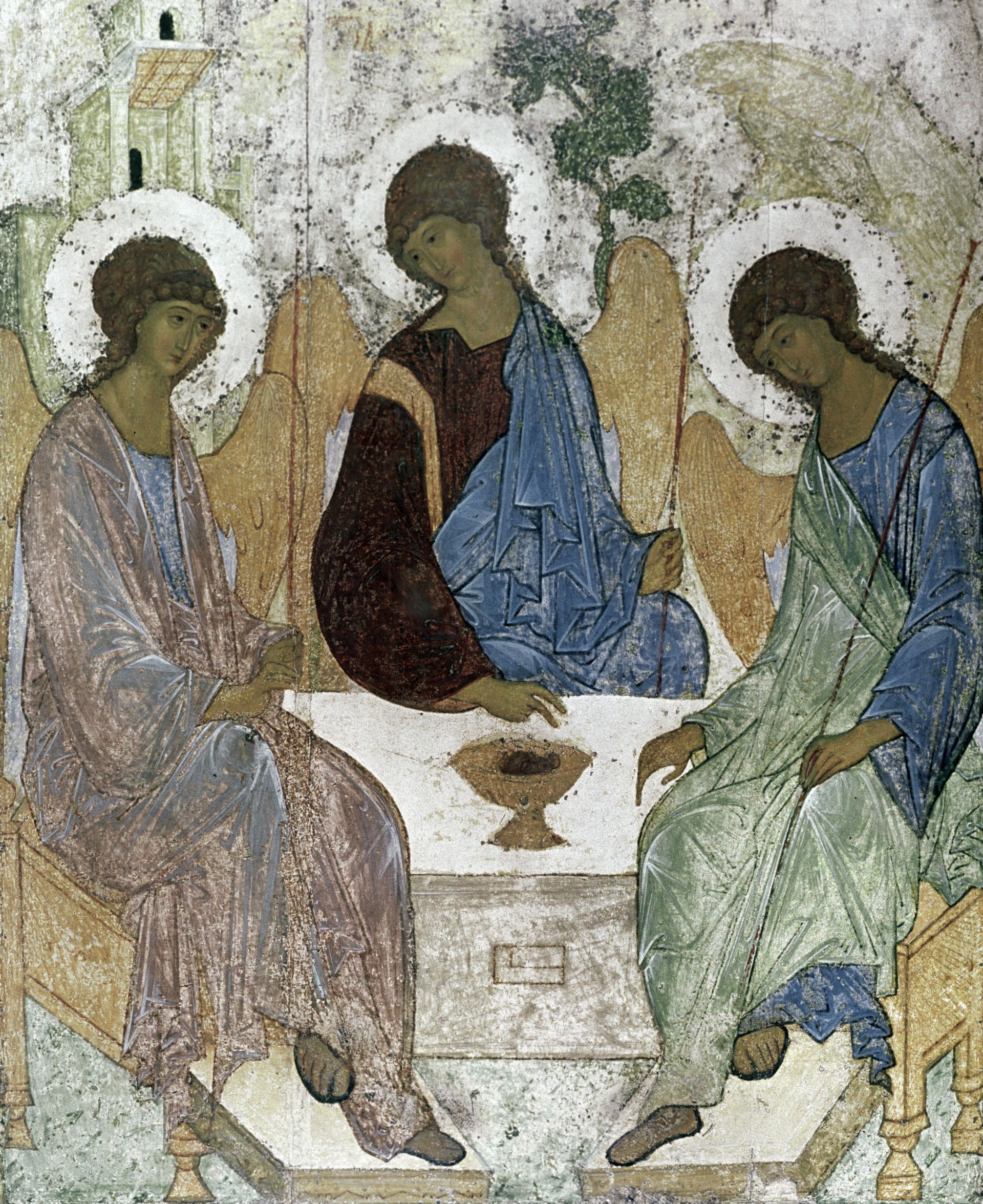
Each year on July 17, the Russian Orthodox Church commemorates the famous icon painter and monk Andrei Rublev. He lived and worked for a long time at the Trinity Monastery of St. Sergius outside Moscow. He painted the Kremlin’s Annunciation Cathedral (1405) in collaboration with fellow painters Theophanes the Greek and Prokhor of Gorodets.
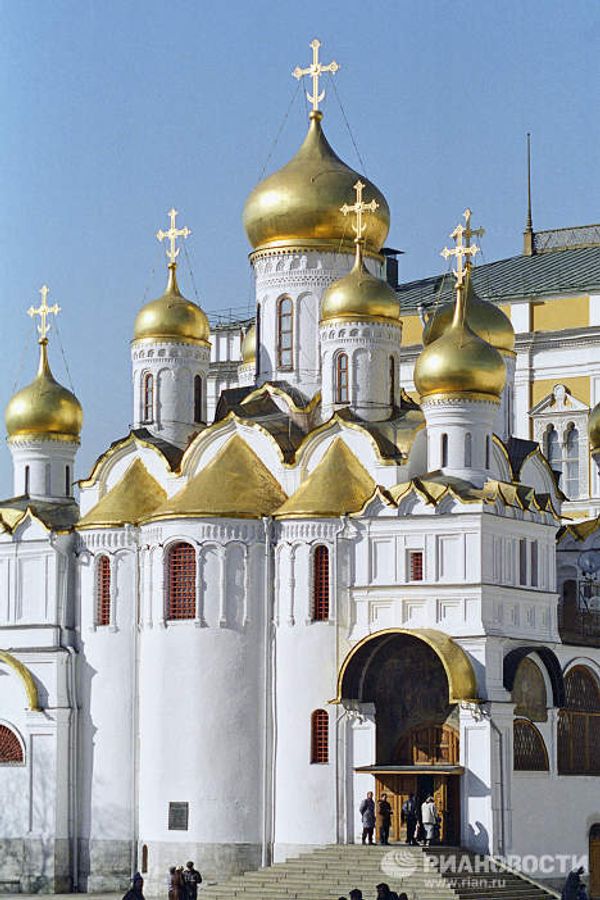
Each year on July 17, the Russian Orthodox Church commemorates the famous icon painter and monk Andrei Rublev. He lived and worked for a long time at the Trinity Monastery of St. Sergius outside Moscow. He painted the Kremlin’s Annunciation Cathedral (1405) in collaboration with fellow painters Theophanes the Greek and Prokhor of Gorodets. Photo: Annunciation Cathedral in the Moscow Kremlin.
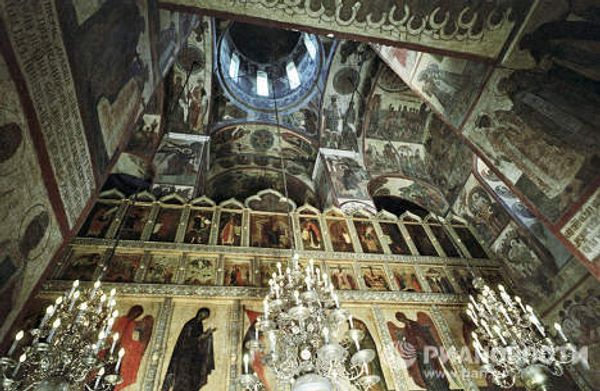
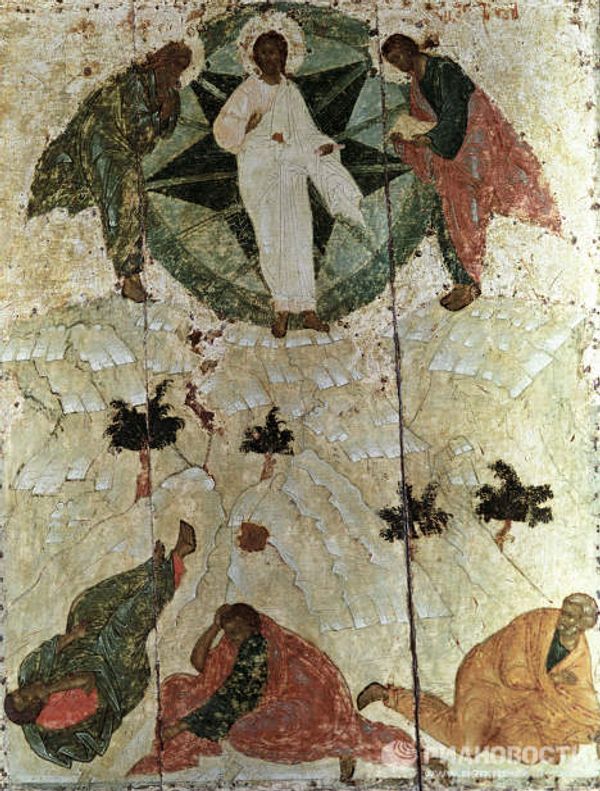
A reproduction of Andrei Rublev’s Transfiguration in the Moscow Kremlin’s Annunciation Cathedral.
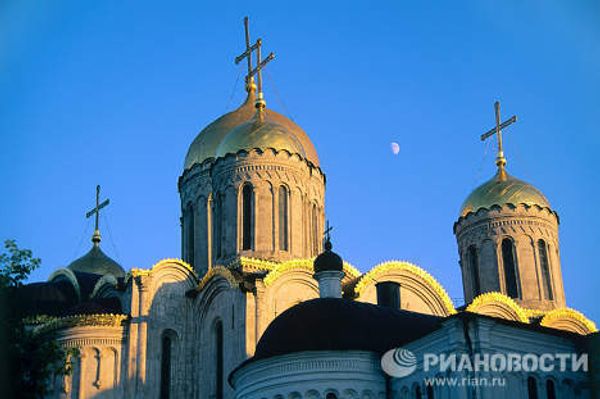
In 1408, Andrei Rublev worked with Daniel the Black and other painters to decorate the Assumption Cathedral in Vladimir, where their frescoes have partially survived to this day, and also painted icons for its monumental three-tiered icon wall.
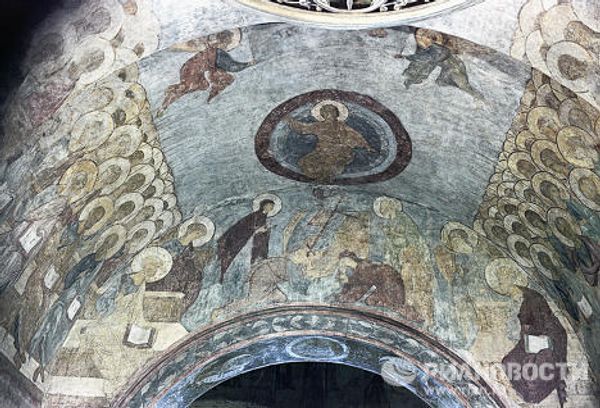
The Last Judgment, a fresco by Andrei Rublev in the Assumption Cathedral in Vladimir.
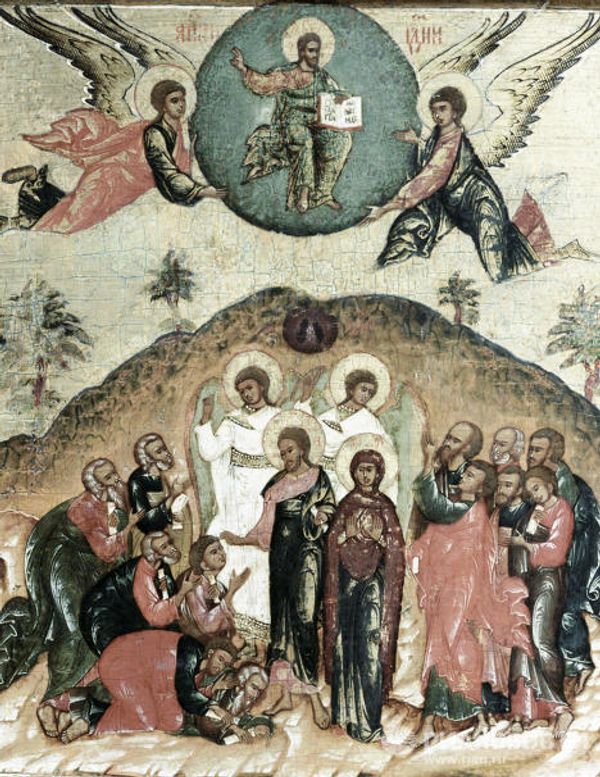
A reproduction of Andrei Rublev’s icon Ascension from the Assumption Cathedral in Vladimir.
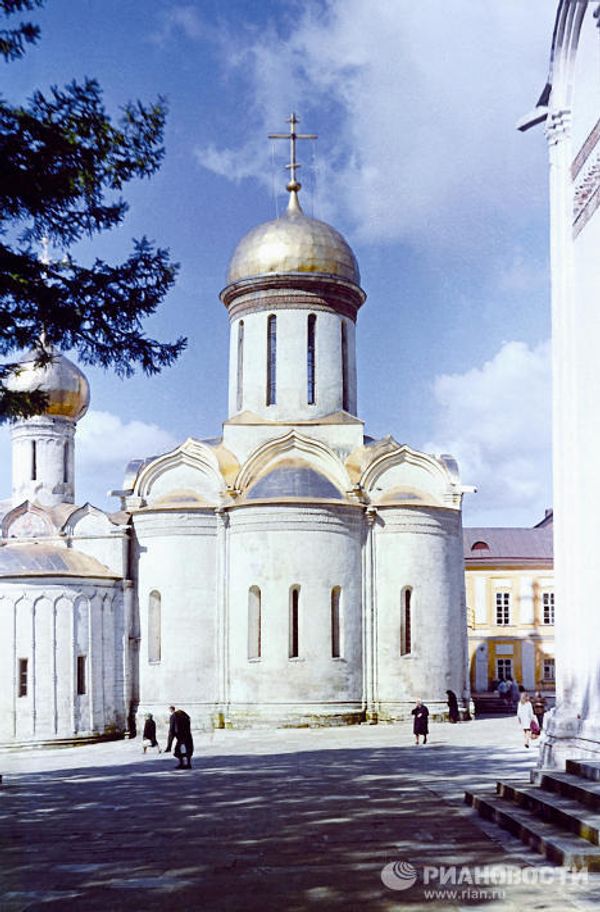
Rublev decorated the Cathedral of the Holy Trinity at St. Sergius’ Trinity Monastery with Daniel the Black and other masters (1425-27)…
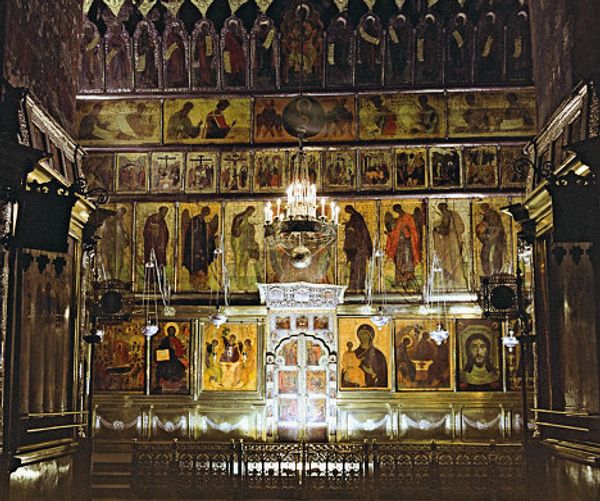
… and painted icons for the cathedral’s icon wall.
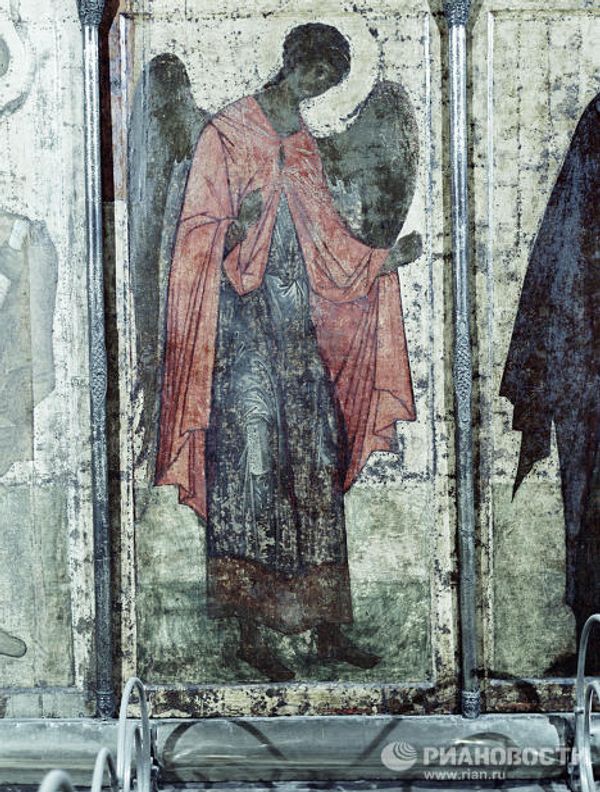
Andrei Rublev’s icon of the Archangel Gabriel from the Trinity Cathedral of St. Sergius’ Trinity Monastery.
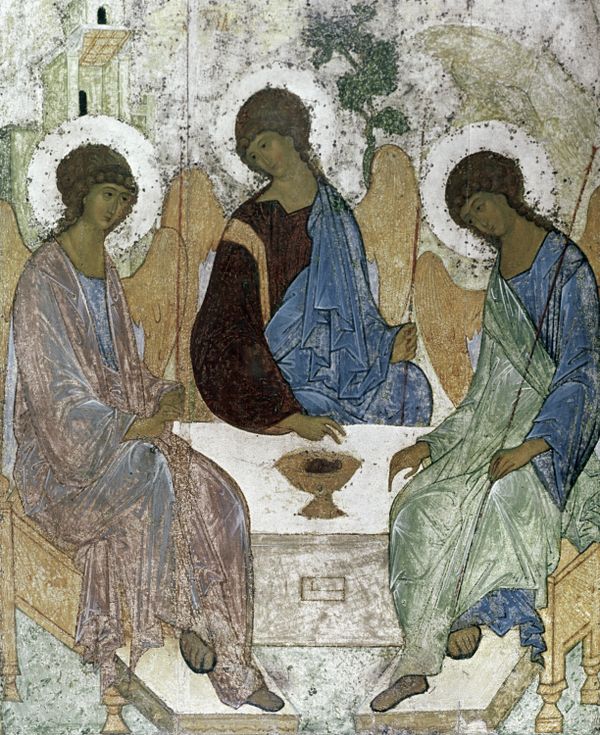
Andrei Rublev’s most celebrated icon, The Old Testament Trinity, is thought to have been painted circa 1420. According to a 17th-century source, this icon, a tribute to St. Sergius of Radonezh, was commissioned by Father Superior Nikon, a disciple and successor of the famous Russian saint. It depicts the Biblical scene (Genesis, Chapter 18) of Yahweh appearing to Abraham in the form of three angels.
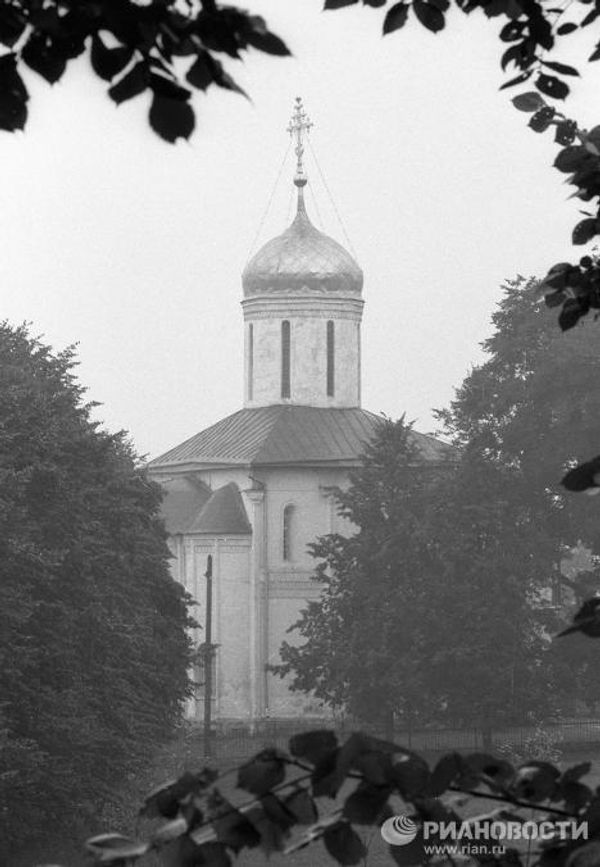
The partially preserved frescos at the Assumption Cathedral on the Gorodok (late 14th-early 15th centuries) in Zvenigorod are also attributed to Andrei Rublev.
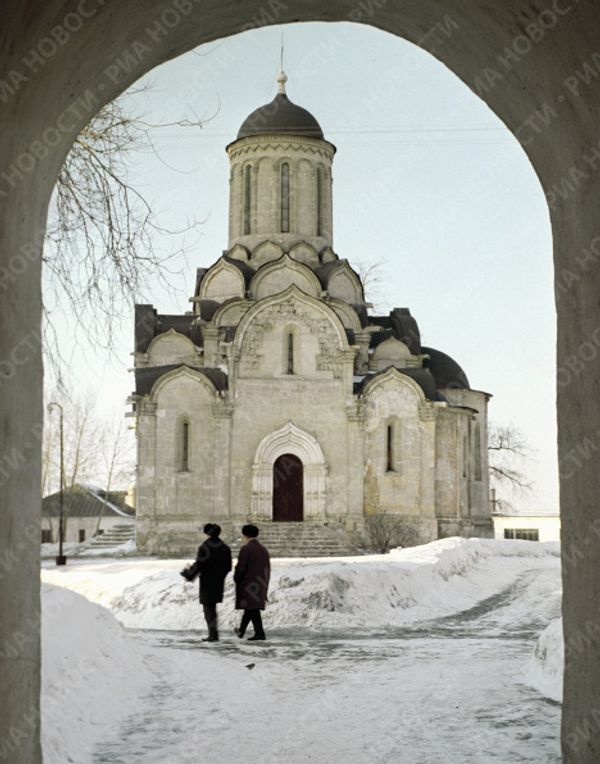
Rublev spent his final years in Moscow’s St. Andronicus Monastery, painting frescoes for its Cathedral of the Savior, some of which are partially preserved to this day.