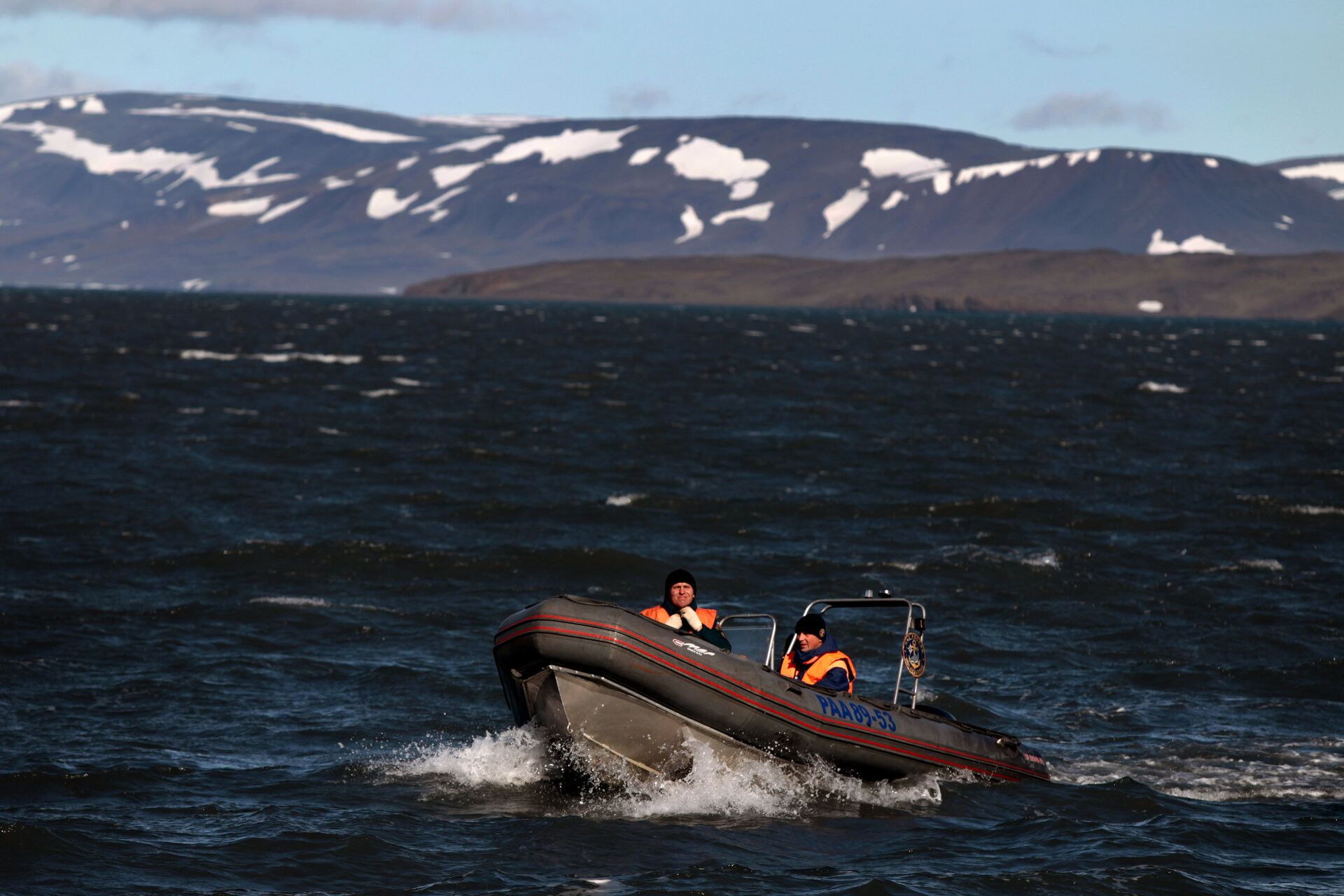
Specialists from the Emergencies Ministry began a survey of underwater radioactive objects buried over the years in the Kara Sea near the Novaya Zemlya archipelago. This will be the longest high-latitude expedition along the Northern Sea Route to happen in 20 years. The expedition is divided into nine stages and will last 74 days – until October 3.
Specialists from the Emergencies Ministry began a survey of underwater radioactive objects buried over the years in the Kara Sea near the Novaya Zemlya archipelago. This will be the longest high-latitude expedition along the Northern Sea Route to happen in 20 years. The expedition is divided into nine stages and will last 74 days – until October 3.
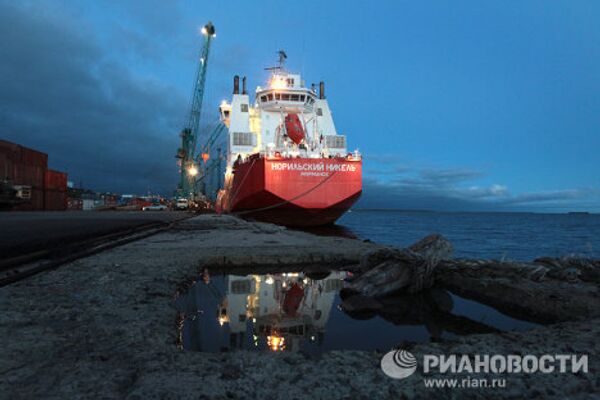
Photo: A view of the port city of Dudinka in the Arkhangelsk Region.
Photo: A view of the port city of Dudinka in the Arkhangelsk Region.
The rescue tug Neotrazimy will follow the Northern Sea Route from Arkhangelsk with stops in the Gulf of Tsivolko in the Kara Sea and the ports of Dudinka, Dixon, Tiksi, Pevek, Provideniya, Anadyr, and then it will return to Arkhangelsk.
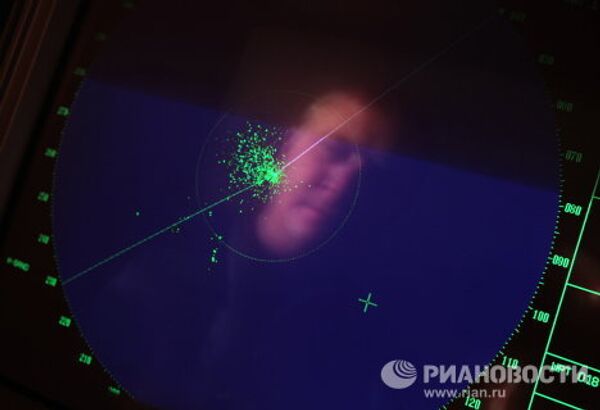
Photo: Part of the control panel of the Emergencies Ministry’s rescue tug, the Neotrazimy.
Photo: Part of the control panel of the Emergencies Ministry’s rescue tug, the Neotrazimy.
The expedition’s operations will be performed using a remote controlled underwater vehicle, side-scan sonar, a magnetometer, as well as self-contained devices for monitoring the operational status of potentially dangerous underwater objects.
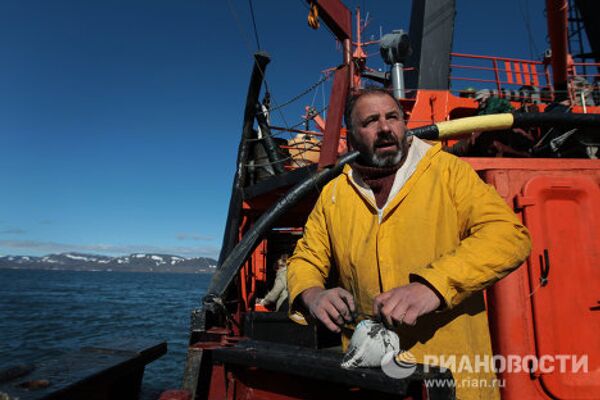
Photo: Team leader of the geo-ecological expedition Andrei Grigoriev on board the rescue tug Neotrazimy.
Photo: Team leader of the geo-ecological expedition Andrei Grigoriev on board the rescue tug Neotrazimy.
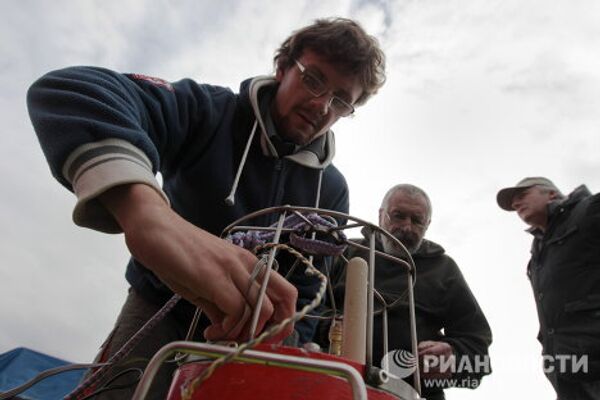
The expedition also plans to inspect the OK-150 nuclear reactor of the icebreaker Lenin, which is located at a depth of 50 meters.
Photo: Engineer Mikhail Dmitriev (foreground) during the collection of soil samples from the underwater burial sites of objects containing solid radioactive waste.
Photo: Engineer Mikhail Dmitriev (foreground) during the collection of soil samples from the underwater burial sites of objects containing solid radioactive waste.
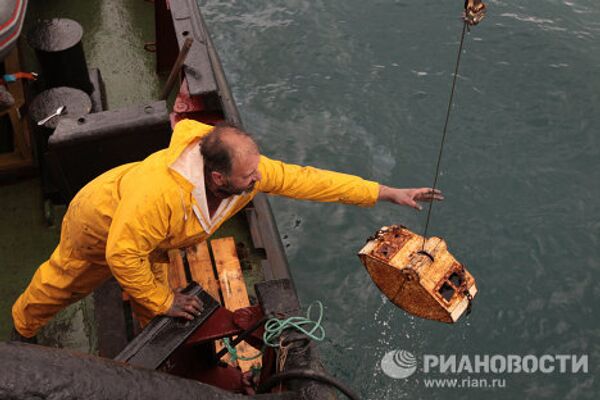
In addition to working in the Kara Sea, the expedition will have to evaluate the areas proposed by the authorities of constituent entities of the Russian Federation for the planned deployment of Emergencies Ministry Arctic search and rescue teams in Dudinka, Tiksi, Anadyr and Pevek. And the expedition must determine the actual status of navigational, hydrographic, rescue and logistical support for the Arctic areas of the Northern Sea Route.
Photo: Emergencies Ministry specialists taking soil samples from on board the rescue tug Neotrazimy.
Photo: Emergencies Ministry specialists taking soil samples from on board the rescue tug Neotrazimy.
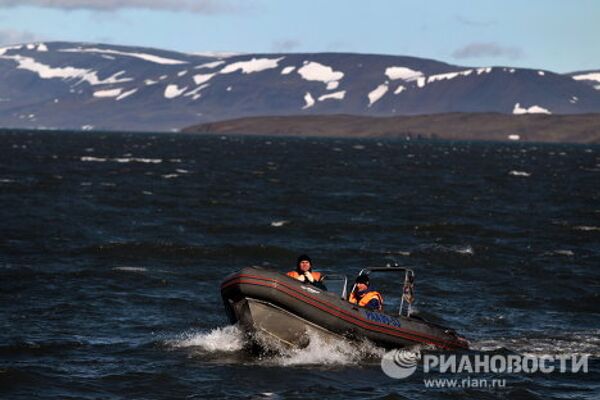
In addition, the port waters of Dudinka and Tiksi will host exercises demonstrating search and rescue missions of people in distress and fighting fires on seagoing vessels and on oil spills.
Photo: The Gulf of Tsivolko in the Novaya Zemlya archipelago.
Photo: The Gulf of Tsivolko in the Novaya Zemlya archipelago.
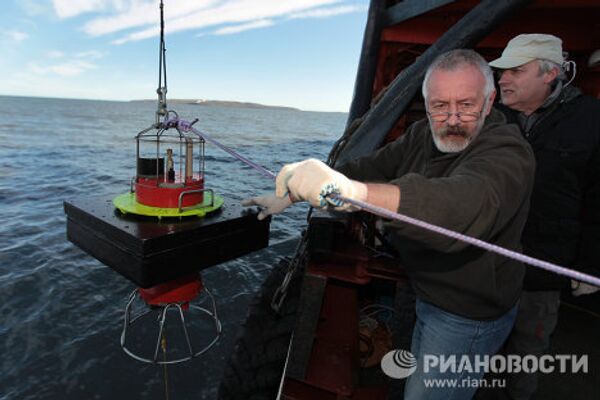
Emergencies Ministry specialists installing a self-contained device for real-time monitoring of submerged objects.
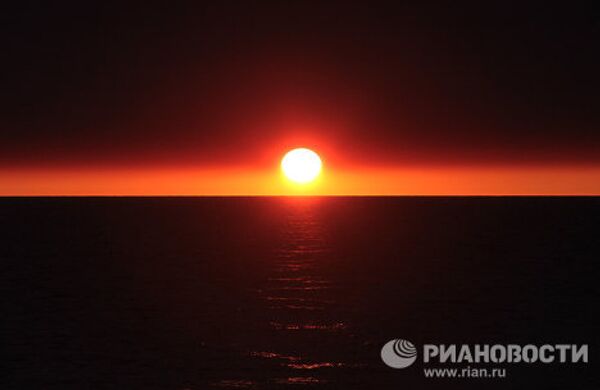
View of the sunset near Dixon Island from on board the Emergencies Ministry’s rescue tug Neotrazimy.