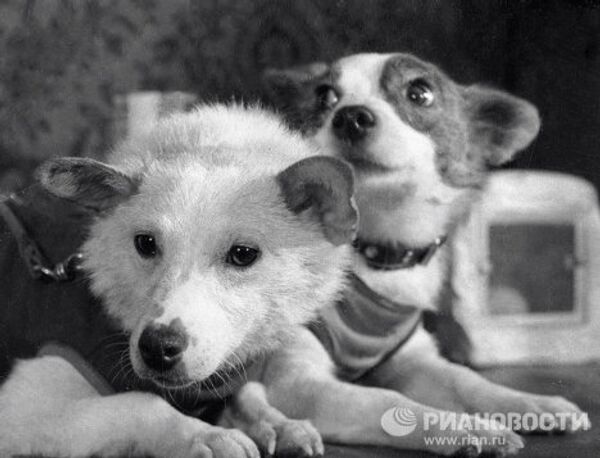
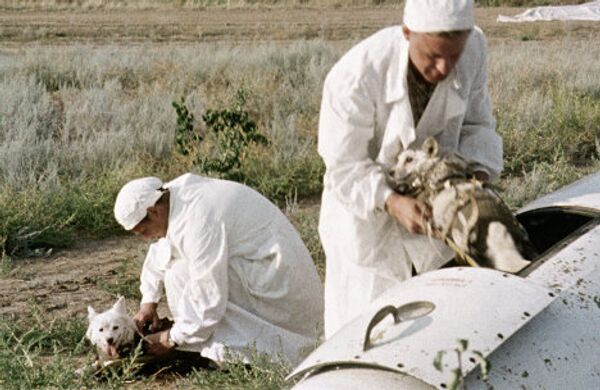
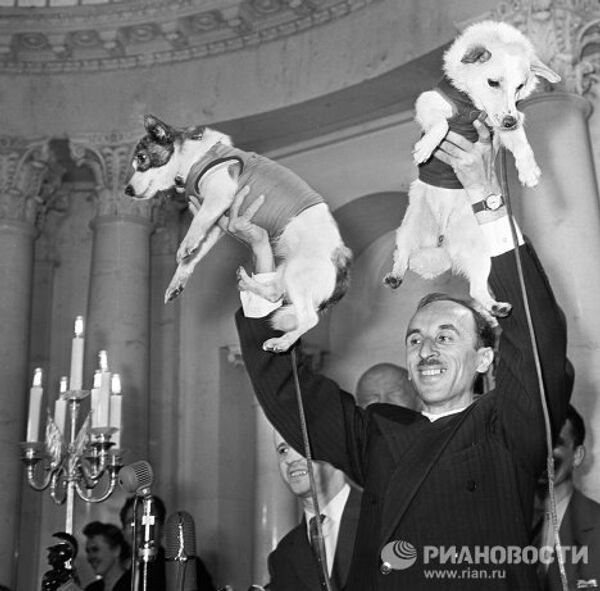
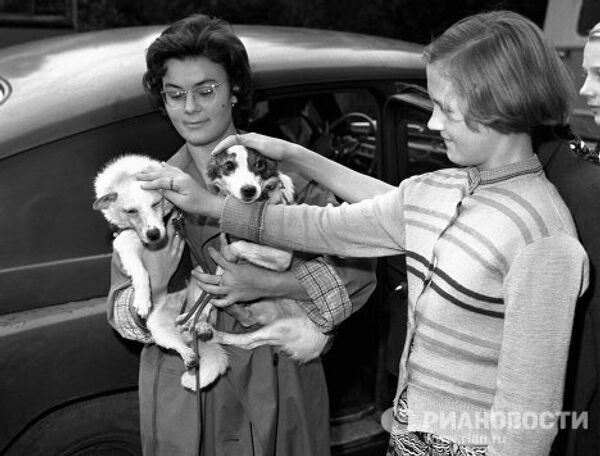
On August 19, 1960, a Soviet spacecraft carrying two dogs named Belka (Little Squirrel) and Strelka (Little Arrow) was successfully launched into orbit. 19.08.2010, Sputnik International
On August 19, 1960, a Soviet spacecraft carrying two dogs named Belka (Little Squirrel) and Strelka (Little Arrow) was successfully launched into orbit.
On August 19, 1960, a Soviet spacecraft carrying two dogs named Belka (Little Squirrel) and Strelka (Little Arrow) was successfully launched into orbit.
On August 19, 1960, a Soviet spacecraft carrying two dogs named Belka (Little Squirrel) and Strelka (Little Arrow) was successfully launched into orbit.
On August 20, 1960, the spacecraft with animals onboard successfully landed at the destined area and for the first time in history living creatures performed a space flight and returned to Earth.
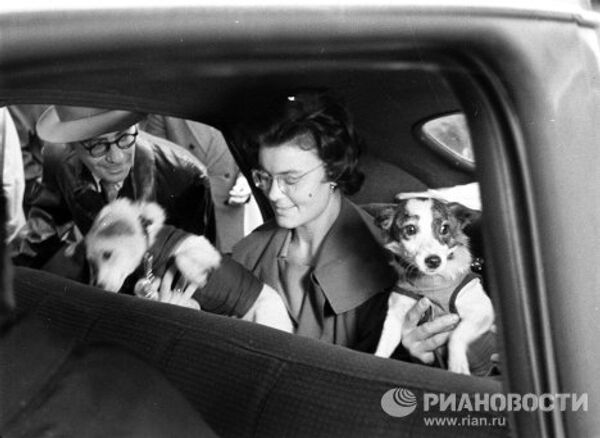
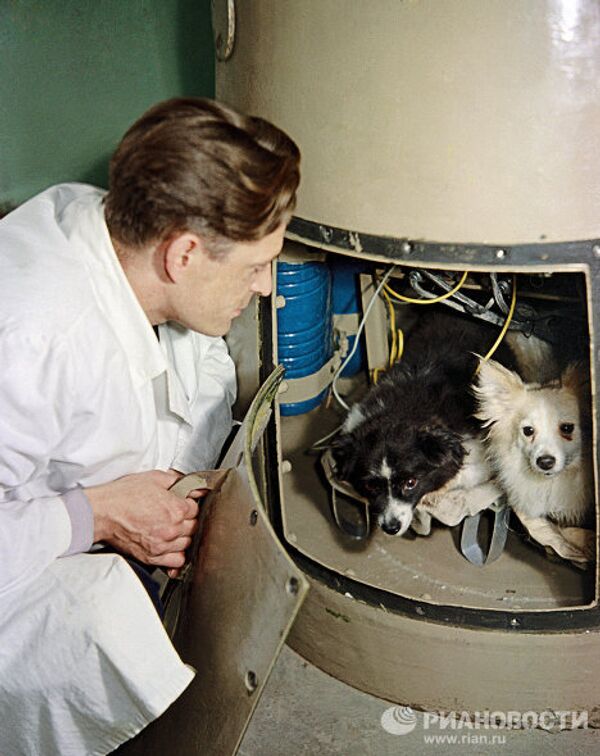
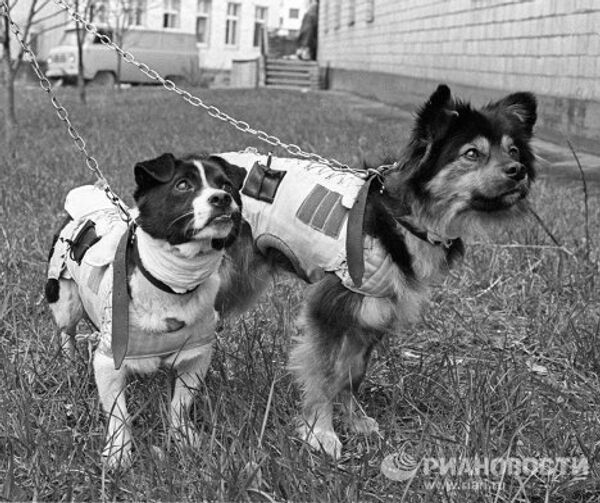
This was the first and the only space flight of these dogs. They stayed in a scientific research institute and lived a rather long life. Strelka became a mother to many puppies, one of which, Pushok, was given to the wife of the U.S. president Jacqueline Kennedy. Photo: Belka and Strelka. A shot from a Soviet film Earth-Space- Earth.
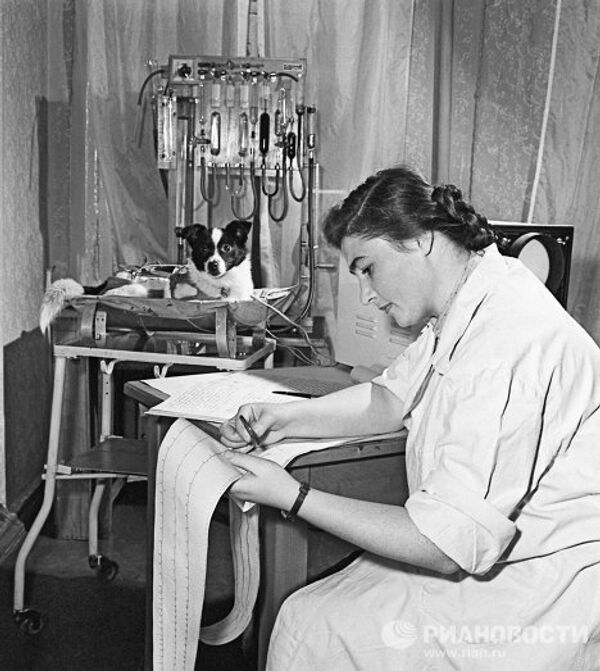
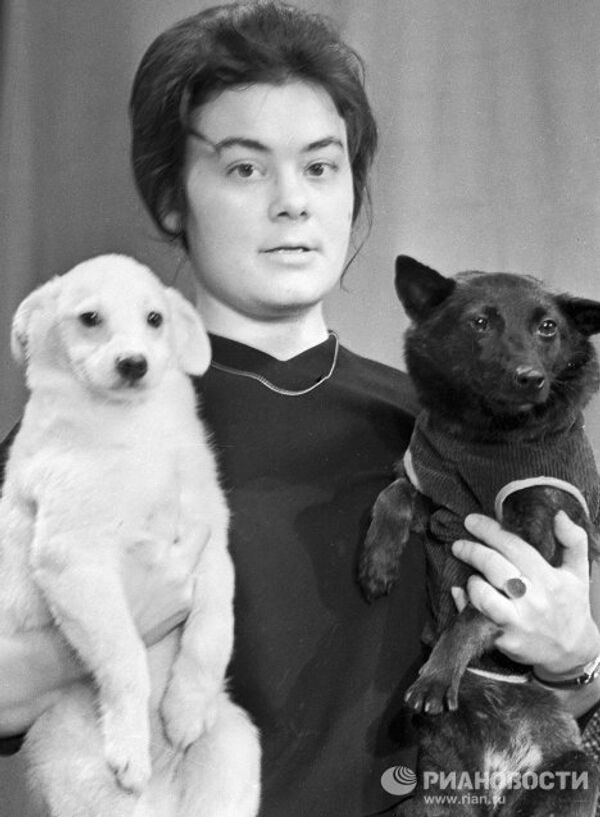
On November 3, 1957, at 5.30 a.m. Moscow time Sputnik 2 spacecraft was launched into Earth’s orbit carrying a dog named Laika (Barker). Laika was about two years old and weighted around 6 kilograms. Photo: physiologist Ada Kotovskaya prepares Laika for the space flight.
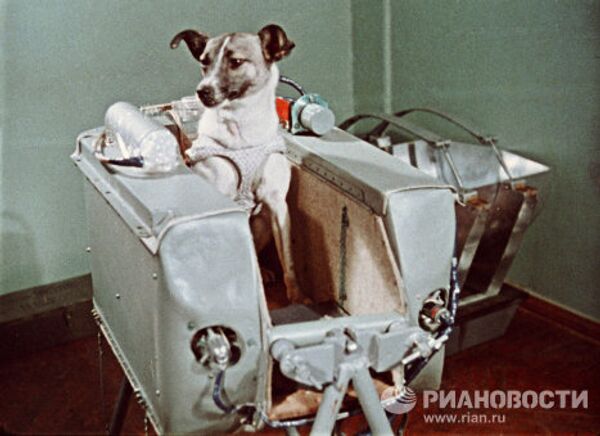
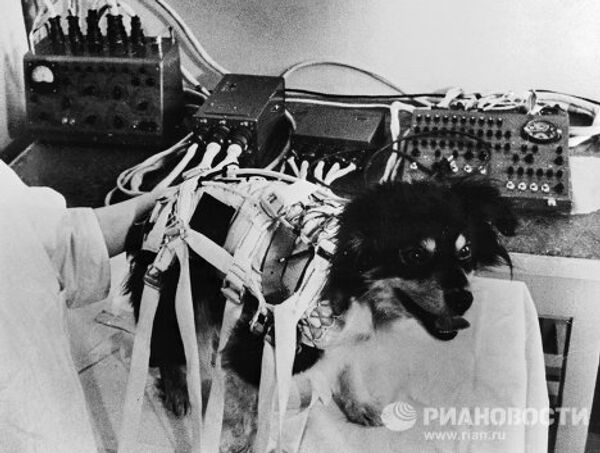
Laika’s return back to Earth was not planned. As many other space animals, the dog died during the flight, some 5-7 hours from the launch she died of stress and heatstroke, although it was expected that she would live for around a week. For 7 days the Soviet Union reported on the health of the dog, who had already died. Only a week after it was announced that Laika was allegedly put to sleep. Photo: Laika before the spaceflight.
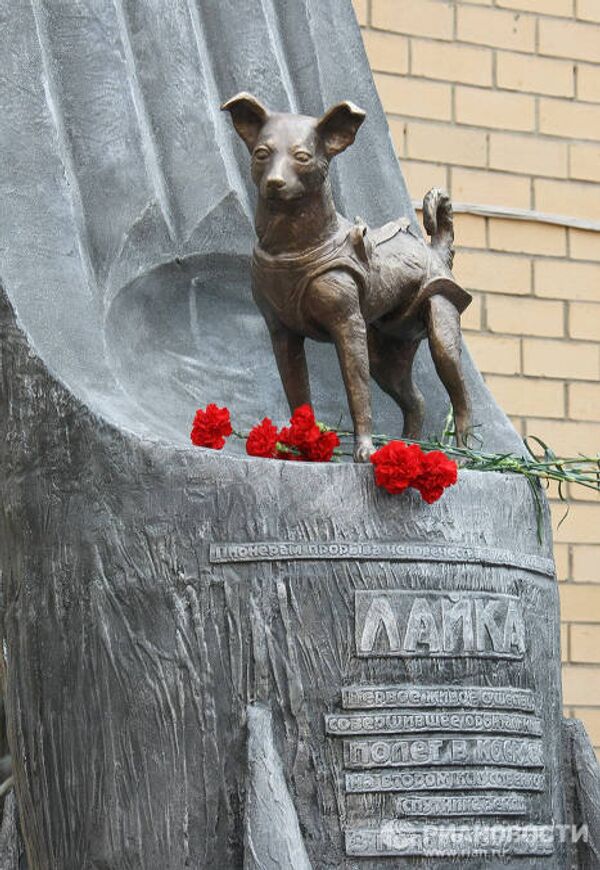
On April 11, 2008, a monument to Laika (sculptor Pavel Medvedev) was unveiled in Moscow at Petrovsko-Razumovskaya Alley on the territory of the Institute of Military Medicine, where the space experiment had been prepared. The two-meter-long monument represents a space rocket with a palm of a hand atop where Laika stands proudly.
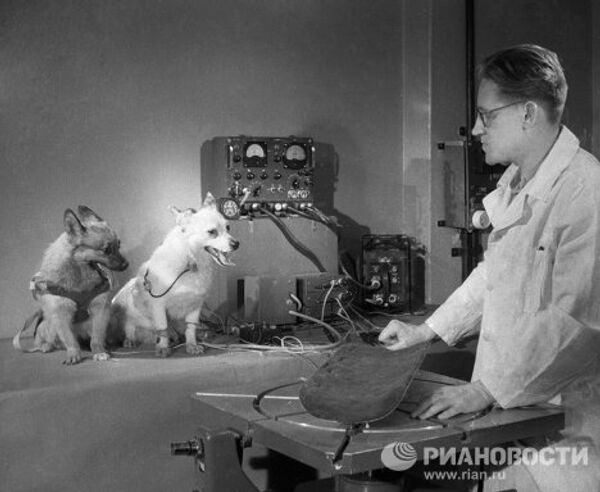
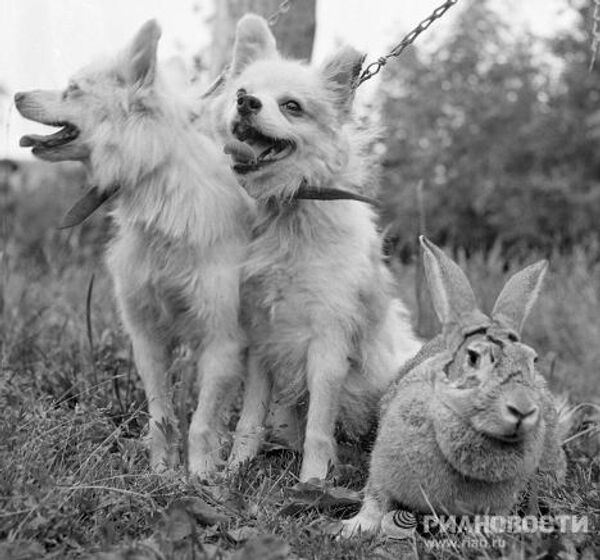
In 1959, dogs Damka (crowned piece in checkers) and Kozyavka (Little Gnat) reached the height of 210 kilometers and returned to Earth. During the landing the animals were calm and did not rush from the spacecraft. After the flight, the dogs behaved as usual. They reacted to their nicknames, changes in environment and ate with enthusiasm. Damka flew to space four times.
Veterok (Little Wind) and Ugolyok (Ember) were launched on board a bio sputnik Cosmos 110 on February 22, 1966. The space flight lasted 23 days. Only in June 1973 this record was surpassed by the crew of the U.S. orbit station Skylab. For now this remains the longest space flight by dogs.
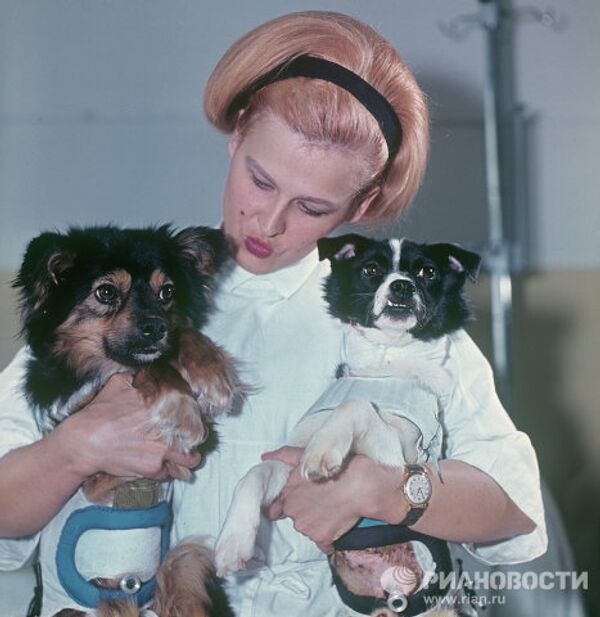
The sputnik with Veterok and Ugolyok landed on March 17 and at 7 p.m. the dogs were taken to the Institute of Medical and Biology Problems of the USSR Health Ministry, where they had been prepared for the flight. When the dogs were stripped of their kapron-coated costumes, it was discovered the animals had lost their fur, had become bald and had bad skin. The dogs were unable to stand on their legs and were very weak, they suffered from heart palpitations and were thirsty. Some time later the dogs were running around the institute like any other dog. They gave birth to healthy puppies and lived a long life.
The flights were made at a height of 100-110 kilometers (15 launches), 212 kilometers (11 launches) and 450-473 kilometers (3 launches). A total of 36 dogs were sent into the stratosphere, 15 of them died.
Newsfeed
0
Access to the chat has been blocked for violating the rules .
You will be able to participate again through:∞.
If you do not agree with the blocking, please use the feedback form
The discussion is closed. You can participate in the discussion within 24 hours after the publication of the article.