- Sputnik International
Multimedia
When a picture is worth a thousand words. See what's happening in the world from a more visual perspective with Sputnik's photo galleries, infographics and other multimedia content.

Kizhi Natural Museum-Reserve

Subscribe
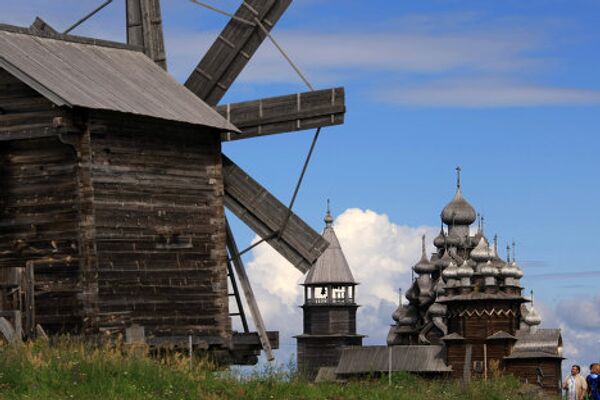
The Kizhi Natural Museum-Reserve is one of Russia’s largest open-air museums. This is a unique historical, cultural and natural complex and valuable cultural heritage site of Russian peoples. RIA Novosti presents a photo tour of the Kizhi Natural Museum-Reserve.

The Kizhi Natural Museum-Reserve is one of Russia’s largest open-air museums. This is a unique historical, cultural and natural complex and valuable cultural heritage site of Russian peoples. RIA Novosti presents a photo tour of the Kizhi Natural Museum-Reserve.

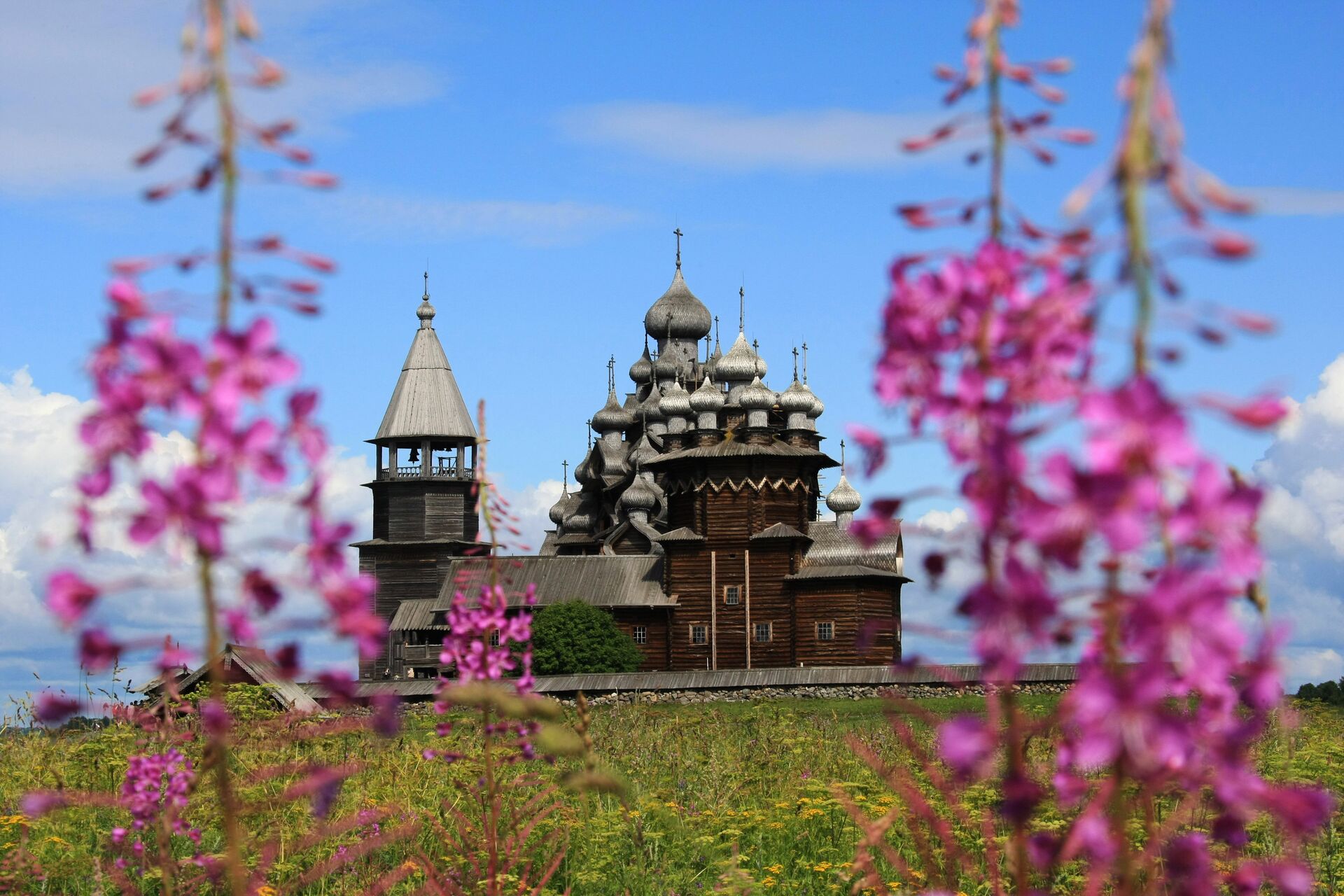
© RIA Novosti . Mikhail Fomichev / Go to the mediabankThe unique wooden buildings of the Kizhi Pogost, an enclosure that includes two 18th-century churches, is a UNESCO World Heritage-listed site.
Kizhi Natural Museum-Reserve - Sputnik International
1/12
The unique wooden buildings of the Kizhi Pogost, an enclosure that includes two 18th-century churches, is a UNESCO World Heritage-listed site.
© RIA Novosti . Mikhail Fomichev / Go to the mediabankThe Kizhi site is famous not only in the Republic of Karelia in northern European Russia but also all over the world. It is located on an island of Lake Onega.
Kizhi Natural Museum-Reserve - Sputnik International
2/12
The Kizhi site is famous not only in the Republic of Karelia in northern European Russia but also all over the world. It is located on an island of Lake Onega.
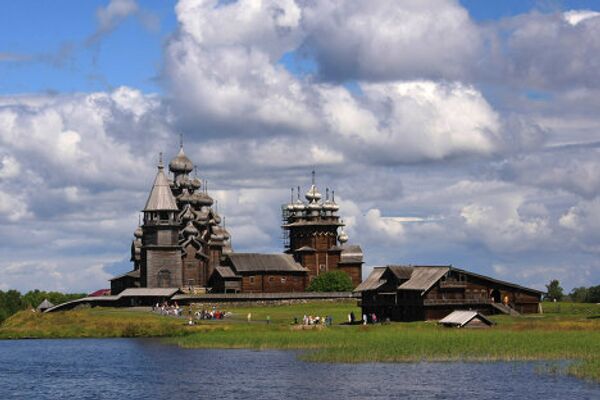
© RIA Novosti . Mikhail Fomichev / Go to the mediabankThe architectural ensemble includes two churches, which is traditional for pogosts in the north (pogost is a settlement with a church and a graveyard). The Church of the Transfiguration (summer) was built in 1714 and the Church of the Intercession (winter) was built in 1694 and rebuilt in 1764. Photo: Church of the Intercession (left) and Transfiguration Church (right) in Kizhi.
Kizhi Natural Museum-Reserve - Sputnik International
3/12
The architectural ensemble includes two churches, which is traditional for pogosts in the north (pogost is a settlement with a church and a graveyard). The Church of the Transfiguration (summer) was built in 1714 and the Church of the Intercession (winter) was built in 1694 and rebuilt in 1764. Photo: Church of the Intercession (left) and Transfiguration Church (right) in Kizhi.
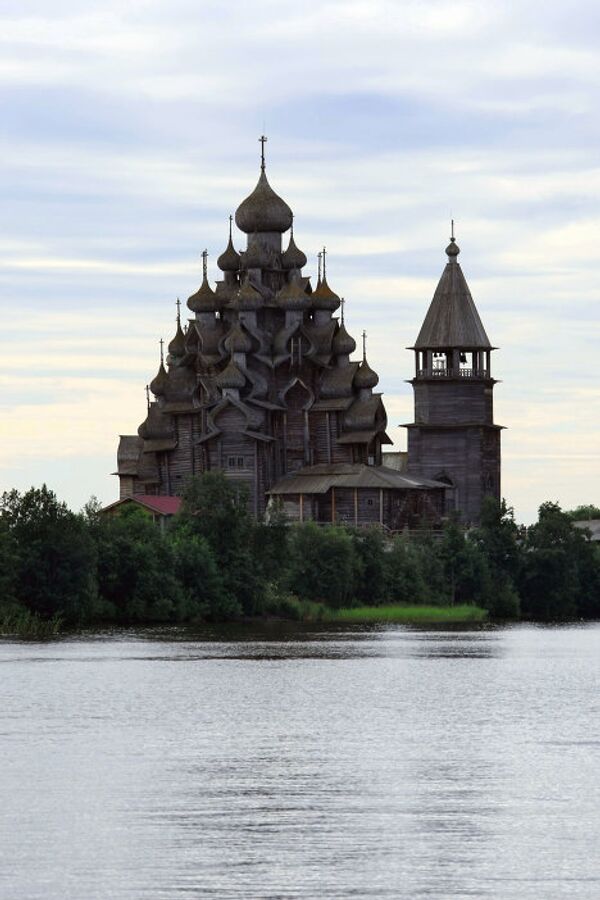
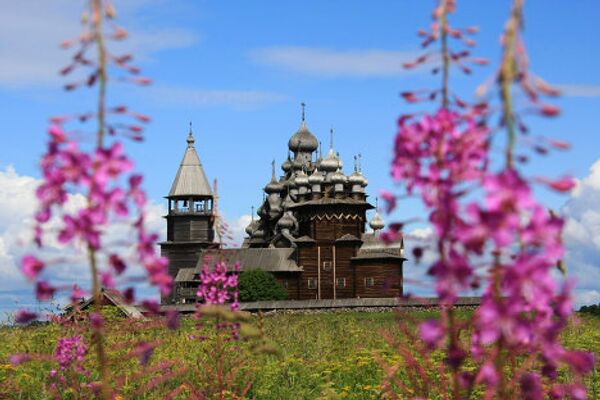
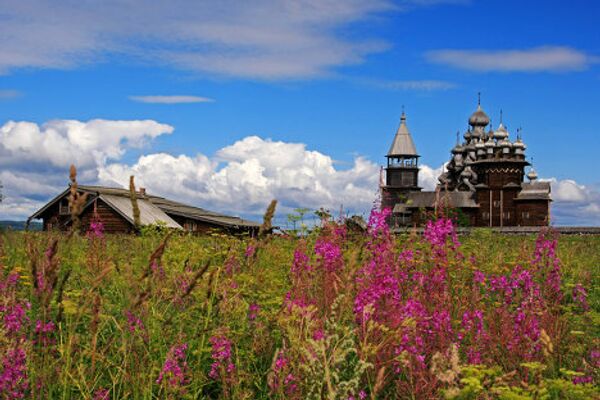
© RIA Novosti . Mikhail Fomichev / Go to the mediabankThe complex also includes a bell-tower (built in 1862 and rebuilt in 1874)… Photo: view from Lake Onega to the Church of the Transfiguration (left) and a bell-tower of the Kizhi Pogost (right).
Kizhi Natural Museum-Reserve - Sputnik International
4/12
The complex also includes a bell-tower (built in 1862 and rebuilt in 1874)… Photo: view from Lake Onega to the Church of the Transfiguration (left) and a bell-tower of the Kizhi Pogost (right).
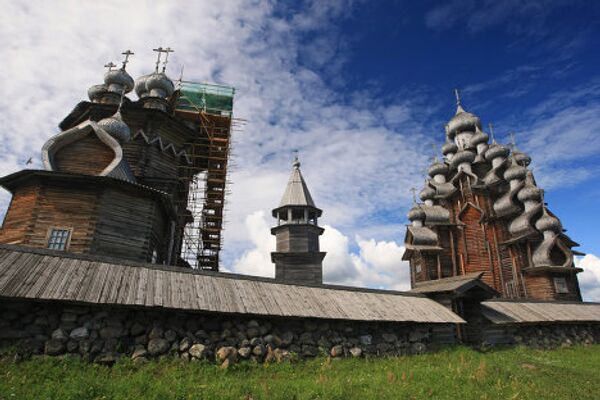
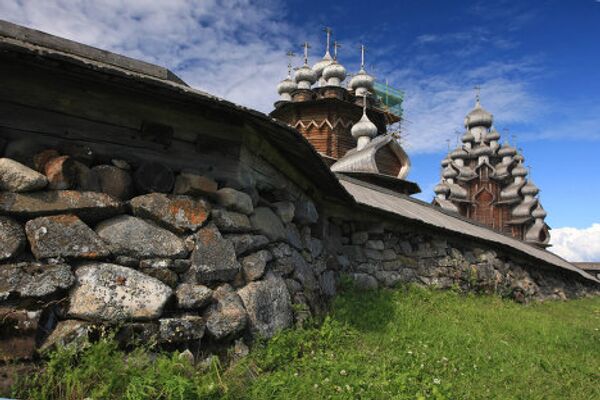
© RIA Novosti . Mikhail Fomichev / Go to the mediabank…and a fence (a stone fence was built in 1800 and the wooden fence was rebuilt in 1959).
Kizhi Natural Museum-Reserve - Sputnik International
5/12
…and a fence (a stone fence was built in 1800 and the wooden fence was rebuilt in 1959).
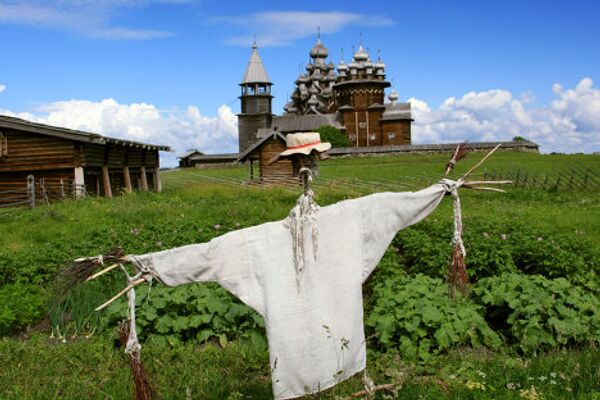
© RIA Novosti . Mikhail Fomichev / Go to the mediabankIn northern Russia there are many wooden complexes which are the centers of major administrative districts. The Kizhi Pogost with its multi-domed churches is one of the most beautiful of them.
Kizhi Natural Museum-Reserve - Sputnik International
6/12
In northern Russia there are many wooden complexes which are the centers of major administrative districts. The Kizhi Pogost with its multi-domed churches is one of the most beautiful of them.
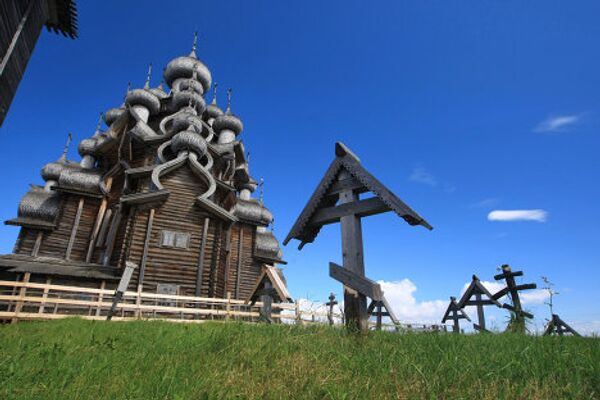
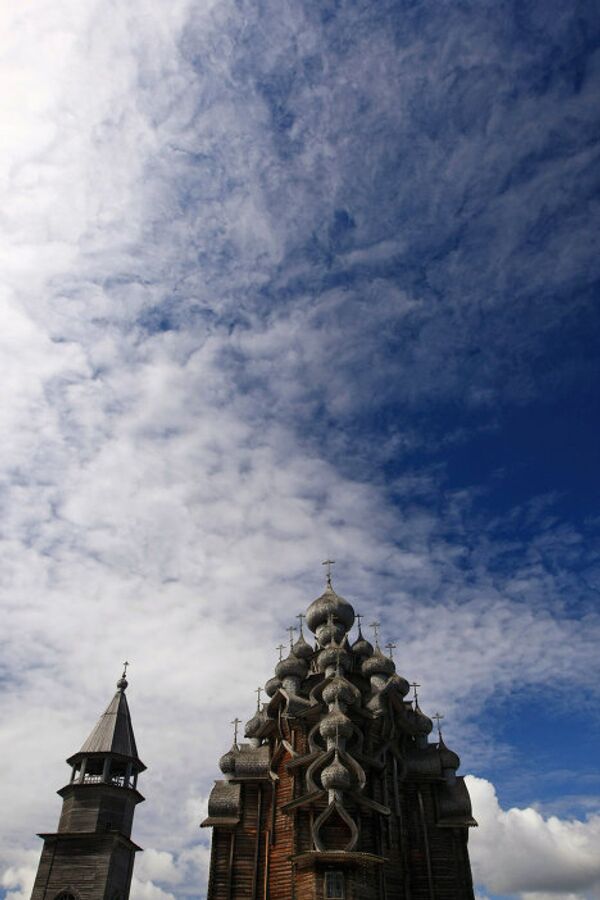
© RIA Novosti . Mikhail Fomichev / Go to the mediabankThe Church of the Transfiguration represents the pinnacle of wooden construction in Russia. It exemplifies the experience and best achievements of the centuries-old carpentry skills.
Kizhi Natural Museum-Reserve - Sputnik International
7/12
The Church of the Transfiguration represents the pinnacle of wooden construction in Russia. It exemplifies the experience and best achievements of the centuries-old carpentry skills.
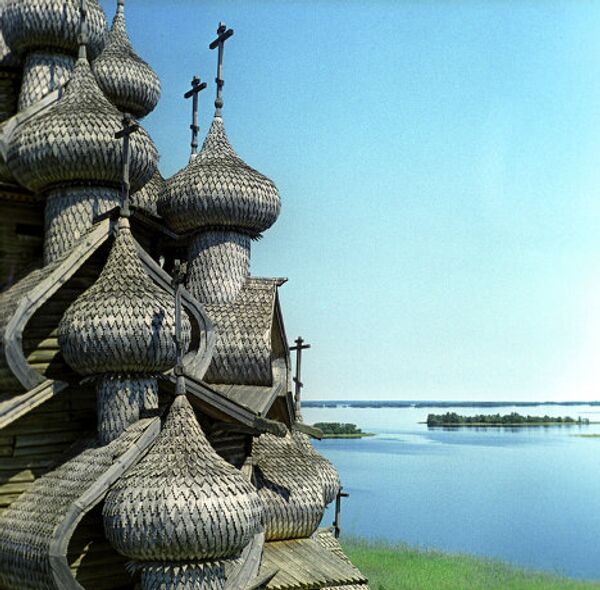
© RIA Novosti . G. Shierbakov / Go to the mediabankThe main instrument of the carpenters was an ax. The traces of axes are well seen on the face ends of crowns and inside the walls. All the sophisticated constructions are also made by an ax, with no nails used.
Kizhi Natural Museum-Reserve - Sputnik International
8/12
The main instrument of the carpenters was an ax. The traces of axes are well seen on the face ends of crowns and inside the walls. All the sophisticated constructions are also made by an ax, with no nails used.
© RIA Novosti . Ivan Denisenko / Go to the mediabankThe modern look of the ensemble evolved slowly - its construction spanned 265 years from 1694 to 1959.
Kizhi Natural Museum-Reserve - Sputnik International
9/12
The modern look of the ensemble evolved slowly - its construction spanned 265 years from 1694 to 1959.
© RIA Novosti . Mikhail Fomichev / Go to the mediabankEach century made a contribution in its construction and only when the wooden fence was rebuilt did it obtain its modern look.
Kizhi Natural Museum-Reserve - Sputnik International
10/12
Each century made a contribution in its construction and only when the wooden fence was rebuilt did it obtain its modern look.
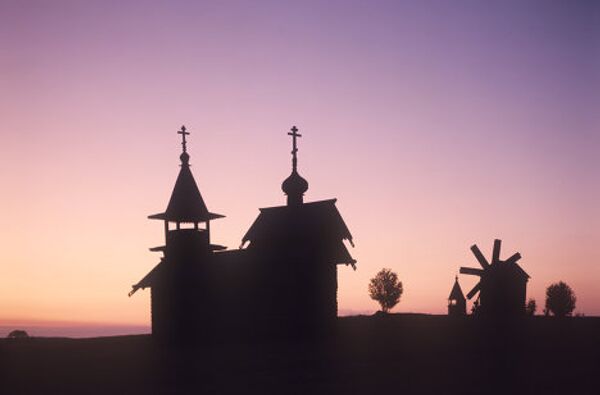
© RIA Novosti . Mikhail Fomichev / Go to the mediabankThe Kizhi Natural Museum-Reserve on Lake Onega in Karelia.
Kizhi Natural Museum-Reserve - Sputnik International
11/12
The Kizhi Natural Museum-Reserve on Lake Onega in Karelia.
© RIA Novosti . Mikhail Fomichev / Go to the mediabankThe Kizhi Natural Museum-Reserve on Lake Onega in Karelia.
Kizhi Natural Museum-Reserve - Sputnik International
12/12
The Kizhi Natural Museum-Reserve on Lake Onega in Karelia.
Newsfeed
0
To participate in the discussion
log in or register
loader
Chats
Заголовок открываемого материала