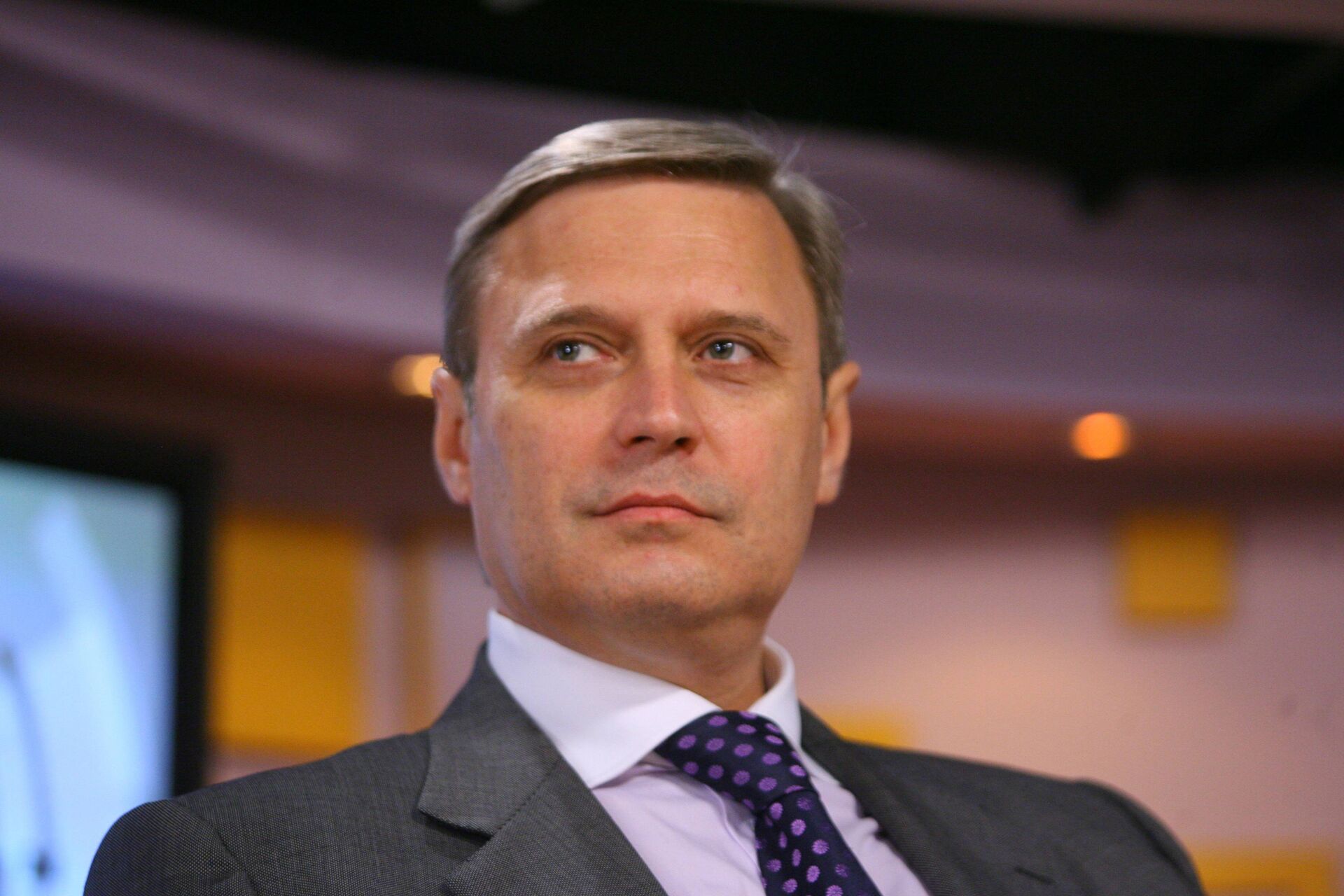
Russian opposition leaders have announced their intention to form yet another coalition. Four prominent political figures who are now affiliated with unofficial opposition parties and movements have promised to join: former prime minister Mikhail Kasyanov, former deputy prime minister and former governor of the Nizhny Novgorod Region Boris Nemtsov, former leader of the Our House Russia party in the State Duma Vladimir Ryzhkov and former leader of the youth wing of the Yabloko party Ilya Yashin. The coalition may also be joined by a former deputy chairman of the Bank of Russia, the businessman Sergei Alexashenko,
The primary aim of the coalition is to win seats in the 2011 parliamentary elections, after which its leaders plan to nominate a candidate to run for president in 2012.
But these kinds of coalitions are usually only politically significant when they are banned, persecuted or barred from elections. This allows them to portray themselves as a victim of the regime. They attract public attention, especially in the foreign press, and they talk about all the things they would do if only they were in power.
However, these opposition coalitions have no chance of electoral success, and not because of persecution or suppression. There are several objective reasons. First of all, they are fragile and unstable. One can recall at least four attempts to forge such coalitions under different names in the past ten years: Committee 2008, The Other Russia, National Assembly and Solidarity. They generally collapsed before the election campaign even started. What makes them so unstable is the constant infighting caused by irresolvable conflicts, particularly the dispute over who will lead the coalition. Most of the leaders of the would-be coalition head their own political organizations and want to remain in a position of power. In addition, some of them held high-ranking post in the government in the past and are unwilling to yield to those who have not. The outsiders, for their part, believe that they should head the coalition to inject new blood into the opposition movement. Prospective leaders often say that they have "no ambitions" and do not "seek power," and appoint each other co-chairmen of various groups. But conflicts between them remain, which leads to the inevitable collapse of the coalition. Collective leadership can also complicate the campaigning process. As they say, 'too many cooks spoil the broth'.
Even if this fifth coalition survives till the next election, it will have to deal with one more problem - the absence of a realistic political platform. The only thing they know for sure is who needs to be voted out, and the only thing they share in common is the motto "Down with ______!" and a call for fair elections. The longer the government refuses to register this coalition and bar it from standing in elections, the longer it will survive. It can seem at times that by barring unofficial opposition movements from running, the government actually saves them from a crushing defeat.
This coalition proves the famous thesis of Karl Marx: "History repeats itself, first as tragedy, then as farce." In the late 1930s, the Soviet government made up a bizarre term, 'the right-left bloc', only to execute many Soviet people accused of being affiliated with this odd conglomerate. At the turn of the 20th century, the right-left bloc became a reality.
In post-Soviet Russia, several alliances formed by diverse political forces have been driven purely by a desire to defy the government. One of the recent examples is The Other Russia, led by respectful liberal Mikhail Kasyanov and reckless radical and communist Viktor Anpilov. Even after such unnatural blocs collapsed like a house of cards, the strange ideology of the right-left bloc found its way into the political platforms of various unofficial parties and movements or temporary alliances. These platforms usually rest upon two mutually exclusive ideologies, liberalism and socialism. They call for free markets and minimal government control, while promising to raise pensions, salaries and social benefits for government-paid employees. The same goes for this coalition, whose platform has the catchy title 300 Steps to Freedom.
Strictly speaking, very few election platforms can be translated into reality. Every politician makes promises, but few are trusted and few keep their promises. Kasyanov, Nemtsov and others have already served in government, and people remember what policies they pursued while in office. They are unlikely to believe that these former government officials have changed. At best, the new opposition coalition will survive till the next elections; they will be allowed to run, and they will lose.
Nikolai Troitsky, RIA Novosti political commentator
The opinions expressed in this article are the author's and do not necessarily represent those of RIA Novosti.