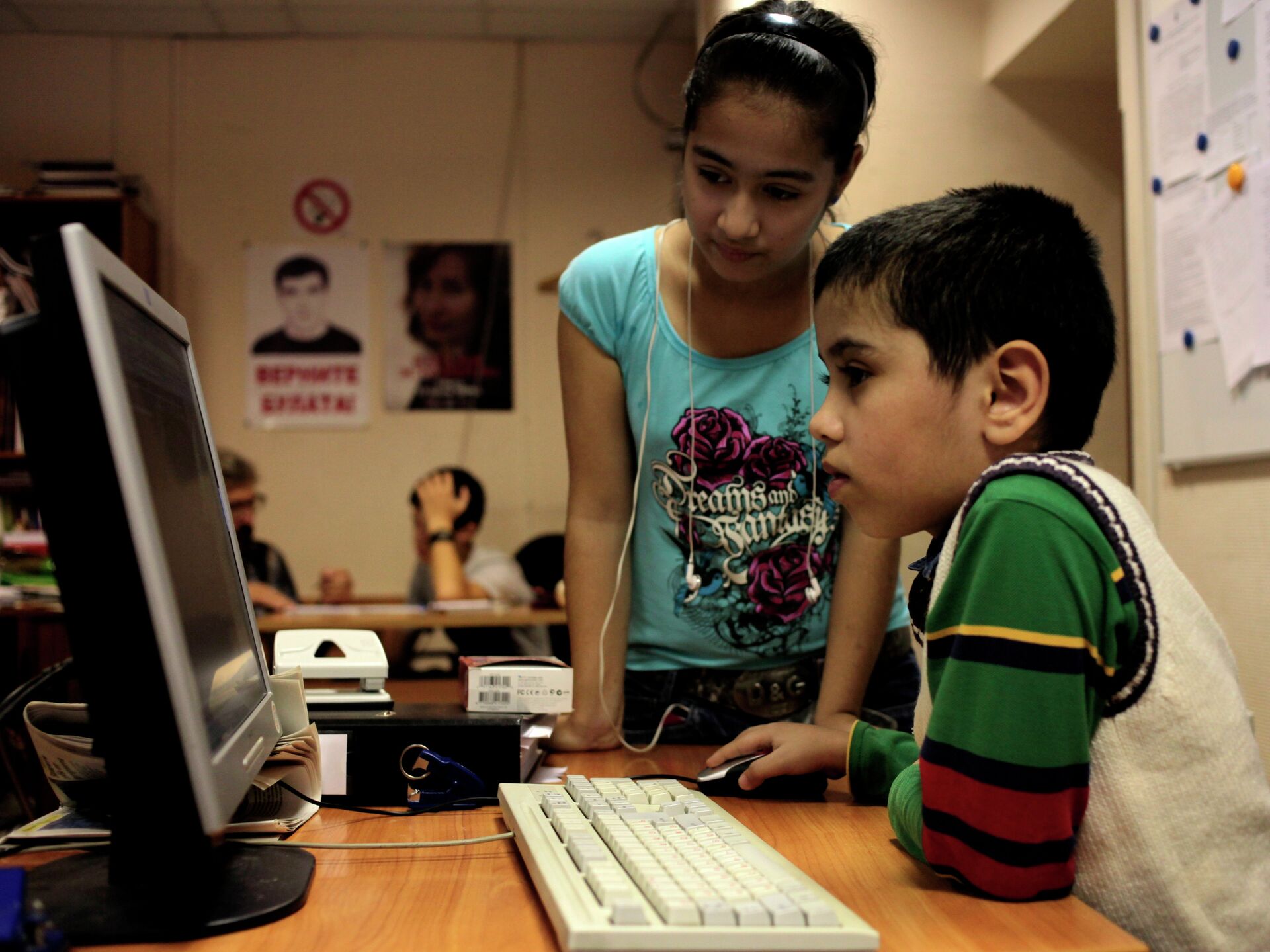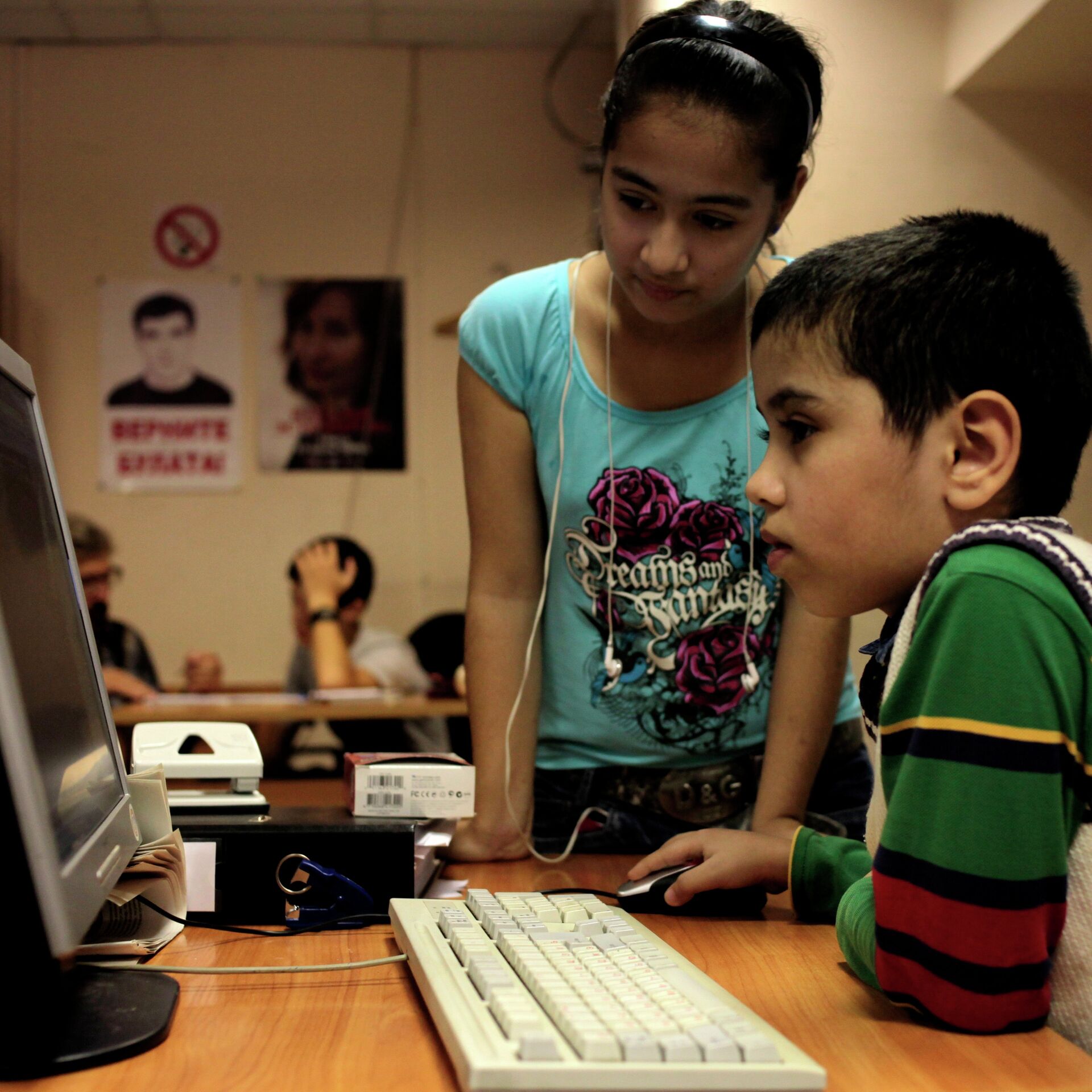
Down one of Moscow’s many side streets, tucked away from the hustle and bustle of the metropolis, a young Russian businesswoman runs through a list of English irregular verbs with a Chechen teenager.
“My friends and family say I’m crazy to give up part of my weekend to work for nothing,” says Natalia Krylova, 25, a volunteer English teacher at the Center for the Adaption and Education of Refugee Children.
The center, which is part of the Civil Assistance Movement, an NGO that supports Moscow’s growing refugee population, has up to 70 volunteers at a time. Most, like Krylova, are well-educated Russians who come to the school after work to pass on their skills.
“It’s different from my normal job; I don’t get paid anything, but to know that I’m doing something useful is more important,” she says.
While there was no shortage of “volunteers” in the Soviet Union, where state employees were often obliged to give up their days off for good causes, this tradition has largely died out in modern Russia.
A 2008 study by the Moscow Higher School of Economics revealed that only 3 percent of Russians are involved in organized volunteer work, compared with around 26 percent in the United States.
But Galina Bodrenkova, president of the Russian Volunteer Development Center, says that many people who would like to volunteer simply do not know how to go about it.
Indeed, Russian opinion polls suggest that as many as 40-53 percent of Russians are ready to take part in organized volunteer work. Even if only half of this number lived up to their word, the contribution to the Russian economy and to society as a whole would be enormous.
In 2000, the center estimated that if just 10 percent of the population engaged in volunteer work for three to four hours a week, the annual contribution to Russia’s social and economic development would be worth more than 18 billion rubles ($591 million).
This summer’s wildfires in central Russia encapsulated perfectly the gap between this untapped willingness to help out and the reality.
The disaster, which killed over 50 people and left thousands homeless, saw some 4,000 people give up their time to assist their endangered compatriots, despite there being no organized volunteer relief effort.
Alexander Khoroshilov, 35, a Moscow businessman who risked his life by extinguishing fires in one of the worst affected areas, says many more people wanted to help but did not know how.
“It was complete chaos. There wasn’t even enough protective equipment and supplies for the firefighters, let alone the volunteers,” Khoroshilov says. “Lots of people came to help, but there was no one to organize them and many didn’t have a clue what to do.”
After the wildfire crisis, the Volunteer Development Center appealed to the Russian government to establish a database of volunteers who could be called up in future emergency situations.
The government, which has made the growth and spread of voluntary activity a priority of the long-term social and economic development plan until 2020, may now be forced into action.
The growth of corporate volunteer work in recent years gives an indication of how quickly the voluntary sector could develop in Russia, if it had the right infrastructure.
Yulia Yudina, who works to develop corporate volunteering through CAF Russia estimates that around 30 percent of all companies in the country organize volunteer projects for their staff.
“After the financial crisis, companies are trying to think of new ways to avoid making cutbacks on charity programs, which has led to a growing interest in corporate volunteering,” Yudina says. “Big companies are giving individuals access to information about how to volunteer, which is lacking in society in general.”
The Volunteer Development Center aims to create a network of volunteer centers across Russia, linking potential volunteers with organizations that need a helping hand.
“When the necessary conditions are put in place, we can expect a huge increase in the number of volunteers in Russia,” Bodrenkova says.
MOSCOW, October 7 (RIA Novosti, Natasha Doff)