By Thomas Balmforth, RussiaProfile.org special for RIA Novosti
The decision to allow Russian opposition activists to demonstrate legally in central Moscow marks a significant break with the practice of recent years and a key advance for civil society but also confirms the Kremlin's ultimate control of political life in the country, analysts and activists said Tuesday.
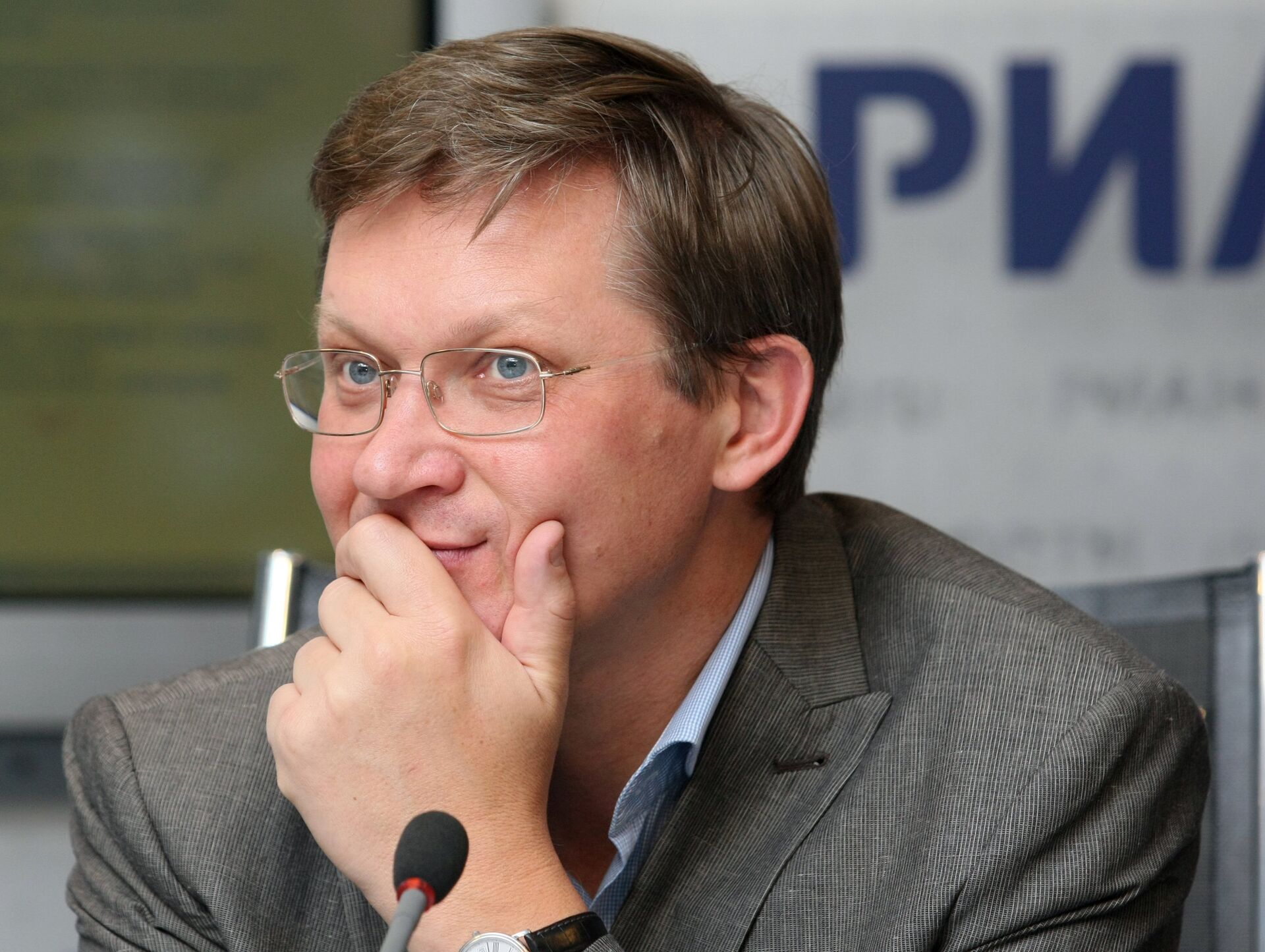
"This is a victory for Russian civil society," Vladimir Ryzhkov, a former independent member of parliament and outspoken opposition leader, told RIA Novosti on Tuesday, a day after the protest decision was announced.
Ryzhkov dismissed complaints from several opposition leaders that the approval from Moscow's new mayor, Sergei Sobyanin, did not go far enough because it allowed only 800 protestors and 200 journalists to gather on Triumphalnaya Square in central Moscow this Sunday.
"Confrontation between the authorities and activists on this issue has been continuing all year and Prime Minister Putin had said that the authorities would not compromise," Ryzhkov said, referring to Russia's powerful president-turned-prime-minister, Vladimir Putin. "Nonetheless, they have done and I am very encouraged by this."
Some experts said the decision to allow the protest was attributable in part to an effort by Sobyanin, a virtual unknown among most Russians until this month, to draw a sharp distinction between himself and his iron-fisted predecessor, Yuri Luzhkov, under whom rallies were invariably broken up violently and protestors detained. Luzhkov was sacked on September 28 by President Dmitry Medvedev.
"As long as the new mayor wants to look different to the old one, he will try to do the opposite of his predecessor's policies," said Sergei Mikheyev, vice-president of the Center for Political Technologies.
On Saturday, barely a week after Sobyanin was tapped by President Dmitry Medvedev for the top Moscow post, a rare anti-Putin rally led by opposition leader and chess champion Garry Kasparov in central Moscow attracted hundreds of people - some reports put the number at over 1,000 - and was neither broken up nor its participants detained, in stark contrast to similar rallies in recent years.
But most say that while something different has indeed happened in the past week it has less to do with the Luzhkov-Sobyanin shakeup than with continued Kremlin scripting of political life in Russia, even if allowing the opposition protest might suggest a timid - and probably temporary - easing of that control.
"Today Moscow City Hall officials, in a desire to keep their posts, are carrying out instructions coming from the Kremlin domes with surgical precision, no matter what these instructions are," said Alexei Mukhin, director of the Moscow-based think tank Center for Political Information.
"If they are told to sit up, they will sit up, if they are told to lie down, they will lie down," Mukhin said. Ryzhkov offered a similar explanation for the apparent shift.
Last week, key Kremlin ideologist Vladislav Surkov surprised activists when he said there was no reason why a small group of Muscovites - "say, 200" - should not be allowed to demonstrate in Moscow. Days later, City Hall approved precisely that number at the October 31 protest.
Various Kremlin opposition activists, grouped loosely under the slogan "Strategy 31," have since last year attempted to hold rallies in Moscow on the last day of every month with 31 days - a reference to Article 31 of the Russian Constitution which enshrines the right to freedom of assembly in the country's basic law.
Medvedev, Putin's hand-picked successor, is often regarded as the more liberal side of Russia's ruling tandem, an image burnished by everything from his agreement with President Barack Obama to "reset" strained US-Russian relations to his administration's focus on high technology and business investment.
Ryzhkov however linked the apparent shift of tactics on the opposition demonstration to mass protests currently taking place in several Western countries, albeit for different reasons - austerity measures and unpopular pension reforms.
"The rallies taking place in Europe - in France, in Spain and Great Britain - have played a role in the Kremlin's decision. Every day Russian citizens see hundreds of people peacefully walking down the streets without anyone breaking them up or arresting them. Against that background, it would look simply absurd to break up this protest on Sunday," he said.
If indeed the orders to allow, or not allow, opposition demonstrations are coming directly from the Kremlin, there is no assurance that today's apparent easing of restrictions will continue, analysts and activists said.
"If they think they've made a mistake, they'll simply clamp down again," said Andrei Dukhonin, a real estate broker and regular participant in opposition protests.