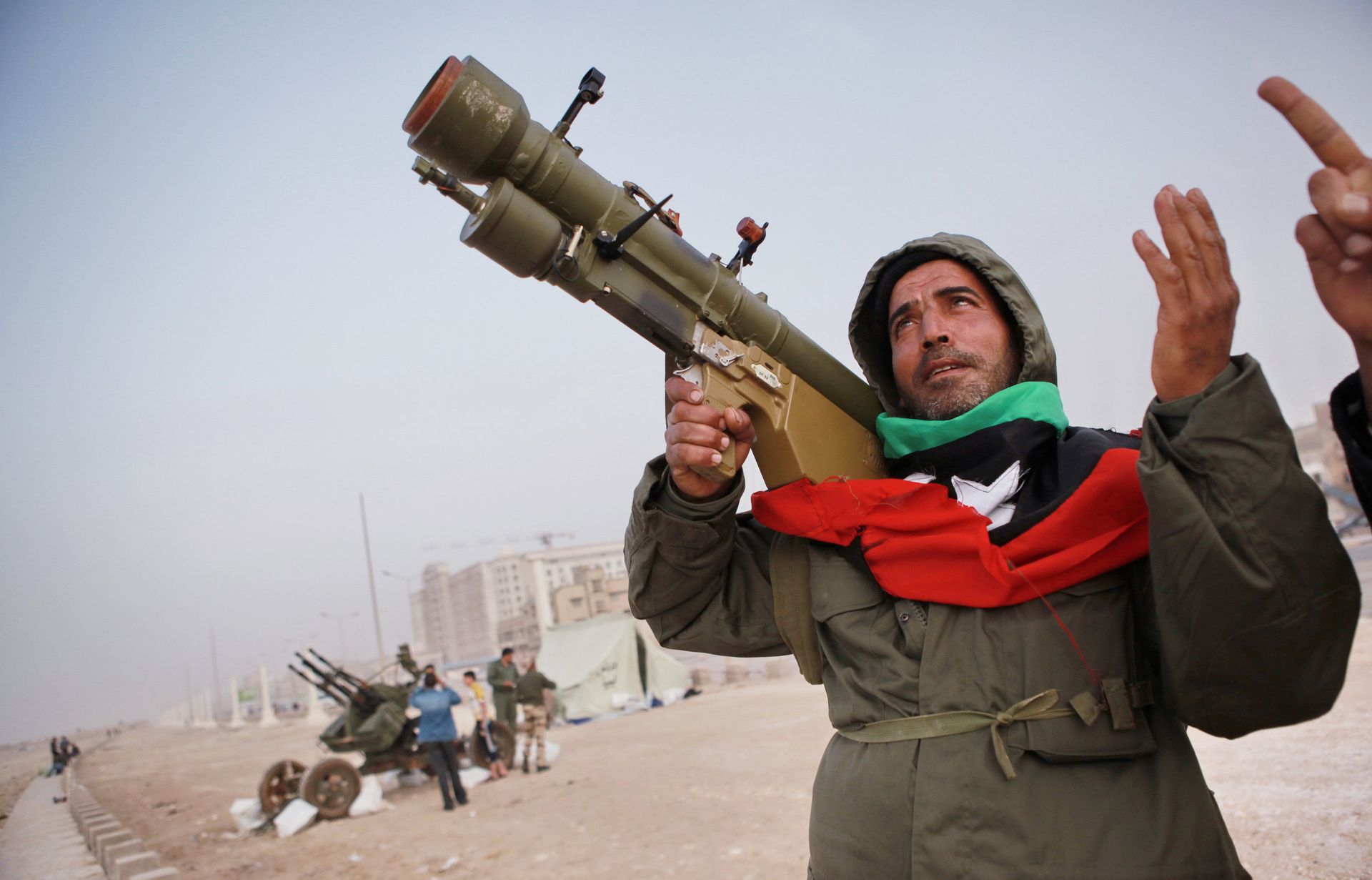
Cities in the east of Libya, including its second largest city Benghazi, are fully under the control of the opposition.
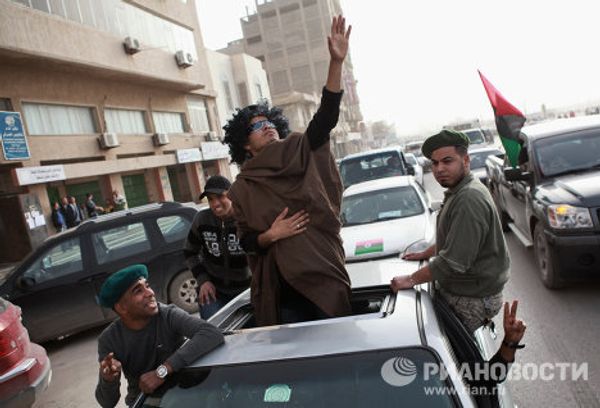
Cities in the east of Libya, including its second largest city Benghazi, are fully under the control of the opposition.
Photo: a Benghazi resident posing as Libyan leader Muammar Gaddafi.
Photo: a Benghazi resident posing as Libyan leader Muammar Gaddafi.
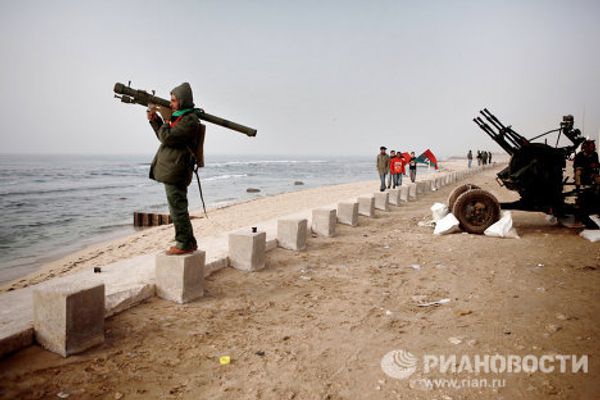
The military forces supporting Libyan leader Muammar Gaddafi launched an offensive against several cities occupied by rebels in the east of the country on Tuesday.
Photo: A member of Benghazi’s rebel forces standing on the Mediterranean coast with a portable anti-aircraft missile launcher.
Photo: A member of Benghazi’s rebel forces standing on the Mediterranean coast with a portable anti-aircraft missile launcher.
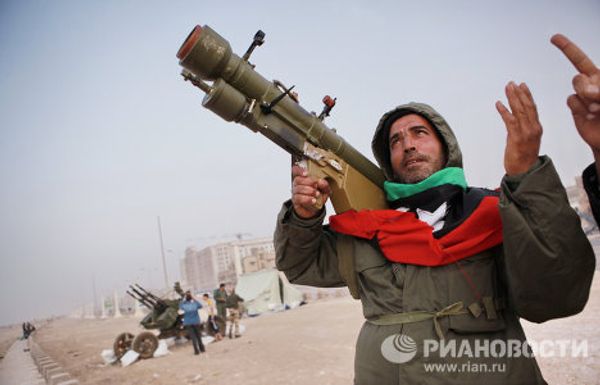
Pro-government forces have regained control of the important oil-exporting port of Marsa el-Brega located on the Mediterranean coast in the east of Libya. Eyewitnesses say that at least 14 people were killed in street fighting.
On March 2, Libyan leader Muammar Gaddafi declared that “he would not let insurgents control Libyan cities,” and promised amnesty to rebels who lay down their arms.
The Libyan opposition has called for the United Nations to authorize the use of precision airstrikes on the positions of the mercenaries that are ostensibly fighting on the side of Libyan leader Muammar Gaddafi.
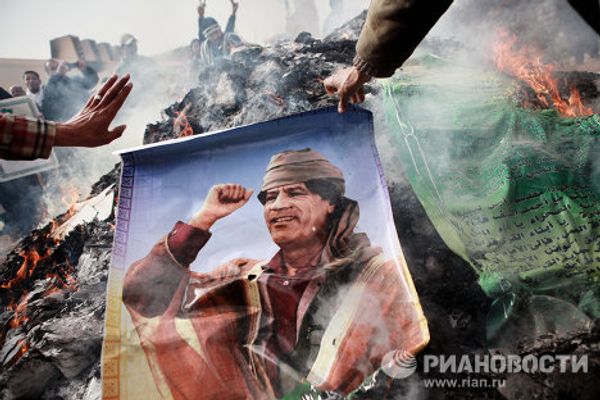
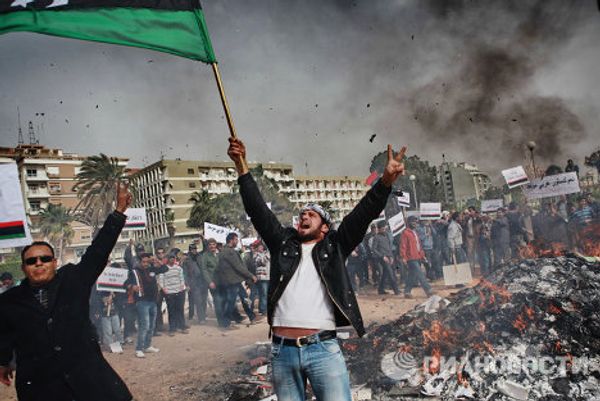
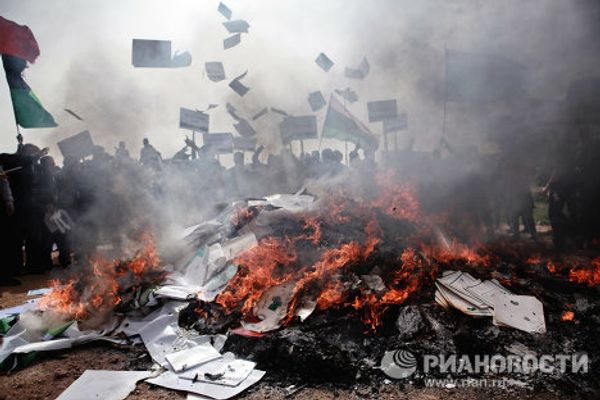
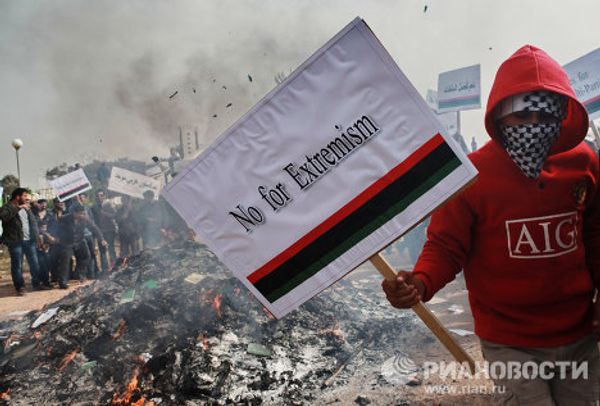
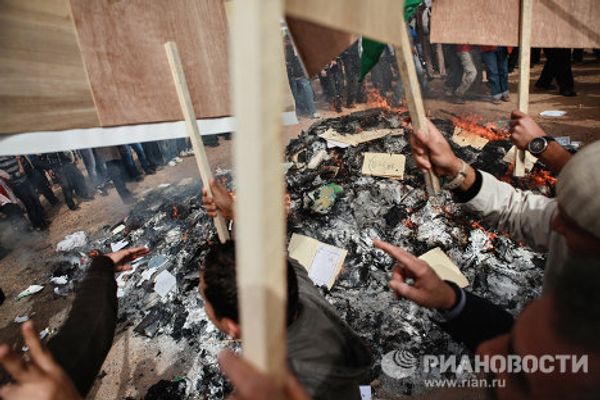
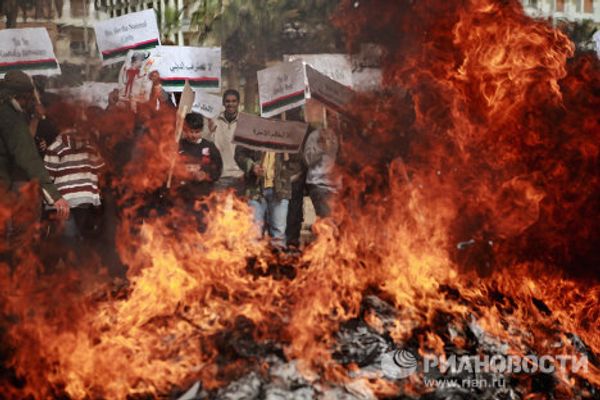
Photo: residents of Benghazi burning portraits of Gaddafi, posters with his quotations and his Green Book.
Photo: residents of Benghazi burning portraits of Gaddafi, posters with his quotations and his Green Book.
The minister of justice, the head of the Interior Ministry and Libya’s prosecutor general resigned in support of the opposition. Muammar Gaddafi appointed new cabinet members to replace them.
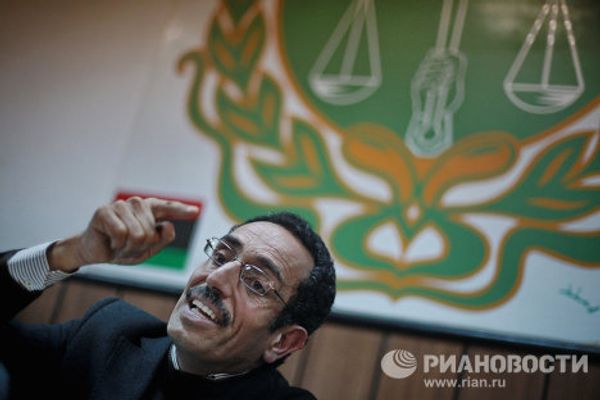
On March 2, former Libyan Justice Minister Mustafa Abdel-Jalil who stepped down and joined the revolt, headed the transitional National Council – a body of power functioning as the caretaker government.
The National Council consisting of 30 military and civilian figures representing the Libyan opposition from different regions of the eastern part of the country has been instructed to normalize life on the territories outside Gaddafi’s control and prepare for free and fair elections over the next three months.
As of March 2, the number of refugees attempting to flee Libya because of the public unrest reached 180,000. More than 77,000 people, most of them Egyptians, left Libya for Egypt. About the same number fled from Libya to Tunisia and another 30,000 are waiting in line on the border.
10/11
© RIA Novosti . Andrei Stenin
Libyan leader Muammar Gaddafi warned the United States and NATO against military intervention and promised that any military operation would result in more bloodshed. Nevertheless, the United States has already started grouping its forces in the region: two U.S. warships have been sent to the Mediterranean through the Suez Canal and are moving towards Libya.
Photo: Opposition supporters attacking participants in a rally against Libya’s division.
Photo: Opposition supporters attacking participants in a rally against Libya’s division.
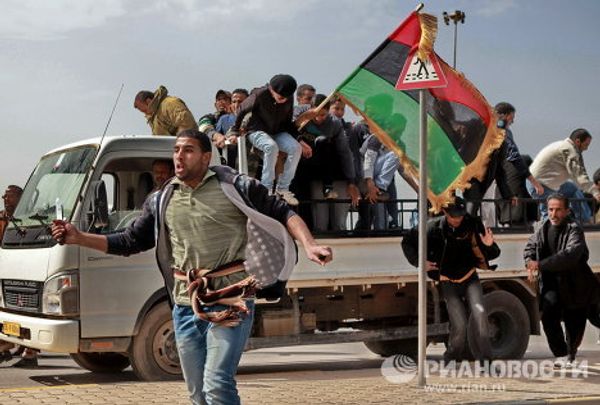
Since February 15, the opposition in Libya has demanded the resignation of Libyan leader Muammar Gaddafi, who has ruled the country for more than 40 years. Simultaneously with the opposition, Gaddafi’s supporters also took to the streets.
According to international organizations, the authorities are brutally suppressing demonstrations. Libyan human right groups say up to 6,000 people may have fallen victims to the clashes.
According to international organizations, the authorities are brutally suppressing demonstrations. Libyan human right groups say up to 6,000 people may have fallen victims to the clashes.