GZT.RU
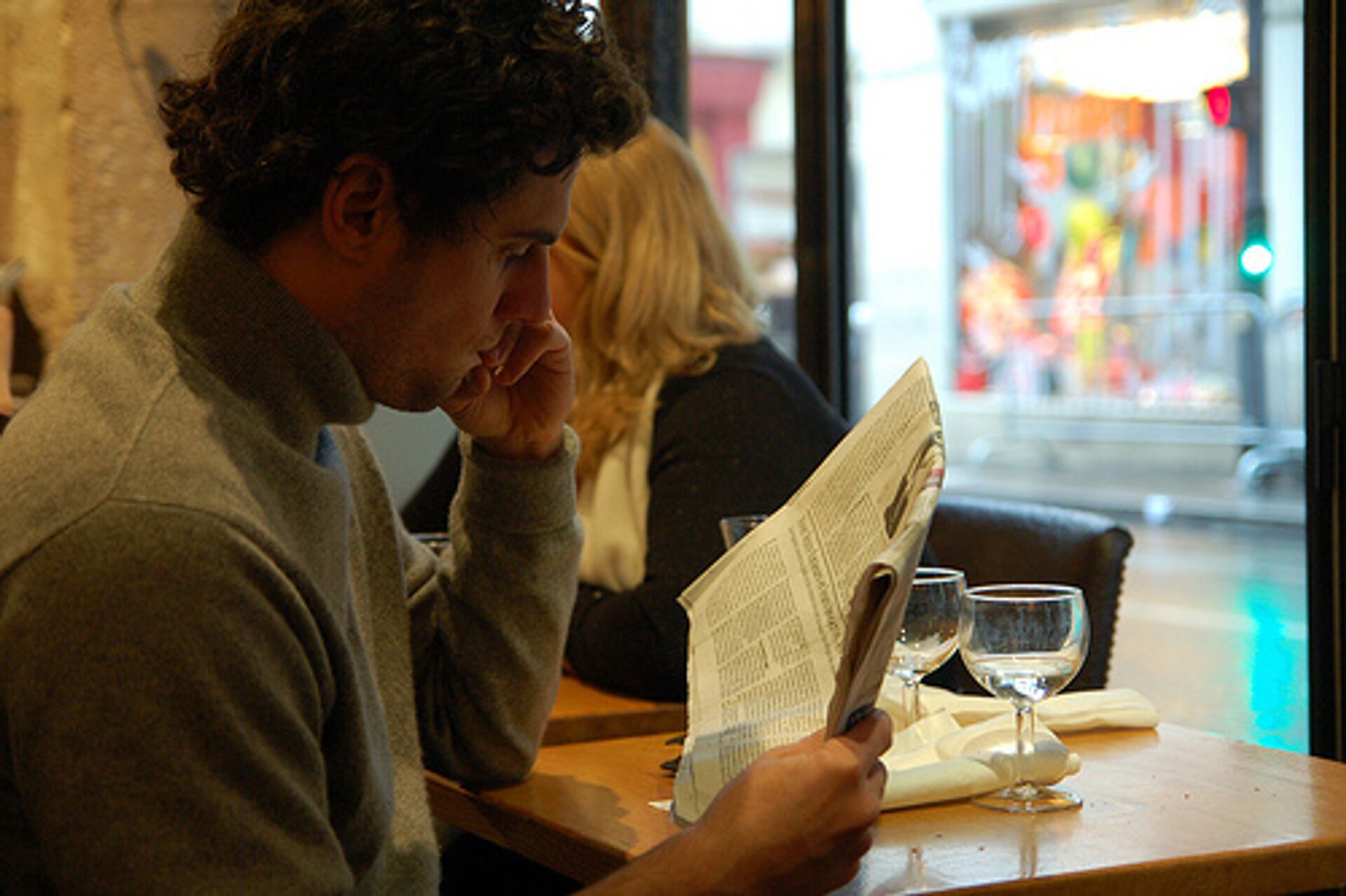
Russian winemakers want food status for wine
Wine in Russia should have the status of a food, an official in the southern Krasnodar Territory has said. Alexander Pochinok, a winemaking enthusiast, quotes European experience and studies that prove the health benefits of moderate wine consumption. Winemakers support the initiative, but lawmakers are strongly opposed.
“Wine should not be treated as an alcoholic drink,” Alexander Pochinok told a roundtable held at the Chamber of Commerce and Industry on March 21. “Wine must be classified as a food product.” He is confident that this measure would help develop winemaking and grape growing in Russia.
Russia should follow the example of France, Italy, Spain and other European Union countries where wine is classed as a food and not regulated by the same laws as hard liquor, believes Leonid Popovich, president of the Russian Union of Vine Growers and Winemakers.
“There are two approaches to wine, treating as a farm product or as an industrial product,” State Duma deputy Mikhail Blinov told GZT.RU. “The law that regulates the production and sale of alcoholic drinks treats wine as a predominantly industrial product, while genuine grape wine requires painstaking soil cultivation.”
“Every year EU countries allocate 300 to 400 million euros in subsidies to promote wine production,” Popovich says. “In Russia, however, there is no appreciation of wine.” Wine production in Russia is today regulated by the same law as vodka, he complains. This, he believes, stands in the way of Russian grape growing and winemaking.
Although Russia’s anti-alcoholism strategy is focused on shifting from the consumption of strong drinks towards wine, experts agree little is being done to achieve this.
Vadim Drobiz, director of the Center for the Study of Federal and Regional Alcohol Markets, agrees that “wine should be governed by a separate law.” “Russia,’ he said, “is the only grape-growing and wine-producing country that does not have a separate law on grapes and wine.”
However, the federal authorities do not support the winemakers’ initiative. State Duma deputy Viktor Zvagelsky, who is in charge of Russia’s alcohol reforms, does not believe in the winemakers’ good intentions. In fact, he thinks state regulation of wine production should be tightened further.
At the same time, he believes that the state should help grape growers and winemakers. He refers to the technical regulations on the safety of wines and spirits common for all Customs Union countries, which contain a fixed definition of wine, as the main document for the sector.
Winemakers, however, do not believe that they will be allowed to participate in the debate on the regulations or suggest their amendments. “Experts are being kept out of discussions,” says Pochinok. “We will see the regulations for the first time when they are adopted.” Pochinok said he had been trying to obtain the text for several months now, but without success.
Moskovsky Komsomolets
New suicide bomber heading for Moscow?
Police in the southern Russian republic of Ingushetia have asked their Moscow colleagues for help find a former militant’s widow, who left home on March 11 and is suspected of planning a suicide bombing in Moscow.
Ingush special services have intelligence that Malika Turazova, 24, may be heading to Moscow to avenge the deaths of her husband and brother, two militants killed in a clash in 2005. The police searched her house shortly before she vanished, finding Wahhabi booklets and instructions on how to make home-made bombs.
Her description and cell phone numbers have been circulated around members of the security forces. Sources in Ingushetia believe she is an ethnic Chechen.
Ingush human rights activists believe Malika’s brother may have been killed by accident. According to the local human rights group, Mashr, he could have been one of the two men killed on November 11, 2005, Ruslan Merzhoyev and Molad Turazov. Official reports say both were militants and members of a large gang, and were killed in a clash.
However, Merzhoyev’s family claimed he was killed in an attack by law enforcement agents. Mashr leader Magomed Mutsolgov said the young man could have been attacked because he was related to the gang leader, who had been killed shortly before that.
“They may have kept in touch as cousins. That is why the special services began investigating Ruslan as well. According to his relatives, he swore to one of the police interrogations that he was not in any way involved in militant activity,” he said.
Ingush human rights activists urge the public to be critical of any leaks or reports on potential terrorists. “There have been mistakes,” Mutsolgov said. “There was one case where young woman ran away from home to get married against her parents’ will. Her parents told the police she probably went to Moscow to blow herself up in a desperate attempt to stop her. She was caught only to be released after a short investigation. But the whole affair put her right in the center of a high-profile scandal.”
All relatives of killed militants are under surveillance in Ingushetia. They also come under constant pressure from the authorities. The police have visited Malika Turazova’s house on many occasions. However, her relatives have never lodged any complaints with human rights groups about the police actions.
Rossiiskaya Gazeta
Hard labor for petty criminals
The Federal Penitentiary Service is to establish a chain of new-generation correctional centers at major construction projects and enterprises.
The punishment meted out to convicts at such centers will essentially comprise the work: their freedom will only be moderately restricted.
With no security towers, guard dogs or high barbed-wire fences these new facilities will barely resemble ordinary jails. But their inmates will feel that they have been punished.
Under legislative changes that could be in place by 2013, criminals sentenced to serve time in these centers will be subject to a new form of punishment: forced labor.
This move is part of a new presidential legislative package amending the Criminal Code. Of course “new” is only a relative concept: in formulating these reforms the law’s authors leant heavily on the Soviet-era Criminal Code, under which petty crimes were punished by being forced to work at industrial enterprises.
There are plans to set up seven or eight such centers, with more to follow. Under the bill, forced-labor centers could even spring up in every single Russian region. These individuals, who must be referred to as “correctional center residents” rather than “prisoners,” could be accommodated in existing prisons – but only in separate wings. Something similar can be found in penitentiaries that have maximum-security, medium-security and minimum-security sections.
Under the planned reforms, all penitentiaries will be replaced with prisons.
Analysts say the establishment of forced-labor centers should be dictated by the economy, to ensure everyone has work and can earn a living. These petty criminals will be housed in dormitories and given free beds and bed linen but will have to work to pay for clothes, shoes and food.
One proposal suggests that these centers be established on a temporary basis, for the duration of specific economic projects: near a large incomplete plant or a federal highway under construction. They have the advantage of being cheaper to build than a traditional prison.
Incidentally, some new minimum-security penitentiaries are also to be established at construction sites and enterprises.
People given forced labor sentences at these facilities will have the chance to redeem themselves through honest hard work. Technical surveillance systems, such as electronic ankle bracelets and CCTV, will replace security guards. The state will finance their travel expenses, also providing them with rations and daily allowances.
Anyone who goes AWOL will be arrested and imprisoned. Under the bill, “residents” must abide by strict regulations and work at preset facilities. They will not be allowed to leave their allotted forced-labor centers, and will have to clean their dormitories and other local premises for free (provided this unpaid labor takes no more than two hours per week).
Forced labor sentences will last between two months and five years. The state will deduct up to 20% of their income, but “residents” will have the right to appeal their wage deductions.
RIA Novosti is not responsible for the content of outside sources.