For centuries, Slavic nations have celebrated Ivan Kupala Day on July 7. It is one of the major holidays of the Slavic calendar and even today the festivities... 08.07.2011, Sputnik International
For centuries, Slavic nations have celebrated Ivan Kupala Day on July 7. It is one of the major holidays of the Slavic calendar and even today the festivities include ancient rites and rituals, which have remained an essential part of this pagan holiday.
For centuries, Slavic nations have celebrated Ivan Kupala Day on July 7. It is one of the major holidays of the Slavic calendar and even today the festivities include ancient rites and rituals, which have remained an essential part of this pagan holiday.
For centuries, Slavic nations have celebrated Ivan Kupala Day on July 7. It is one of the major holidays of the Slavic calendar and even today the festivities include ancient rites and rituals, which have remained an essential part of this pagan holiday.
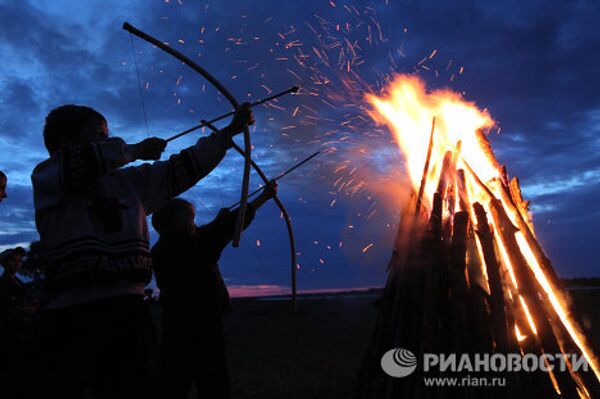
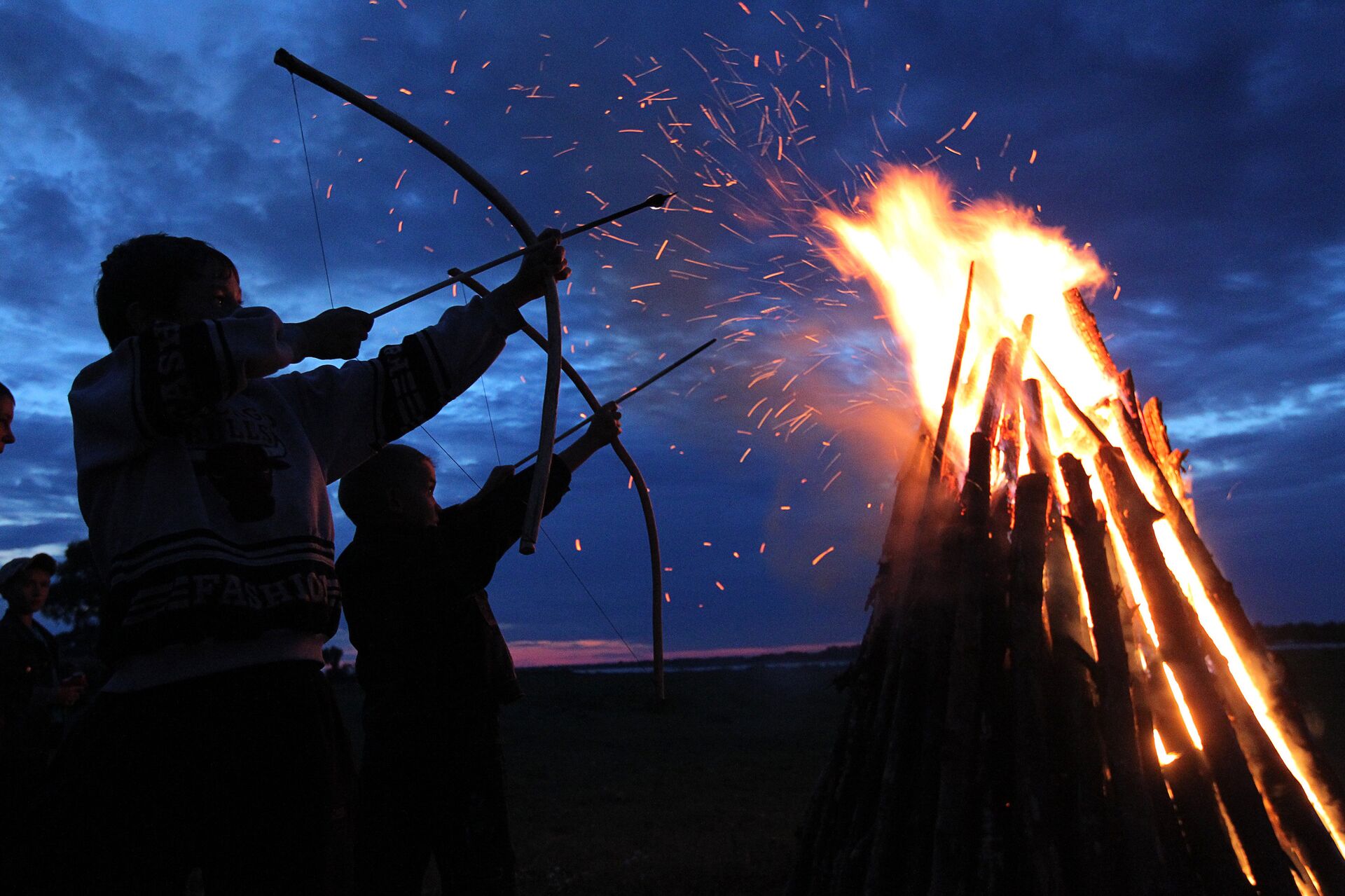
Through the centuries, Ivan Kupala celebrations have preserved their pagan features. The holiday’s significance stemmed from being marked between two periods of the solar annual cycle, which was the basis of the ancient farming calendar. Photo: Young men compete in an archery contest during Ivan Kupala celebrations in Turov, Gomel Region.
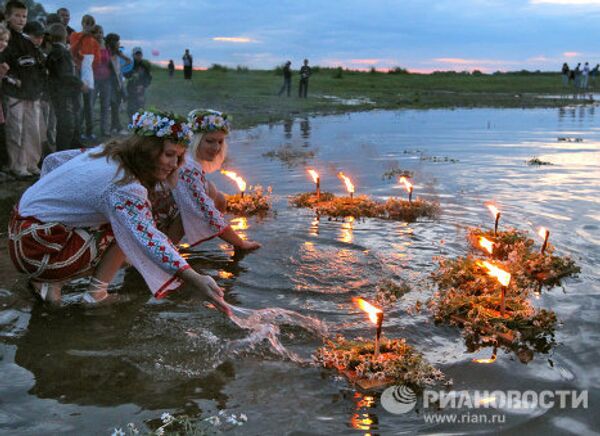
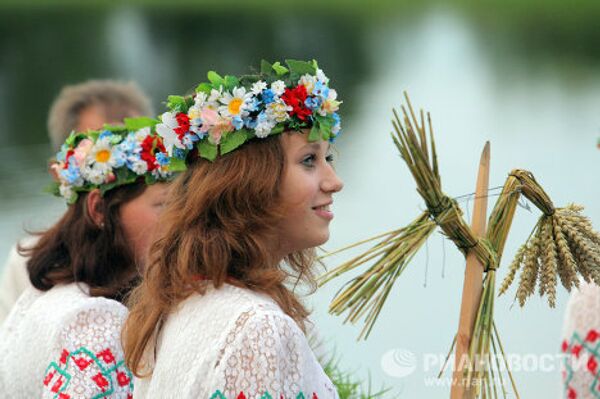
The oldest feature of the ritual is its association with the natural element of fire, which has two aspects, a terrestrial and celestial (the Sun), and water. Photo: Girls float wreaths of flowers on the river, an ancient custom on Ivan Kupala Day in the Gomel Region.
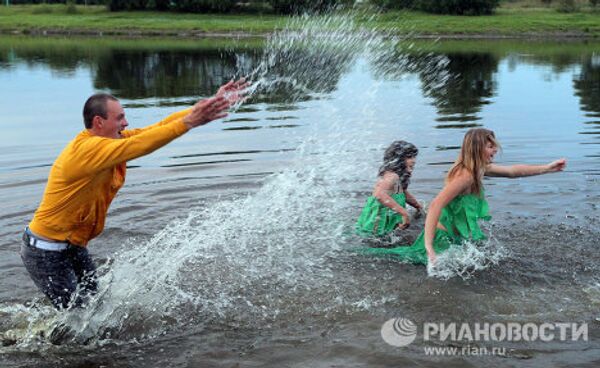
The festivities include mass bathing in water pools, washing the face with water or dew, and bathing in a sauna. Photo: Young people bathe in the Pripyat River during Ivan Kupala Day celebrations in the Gomel Region.
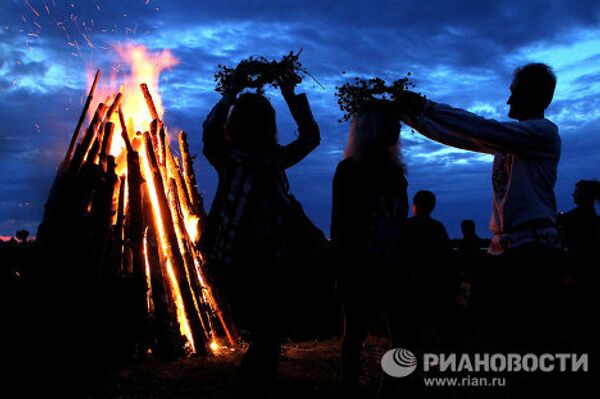
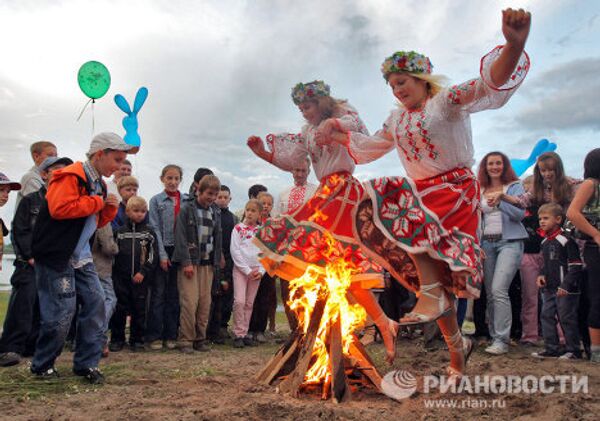
The fire theme is represented in the festival fires, as well as in a widespread popular belief that the Sun “plays” and “bathes” on this day. Photo: The ancient ritual of jumping over a purifying fire during Ivan Kupala Day celebrations in Turov.
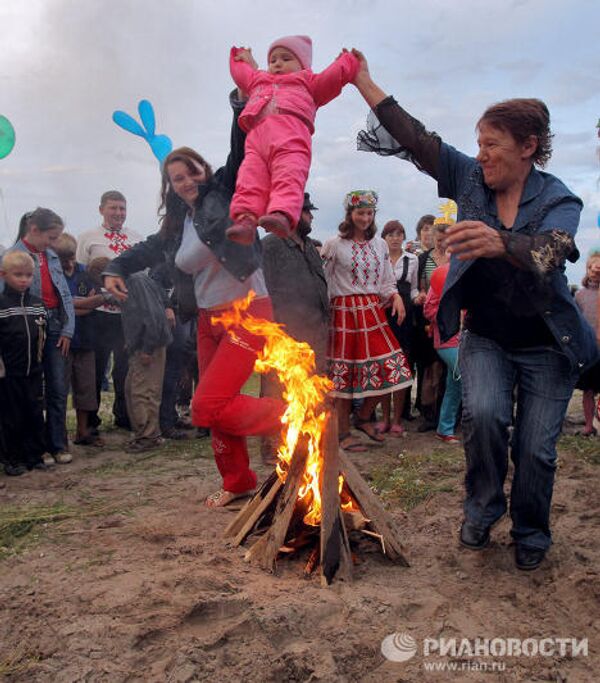
In ancient times, elderly people rubbed dry sticks together to make a “living fire” and placed a pole with a burning wheel, symbolizing the Sun, in the middle. Photo: A baby carried over the fire as part of the purification ritual in Turov.
Beliefs and rituals related to plants are also very popular. Throughout centuries, people have worn flower belts and carried grass garlands on their hair and body during the celebrations.
Newsfeed
0
Access to the chat has been blocked for violating the rules .
You will be able to participate again through:∞.
If you do not agree with the blocking, please use the feedback form
The discussion is closed. You can participate in the discussion within 24 hours after the publication of the article.