St. Basil’s Cathedral against the backdrop of Russian history
St. Basil’s Cathedral against the backdrop of Russian history
Sputnik International
St. Basil's the Blessed (Protection Veil of Our Lady) Cathedral, better known as St. Basil's (Intercession) Cathedral, is an architectural symbol of Moscow and... 12.07.2011, Sputnik International
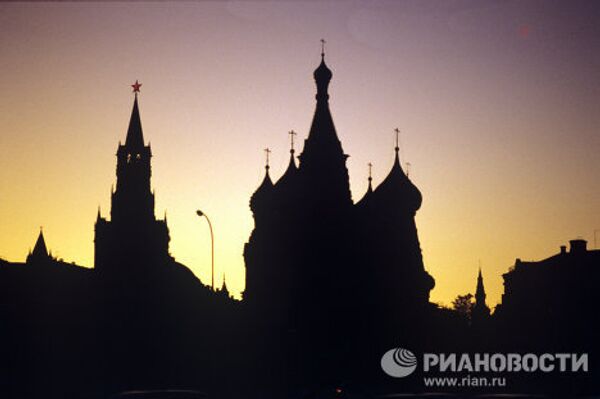
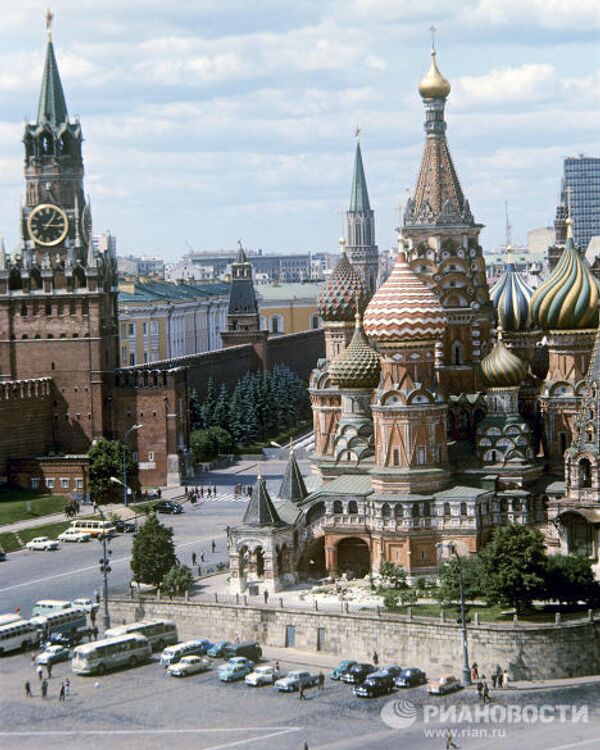
St. Basil's the Blessed (Protection Veil of Our Lady) Cathedral, better known as St. Basil's (Intercession) Cathedral, is an architectural symbol of Moscow and Russia. The church, now a museum, is celebrating its 450th anniversary on July 12.
St. Basil's the Blessed (Protection Veil of Our Lady) Cathedral, better known as St. Basil's (Intercession) Cathedral, is an architectural symbol of Moscow and Russia. The church, now a museum, is celebrating its 450th anniversary on July 12.
St. Basil's the Blessed (Protection Veil of Our Lady) Cathedral, better known as St. Basil's (Intercession) Cathedral, is an architectural symbol of Moscow and Russia. The church, now a museum, is celebrating its 450th anniversary on July 12.
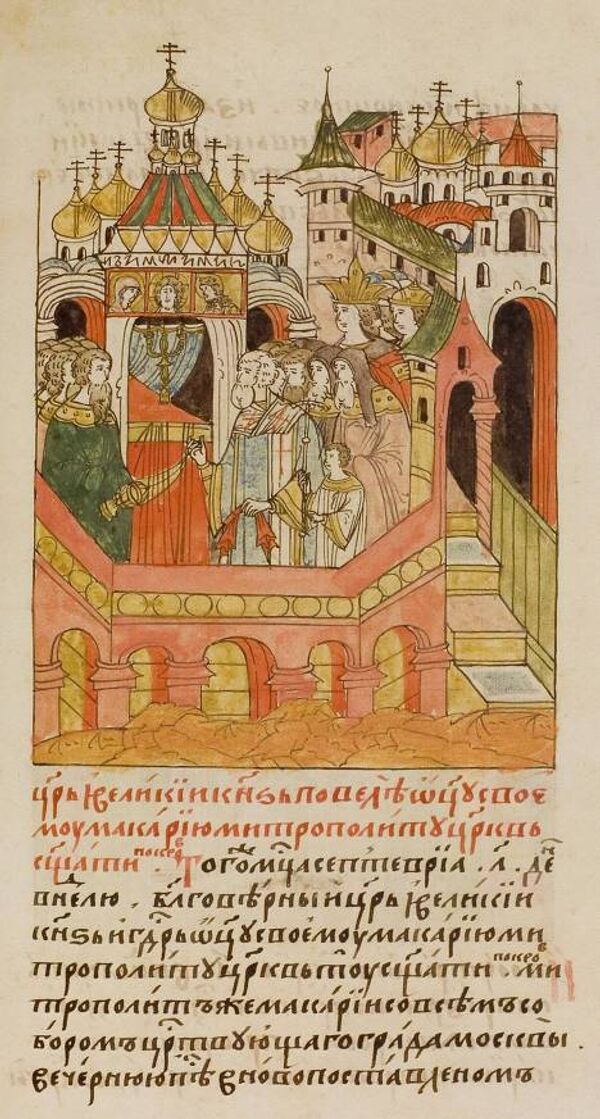
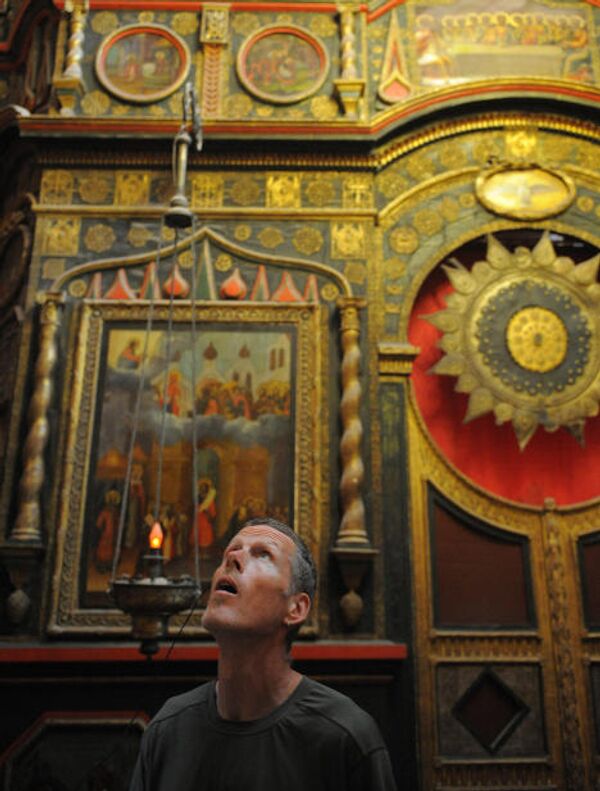
Photo: A miniature reproduction of “The Consecration of the Central Church of St. Basil’s Cathedral on the Feast of the Intercession of the Holy Virgin” painted on the face of the vault in 1568-1576.
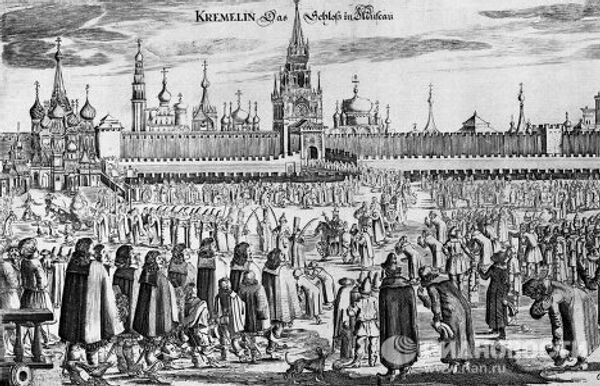
Photo: A fragment of the engraving “The Procession on the Donkey” published in the book A Voyage to Moscow by Adam Olearius. St. Basil’s Cathedral is seen on the left.
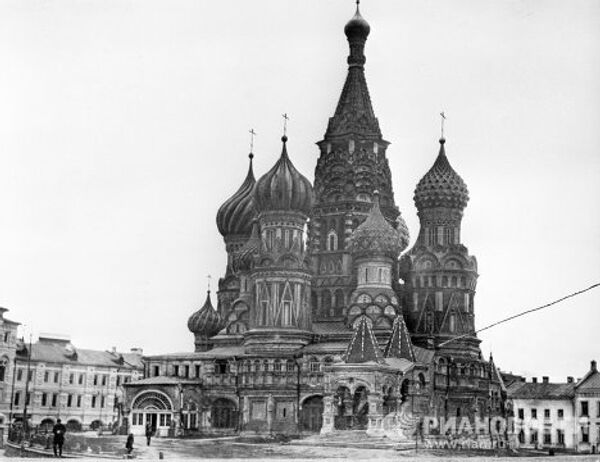
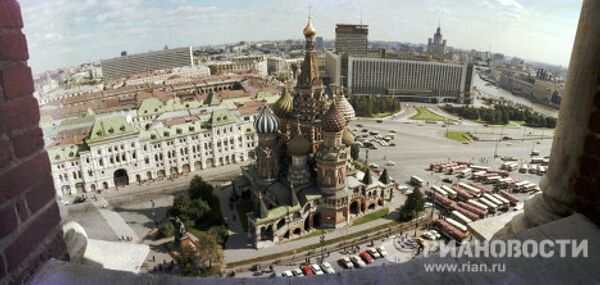
The cathedral has an unprecedented layout, with nine independent churches erected on basement single foundation. The eight side churches are joined to each other with vaulted interior galleries round the central church. All of them were originally surrounded by another, open gallery. The central church is crowned with a tall domed spire, while the side ones have vaulted ceilings with an onion dome above each. In 1588, a tenth church was added to the cathedral on the northeast side above the grave of St Basil the Blessed. Its name spread to the entire cathedral in the 17th century, and has been its vernacular name to this day.
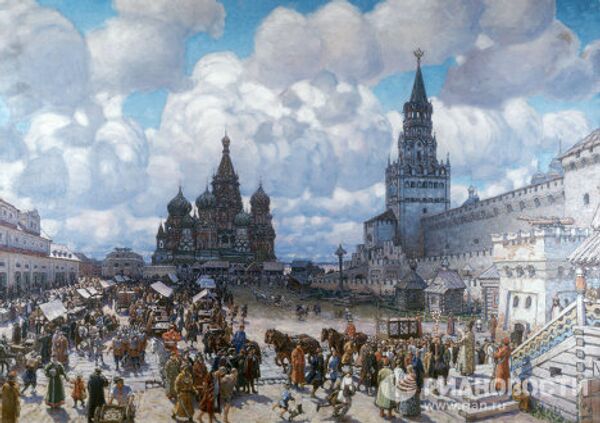
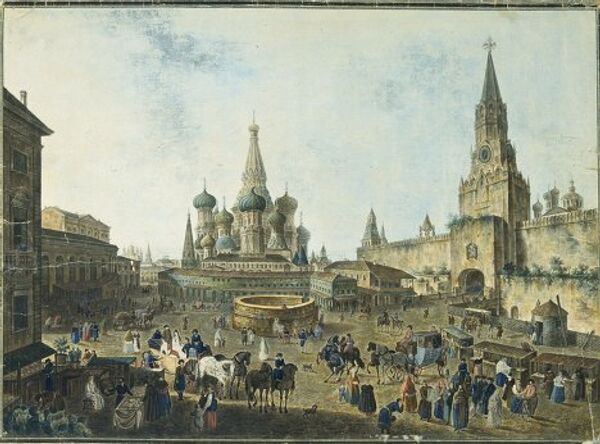
During the Napoleonic invasion of 1812, the cathedral was pillaged. According to one legend, Napoleon Bonaparte attempted to relocate this “Russian miracle” to Paris, which proved logistically impossible. Bonaparte then gave an order to blow up the cathedral as well as the Kremlin, but heavy rain put out the flames. Photo: Fyodor Alekseyev and his students. “Moscow. View of St. Basil’s Cathedral and the Gates of the Savior,” 1800s
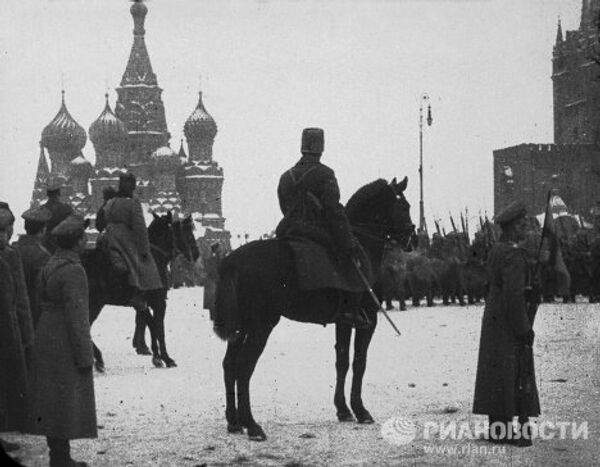
One of the cathedral’s domes suffered damage during the Bolshevik shelling of the Kremlin in 1917. After the revolution, the cathedral’s head priest, Ioan Vostorgov, was shot dead, the cathedral’s assets were confiscated, and its bells were smelted. The cathedral was then closed.
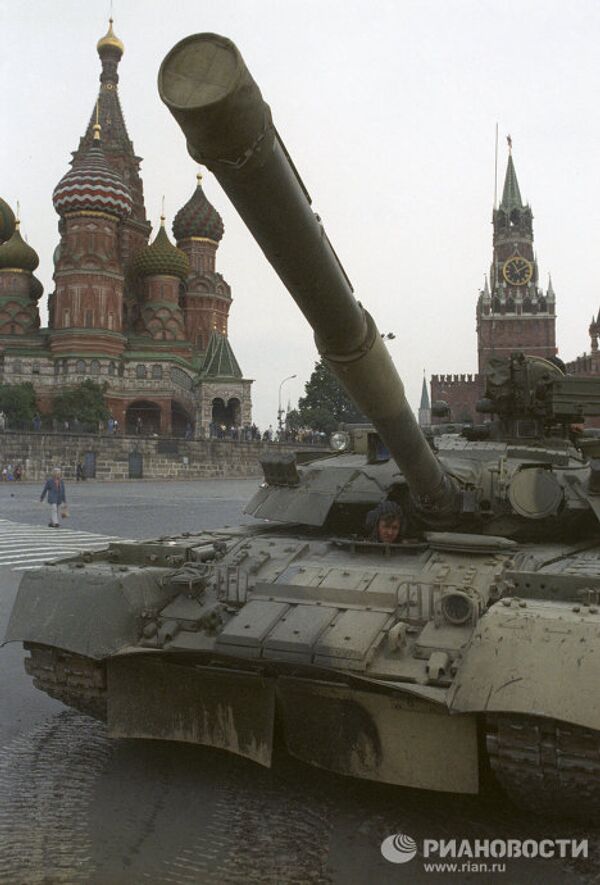
During the Soviet era, the existence of St. Basil’s Cathedral again came under threat. There were plans to demolish the cathedral in order to make room for parading tanks and demonstrations on Red Square.
As another legend would have it, Lazar Kaganovich, who was in charge of the Moscow reconstruction effort, was showing Stalin his plans to reconstruct Red Square to make room for military parades and demonstrations. When he removed the scale model of St. Basil’s Cathedral, Stalin stopped him and snapped: “Lazar, put it back!”
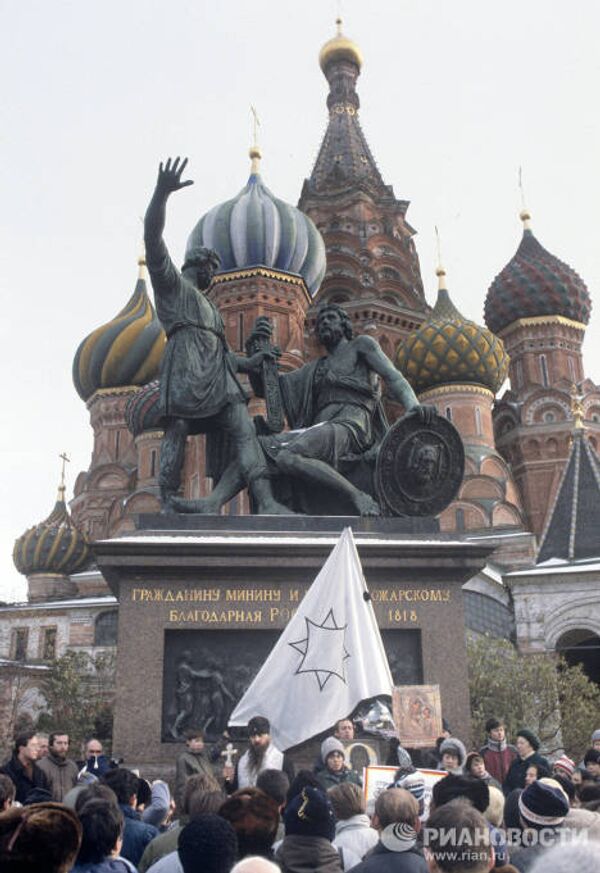
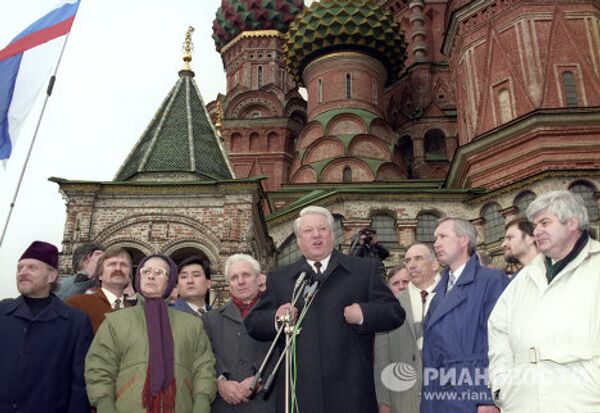
In 1991, a “religious procession of repentance” took place at St. Basil’s in celebration of Our Lady of Kazan and the 270th anniversary of the Russian Empire.
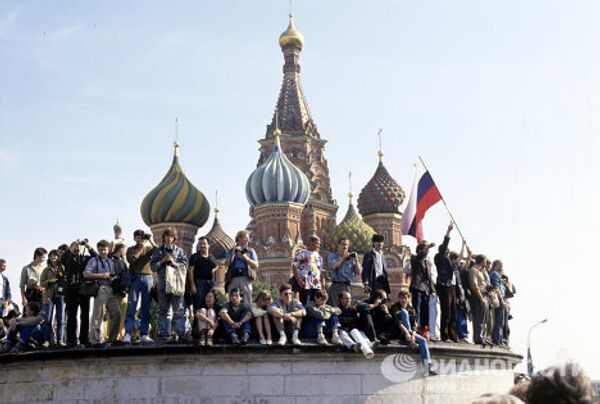
1990 was a landmark year for the cathedral. UNESCO granted it the status of World Heritage Site, and divine services were renewed at the Intercession Church. A year later, the cathedral was legally transferred into joint use by the State History Museum and the Russian Orthodox Church.
Newsfeed
0
Access to the chat has been blocked for violating the rules .
You will be able to participate again through:∞.
If you do not agree with the blocking, please use the feedback form
The discussion is closed. You can participate in the discussion within 24 hours after the publication of the article.