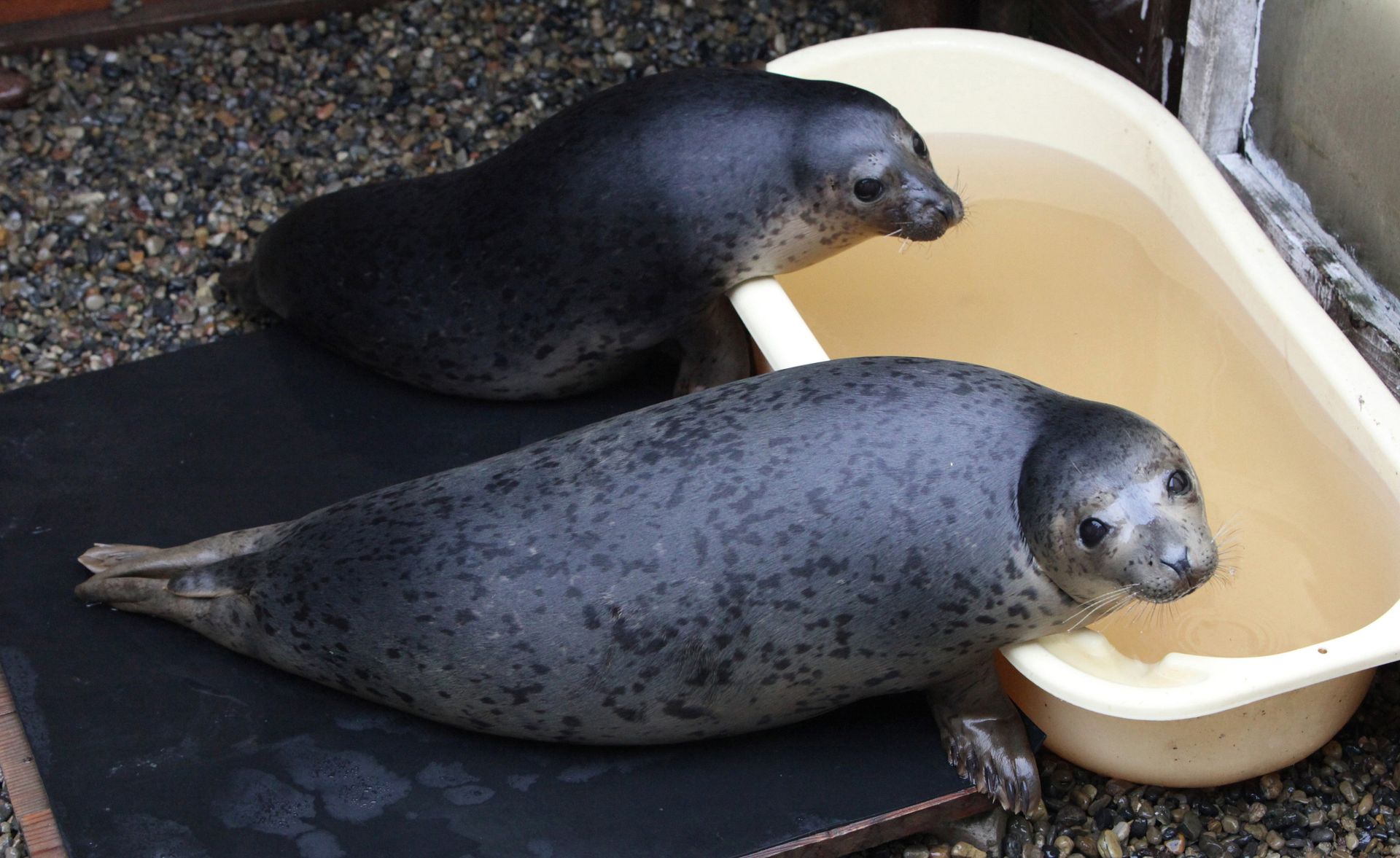
A married couple from the village of Tavrichanka, in Russia’s Primorye Territory, has been busy taking care of sick and weak spotted seals, also known as largha seals, in their home rehabilitation center. Journalist and author Lora Beloivan and her husband, veterinarian Pavel Chopenko, built special enclosures for the animals to feel at ease and recover faster.
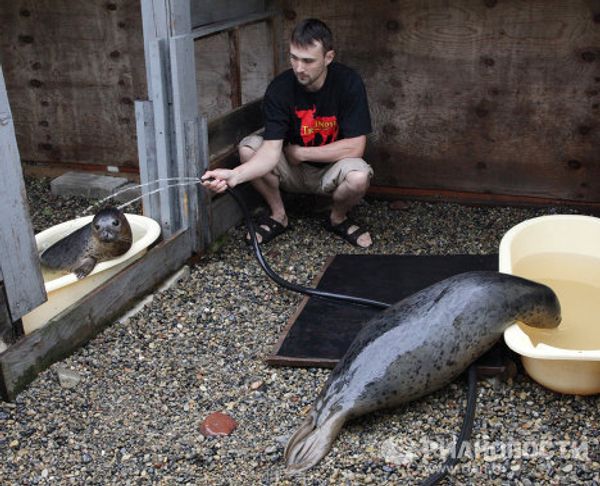
A married couple from the village of Tavrichanka, in Russia’s Primorye Territory, has been busy taking care of sick and weak spotted seals, also known as largha seals, in their home rehabilitation center. Journalist and author Lora Beloivan and her husband, veterinarian Pavel Chopenko, built special enclosures for the animals to feel at ease and recover faster.
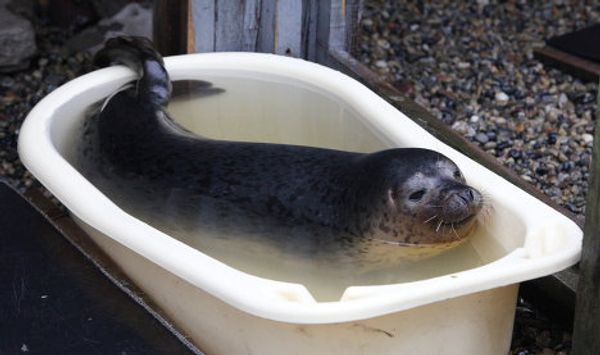
Many seal pups are weaned too early and later die in the wild, as underfed babies do not have enough fat to survive on their own.
Seals often become entangled in pieces of a torn net and can die from asphyxia, injuries or exhaustion as they cannot move or hunt.

Another danger for seals is oil spills. If the oil-coated animal is not promptly rescued it could die of intoxication.

Most of these seals can be saved and released into the sea.
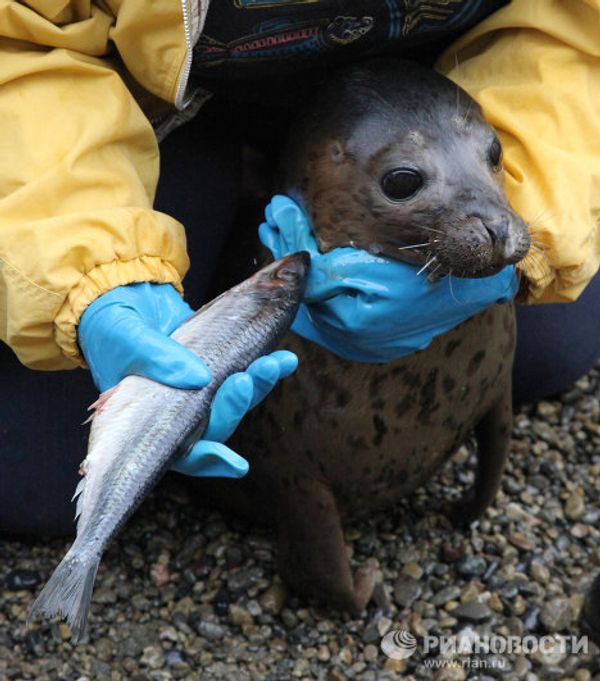
During the rehabilitation period, seals are fed with a special nutrient mixture made of fish, medication and vitamins.
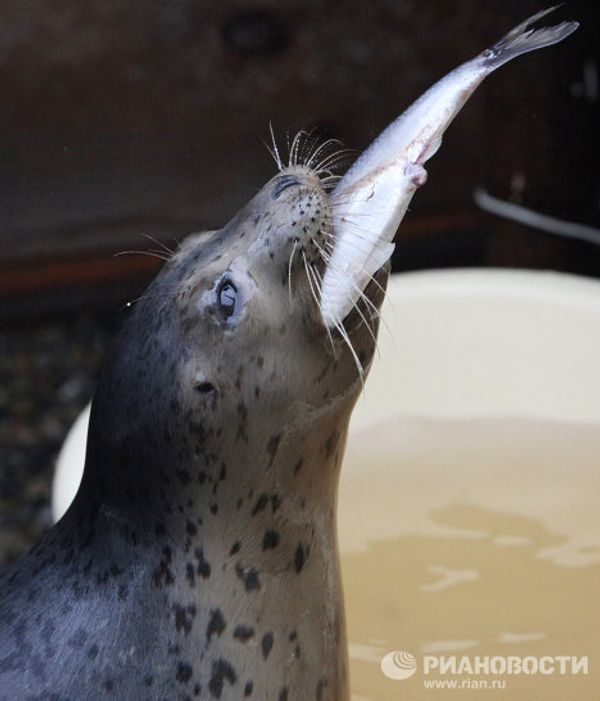
In the wild, spotted seals feed on fish, such as salmon, herring, smelt, capelin and saffron cod. Shrimp, small crabs and octopi, which seals catch in abundance, are also a substantial part of the mammal’s diet.
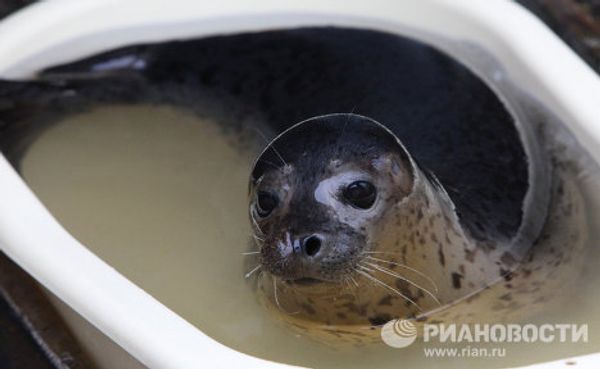
Spotted seals inhabit the northern Arctic and sub-Arctic waters from Alaska to Japan, and Russia’s Far East. In the Sea of Japan, largha seals are commonly found along the coast. In the spring, the animals move to the Tatar Straits and along Sakhalin’s northwestern coast. In Primorye, spotted seals are commonly found in the Peter the Great Gulf.
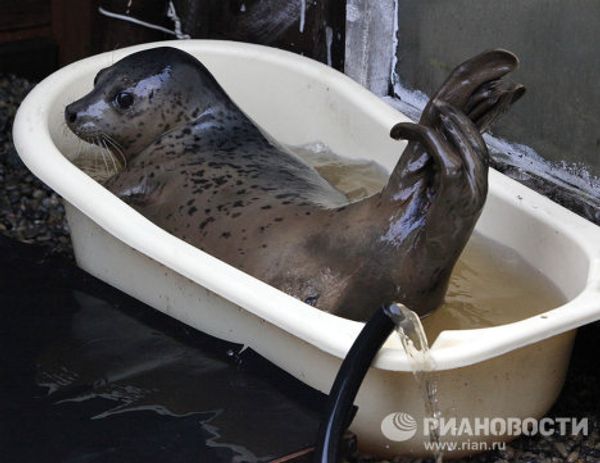
Spotted seals are known to be very cautious in the wild. They are afraid of humans and may leave their habitats when disturbed.

A largha seal’s fur varies in color from silver gray to dark gray. They have small irregularly shaped black or brown spots covering the back, sides and belly.