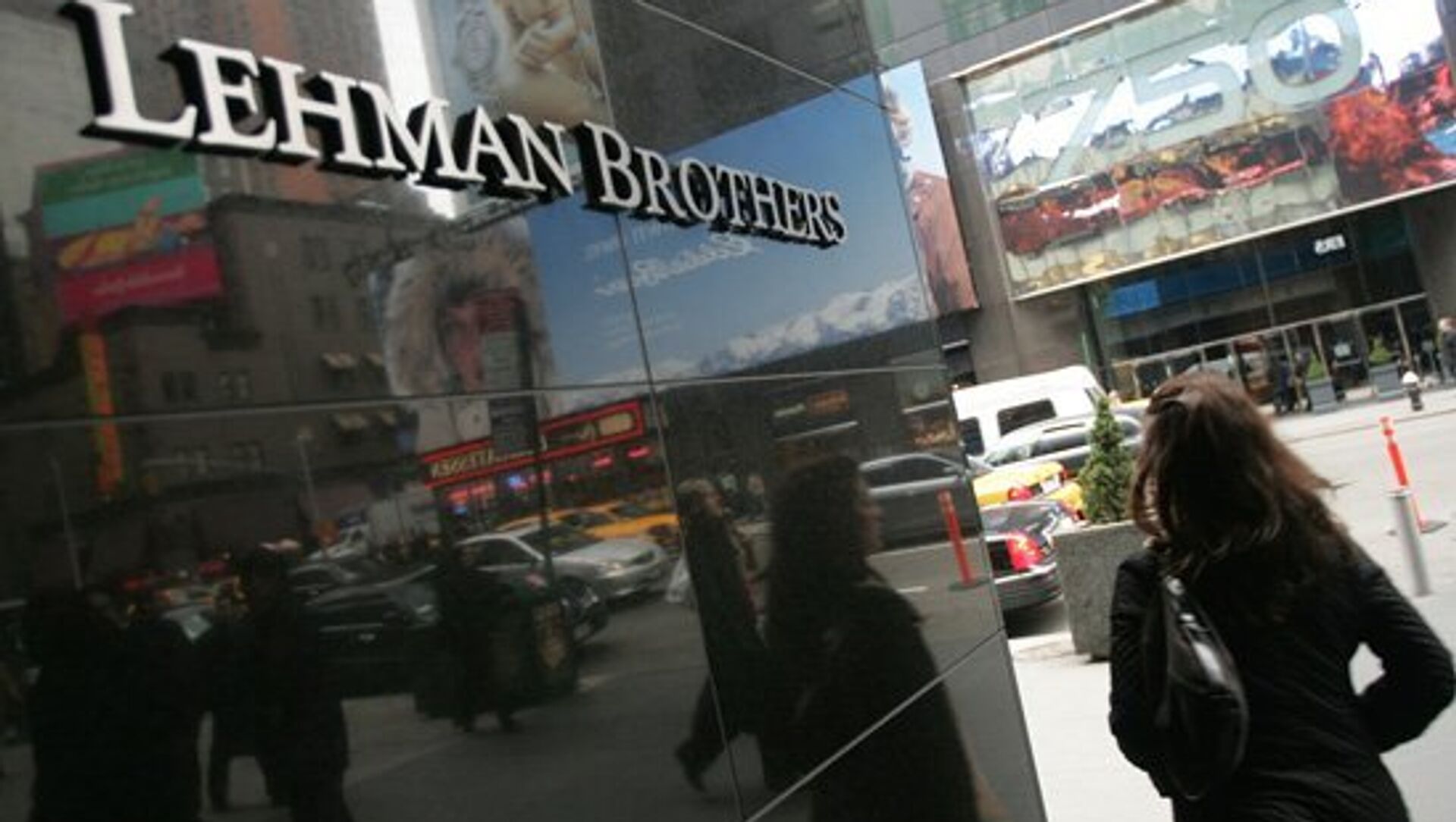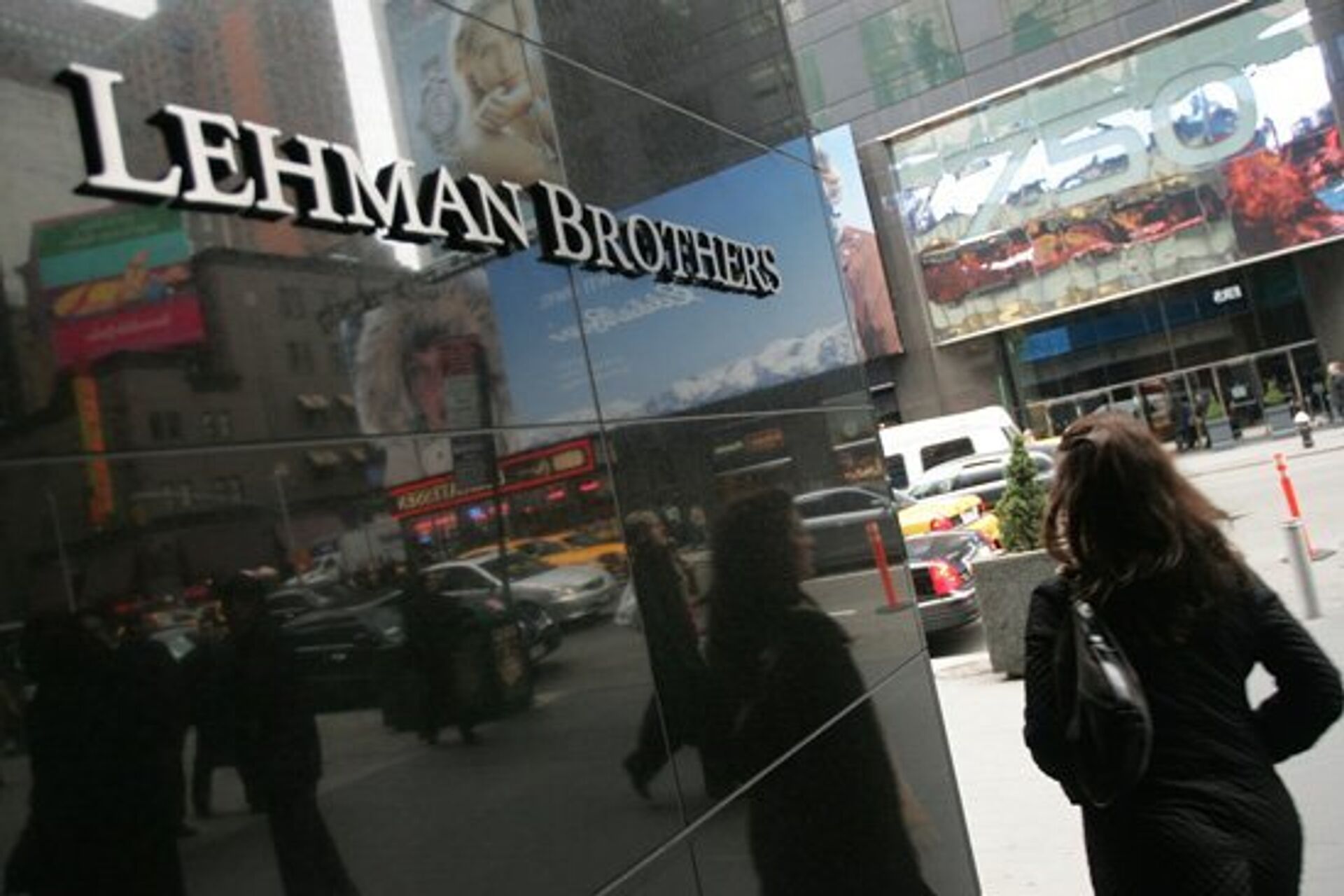
On the night of September 14, 2008, the U.S. bank Lehman Brothers filed for bankruptcy. Its debts had reached $613 billion. This event is considered the start of the 2008 financial and economic crisis, which economists believe is still far from over. In fact, in the last few months a second wave has become much more likely. Greece continues to teeter on the brink of default, financial markets are still volative, and Moody's recently downgraded the French banking giants Societe Generale SA and Credit Agricole CA.
Fifty-fifty
There is a joke about a blonde who, when asked her odds of seeing a dinosaur, answered fifty-fifty: "I'll either see him or not." Economists give pretty much the same odds to a second wave of the crisis occurring.
The storm clouds are gathering. Both officials and independent experts admit that after Greece reached the brink of bankruptcy, a second wave becomes much more likely.
Speaking at a conference on the 20th anniversary of the start of economic reforms in Russia on September 10, Finance Minister Alexei Kudrin said: "Things have gotten worse. I think the crisis is likely to return. The old problems that were not fully resolved have become more pronounced now."
Leonid Slipchenko, an analyst with URALSIB Capital said that the majority of players on the financial markets are also predicting a downturn - the likelihood of another crisis or recession has already been expressed in the cost of shares and other financial instruments.
It is important to understand that we are talking not about a new crisis but the continuation of the old one that started with Lehman Brothers' bankruptcy in 2008. A number of experts are convinced that the stimulus measures taken by governments, which boiled down to pumping liquidity into their economies (the United States alone has spent over $10 trillion), have merely perpetuated existing economic problems.
Slipchenko acknowledges that quantitative easing (as financiers call the government policy of injecting money into the economy) has stopped the economic decline but without ensuring any growth. For many economists, such stimulus measures are like a medicine that can treat the symptoms but not cure the disease. "The economy is marking time; interest rates remain low but there has not been a sharp increase in lending and unemployment remains high. These are fundamental problems that cannot be solved by quantitative easing," he explained.
Ford's arithmetic
The 2008 crisis started as a debt crisis, then hit the financial sector and finally spread to the real economy.
The next downturn, if it comes, will also start as a debt crisis but it will hit entire states rather than private borrowers and banks. Some economists believe that the fundamental reasons of the past and the impending crisis lie not in the financial sector.
Boris Kagarlitsky, director of the Institute of Globalization and Social Movements, considers the imbalance between consumption and production as one of the main economic problems of the last few decades. In his time, Henry Ford increased his workers' wages so that they could save money to buy the cars they built. The wise industrialist devised what Kagarlitsky called "a model of expensive labor" that gained traction after WWII but was gradually renounced in the 1980s when advanced countries opted for cheap labor.
Industrial production shifted from Europe and the United States to regions with cheap labor, primarily South East Asia, and cheap labor was imported en masse to fill low-paid jobs. As a result, workers could no longer save enough to buy cars, but mass production cannot exist without mass consumption and, moreover, production begins to generate demand itself. Consumer lending has become a major toll for encouraging demand in the last few decades. Thus, the imbalance between production and consumption was aggravated by the debt problem that triggered the crisis in 2008.
The debt crisis grew into a financial crisis, but the governments of industrialized countries were unwilling to risk the bankruptcy of financial corporations and preferred to bail them out with public money.
Yevgeny Gavrilenkov, managing director of the Troika Dialogue group, said that now the debt problem has moved from the private to the public sector and that this is particularly pronounced in European countries. They are trying to resolve the national debt problem by raising private capital through public property privatization while at the same time cutting government spending and increasing taxes. This creates a risk of recession because a decline in the incomes of the population will reduce demand, the main driver of industrial production. The circle has been closed.
Heaven-sent catastrophe
Some economists insist that there can be no repeat of 2008 because too much money has been poured into the economy in the last three years. Yury Danilov, a section head at the Institute of Industrial and Market Analysis of the Higher School of Economics, is convinced that "even if advanced countries are hit by recession - and there is 50% chance of that - the financial markets will not be hit by a full-fledged crisis." He thinks a new recession would merely slow down the global economic recovery. "If industrialized countries do not slide back into recession, we will be able to say by the end of the next year that their economies are recovering. If we enter a recession, the recovery will be put off until the end of 2013 and the beginning of 2014," the expert said.
There is a lot of money in the economy but it is not working. Russia is one example. Oil prices have essentially returned to pre-crisis levels, but economic growth rates are approximately half what they were before the crisis. "The flood of money becomes useless," Kagarlitsky said. "I'm not referring to purchasing power. Money just stops working as an instrument. At best it creates volatility but not growth."
A large portion of the liquidity pumped into the economies as stimulus has missed the real economy altogether. Igor Nikolayev, the director of the FBK strategic analysis department, notes that in 2007 investment in financial assets was 3.6 times higher than in non-financial ones; in the first quarter of 2011 it was 12 times higher. With bubbles like this, a new crisis is only a matter of time. Nikolayev insists that only a new, full-scale crisis is capable of resolving the accumulated economic problems and therefore the governments should stop resisting and simply let it happen after planning how to minimize its consequences.
Kagarlitsky also believes the crisis still has to accomplish its mission - removing ineffective capital from the economy through the bankruptcy of some financial companies. Eventually, this will eliminate the existing economic disproportions.
Of course, the price may turn out to be too high. "The Great Depression, WWII and the communist seizure of a third of the world were required to motivate Europe to replace the cheap labor model with the expensive one," Kagarlitsky said. "Something on that scale may take place now. I'd like to hope it won't be as bloody," the expert said in conclusion.
The views expressed in this article are the author's and may not necessarily represent those of RIA Novosti.