Raising World War II tank from the bottom of the Neva River
Raising World War II tank from the bottom of the Neva River
Sputnik International
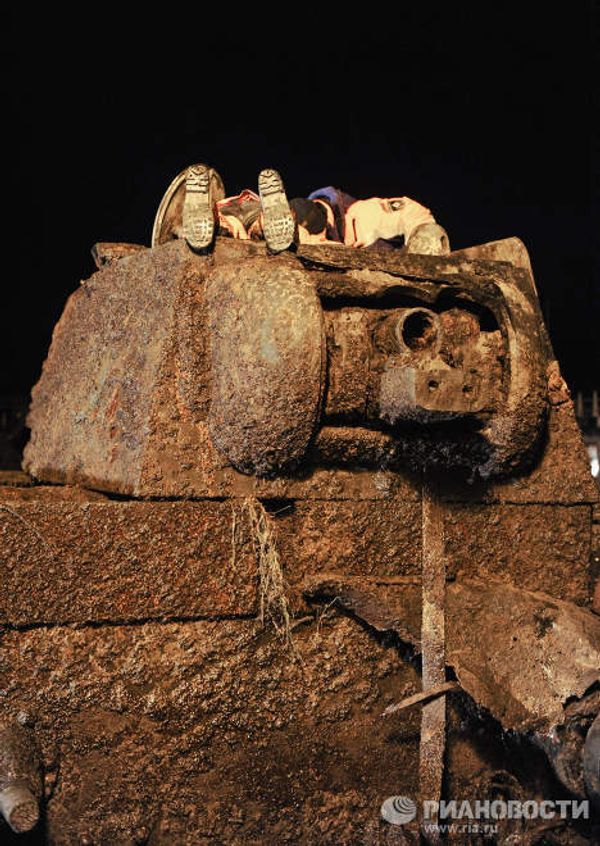
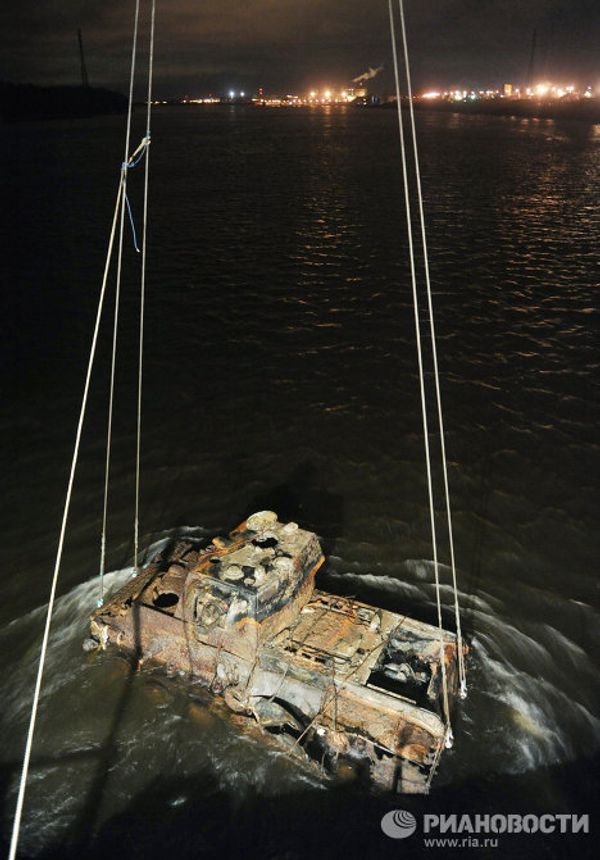
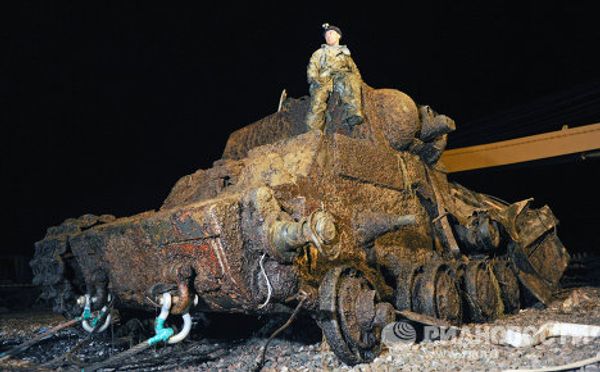
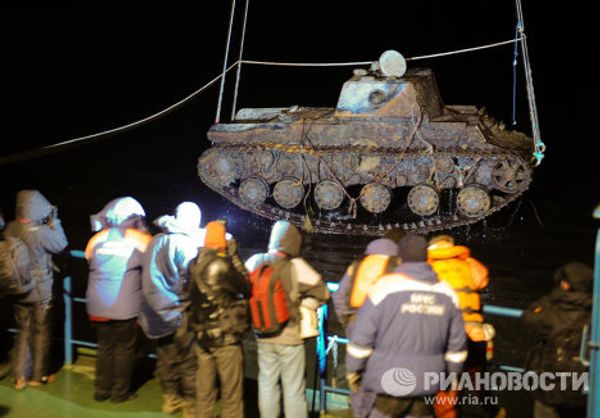
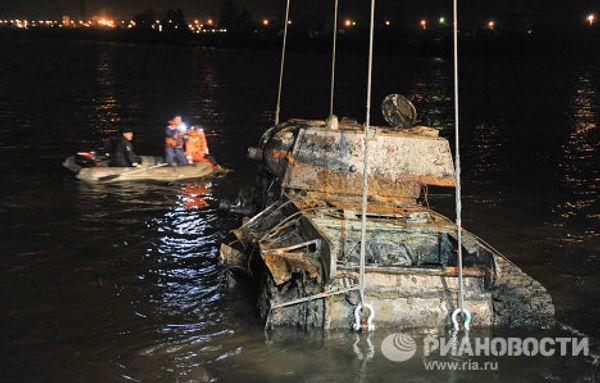
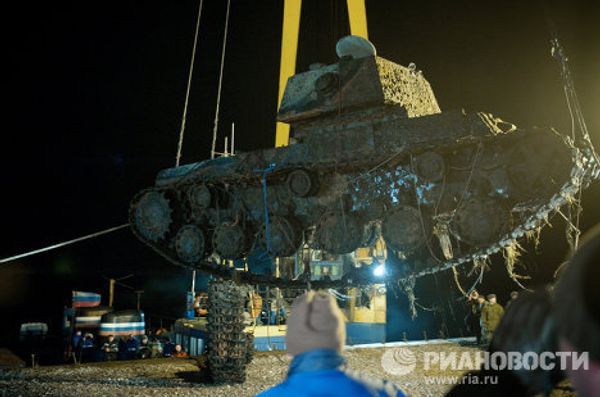
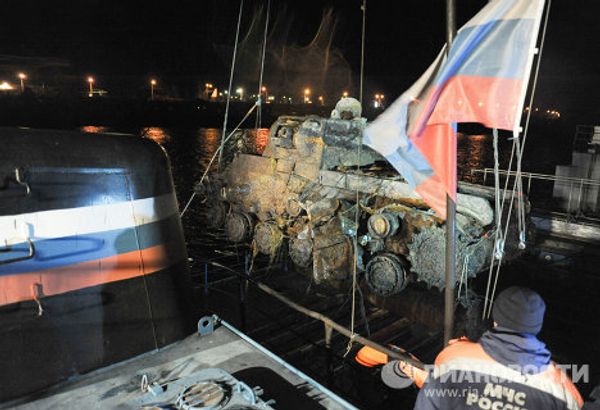
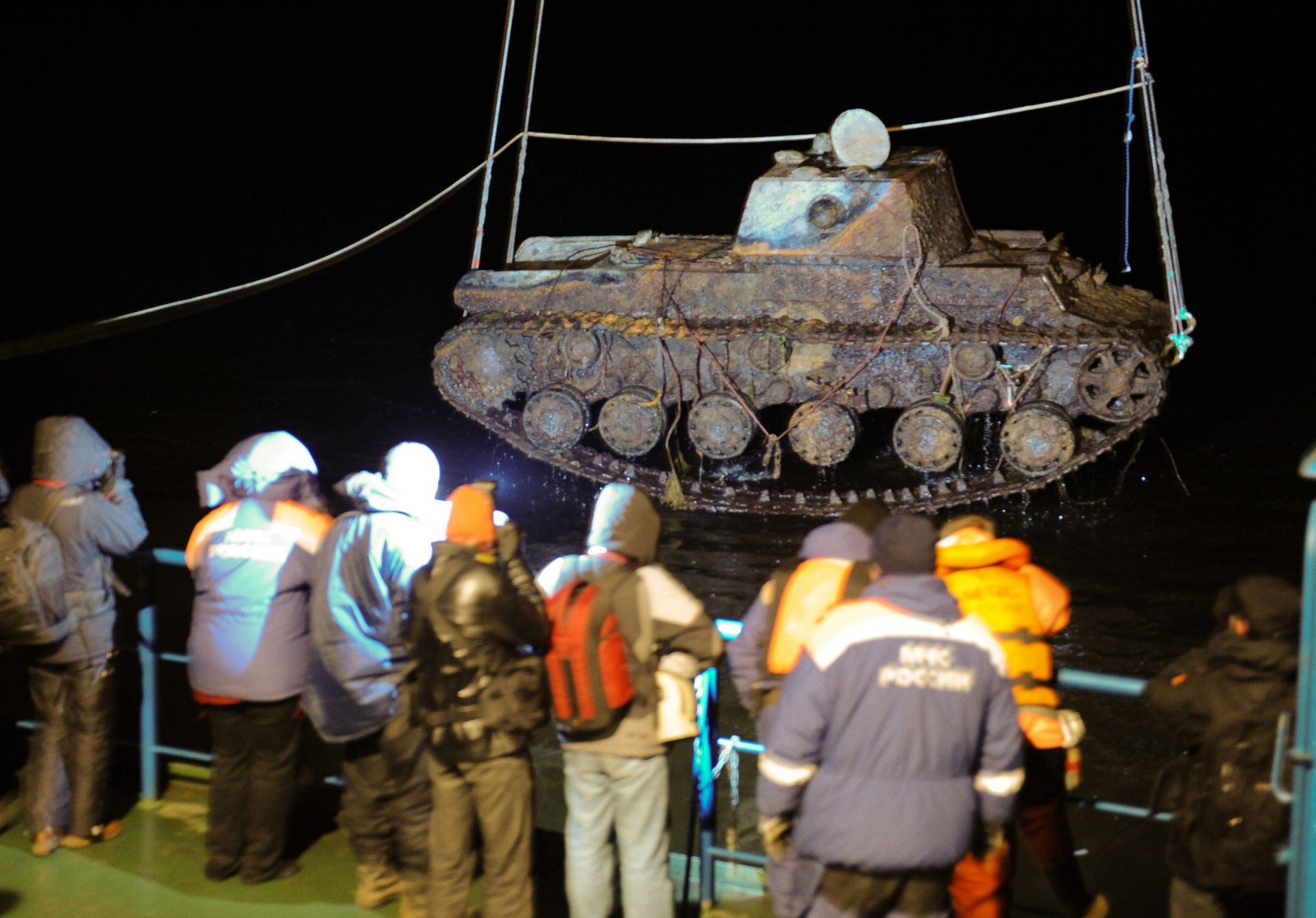
A Klim Voroshilov KV-1 heavy tank which sank during World War II has been raised from the bottom of the Neva River in the Leningrad Region’s Kirov District and... 17.11.2011, Sputnik International
A Klim Voroshilov KV-1 heavy tank which sank during World War II has been raised from the bottom of the Neva River in the Leningrad Region’s Kirov District and not far from the Nevsky Pyatachok (Neva Bridgehead).
A Klim Voroshilov KV-1 heavy tank which sank during World War II has been raised from the bottom of the Neva River in the Leningrad Region’s Kirov District and not far from the Nevsky Pyatachok (Neva Bridgehead).
A Klim Voroshilov KV-1 heavy tank which sank during World War II has been raised from the bottom of the Neva River in the Leningrad Region’s Kirov District and not far from the Nevsky Pyatachok (Neva Bridgehead).
Despite this, soldiers from the Western Military District’s 90th Detached Special Search Battalion and employees from the Battle of Leningrad Museum successfully completed the tank salvage operation in the evening of Tuesday, November 15. The tank will become a museum exhibit.
Specialists from the Emergencies Ministry involved in the salvage operation have removed the tank’s remaining ammunition for disposal. As no human remains were found inside the tank, it appears that the crew managed to abandon the sinking tank.
After determining the numbers of the KV-1 tank’s units and systems, museum employees will leaf through archive records, search for evidence of the crew’s fate and will even be able to locate their relatives and family members.
The tank will be delivered to the museum workshops where its armament will be removed. After it is rebuilt, the tank is to remain in the Leningrad Region and will take part in historical parades and reenactments.
Newsfeed
0
Access to the chat has been blocked for violating the rules .
You will be able to participate again through:∞.
If you do not agree with the blocking, please use the feedback form
The discussion is closed. You can participate in the discussion within 24 hours after the publication of the article.