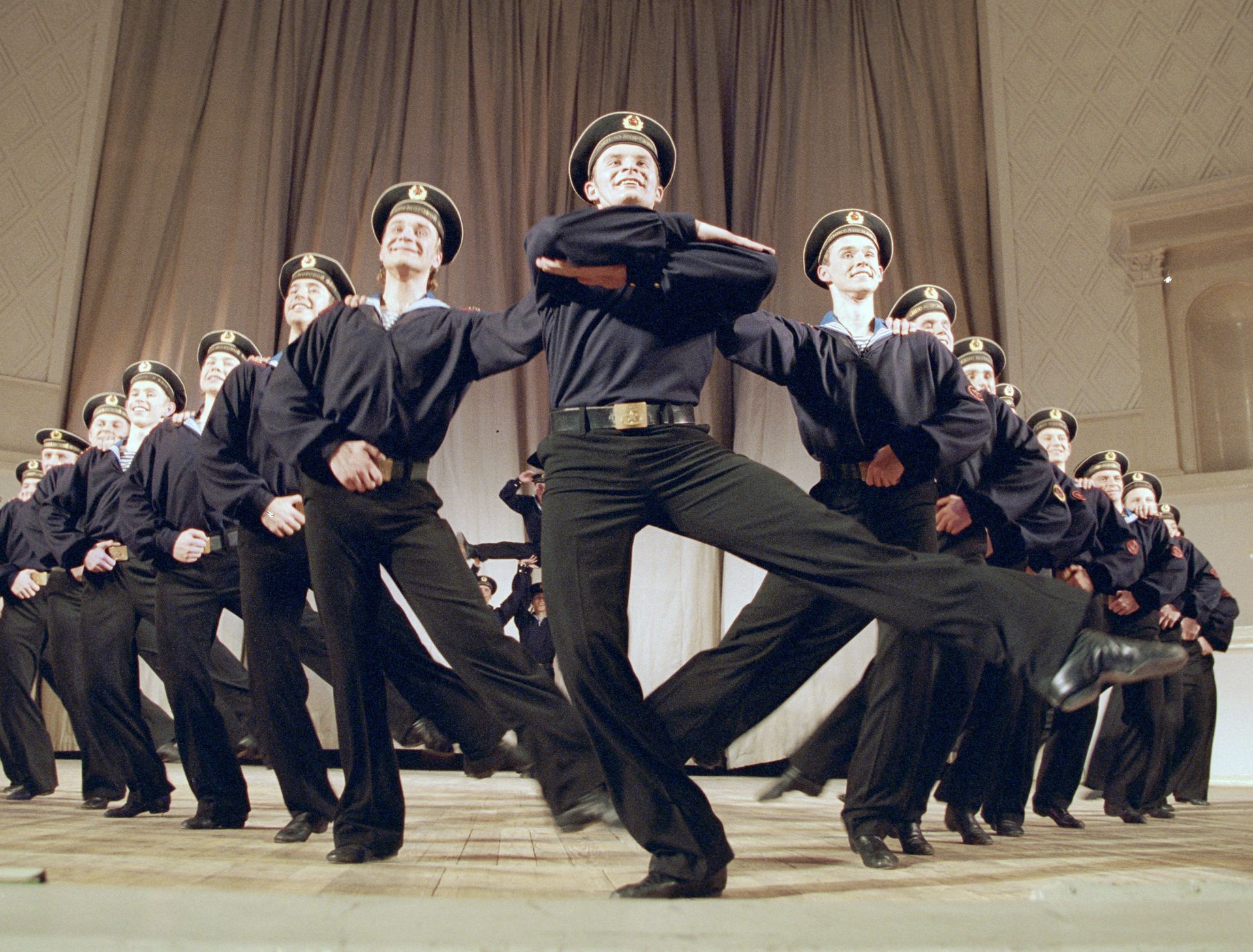
Igor Moiseyev's folk dance ensemble is celebrating its birthday on February 10 - on this day 75 years ago the choreographer held the group's first rehearsal.
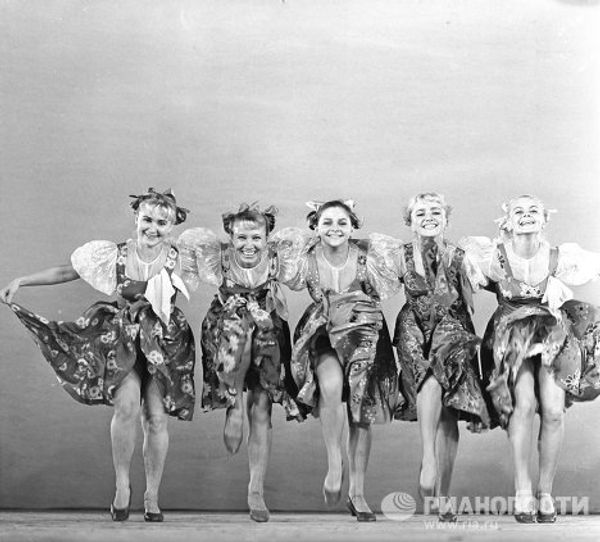
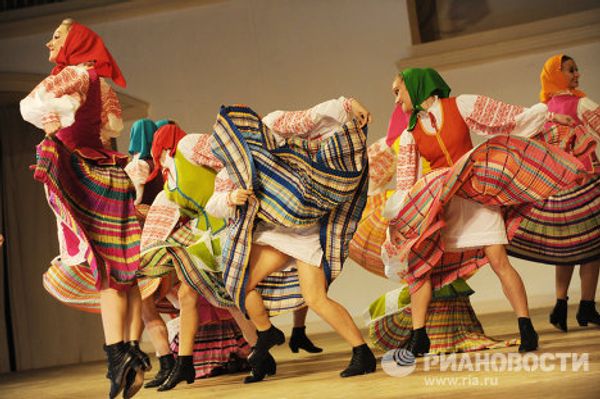
Igor Moiseyev's folk dance ensemble is celebrating its birthday on February 10 - on this day 75 years ago the choreographer held the group's first rehearsal. Photo: the dance Summer performed by a female group from the ensemble.
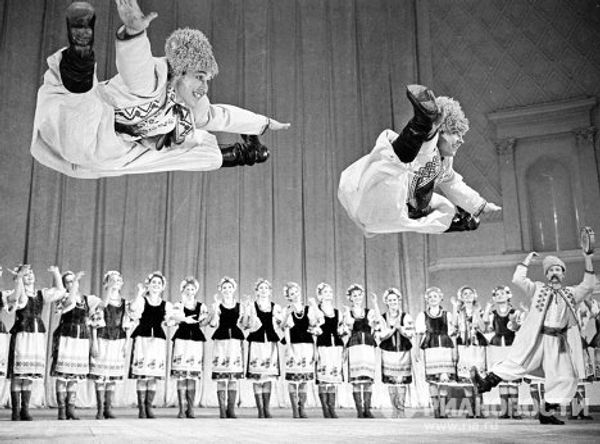
Igor Moiseyev founded a new genre of choreography: beginning with simple folk dances, he moved on to choreographic miniatures, colorful artistic interpretations of the folk dances of the world. Photo: the Ukrainian dance "Stoneflies. A Suite," 1966.
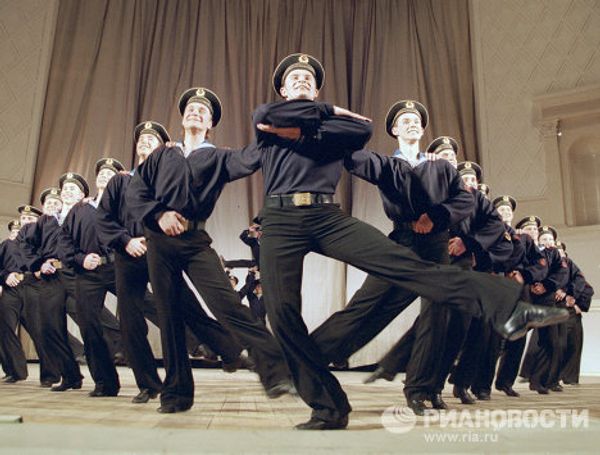
Folk dance ensembles in the style of the group were formed both in Russia and abroad. Photo: the dance Sailor's Suite, 2004.
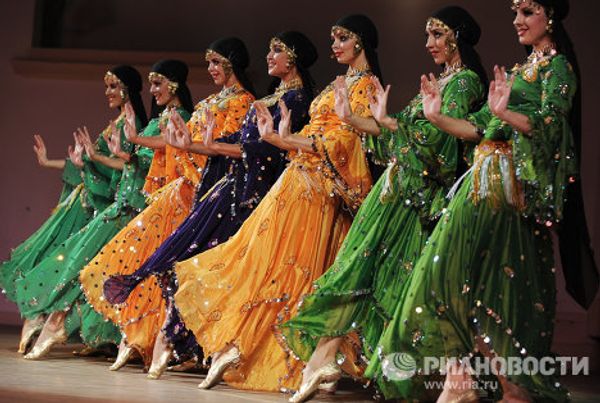
Since 1938, the company started touring in Russia and around the world: it has meanwhile circled the globe twice. Photo: an Egyptian dance (folk rhythms) performed by soloists from the Igor Moiseyev Folk Dance Ensemble, 2009.
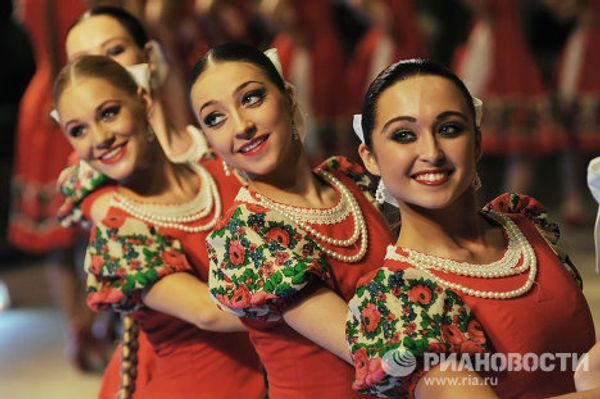
After their tour of Finland in 1945 and of post-War Europe in 1946, the Moiseyev Dance Company started to be called a "peace and goodwill ambassador." Photo: the Russian dance Summer.
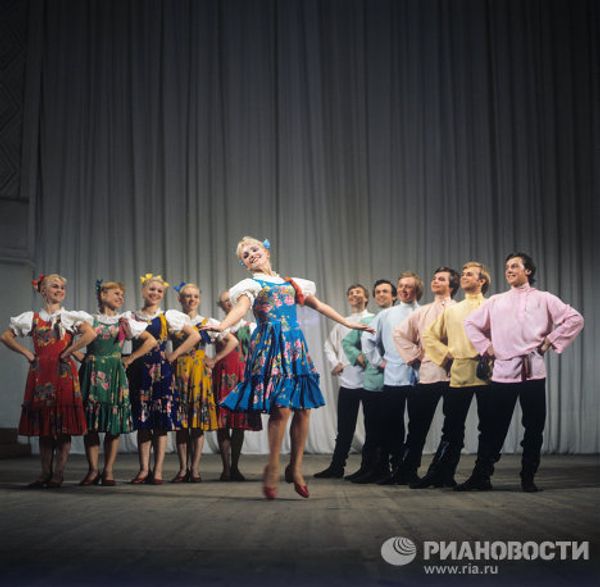
"In France in 1955 we became the first troupe from the Soviet Union to literally tear down the Iron Curtain that divided the Soviet Union and Europe, and then in 1958 in the United States it was we who melted the ice of the Cold War".
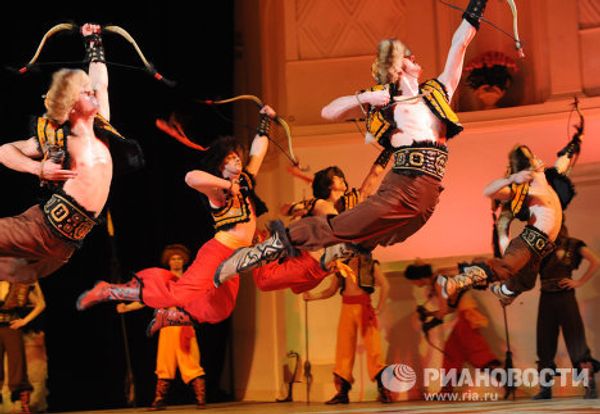
Polovets Dances was the first ballet, which Moiseyev set to the music of the Russian symphonist Alexander Borodin. It premiered in Paris in 1971, where Moiseyev and his company were awarded the honorary gold medal Triumph.
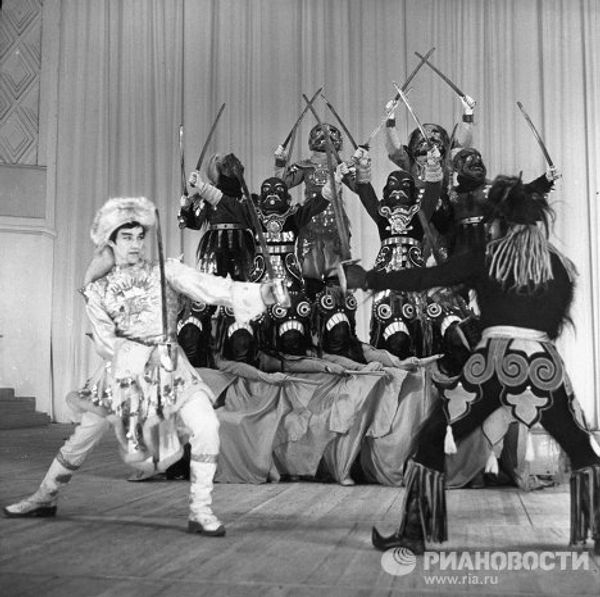
The choreographer created a total of 300 productions, including Mongolian, Korean, Belarusian, Italian, Greek, Gypsy and many other folk dances. Photo: the Mongolian dance Tsam.
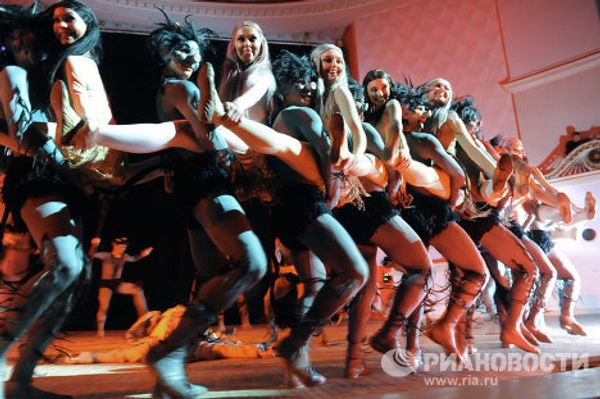
One of Moiseyev's more unique works was his 1983 ballet Night on Bald Mountain.
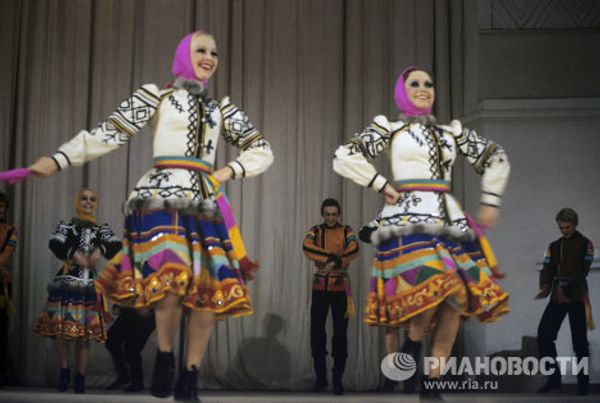
In 1943, the dance troupe set up its own school studio - this was the first state professional folk dancing school in the world, and today it has the status of specialized academy. All its instructors are former dancers with the ensemble and the students are its stars of the future. Photo: Russian folk dance Polyanka.
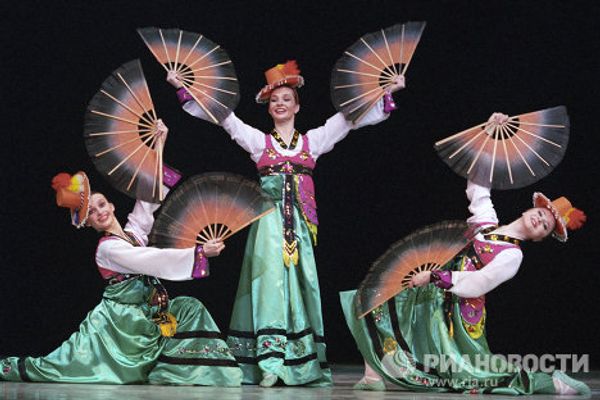
Five years on from the death of the ballet maestro in 2007, the Moiseyev ensemble cites its main task as preserving his unique heritage. Photo: Korean dance with fans.
The main artistic reference point for today's artists are the words of Igor Moiseyev himself: "Dance is a flexible portrait of the people, it is mute poetry, visible song, harboring a part of the soul of the people." Photo: Belarusian dance Bulba.