Moscow’s Shukhov Tower started airing radio broadcasts exactly 90 years ago. The radio tower ranks among the most beautiful and outstanding engineering masterpieces worldwide. The tower’s mockups have been repeatedly displayed at prestigious European architectural exhibitions, thus confirming its global significance.
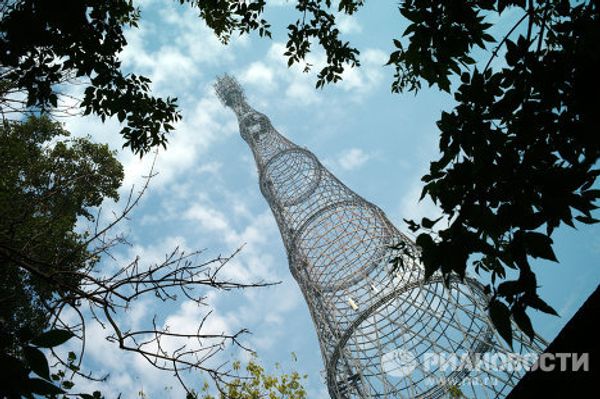
Moscow’s Shukhov Tower started airing radio broadcasts exactly 90 years ago. The radio tower ranks among the most beautiful and outstanding engineering masterpieces worldwide. The tower’s mockups have been repeatedly displayed at prestigious European architectural exhibitions, thus confirming its global significance.

The Shukhov Tower’s image was used as the logo of the Engineer’s Art exhibition at the Georges Pompidou Center in Paris. In 2003, a six-meter gilded mockup of the Shukhov Tower was installed in Munich at an exhibition featuring the best buildings and structures of 20th century architecture.
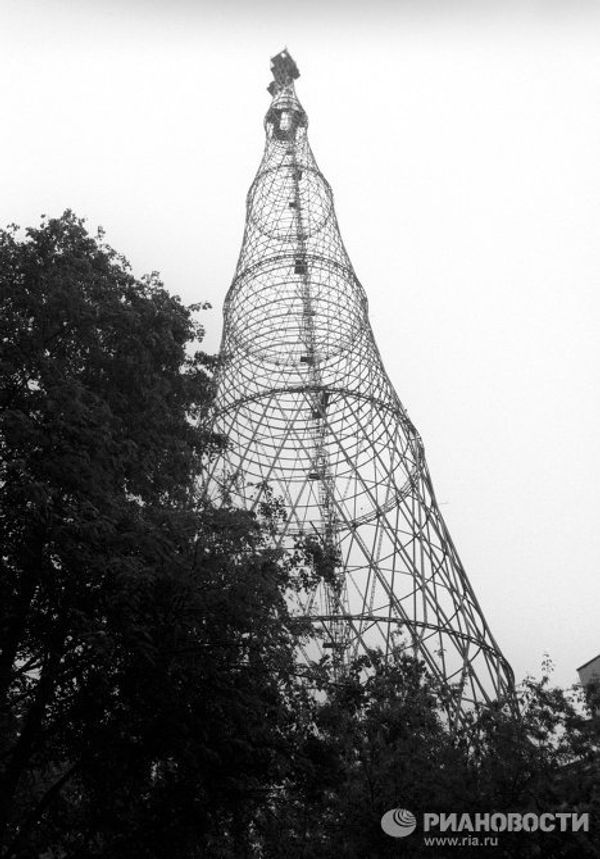
The Shukhov Tower is a unique hyperboloid structure made in the form of load-bearing steel lattice-work. Located on Moscow’s Shabolovka Street, the tower was built in 1920-1922.
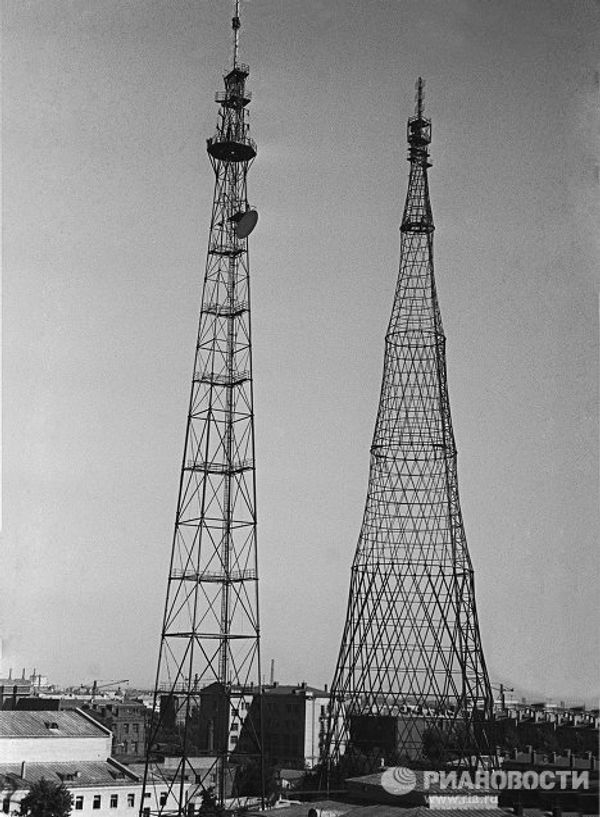
In 1919, Russian engineer, architect and member of the national Academy of Sciences Vladimir Shukhov completed the first design of the Shabolovka tower with a rated height of 350 meters. As Russia was plagued by metal shortages during the Civil War, the tower’s height was subsequently reduced to 148.3 meters under the second design.
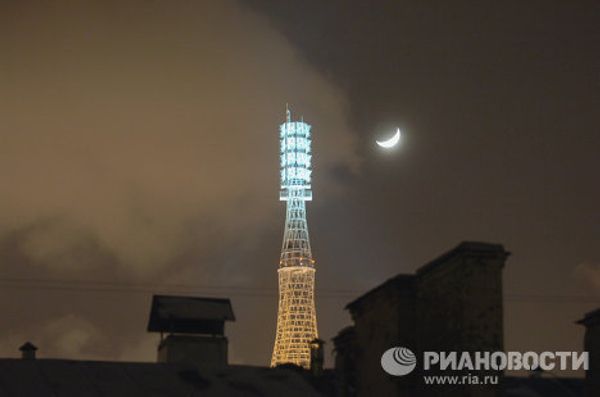
Construction of the radio tower began March 14, 1920 on Moscow’s Shabolovka Street. Although the project was repeatedly stopped due to a lack of construction materials, the first radio broadcasts were aired on March 19, 1922. Everyone was thrilled with the beautiful tower, the tallest Russian building at that time.
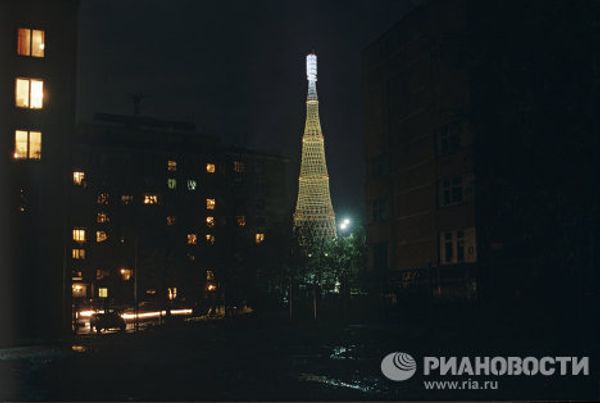
Soviet writer Alexei Tolstoy was inspired by the Shukhov Tower’s design, which comprised of hyperboloid sections that jutted into the sky. He subsequently wrote the bestselling novel “Engineer Garin and His Death Ray.”

The Shukhov Tower has an unusual open-worked lattice design, which minimizes the wind load presenting the main danger for all tall structures and buildings. The tower’s sections are single-cavity hyperboloids of rotation featuring straight beams. The ends of such beams rest against circular foundations.

The unique design is, in fact, a free-standing hyperboloid structure made of durable and light-weight materials. Three times less steel was used to build one unit of the Shukhov Tower’s height than one unit of the Paris-based Eiffel Tower’s height.

The Shukhov Tower reached a height of 160 meters after the installation of two cross-bars and a flag staff. Its foundation is located 131 meters above sea level.
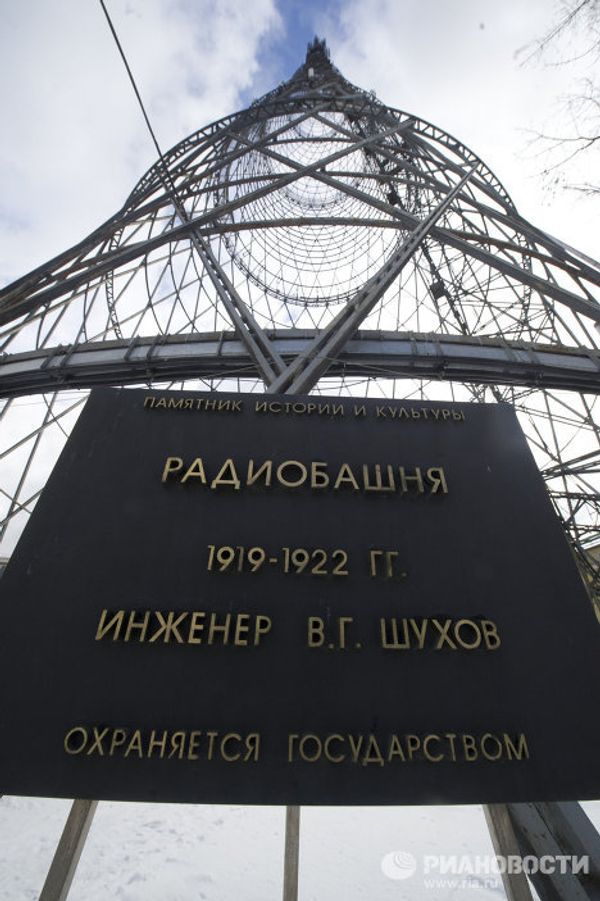
In the 90 years of its existence, the Shukhov Tower has accommodated the aerials of major radio stations and television channels.
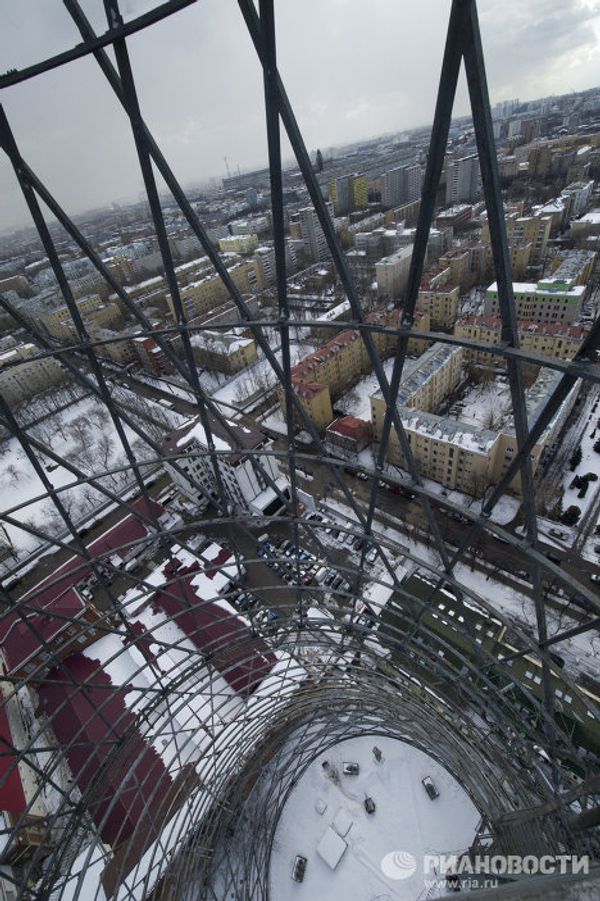
The tower no longer serves as a radio transceiver. Nor does it broadcast any TV shows. Analysts say the facility is in need of urgent renovation.