Rubies, Emeralds and Diamonds Sparkle at the Bolshoi
Rubies, Emeralds and Diamonds Sparkle at the Bolshoi
Sputnik International
George Balanchine’s famous three-act ballet Jewels will premier at the Bolshoi Theater on May 5. The three acts are called Emeralds, Rubies and Diamonds... 05.05.2012, Sputnik International
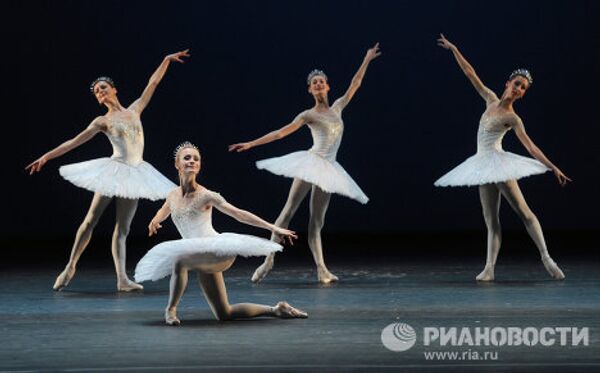
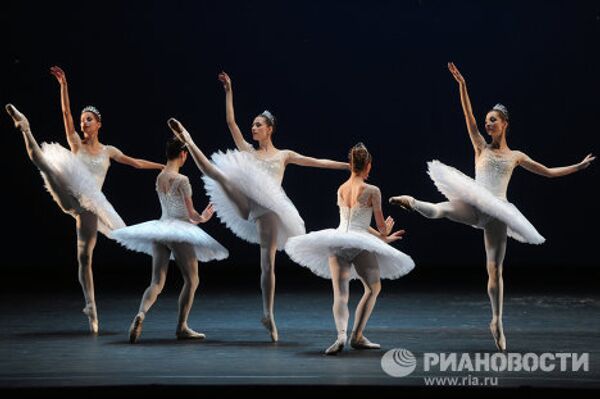
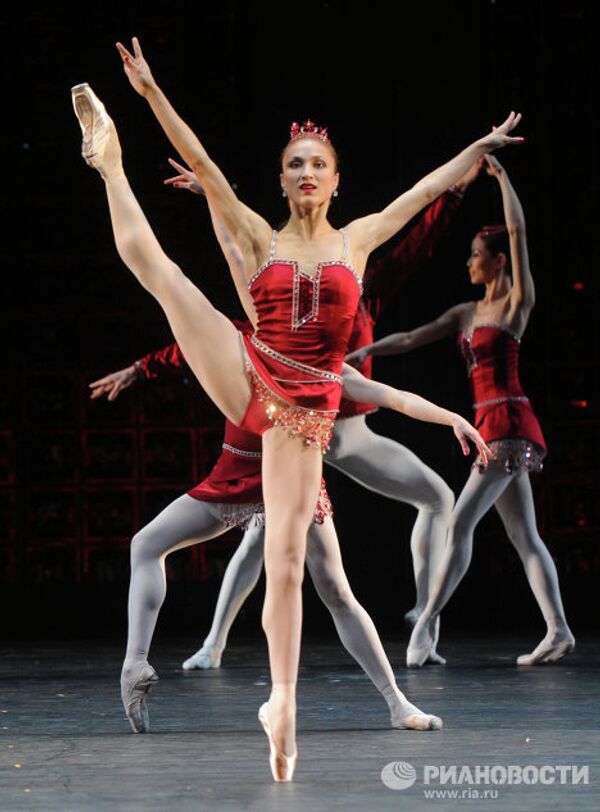
George Balanchine’s famous three-act ballet Jewels will premier at the Bolshoi Theater on May 5. The three acts are called Emeralds, Rubies and Diamonds. Spectators can look forward to luxurious stage sets and fantastic costumes which have been created by artists and jewellers, though the Bolshoi’s main jewel of course is as ever its leading ladies and leading men.
George Balanchine’s famous three-act ballet Jewels will premier at the Bolshoi Theater on May 5. The three acts are called Emeralds, Rubies and Diamonds. Spectators can look forward to luxurious stage sets and fantastic costumes which have been created by artists and jewellers, though the Bolshoi’s main jewel of course is as ever its leading ladies and leading men.
George Balanchine’s famous three-act ballet Jewels will premier at the Bolshoi Theater on May 5. The three acts are called Emeralds, Rubies and Diamonds. Spectators can look forward to luxurious stage sets and fantastic costumes which have been created by artists and jewellers, though the Bolshoi’s main jewel of course is as ever its leading ladies and leading men.
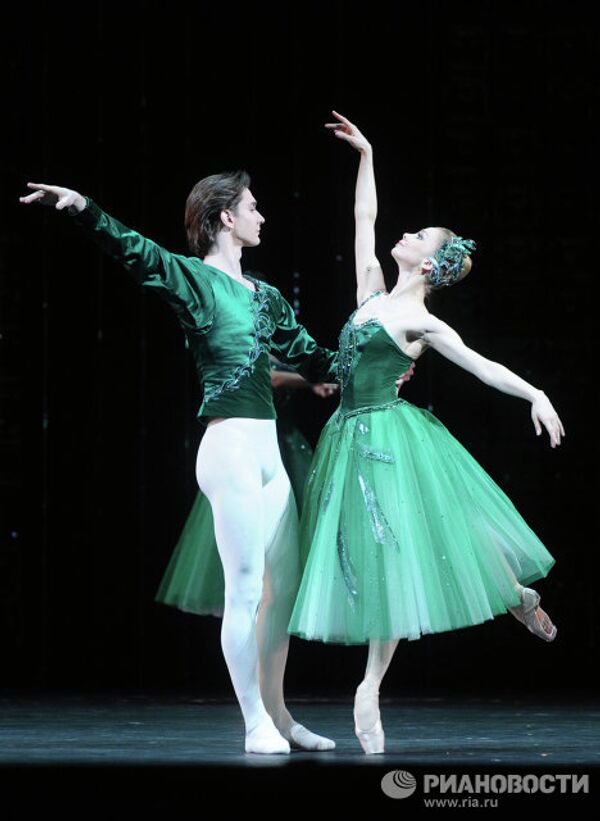
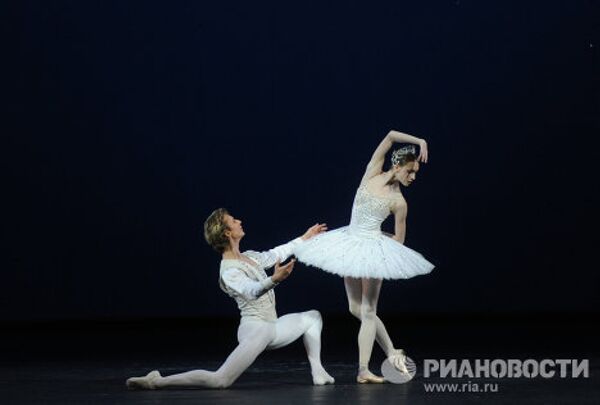
Balanchine’s inspiration for this ballet came from the jewelry collection of Claude Arpels. “Of course I always loved precious stones,” Balanchine wrote. “When all’s said and done I’m an Eastern man, a Georgian. I love the color of gems, the beauty of precious stones. Photo: Yevgenia Obraztsova and Alexander Volchkov in a scene from George Balanchine’s ballet Jewels.
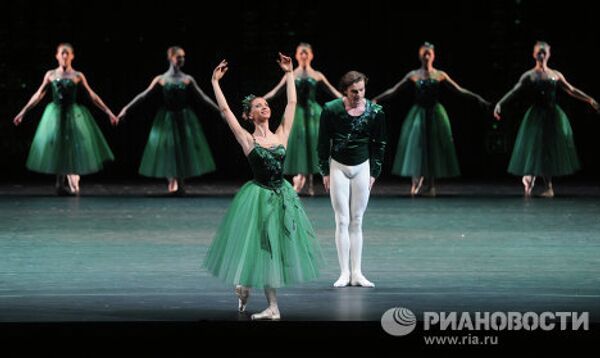
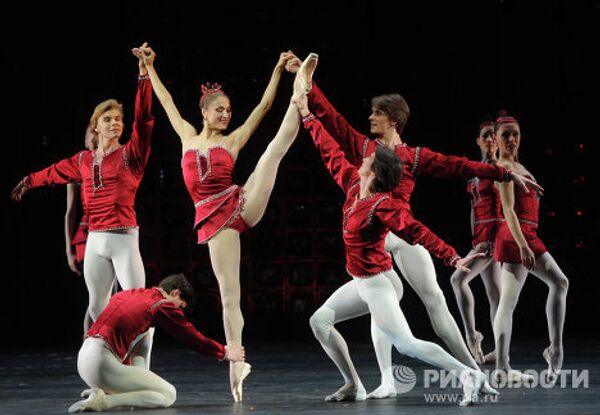
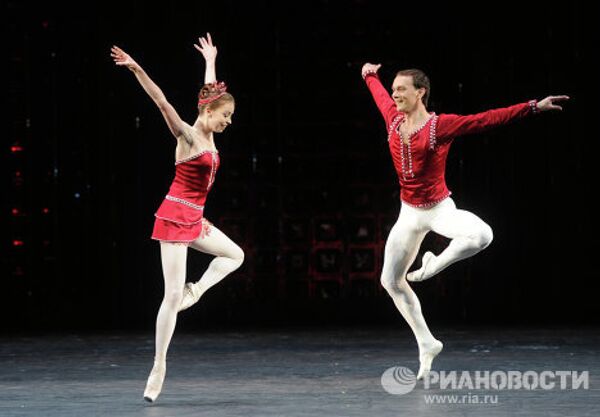
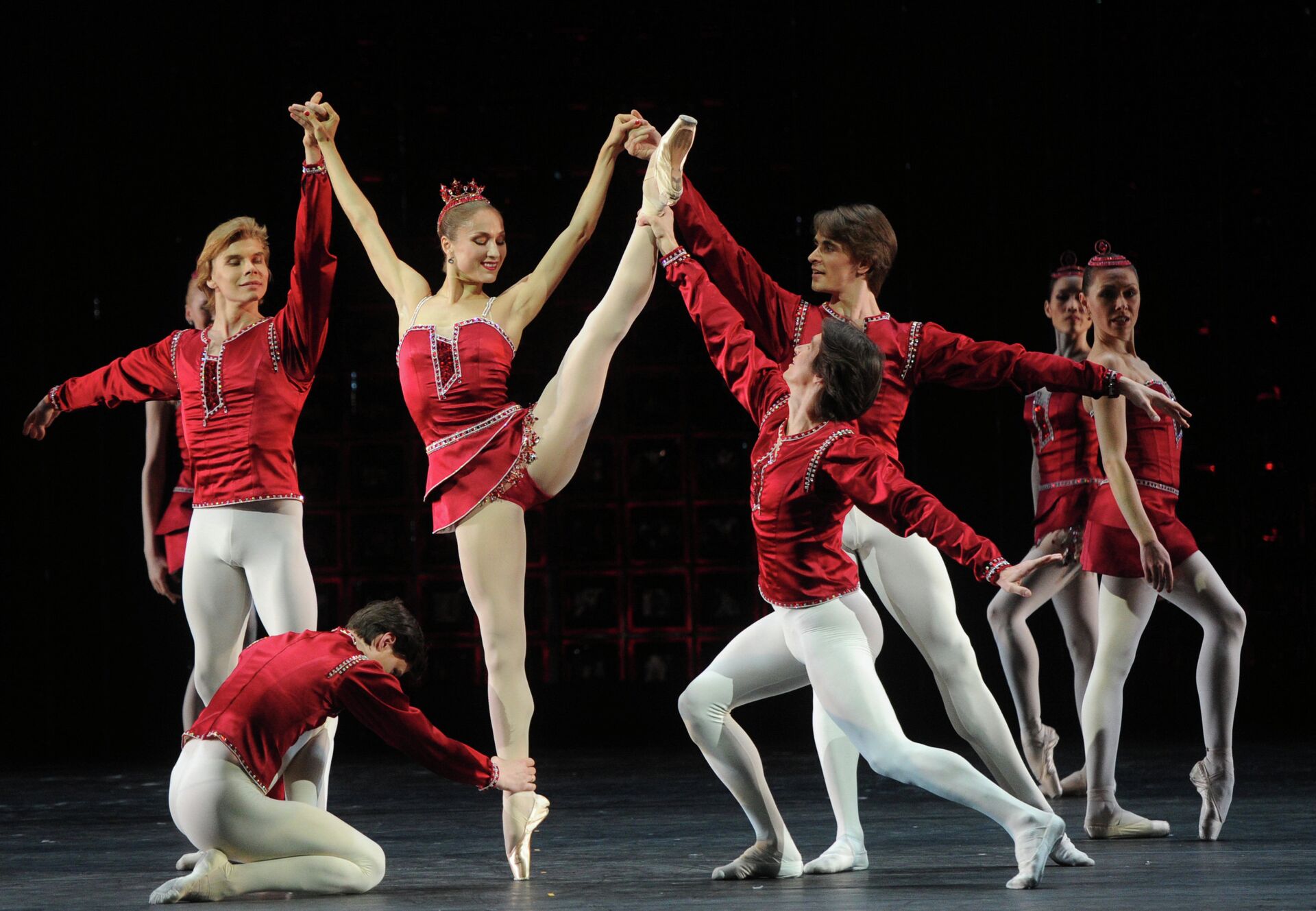
The stage set and distinctive costumes were designed by the Bolshoi’s artists and the Van Cleef and Arpels jewelry company, who at one time inspired Balanchine. The stage is decorated with vertical panels of emeralds, rubies and diamonds. The dancers perform in costumes which are the same color as these gemstones. The costumes are embroidered with Swarkovski crystals, for Rubies alone over 300 were used. Photo: Yekaterina Shipulina in a scene from George Balanchine’s ballet Jewels.
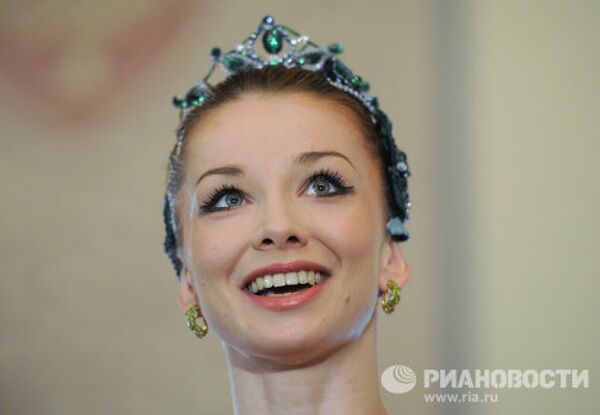
Costume designer Yelena Zaitseva says the guiding principle behind the costumes, their style, is defined by the music. “The music for Emeralds was composed by Gabriel Fauré at the beginning of the 20th century, so for the costumes we tried to recreate the same romantic elegant French style. They are sewn from velvet and satin and decorated with emeralds,” she said. Photo: Yevgenia Obraztsova and Alexander Volchikov in a scene from George Balanchine’s ballet Jewels.
The music for Act II, written by Stravinsky, is more severe, sharper, and brighter which led to the creation of something more akin to jazz rather than ballet costumes. “The final act by Tchaikovsky is festive and ceremonial which goes with the diamonds that sparkle on the ballerina’s tutus and the costumes of their partners,” Zaitseva adds.
But sparkling even more than the jewels on the stage of the Bolshoi are the performers. Artistic Director of the Bolshoi Ballet Sergei Filin says the main reason why the theater decided to put on Blanchine’s ballet was that its ballet troupe really does have its own collection of emeralds, rubies and diamonds. Photo: Yekaterina Shipulina in a scene from George Balanchine’s ballet Jewels.
Ballerina Yevgenia Obraztsova (photo), who dances with Alexander Volchkov, thinks that Emeralds, which also features solo performances by Vladislav Lantratov and Anna Tikhomirova, is the most philosophical of the three acts.
The main roles in Rubies are performed by Yekaterina Krysanova and Yekaterina Shipulina, as well as Vyacheslav Lopatin. Photo: Yekaterina Krysanova and Vyacheslav Lopatin in a scene from George Balanchine’s ballet Jewels.
Access to the chat has been blocked for violating the rules .
You will be able to participate again through:∞.
If you do not agree with the blocking, please use the feedback form
The discussion is closed. You can participate in the discussion within 24 hours after the publication of the article.