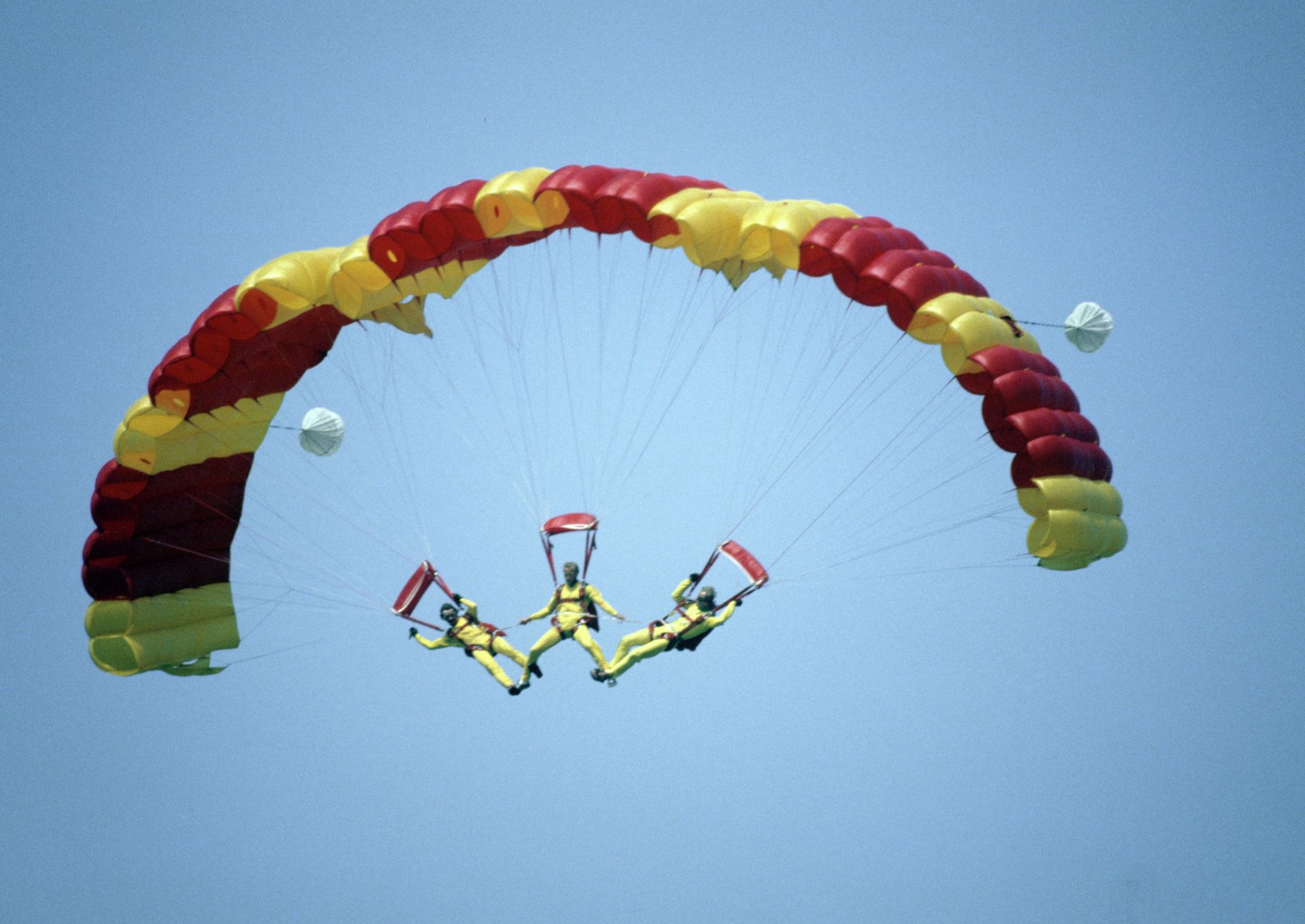
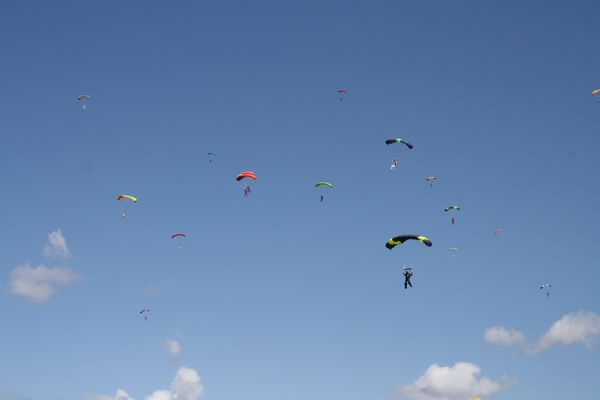
On July 21, Russian female skydivers set a world record in the skies over Kolomna, Moscow Region, by forming a flower involving 88 people. The composition beat last year’s record set by 84 German jumpers. This was their “gift” ahead of Russia’s national Skydiving Day, which was first celebrated on July 26, 1930.
1/15
On July 21, Russian female skydivers set a world record in the skies over Kolomna, Moscow Region, by forming a flower involving 88 people. The composition beat last year’s record set by 84 German jumpers. This was their “gift” ahead of Russia’s national Skydiving Day, which was first celebrated on July 26, 1930.
The reasons people jump with parachutes have evolved over the years. Initially, they were used in rescue operations and later were used to land troops behind enemy lines.
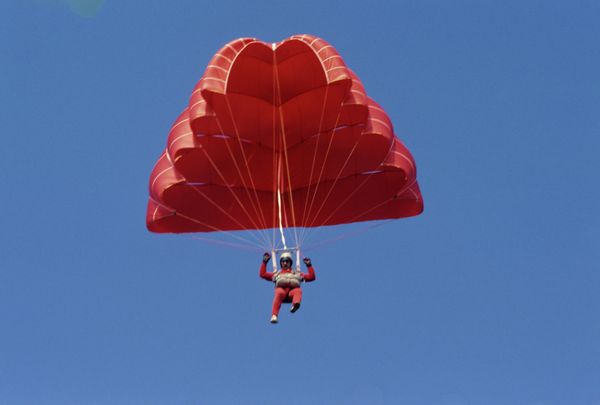
Modern skydiving includes various performance styles such as freestyle, freefall re-formation, group acrobatics and freeflying.
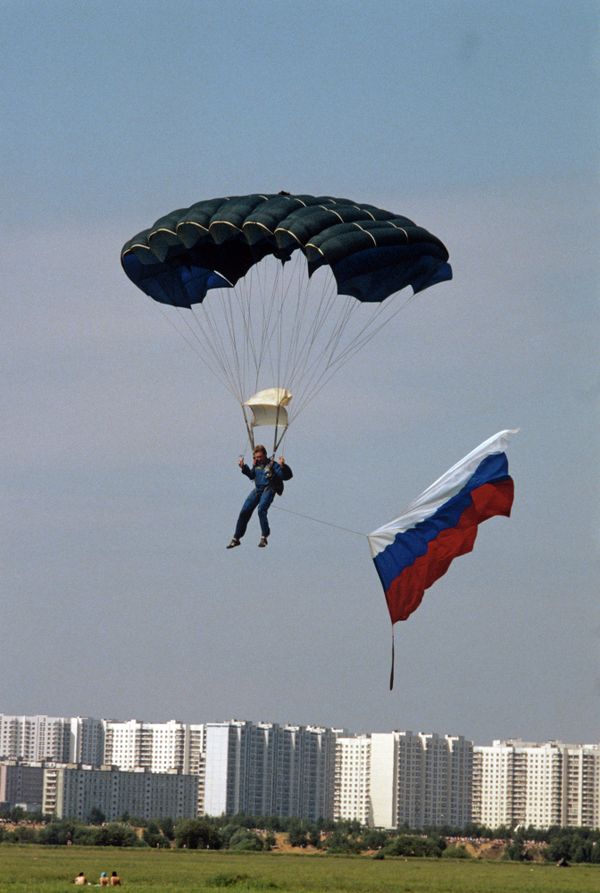
“Classical” parachuting includes two exercises: landing for accuracy and six freefall formations.
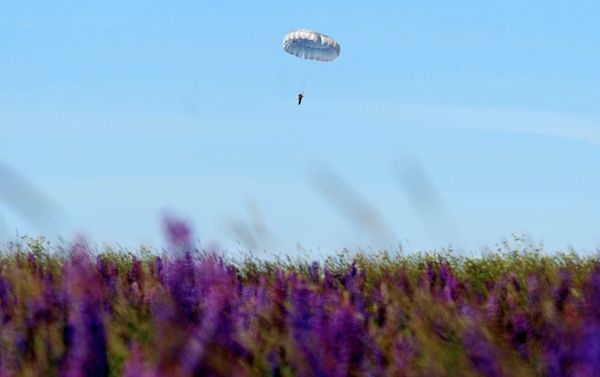
The current world record in accuracy landing is seven precise landings in a row.
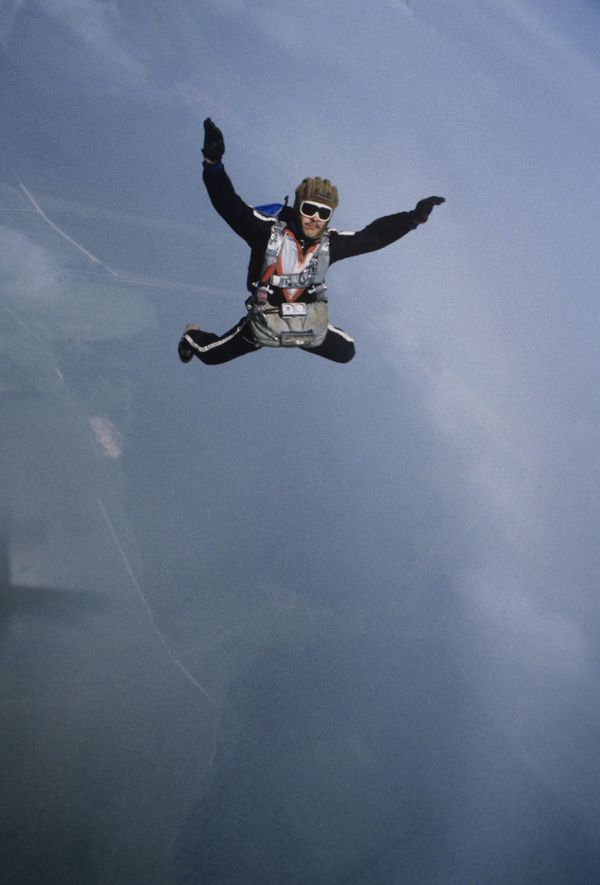
The record for completing freefall maneuvers is 5.18 seconds.
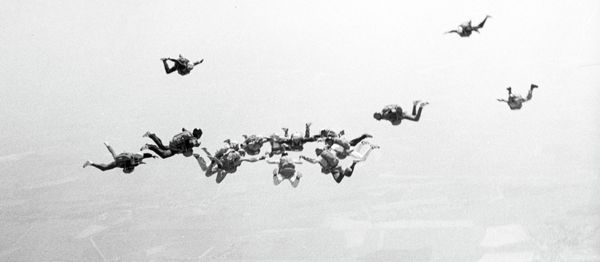
Group aerobatics involves forming figures in freefall.
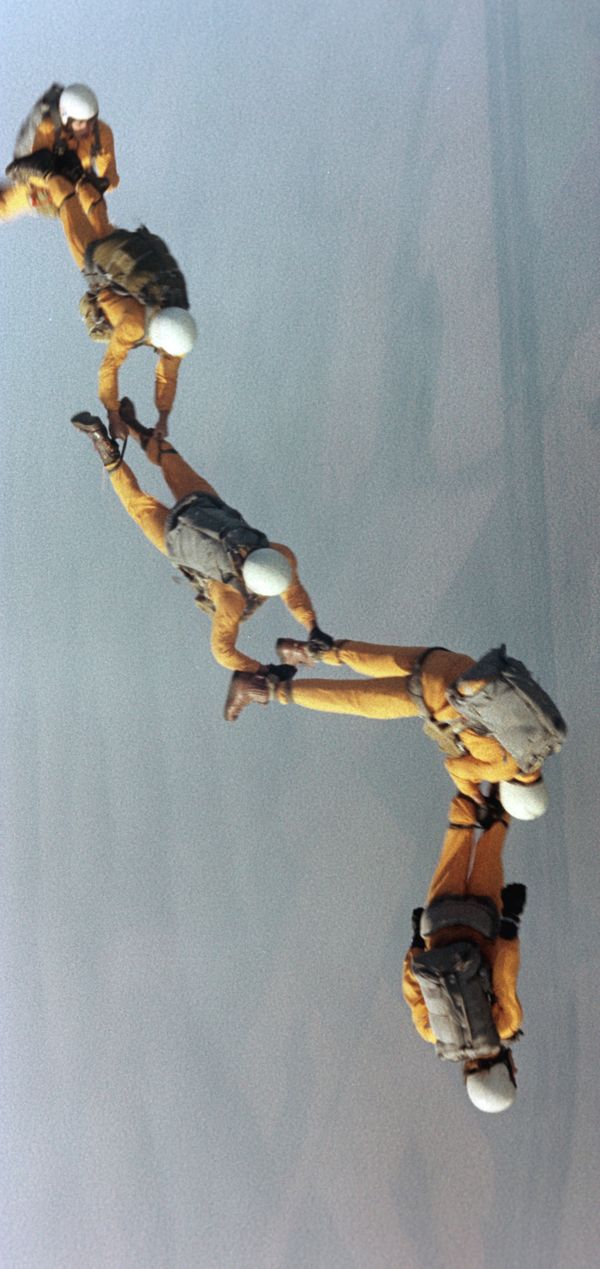
Swooping, or canopy piloting, is one of the most spectacular and dangerous forms of parachuting.
In the photo: The “spiral” element.
In the photo: The “spiral” element.
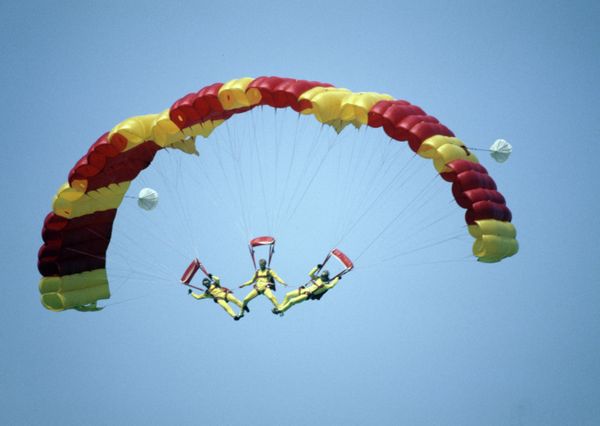
During freestyle skydiving, the parachutist performs complex maneuvers, rotating at specific angles and on specific axes and in various positions. Every move is supported only by the air flow, which gives the skydiver many opportunities for improvisation. It is a sky ballet of sorts. Several people can do a freefall simultaneously.
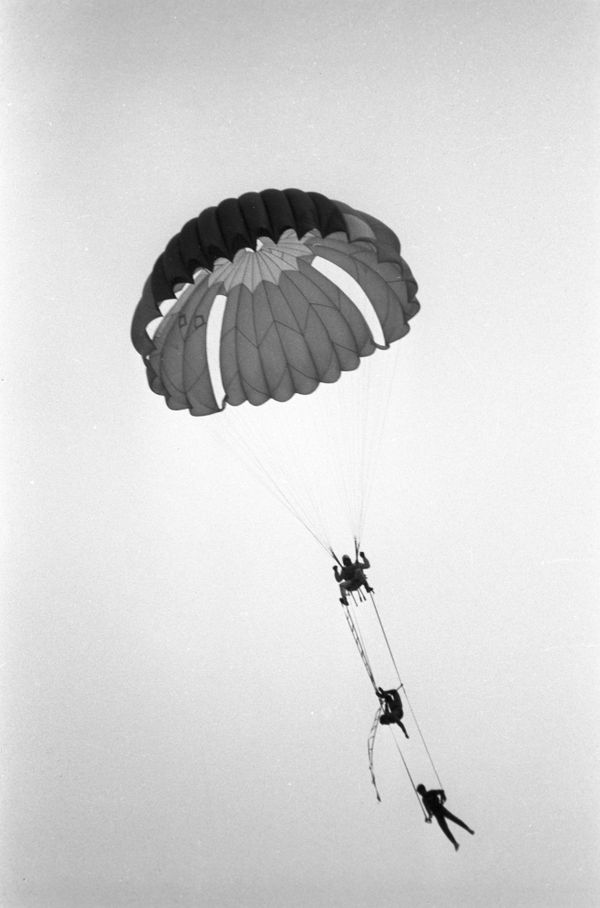
Leonardo da Vinci is believed to have conceived of the parachute. In his 1495 manuscript, da Vinci mentions a safe descent from a high altitude using a canopy made of starched fabric 12x12 cubits in size, or about 6-7 meters in diameter, roughly the size of the average modern-day parachute.
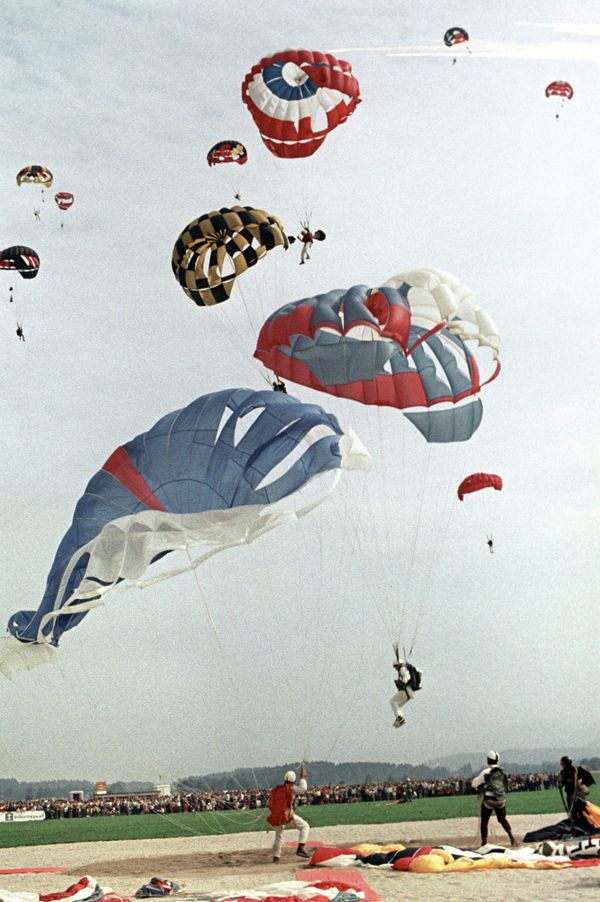
In the early 17th century, another Italian inventor, Fausto Veranzio, described a similar device except that the size of the canopy depended on the jumper’s weight. The tool was first used by a French prison inmate, Andre-Jacques Garnerin, who escaped by jumping from his cell window with a parachute made from bed sheets, ropes and whale baleen. Parachutes, along with hot air balloons, came into wide use in the 18th century.
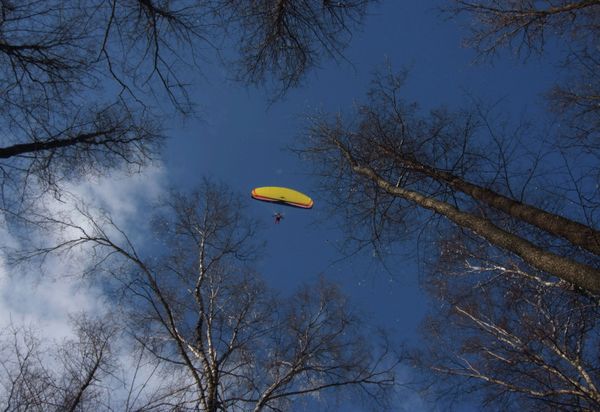
The first parachute jump from a plane came was conducted in Montana in March 1, 1912, when U.S. Army Captain Albert Berry jumped from a height of 1,500 feet. He released his parachute after a 400-feet freefall and landed successfully at the military base where he served.
In the photo: A participant of the ninth annual expedition flies to the Rdeisky Monastery.
In the photo: A participant of the ninth annual expedition flies to the Rdeisky Monastery.
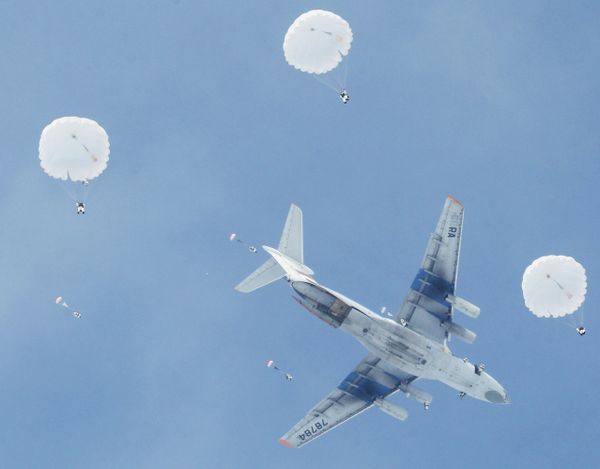
The first rescue parachute in the USSR was used by the test pilot Mikhail Gromov on June 23, 1927, at the Khodynsky airfield. He purposely put his plane into a spin from which it could not recover and jumped with a rescue parachute from a height of 600 meters. Gleb Kotelnikov later improved the parachute’s design significantly and created new models (including cargo parachutes) that were deployed with the Soviet Airborne Troops.
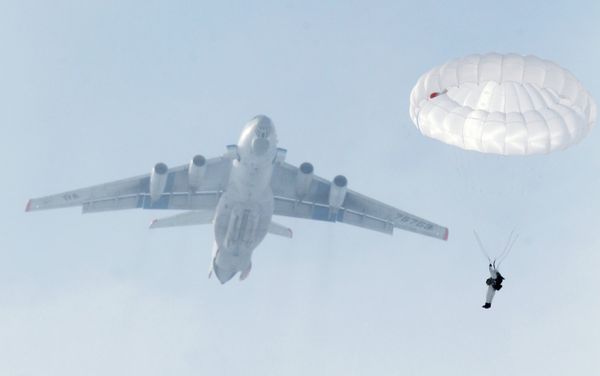
In the photo: The landing troops of the 106th guard airborne division of the Order of the Red Banner and the Order of Kutuzov being air dropped from an Ilyushin Il-76 military cargo plane.
In the photo: The landing troops of the 106th guard airborne division of the Order of the Red Banner and the Order of Kutuzov being air dropped from an Ilyushin Il-76 military cargo plane.
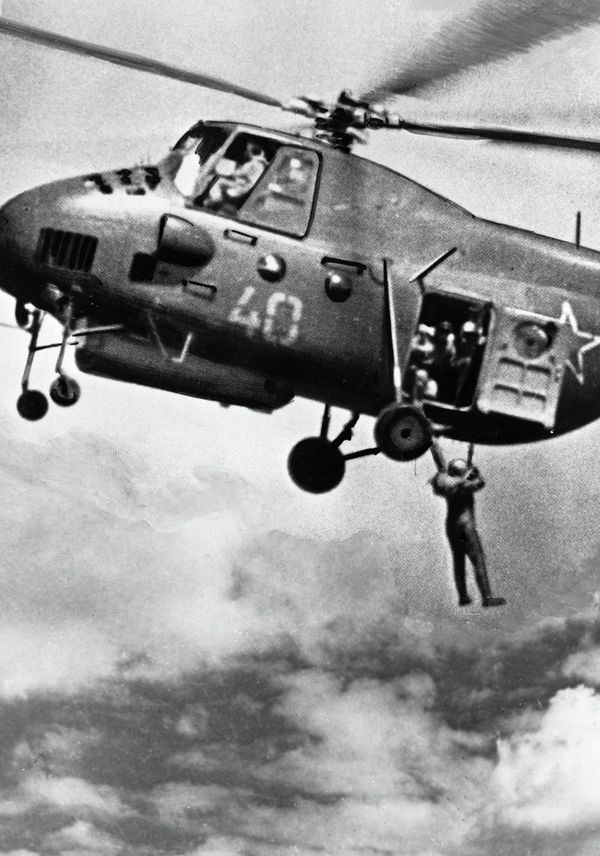
The first World Parachuting Championships took place in 1951.
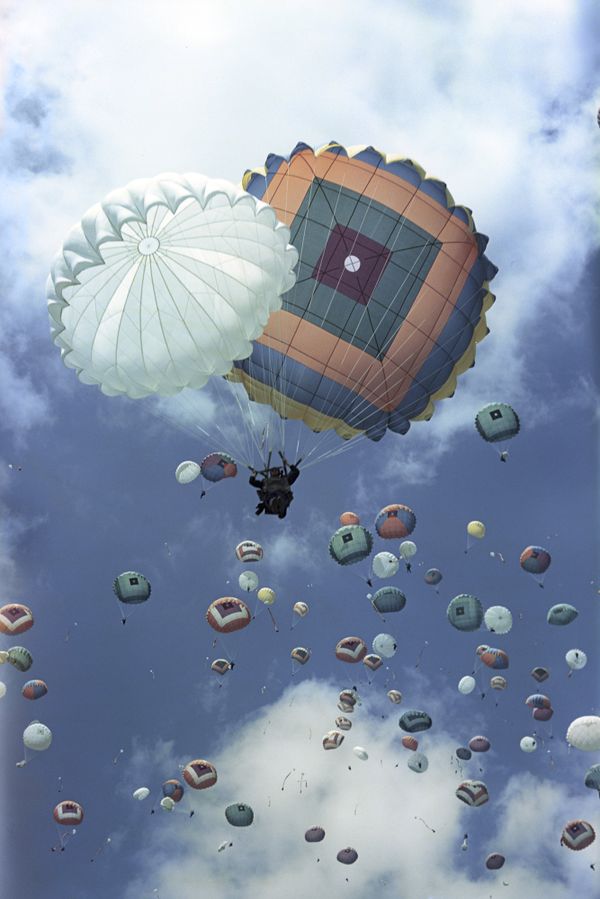
By 1982, some 60 countries had joined the International Parachuting Commission.