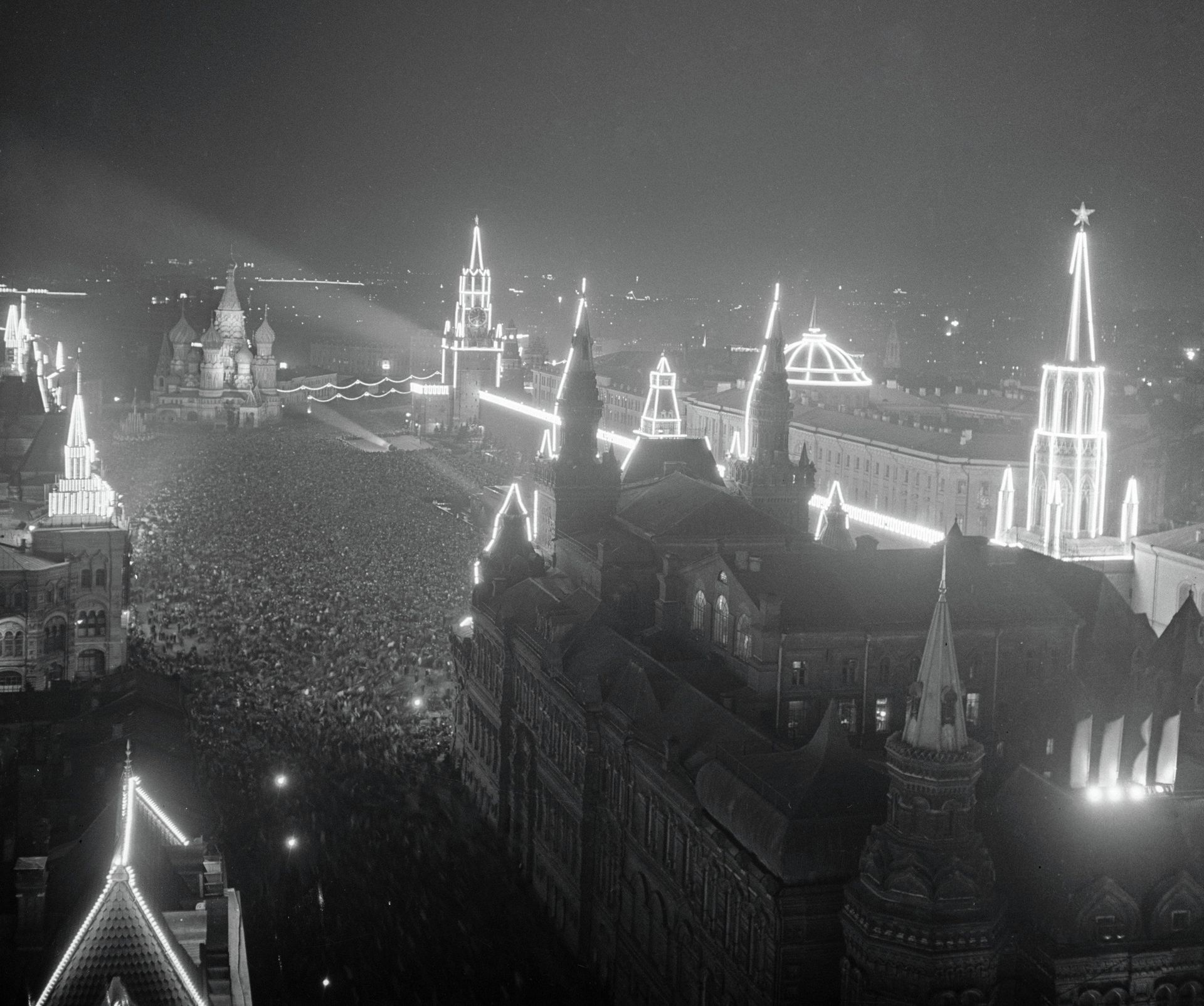
The RIA Novosti site In Moscow is offering its readers a photo essay on post-war life in the Russian capital.
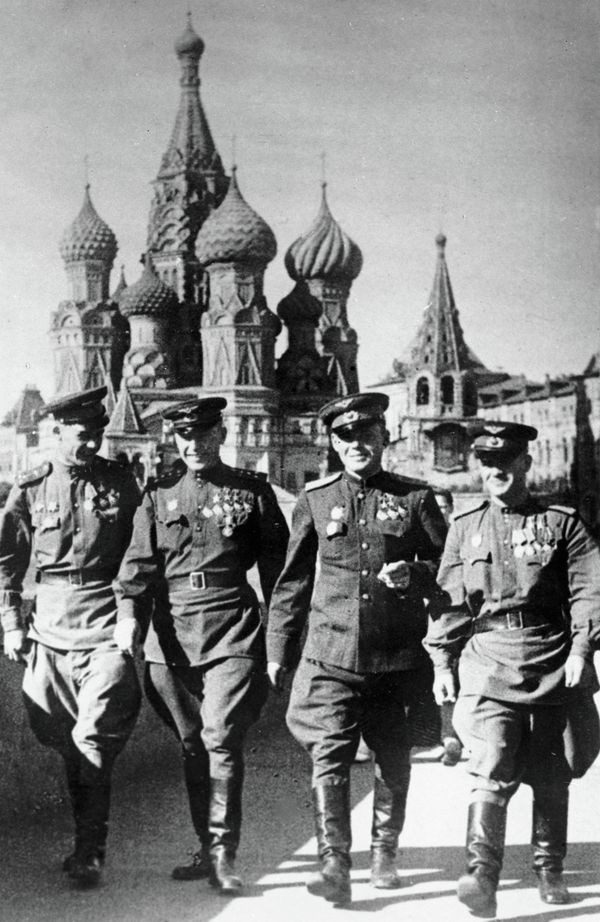
The post-war period in Moscow witnessed the revival and development of industry and agriculture. Photo: heroes of the Soviet Union, pilots Alexander Pokryshkin (second from left), Grigory Rechkalov (center) and Nikolai Gulayev (right) in Red Square on August 1, 1946.
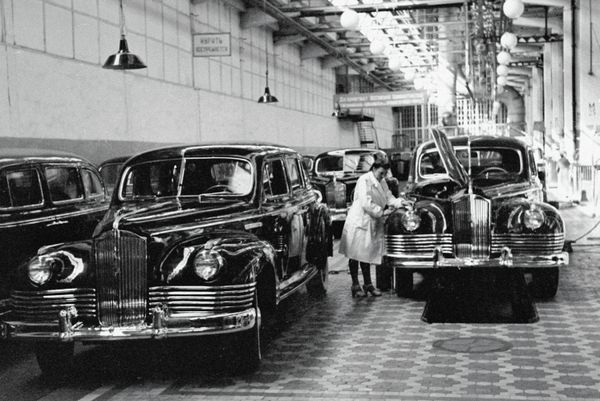
During the first post-war five-year plan Moscow significantly increased production of motor vehicles, both trucks and cars. Photo: the production line for the ZIS-110 car at a Moscow automobile factory. March 1, 1946.
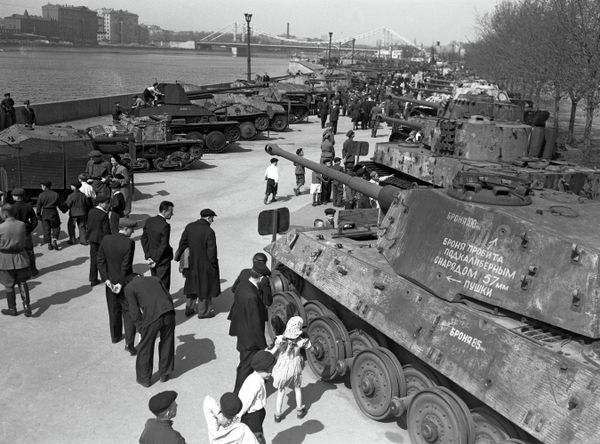
After the victory of the Soviet Union in the Great Patriotic War of 1941-1945 a large-scale exhibition of German technical equipment captured as trophies was held in Gorky Park. It remained open right up until October 1, 1948. Photo: a Tiger II or King Tiger tank (foreground).
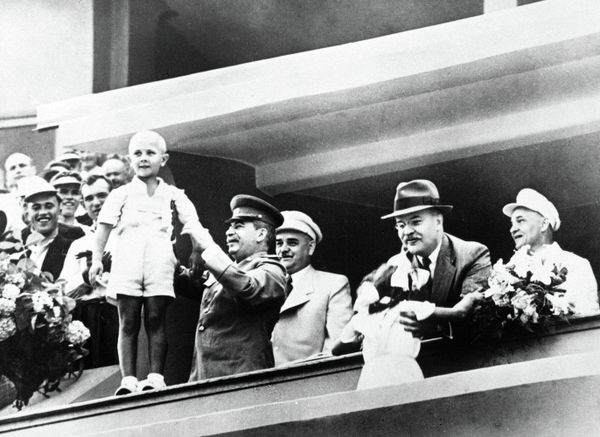
During the post-war years athletes’ parades were started up again, designed to promote physical exercise and sport. Photo: Joseph Stalin (fourth from left) and Vyacheslav Molotov (second from right) accept flowers from Moscow schoolchildren during the All-Union Parade of Athletes on July 21, 1946.
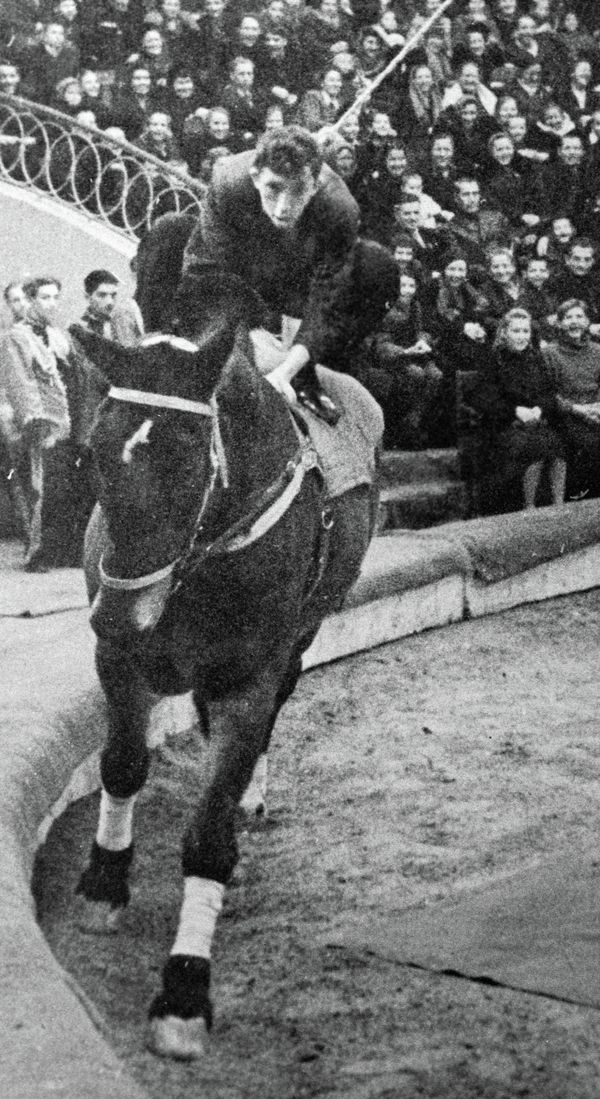
Wearied by the hardships of war, Moscow in peacetime revived its cultural life too. It was at this time that circus artist and Soviet actor Yuri Nikulin (photo) started out on his artistic career.
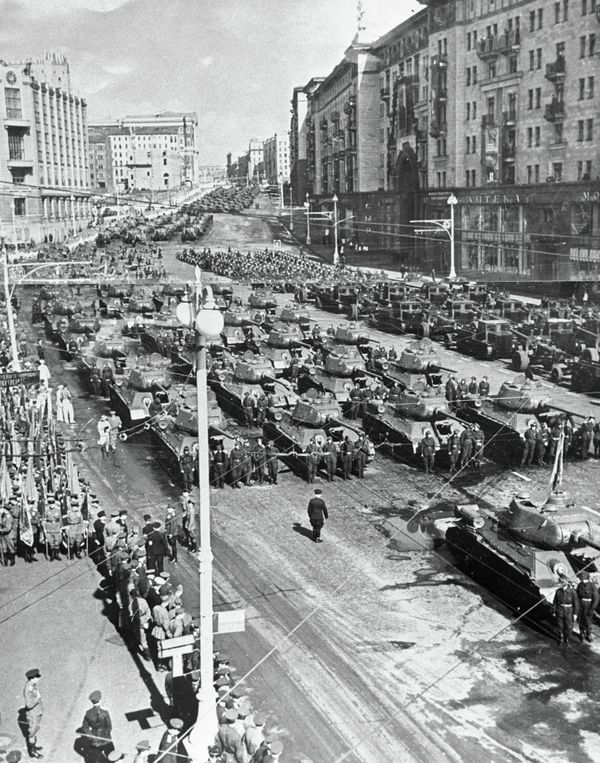
Moscow celebrated the second anniversary of victory in the gruelling war with a huge parade. Photo: columns of tanks stand at the head of the parade in Gorky Street on Victory Day, May 9, 1947.
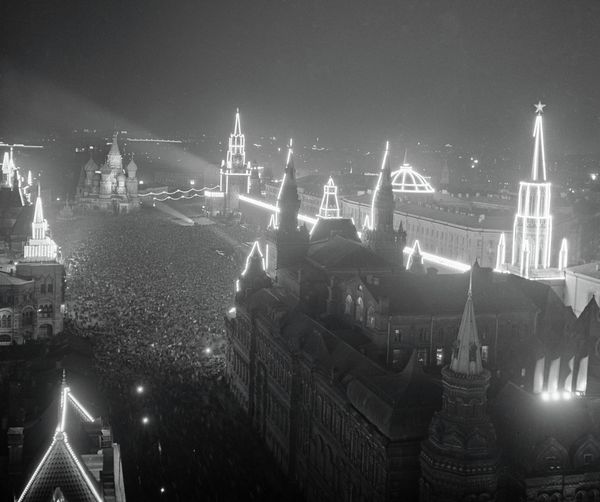
In September 1947 Moscow marked its 800th anniversary with a huge celebration.
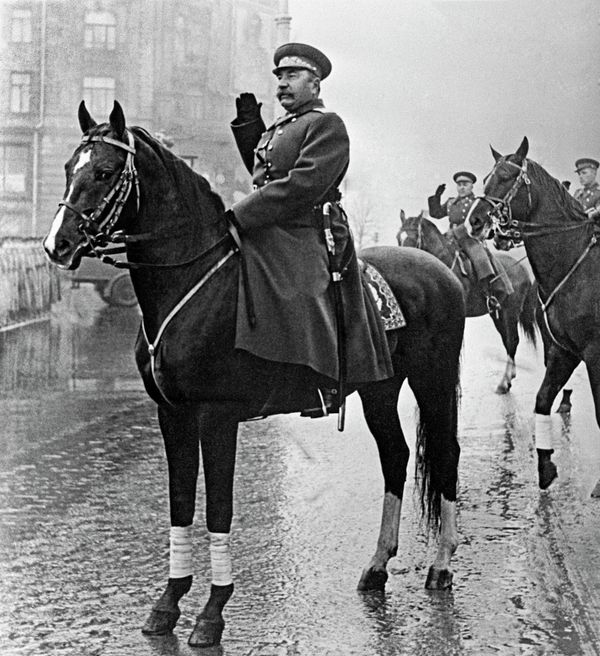
On November 7, 1947 Moscow celebrated the traditional Day of the Great October Socialist Revolution. Photo: Marshall of the Soviet Union Semyon Budenny taking part in the parade in Red Square in Moscow.
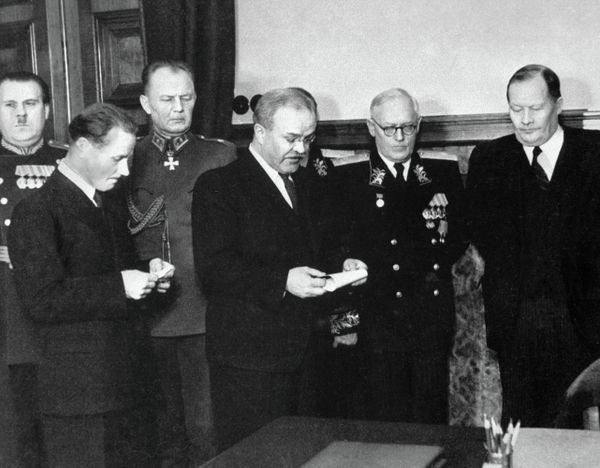
In 1948 a significant political event occurred when a treaty of friendship was signed in Moscow with German wartime ally Finland. Photo: Soviet Minister of Foreign Affairs Molotov during the signing of the treaty of friendship between the Soviet Union and Finland. June 1, 1948.
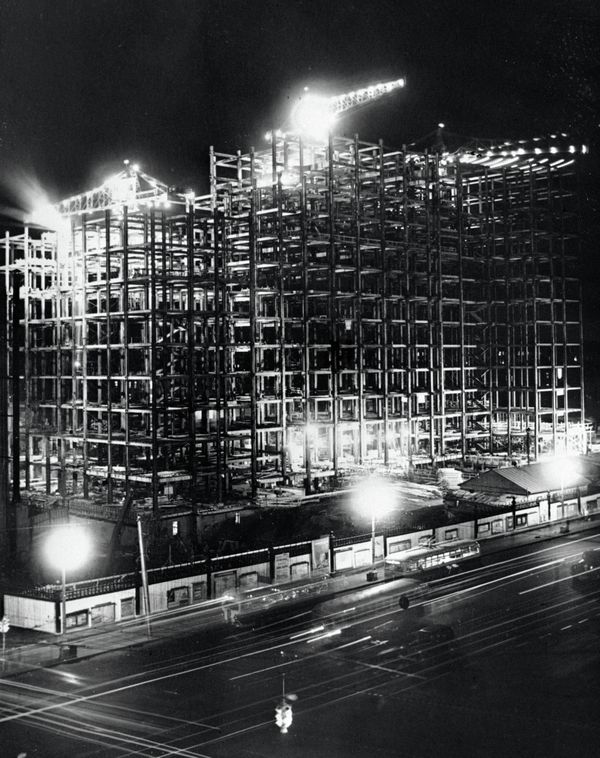
In 1948 construction began on a high-rise on Smolenskaya Square. The tower style was down to the insistence of Stalin, who rejected the initial designs for the building in favor of this particular style, destined to go down in history as the Stalin skyscrapers.
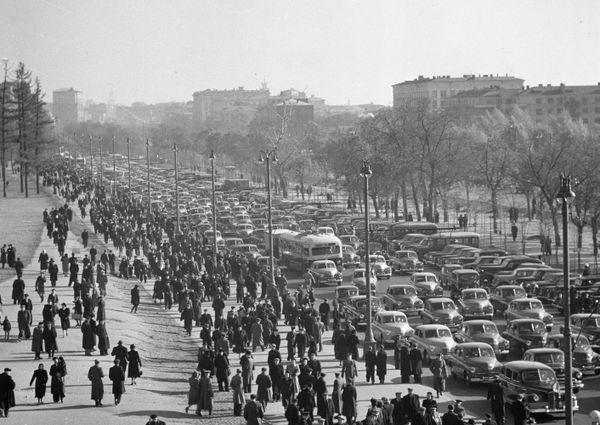
Although Russian footballers were still not participating in the World Cup in the immediate post-war years, interesting matches were played at Moscow’s Dinamo Stadium. Photo: Leningradsky Prospekt near Dinamo Stadium before the start of a football match. September 1, 1949.
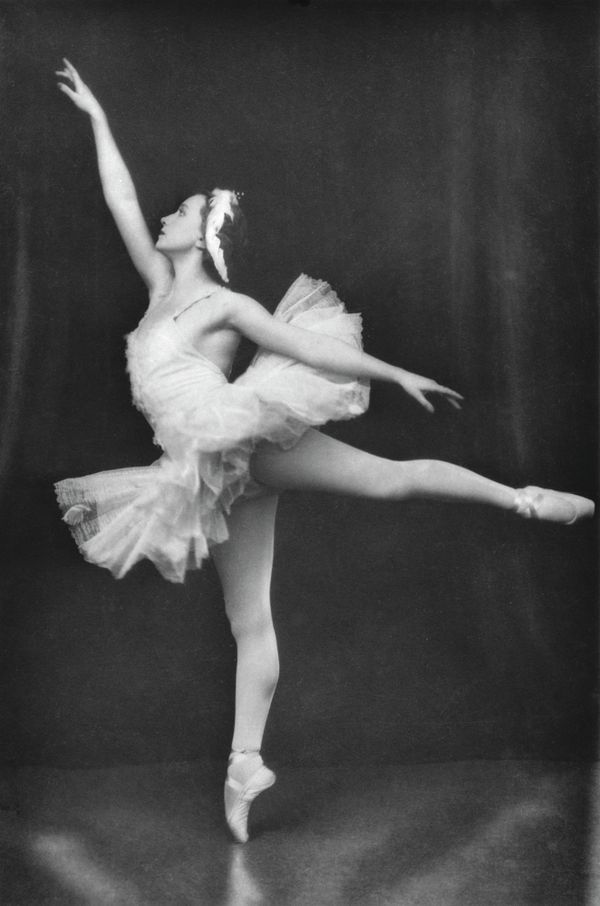
During the post-war years Russian ballet experienced a genuine revival... Photo: Galina Ulanova in a scene from Swan Lake, 1947.
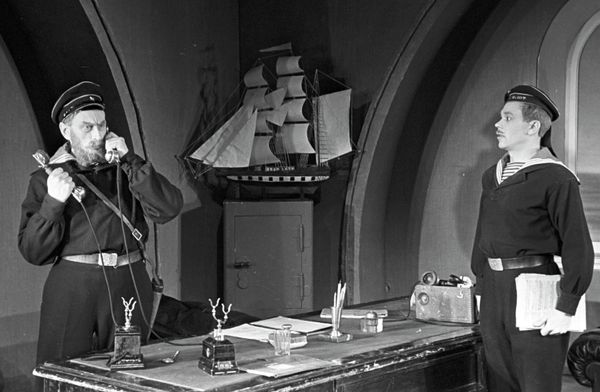
As did the theatre… Photo: a scene from The Unforgettable Year 1919 from the play by Vsevolod Vishnevsky in a production by the Red Army Theater (today known as the Central Academic Theater of the Russian Army).
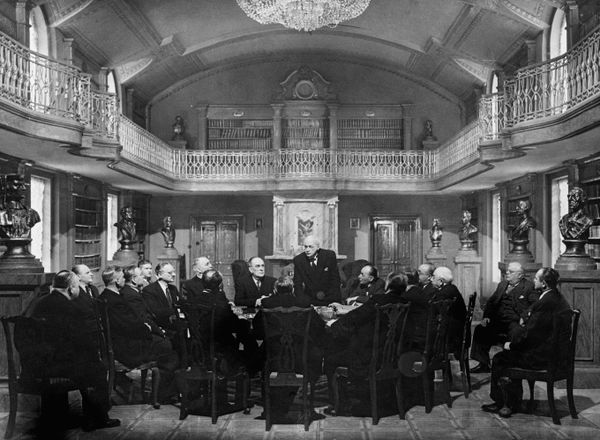
And cinema. Photo: clip from director Mikhail Romma’s film Secret Mission. March 1, 1950.