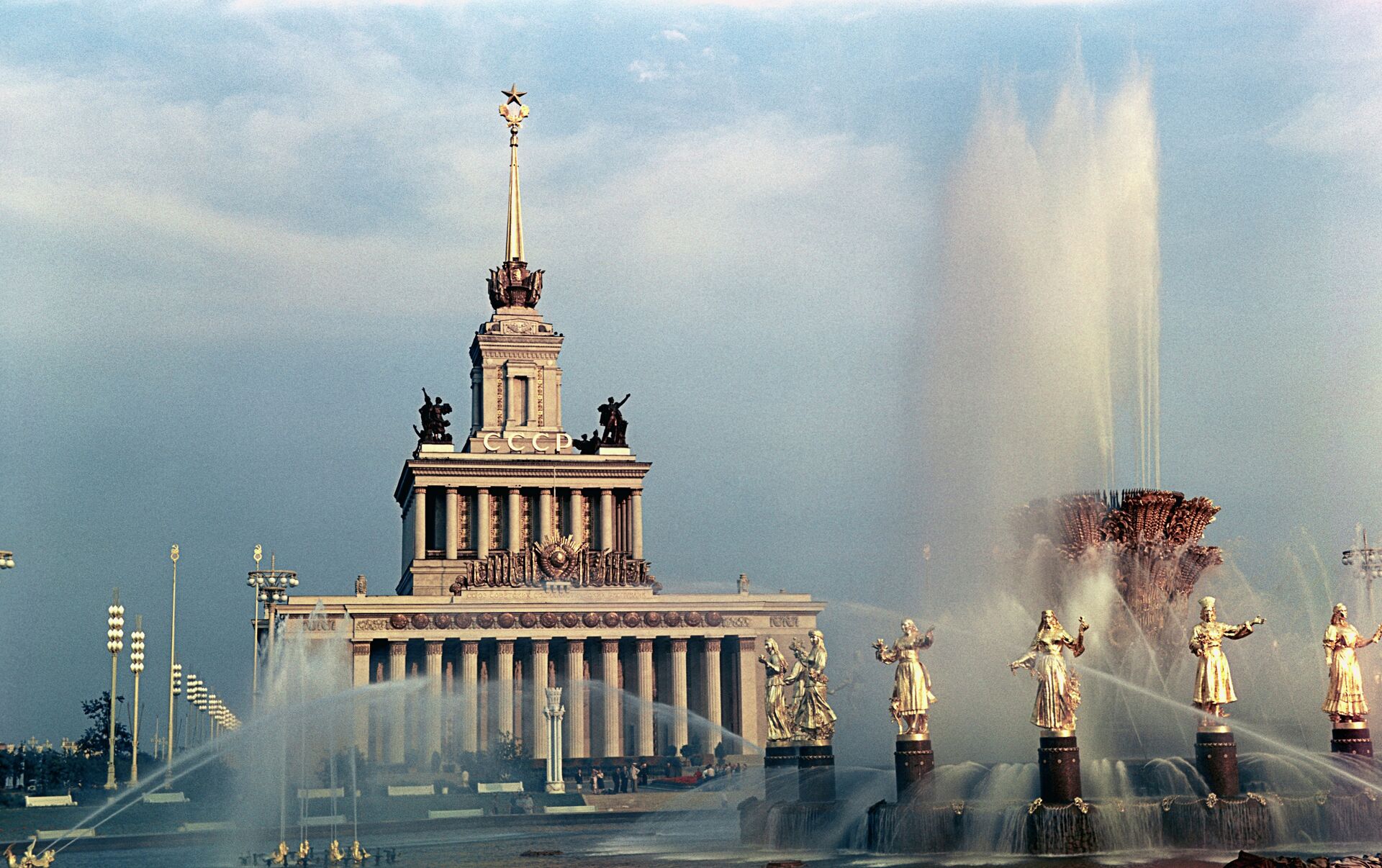
The “In Moscow” links webpage continues its photographic series highlighting the Russian capital’s life at various points in history. The mid-20th century was a period of intensive construction, with lots of new buildings, roads, and metro stations emerging.
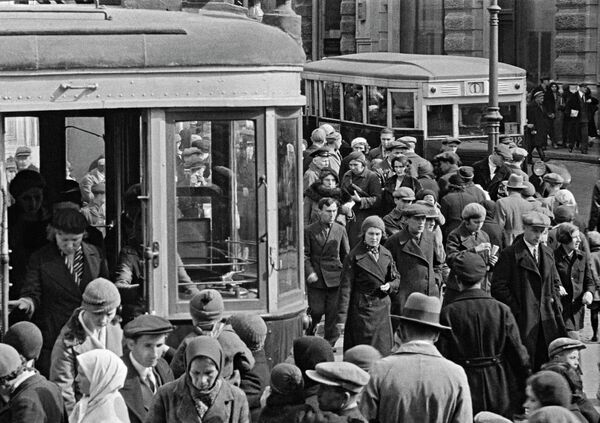
The “In Moscow” links webpage continues its photographic series highlighting the Russian capital’s life at various points in history. The mid-20th century was a period of intensive construction, with lots of new buildings, roads, and metro stations emerging.
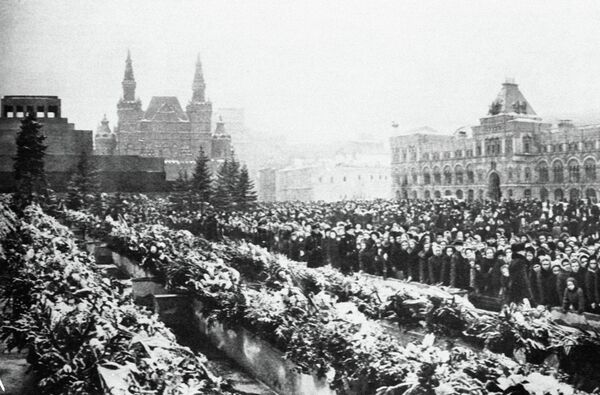
The death of the Soviet dictator Joseph Stalin in 1953 was a momentous event for the entire nation and particularly Moscow. People from all across the USSR, as well as from China, Poland, Czechoslovakia, Romania and other foreign countries, came to pay tribute to this iconic statesman.
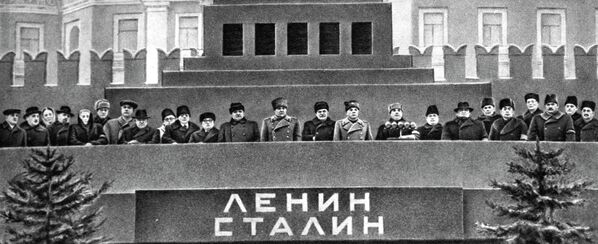
Crowds converged on Red Square and its environs to attend Stalin’s funeral in March 1953. A stampede near Trubnaya Square resulted in the deaths of between 300 and 3,000 people, according to various estimates.
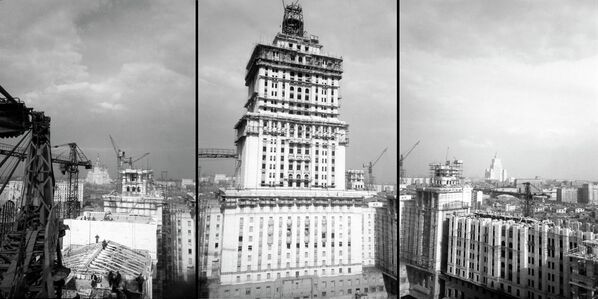
Moscow’s skyline changed dramatically in the 1950s, with the feverish construction of high-rises in the Stalinist Empire style.
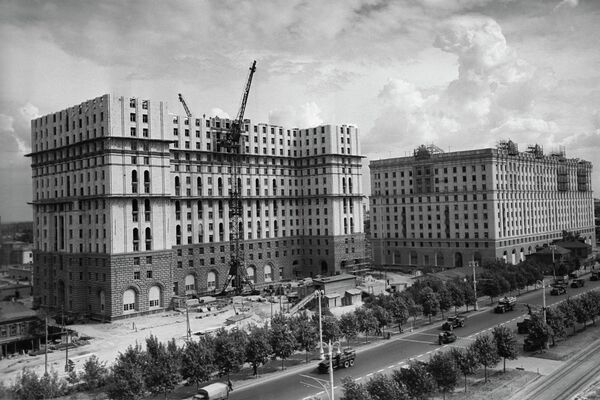
That period saw Moscow grow skyward. Photo: A 15-story apartment block under construction near Yaroslavskoye Shosse.
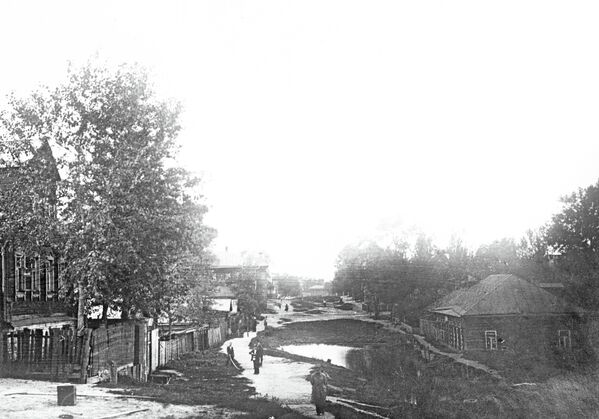
Moscow’s sprawl resulted in the transformation of hundreds of suburban towns and villages into new city boroughs. Photo: Cherkizovo, 1951
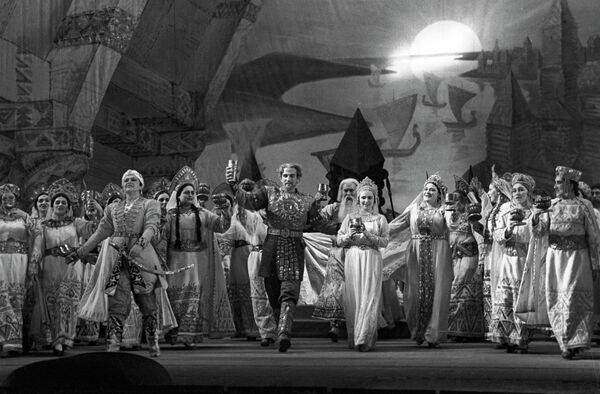
Moscow enjoyed a vibrant cultural life in the period, with frequent releases of films and theatrical productions. Photo: The final episode of Mikhail Glinka’s opera ”Ruslan and Lyudmila,” Bolshoi Theatre, 1954.
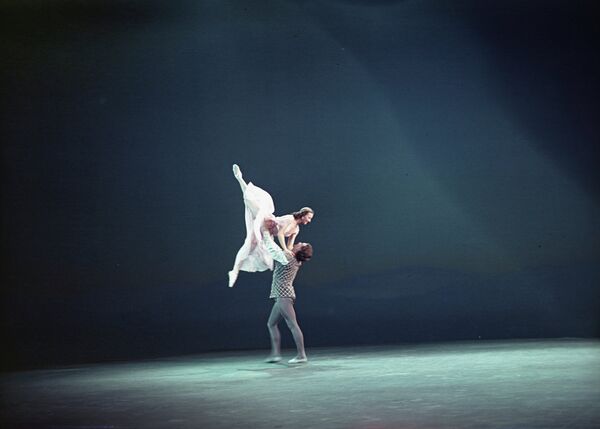
Photo: A scene from Sergei Prokofiev’s ballet “Romeo and Juliet.” Galina Ulanova starred as Juliet opposite Yury Zhdanov as Romeo.
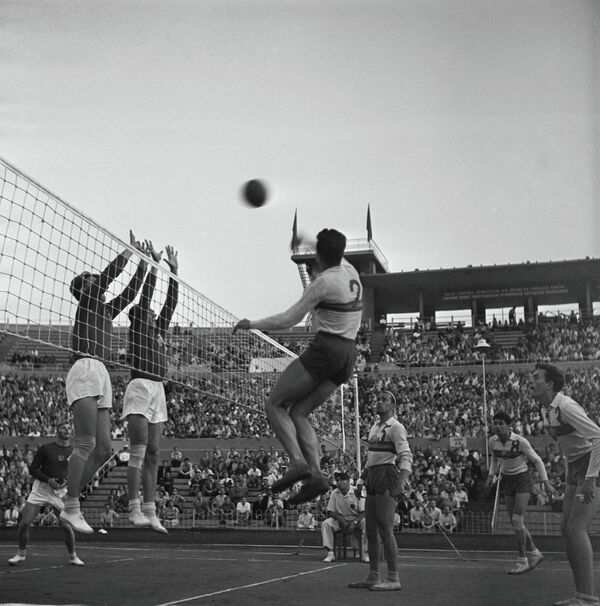
The early 1950s saw the Soviet volleyball squad score some of its most spectacular victories.
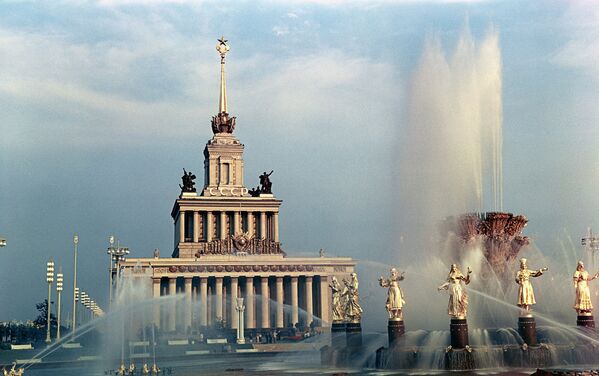
Suspended during WWII, Moscow’s national agricultural exhibition, VSKhV, the predecessor of today’s VVTs exhibition center, finally reopened on August 1, 1954. The legendary “International Friendship” fountain was built especially to celebrate the occasion.
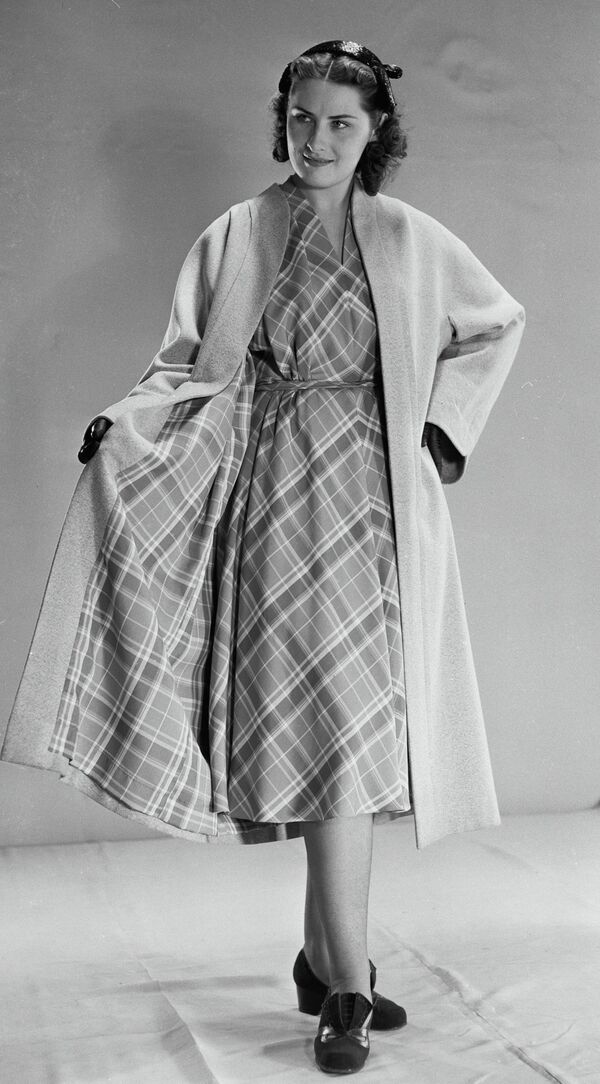
In the early 1950s, the look of Soviet women began to resemble somewhat that of their Western counterparts. Photo: A catwalk show, 1955.