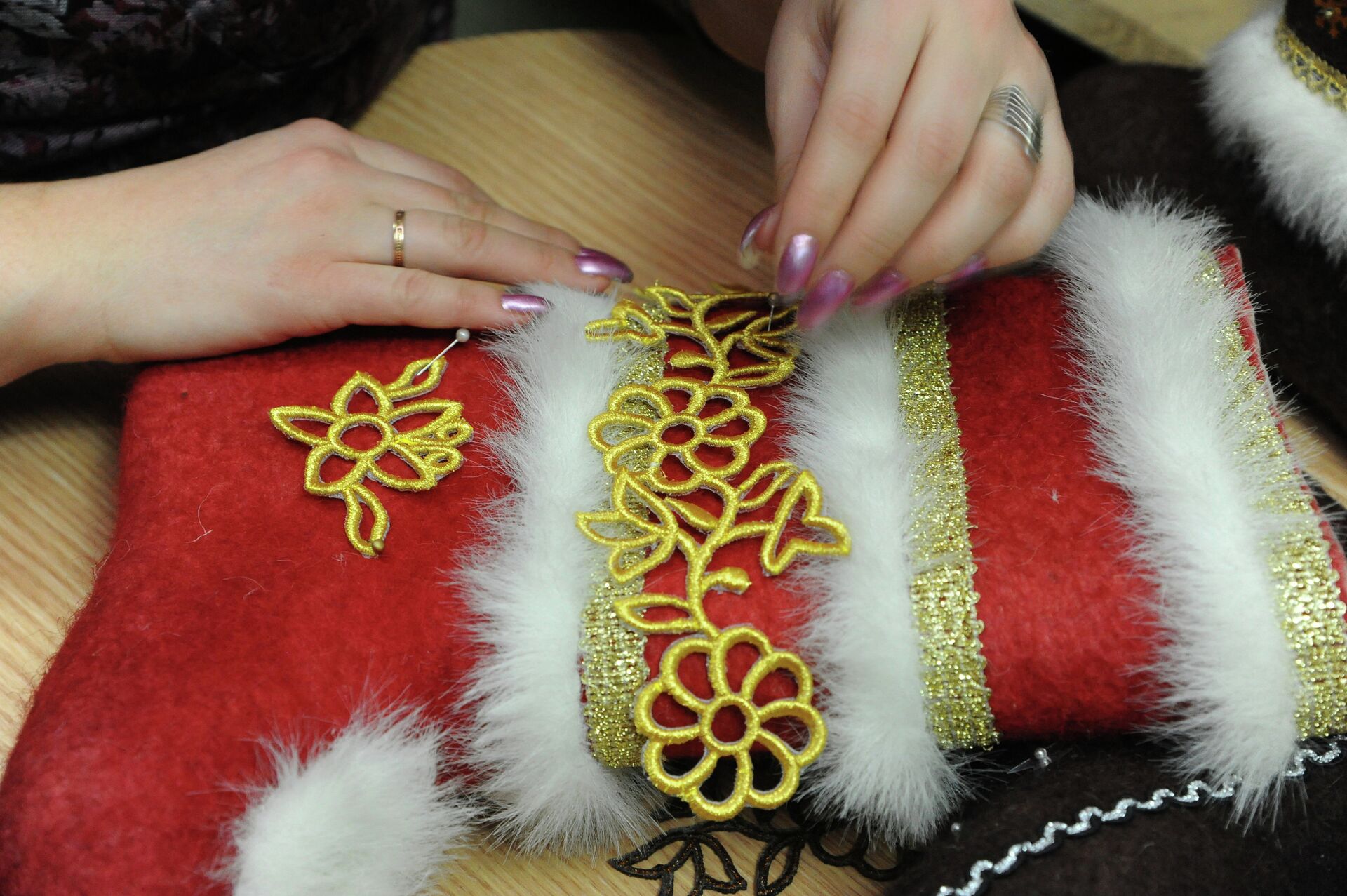
Now that winter has come to most of Russia, it’s time to turn to valenki: the traditional felt boots that are both warm and comfortable. The boots, which are made entirely of unprocessed sheep’s wool, are usually dyed black.
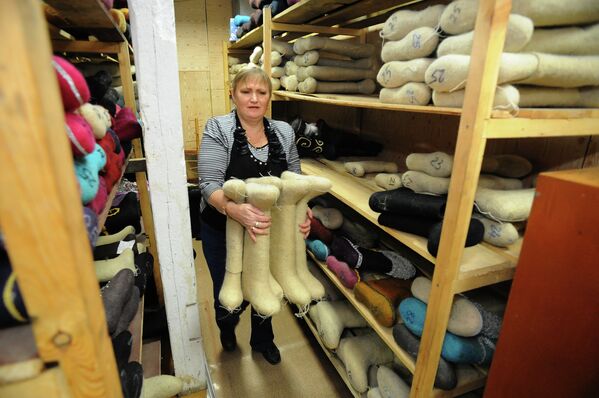
Now that winter has come to most of Russia, it’s time to turn to valenki: the traditional felt boots that are both warm and comfortable. The boots, which are made entirely of unprocessed sheep’s wool, are usually dyed black.
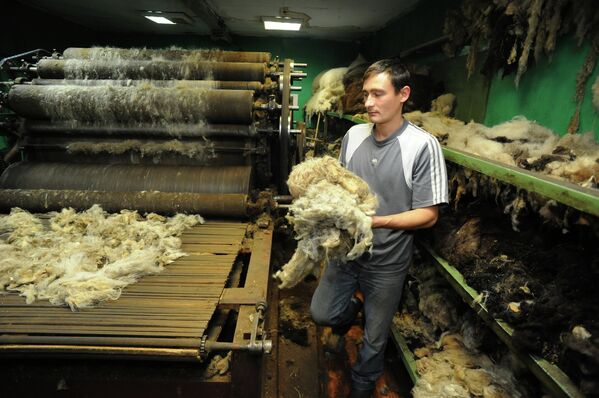
The unwashed sheep’s wool is first pulled apart into thin fibers, and then dried.
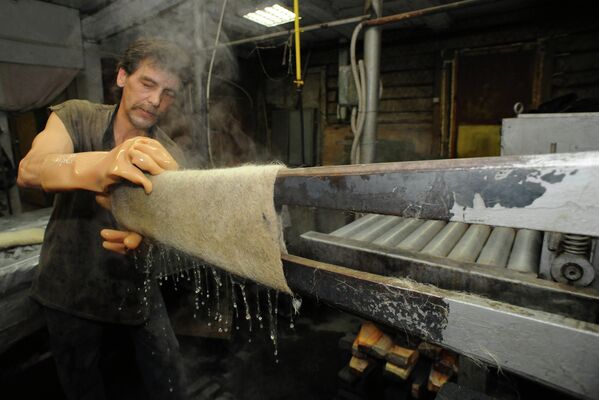
The wool is then processed in a carding machine that separates the fibers and bundles them into a lightweight fabric. This fabric then goes to the felting shop. Water is used to bind the strands of wool with each other.
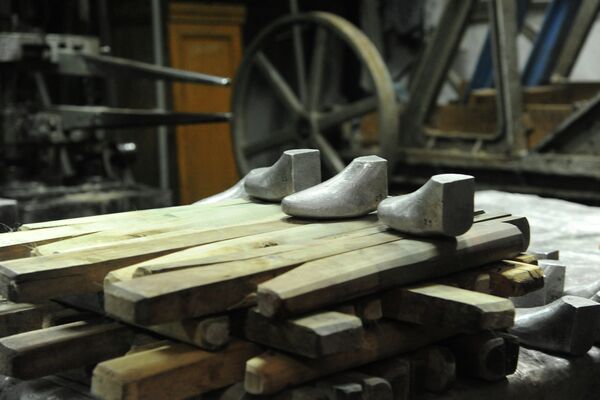
Inserts are used to make different boot sizes. The boots are large at first. They will shrink considerably during the curing process.
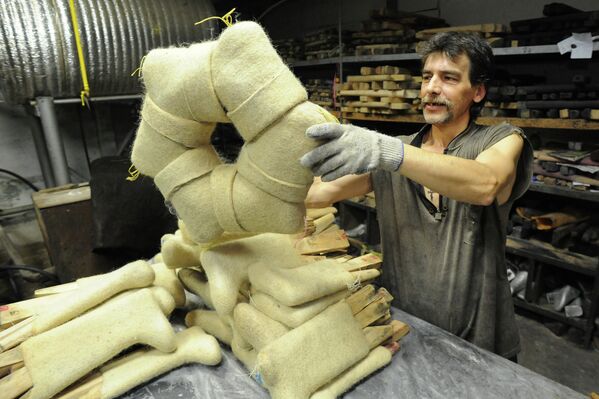
The boots are rinsed in cold water. Between washes, they are stretched in order to maintain their shape.
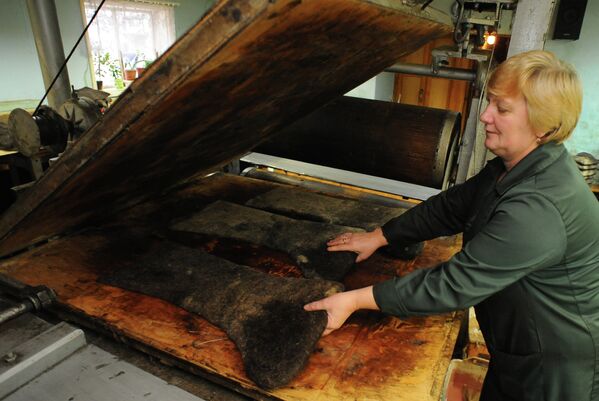
The boots are then dropped into boiling water and dyed black (if not dyed, the boots would be gray in color). Then they are shaped and trimmed and put into a high temperature kiln for 12 hours. After that The boots are then dropped into boiling water and dyed black (if not dyed, the boots would be gray in color). Then they are shaped and trimmed and put into a high temperature kiln for 12 hours. After that the inserts are removed and the exteriors are singed to remove any loose fibers.
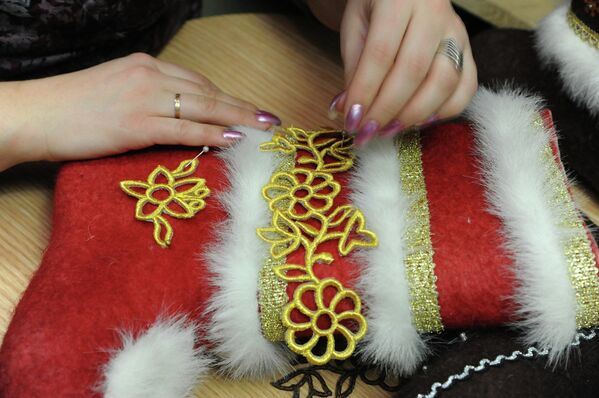
Felt boots, a Eurasian tradition, are best suited for walking on cold, dry snow. The traditional colors are brown, black, gray and white, but valenki of many colors are available today.
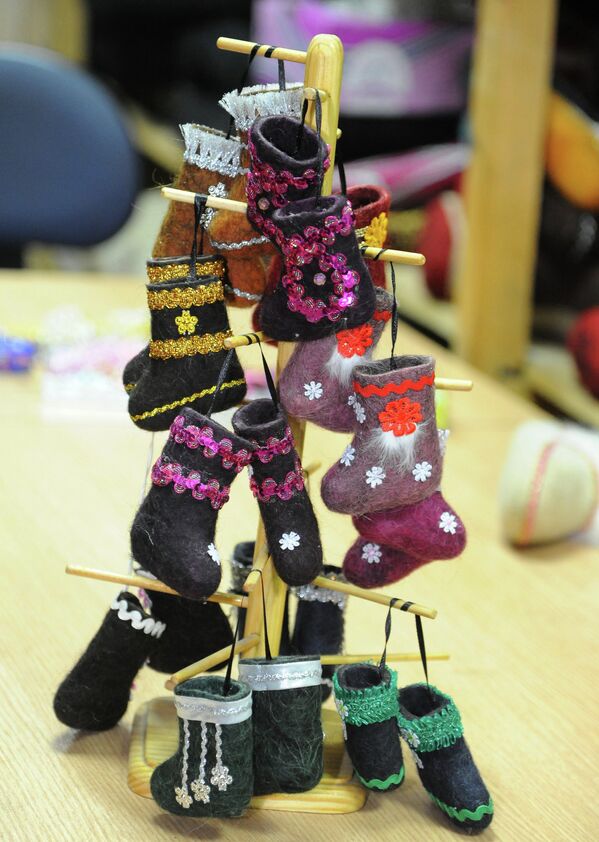
Tiny souvenir felt boots are also popular.