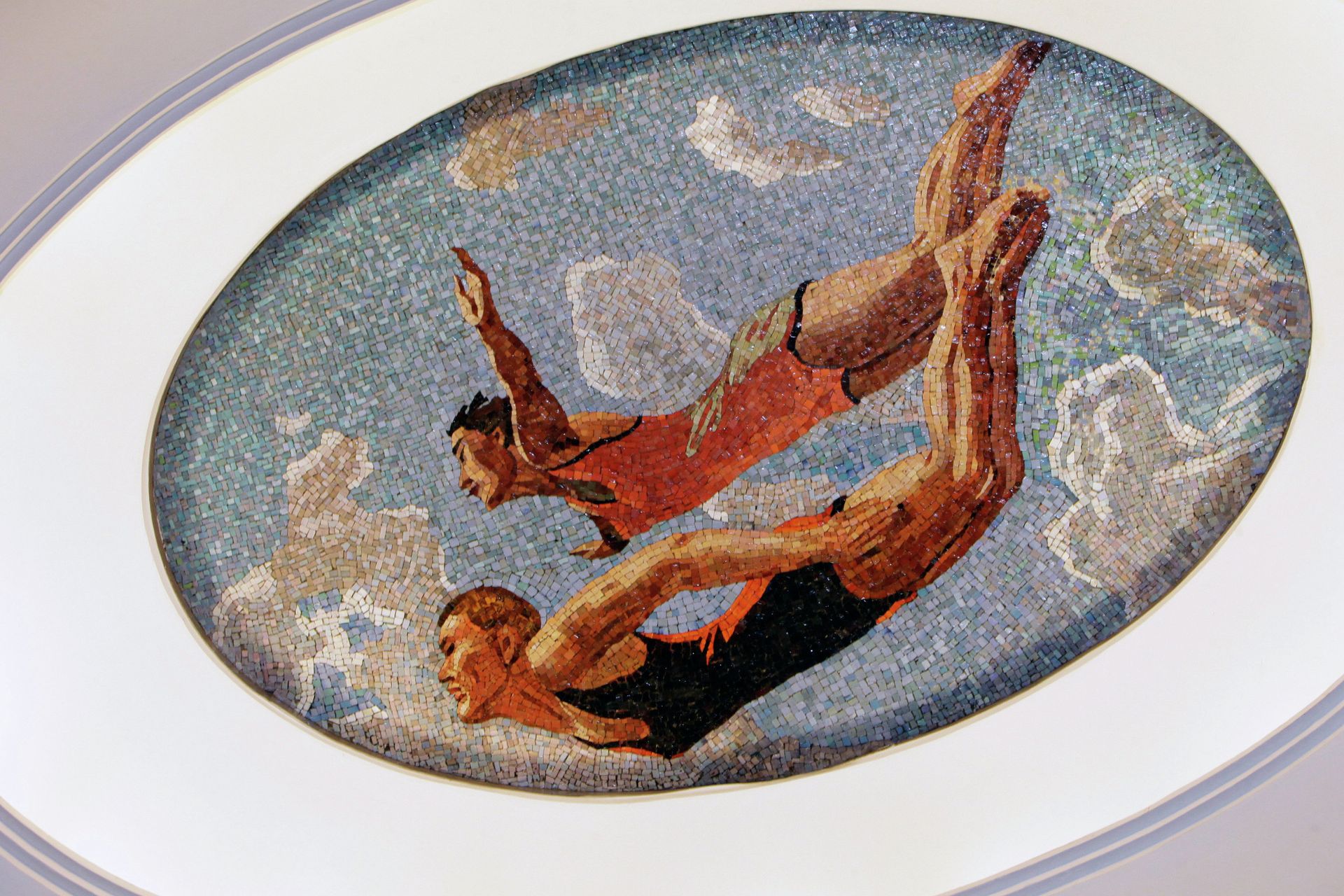
RIA Novosti rings in the New Year with a look at masterpieces from Russian and Soviet artists. Today we present the work of Alexander Deyneka
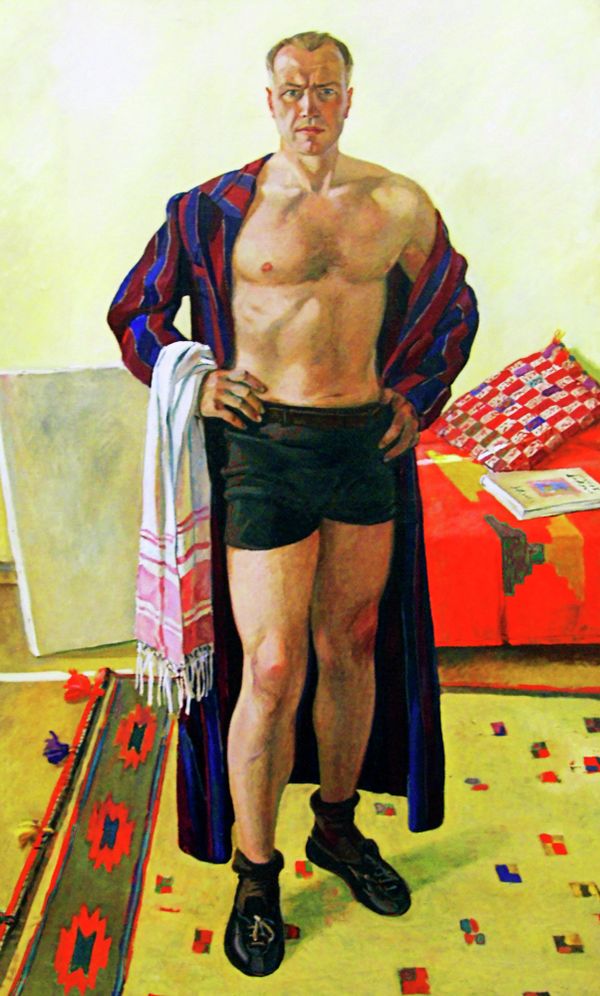
Alexander Deyneka (1899–1969), Soviet painter, graphic artist, sculptor and teacher. Photo: Self-Portrait (1948)
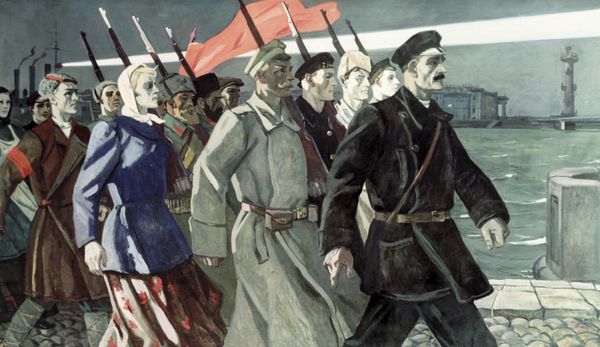
The painter’s young years, like those of his contemporaries, were colored by the revolution. He was a photographer with the Criminal Investigative Department, painted up propaganda campaign trains, and helped to defend Kursk against the White Guards. Photo: “The Great Beginning” (1962)
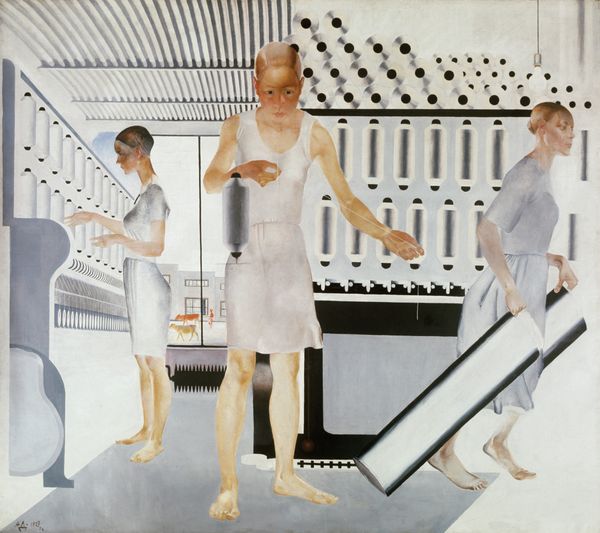
Many of his early pictures portrayed “signs of the 20th century” and extolled peaceful Soviet reality: industrial production, industrialization, and the like. Photo: “Textile Workers” (1927)
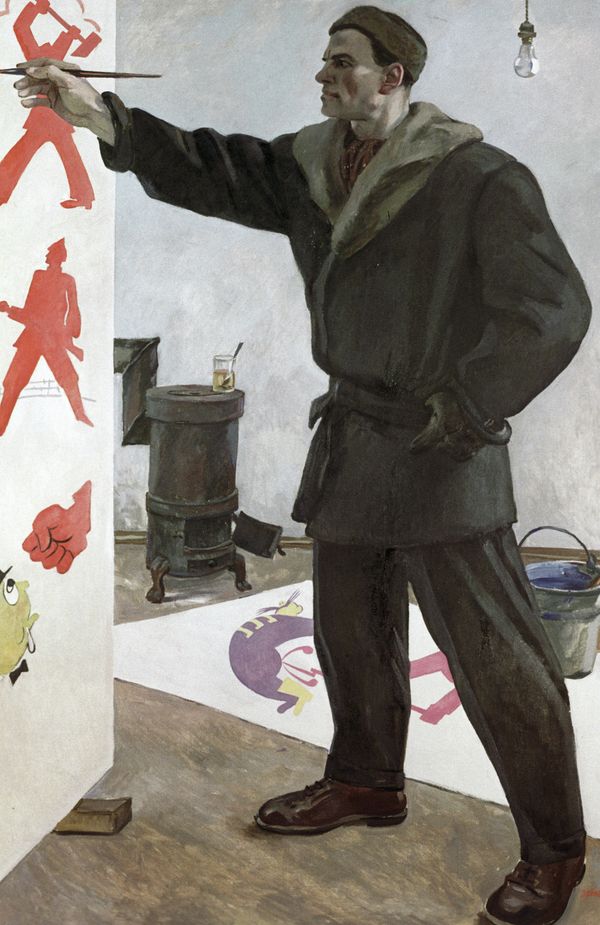
Deyneka’s worldview was strongly influenced by Vladimir Mayakovsky. Photo: “Mayakovsky at the Russian Telegraphic Agency” (1941). Oil on canvas
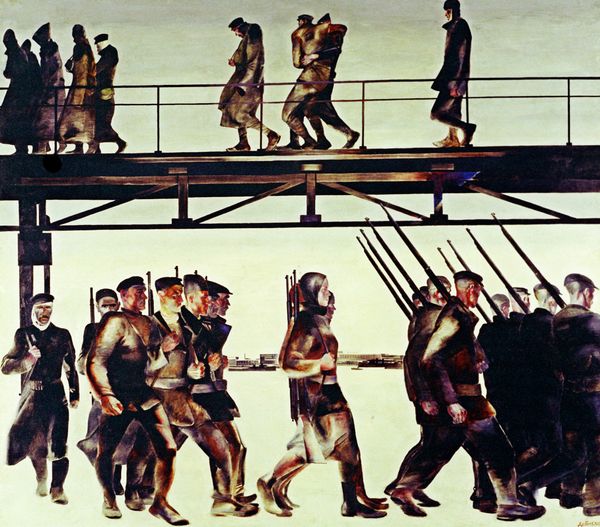
In 1928, Deyneka painted his opus magnum, “The Defense of Petrograd,” an emotional historical picture portraying a squad of workers leaving to fight counter-revolutionary forces led by Yudenich. He later described the painting as his “favorite work.”
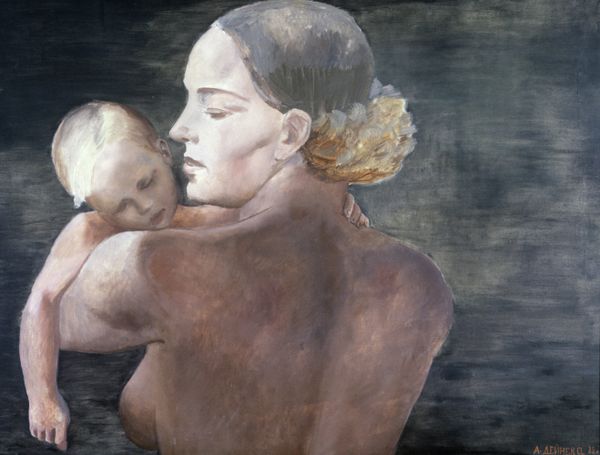
The year 1932 was a landmark in his life and a new stage in his work. He painted “Mother” (oil on canvas), a Soviet-style Virgin, which was recognized as one of his major achievements
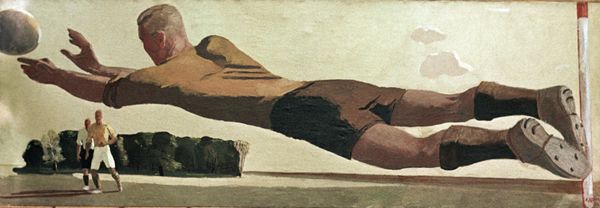
In the same period, Deyneka continued painting sport-related stories. Photo: “Goal-Keeper” (1934). Oil on Canvas
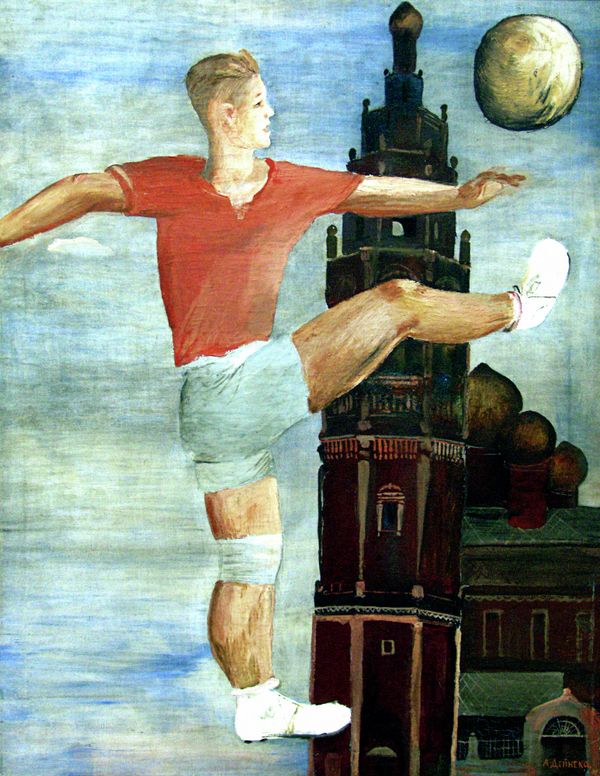
Footballer (1932)
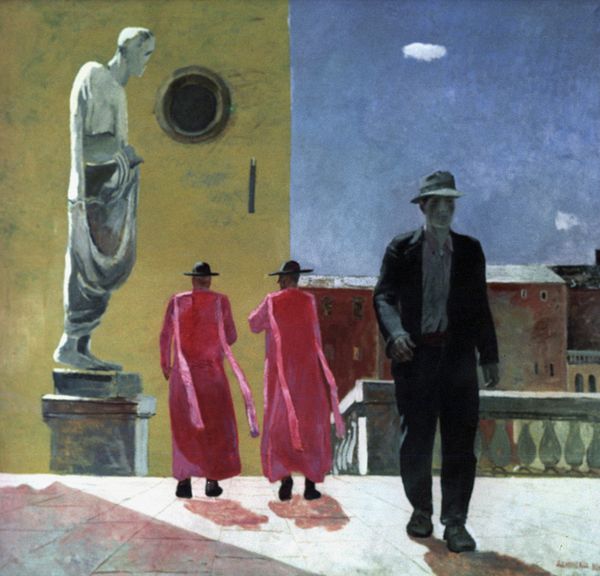
In 1935, Deyneka traveled to the United States, France and Italy, bringing home a number of landscapes and portraits. “A Street in Rome” (1935)
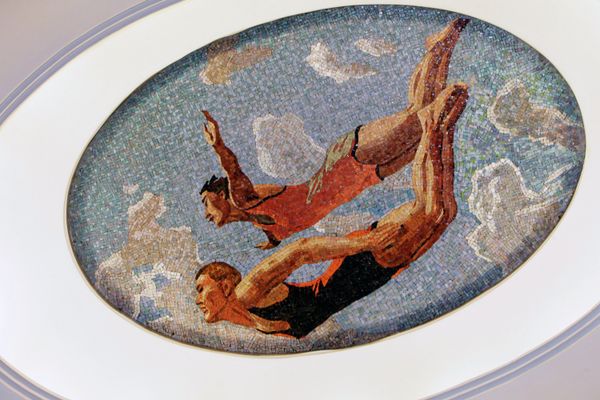
In 1938, Deyneka began working on a series of mosaics for the Moscow metro’s planned Mayakovskaya Station on the theme “One Day of the Soviet Sky.”
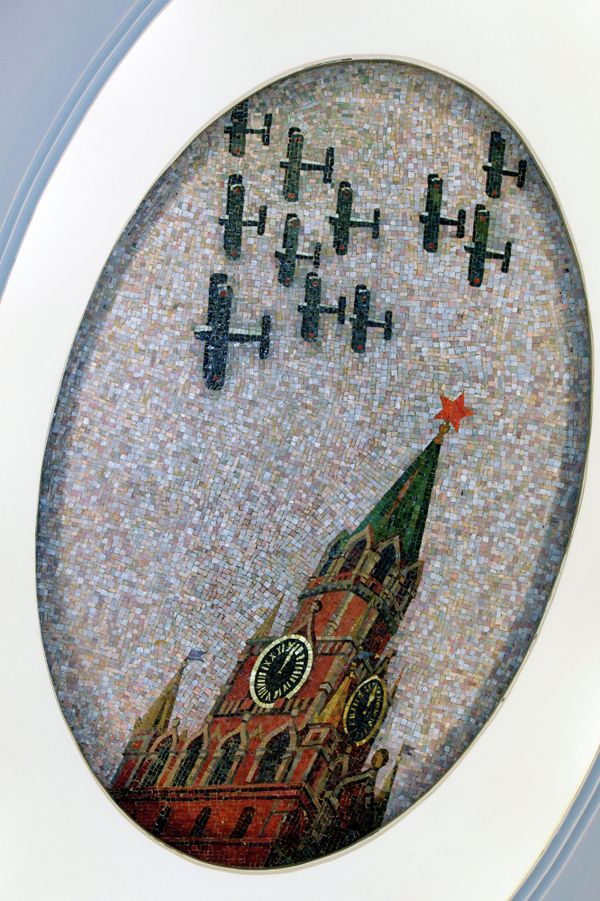
A small mosaic from “One Day of the Soviet Sky” series
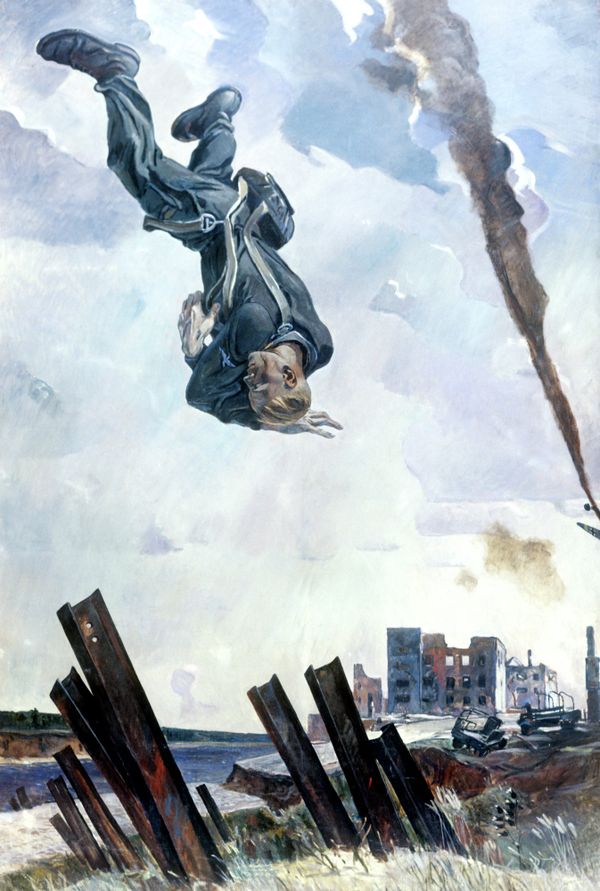
During World War II, Deyneka painted several pictures dedicated to the Soviet people’s valiant fight against Nazi Germany. Photo: “A Downed Ace” (1943). Oil on canvas
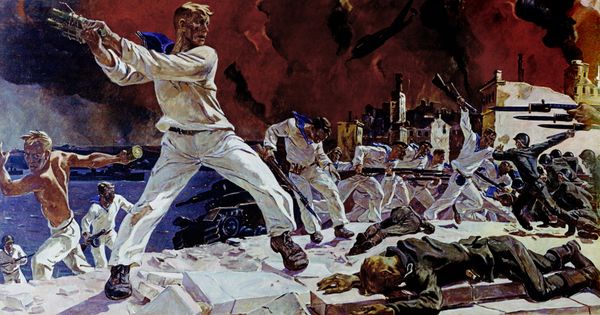
The heroic canvas, “The Defense of Sevastopol” (1942), was a paean to the city’s defenders
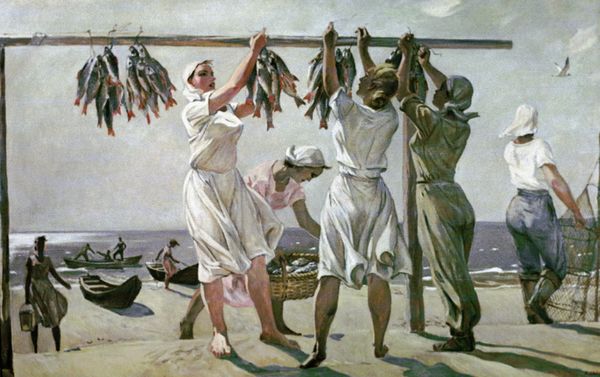
“Near the Sea. Fisherwomen” (1956), one of Deyneka’s important postwar pictures
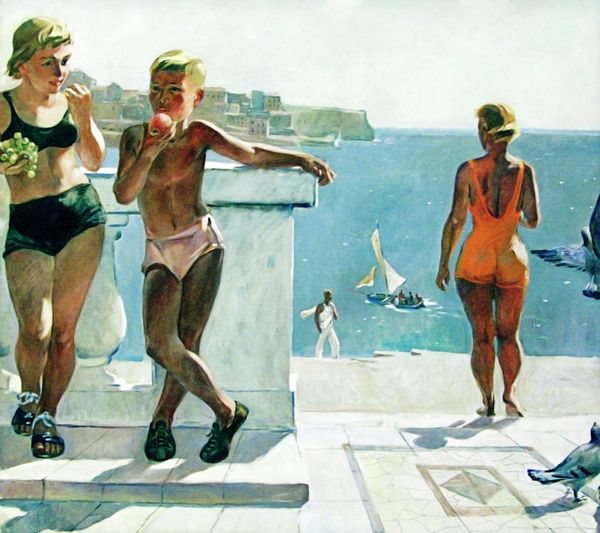
“In Sevastopol” (1953)
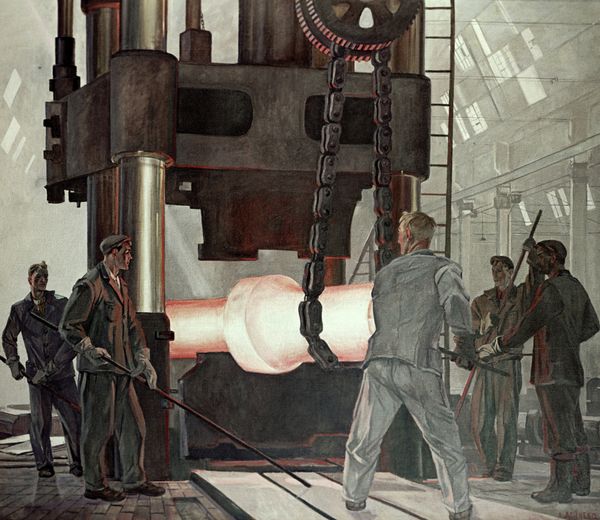
Alexander Deyneka died in Moscow in 1969 and was buried at the Novodevichy Cemetery. Photo: “Metalsmiths” (1957)