Colliders at the Institute of Nuclear Physics in Novosibirsk
Colliders at the Institute of Nuclear Physics in Novosibirsk
Sputnik International
Scientists in Novosibirsk are working on a new type of collider, which could eventually replace the Large Hadron Collider (LHC), the most powerful particle... 24.01.2014, Sputnik International
Scientists in Novosibirsk are working on a new type of collider, which could eventually replace the Large Hadron Collider (LHC), the most powerful particle accelerator in history.
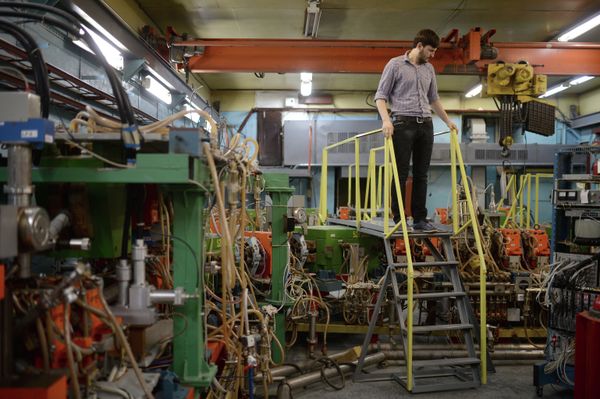
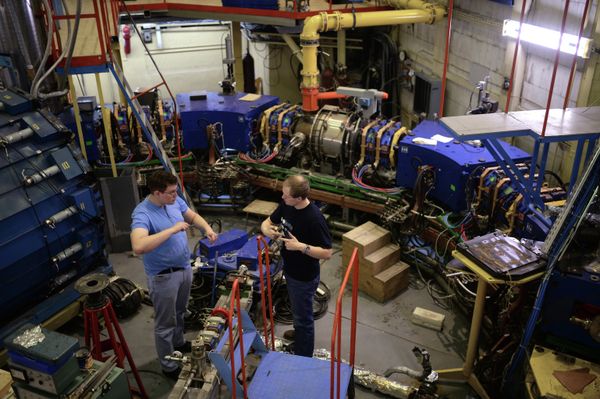
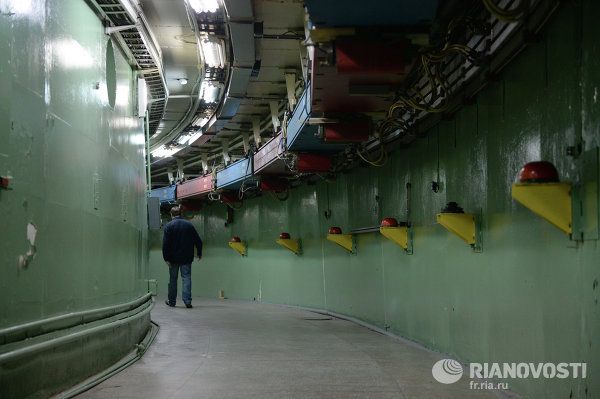
Scientists in Novosibirsk are working on a new type of collider, which could eventually replace the Large Hadron Collider (LHC), the most powerful particle accelerator in history. Photo: The VEPP-5 injection complex.
Scientists in Novosibirsk are working on a new type of collider, which could eventually replace the Large Hadron Collider (LHC), the most powerful particle accelerator in history. Photo: The VEPP-5 injection complex.
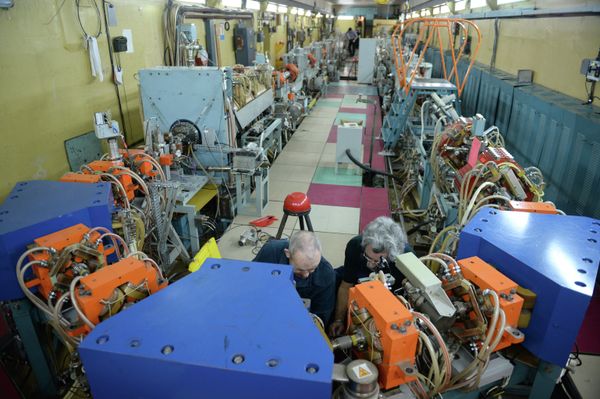
The VEPP-1, VEPP-2, VEPP-3 and VEPP-4 counter-propagating beam electron-positron particle accelerators (colliders) have been operating at the Novosibirsk-based Institute of Nuclear Physics since the 1960s. Photo: A VEPP-3 collider.
The new Electron-Positron Collider Super C-Tau Factory, currently being developed in Novosibirsk, is one of four Russian megaprojects. Photo: A VEPP-5 collider.
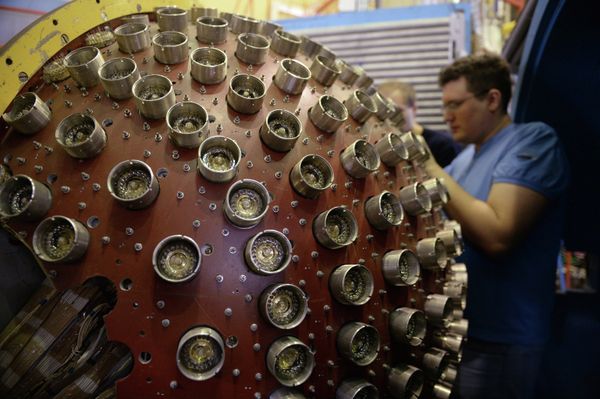
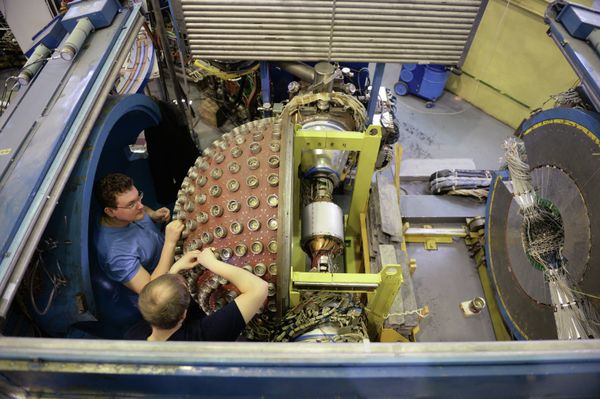
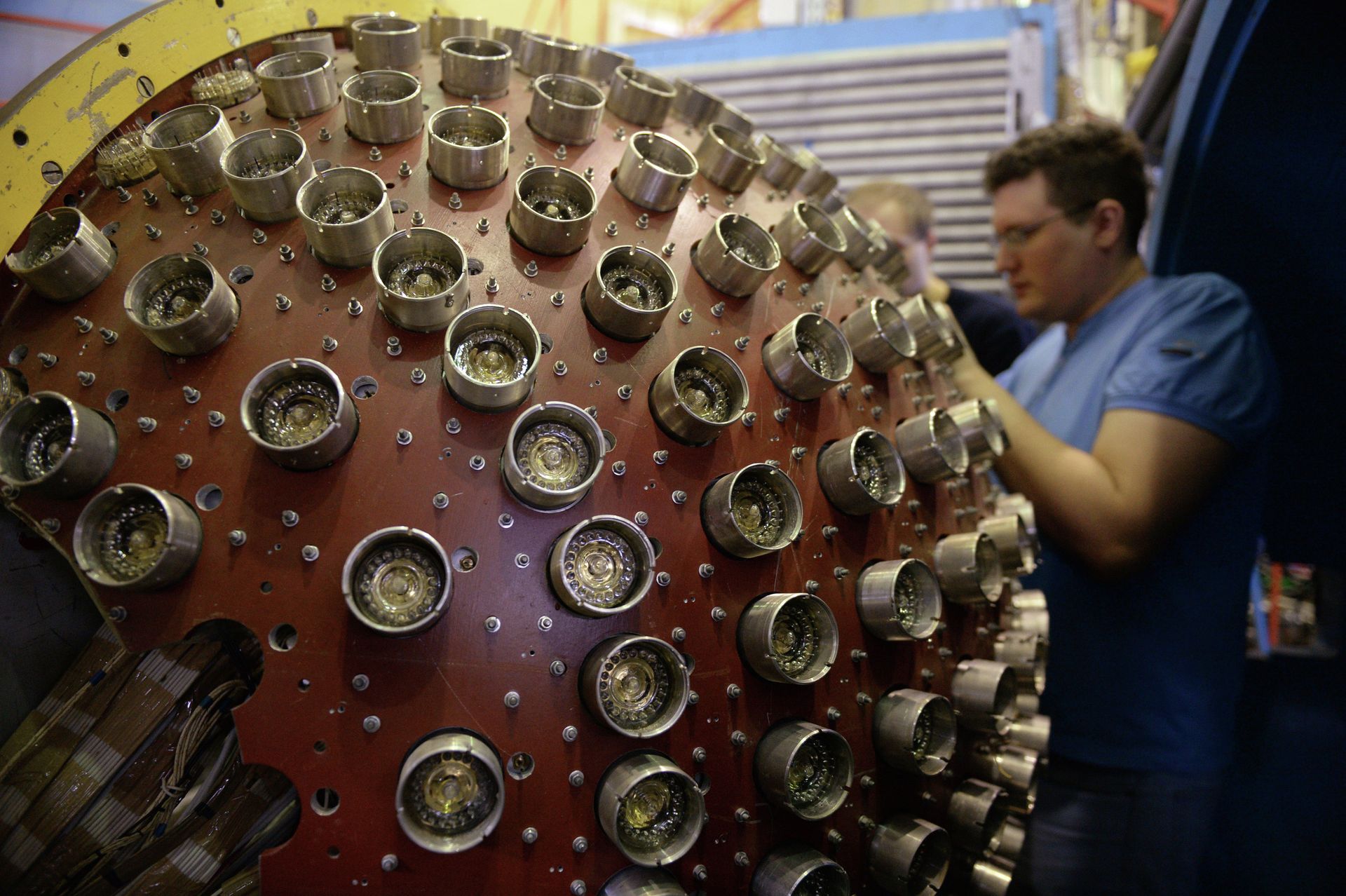
The system will require 17 billion rubles($500 million), including 4 billion rubles from extra-budgetary sources. Photo: A spherical detector of the VEPP-2000 collider
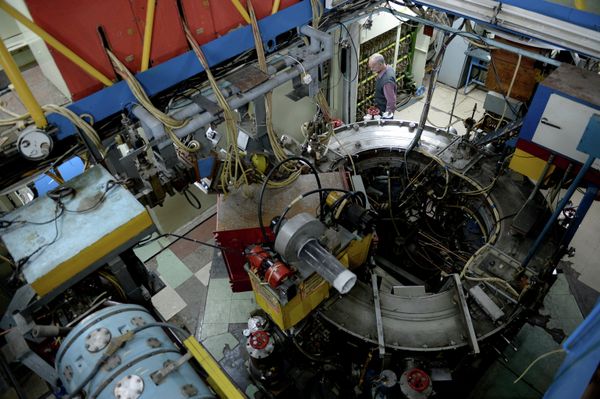
Despite its huge size, the collider functions like an ordinary microscope, helping scientists to peek into the microcosm. Photo: A KEDR detector installed on a VEPP-4M collider
However, its resolution (magnifying power) is billions of times greater: It can “see” elementary particles, which make up the atom and even their components, including quarks and gluons. Photo: The VEPP-2000 collider
The new collider, which will become the most intensive source of elementary particles, has been named the Super C-Tau Factory. Photo: Spherical detector of VEPP-2000 collider
This project will make it possible to study phenomena beyond the boundaries of the Standard Model, the main theory of physics. Photo: A VEPP-5 collider
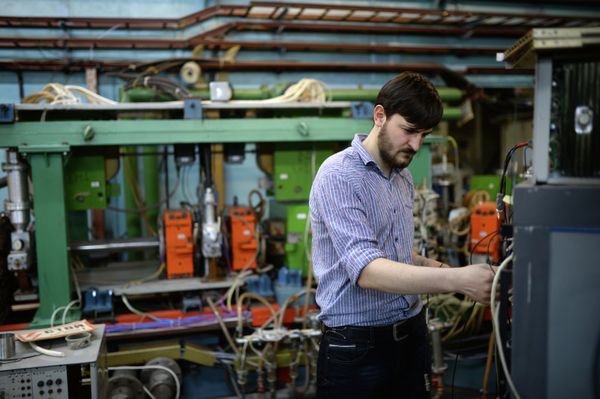
The storage ring of the VEPP-4M collider at the Budker Institute of Nuclear Physics
Newsfeed
0
Access to the chat has been blocked for violating the rules .
You will be able to participate again through:∞.
If you do not agree with the blocking, please use the feedback form
The discussion is closed. You can participate in the discussion within 24 hours after the publication of the article.