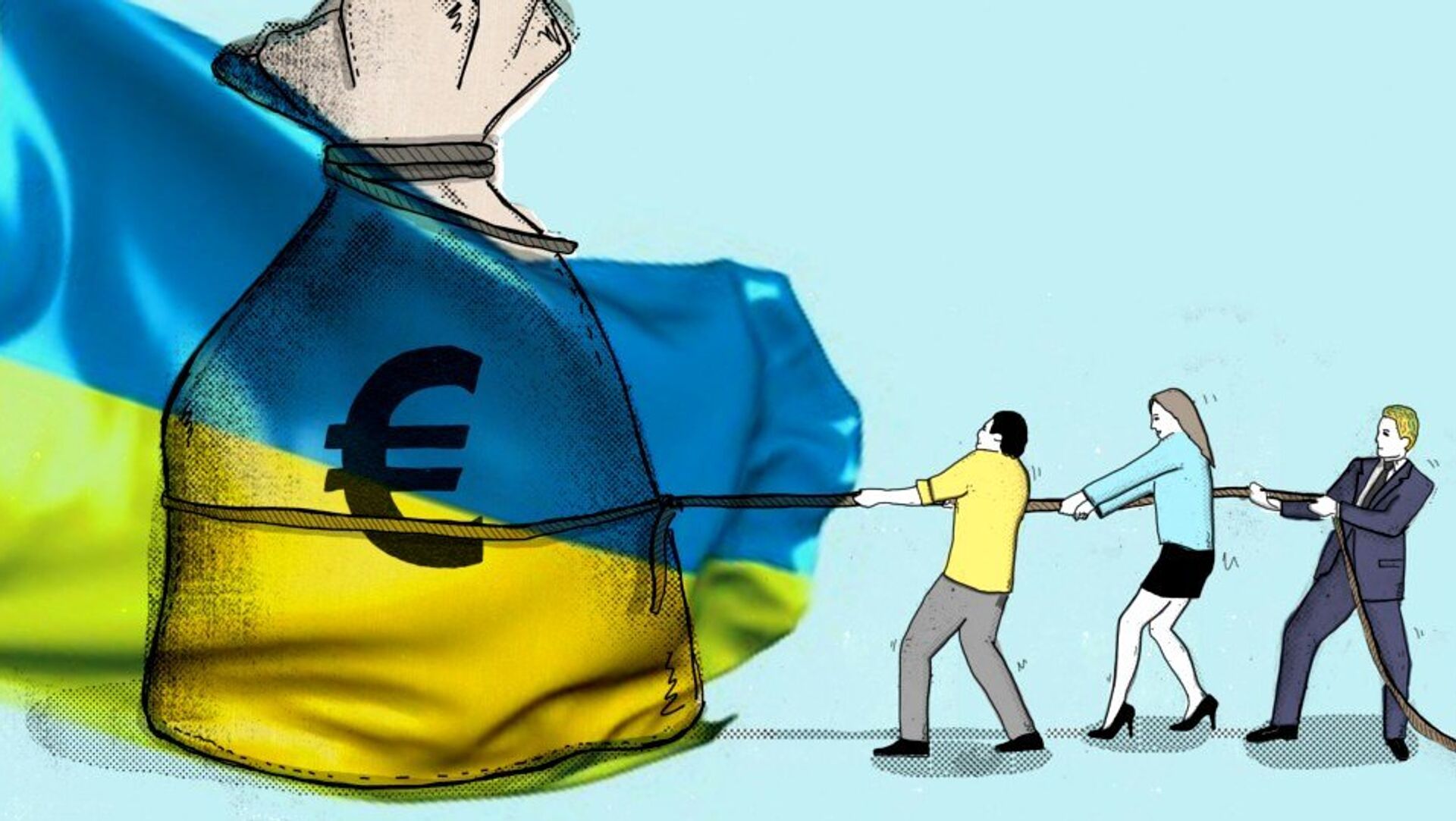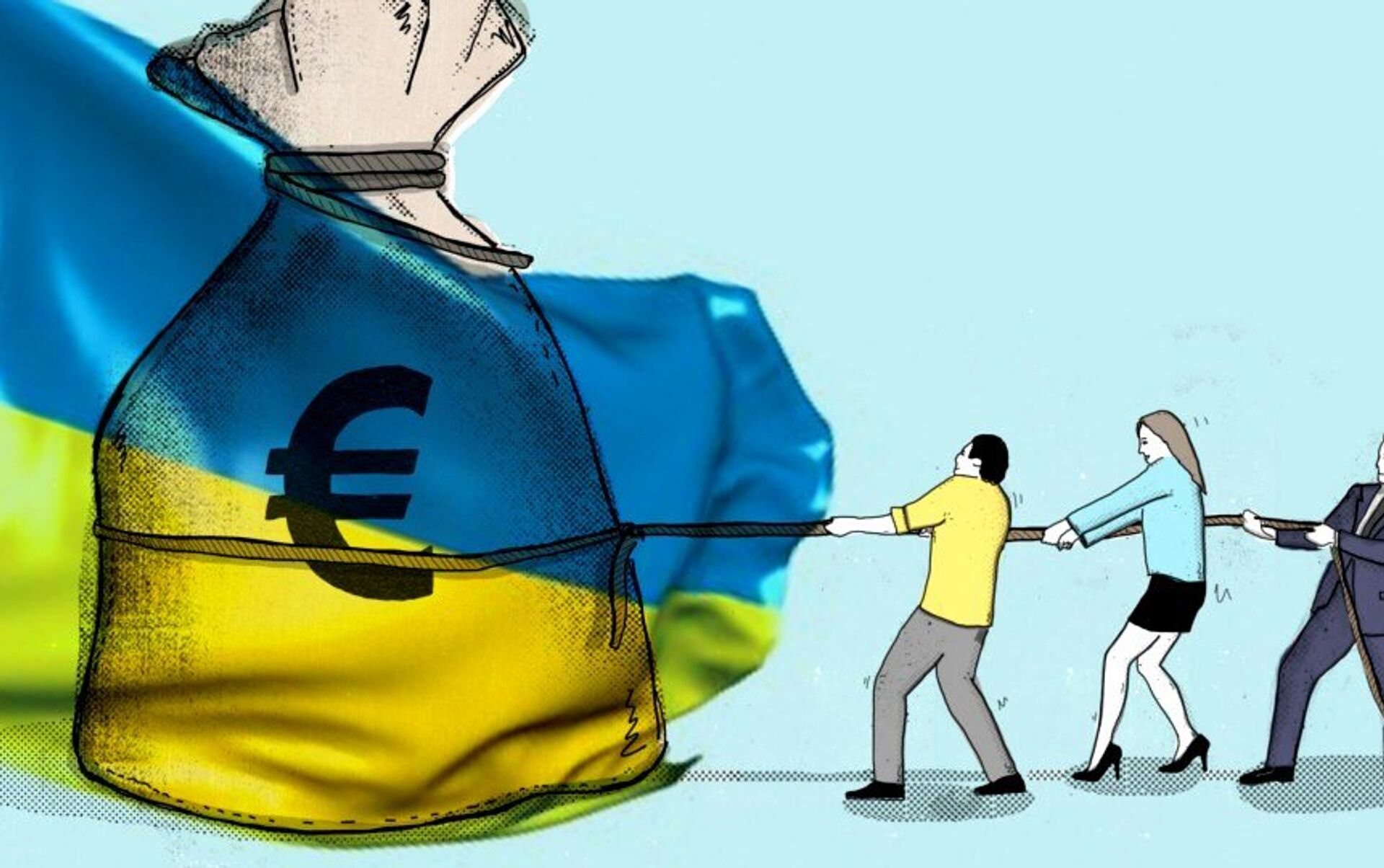
According to the International Monetary Fund (IMF), the additional money will have to come in on top of the $17bn IMF rescue package that the International Monetary Fund announced earlier this year.
It has been said repeatedly that Kiev is at risk of default if it doesn't receive additional funding. Deputy head of the Ukrainian presidential administration Valery Chaly reiterated that "without additional resources, it's almost impossible to cover financial gaps . . . to conduct reforms and avert default."
A recent poll commissioned by Sputnik News in Germany, France and UK shows there is not a lot of support for continued financial aid to Ukraine among residents of those three countries.
Russia Biggest Economic Factor
There is apparently even less appetite in the western corridors of power for such outlays at a time when western economies are struggling with problems of their own. Ukraine still finds itself in the grip of a small-scale civil war that is crippling its economy while long-promised reforms that are required by western financial institutions seem to be as remote as ever. And much-touted steps to combat corruption don't seem to be getting any closer.
Still, for all the talk about how the West will be helping a newly European Ukraine prosper, Russia to this day remains the biggest factor for Ukraine's economy.
"We have made a tremendous contribution to supporting Ukraine. Russian banks have invested about $25 billion in our neighbour's economy, the Finance Ministry — another $3 billion, and another $4.5 billion came from Gazprom," Russian president Putin said in his State of the Union address in early December.
That puts into proper perspective the scale of western programmes of economic assistance to Ukraine.
Capital Flight
Another problem for Ukraine's economy which receives scant attention in the western media is the outflow of capital. IMF loans that come in instalments of $1.5 billion are presented as a big deal but they are dwarfed by the sums that Ukraine is bleeding in capital flight.
According to the Polish Institute of international Affairs, Ukrainian oligarchs ‘love the EU'. They have invested so much in major European offshores that there is hardly anything left for Ukraine proper. If that trend persists, Ukraine may need not only an increase in loans and financial aid, but some form of capital controls to prevent the speculative decisions of the less "patriotic" oligarchs from fleeing the country.
Besides the conflict in East Ukraine, a region which prior to the forcible change of government in Kiev accounted for 16% of the country's economic output, much of Ukraine's economic turmoil is caused by a collapse in its exports to Russia and a slump in Russian investment. Is the money coming from the west sufficient to finance Ukraine's economic revival, or will Russia still have to fork out?