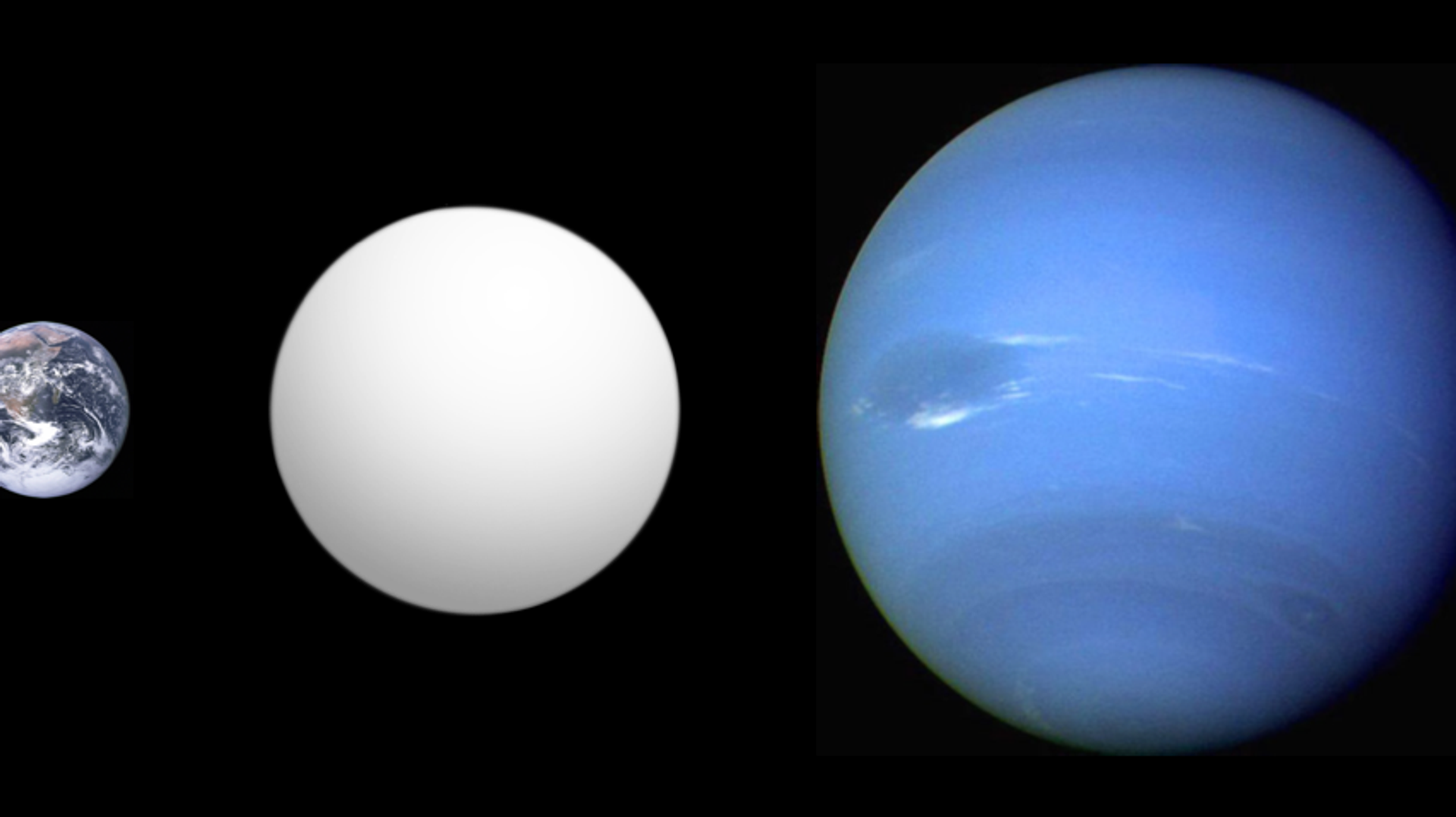
It’s a new year and scientists have found eight new extrasolar planets. That may seem like nothing special — using technology like the Kepler telescope, astronomers have discovered thousands of planets outside our solar system. But this latest discovery is something special. That’s because they orbit their home stars in the “Goldilocks zone” — a distance where liquid water would be able to exist on the surface. Where there’s liquid water there’s also the possibility of life. The discovery doubles the number of known small planets (less than twice the diameter of Earth) that are believed to be in the habitable zone of their parent stars.
Just Like Earth?
The two newly-discovered planets that most resemble Earth are called Kepler-438b and Kepler-442b. Both of them orbit stars called red dwarfs — stars that are smaller and cooler than our own sun. If you lived on one of these planets your birthday would come around much more often than you might like: one year on Kepler-438b lasts just 35 Earth days and on Kepler-442b one trip around its parent star takes 112 days.
According to the astronomers who discovered the planets, Kepler-438b has a 70% chance of being rocky, just like Earth. “For our calculations we chose to adopt the broadest possible limits that can plausibly lead to suitable conditions for life,” said Guillermo Torres of the Harvard-Smithsonian Center for Astrophysics, one of the scientists who made the discovery.
Sophisticated Data Techniques
The team behind the new findings looked for candidates based on data collected by the planet-hunting Kepler telescope. Initially, all the planets they found were too small to be able to be labelled as planets immediately; they had to use a computer program called BLENDER that performed a series of statistical tests to determine if the objects were indeed planets. These objects are so far away from earth — Kepler-442b is 1,100 light years distant — that many theoretical models must be used to make any meaningful predictions about them. After using the BLENDER program, which runs on a NASA supercomputer, it took the research team another year to confirm whether what they found were planets at all.
A Long Ride
If you feel like life on Earth is too much and you need a change of pace, Kepler-442b may sadly be a bit too far out of the way. Travelling at the same speed as the Space Shuttle, it would take you 21 million years to get there — give or take a century or two.