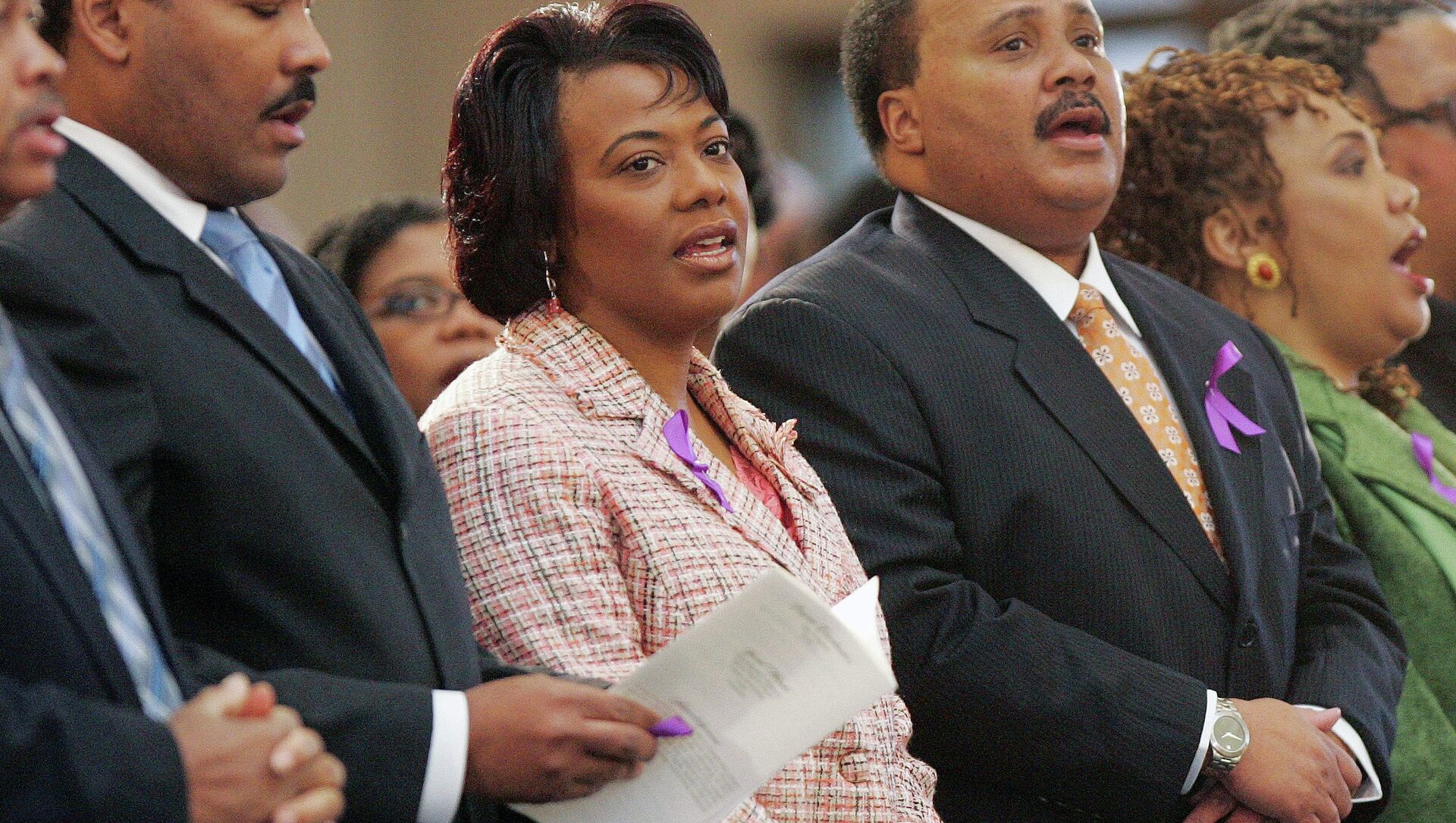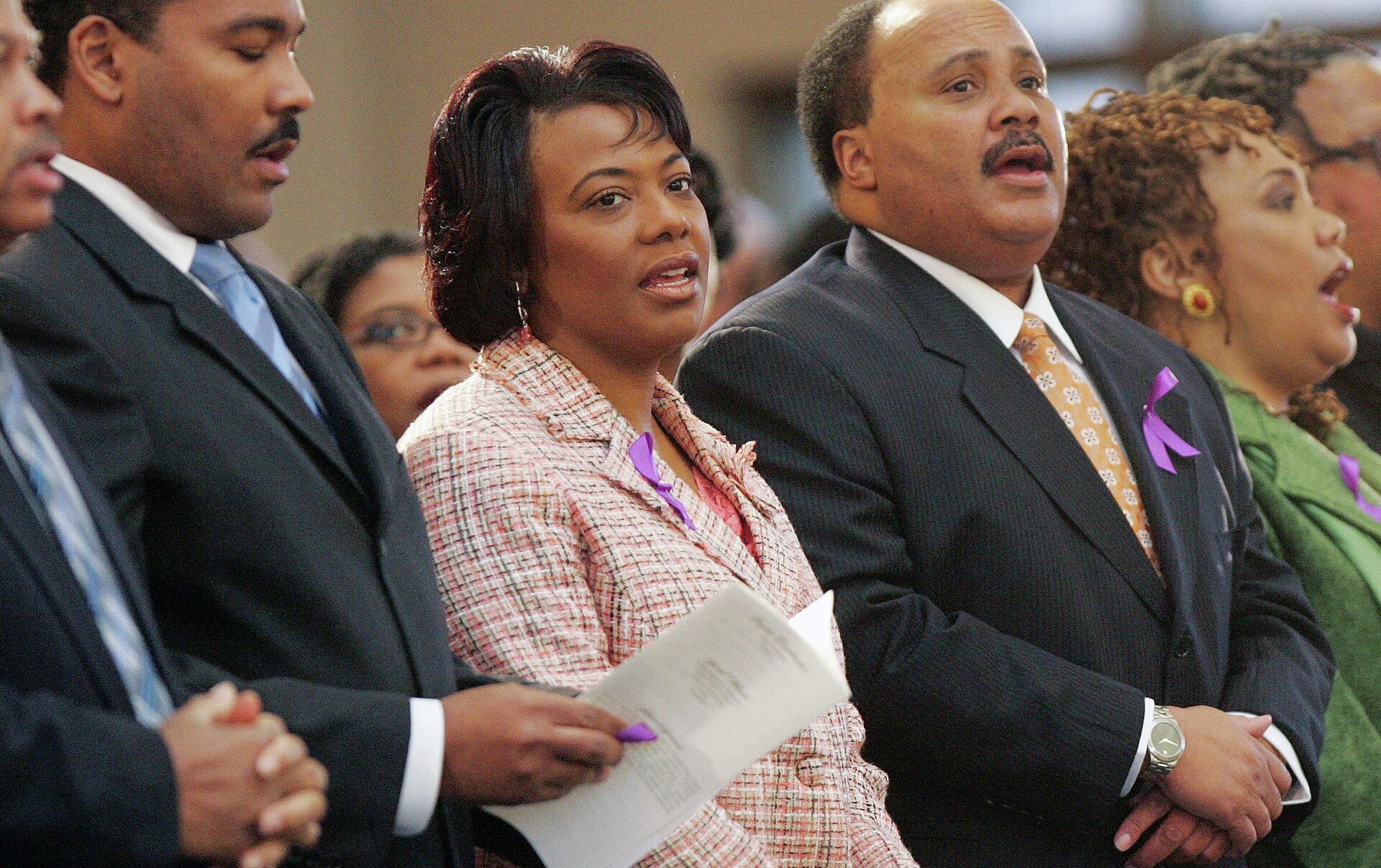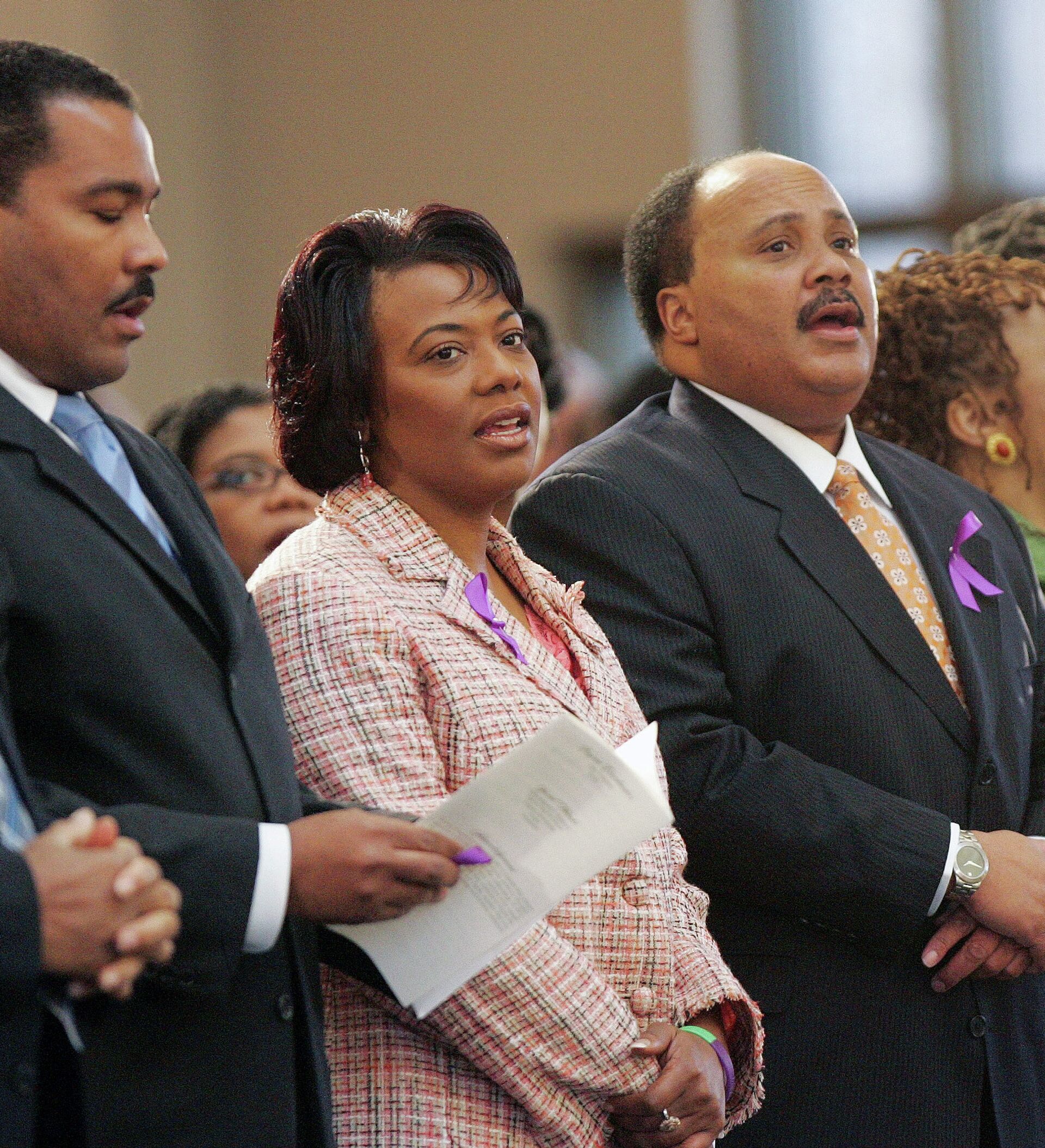
According to the AP, Martin Luther King III and his younger brother Dexter Scott King requested a judge force their sister Bernice King to hand over the medal and traveling bible to the estate because they had a private buyer for both items.
Bernice argued these two treasures were her father’s most cherished possessions and represent who he was.
Judge Robert McBurney could decide on Tuesday who will be victorious in this case, or let it go to trial. The Fulton County Superior Court judge said that when he ordered Bernice to turn in the Bible and medal to the court’s custody, it appeared likely the estate would win the case.
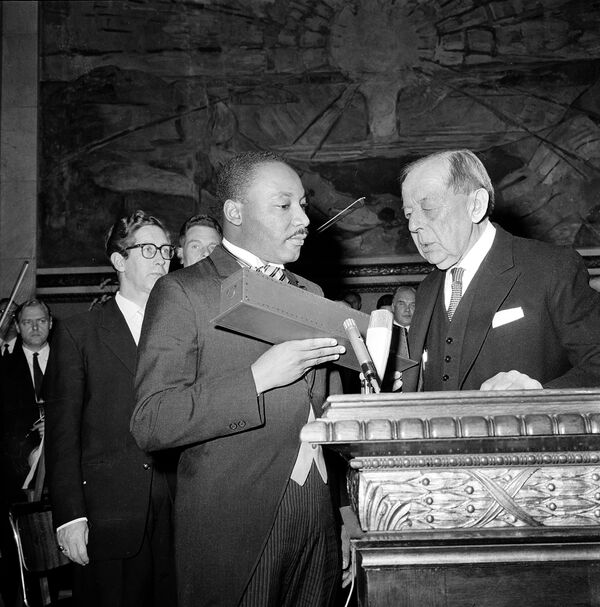
The two iconic items of Dr. King’s have not been seen since President Obama used the bible to be sworn in for his second term, while the Nobel Prize has not been seen in recent years. Both have been held in a safe deposit box since March by an Atlanta judge.
The estate’s attorneys have not commented on the case. But last year a lawyer explained that the King brothers want to sell the items because the estate needs money. Since the estate is a private entity, its finances are not made public.
Bernice’s attorneys have argued that the medal was given to his wife Coretta Scott King, for whose estate Bernice is the administrator.
This would not be the first time the King siblings have sold part of their father’s legacy. They sold a collection of more than 10,000 of his personal papers and books in 2006 for $32 million, a collection now housed at Morehouse College, King’s alma mater.
Appraisers Leila Dunbar and Clive Howe told the AP they expect the medal could be sold for as much as $20 million, depending on the buyer. Dunbar went on to say that the bible could go for anywhere from $200,000 to $1 million.
Barbara Andrews, the director of education and interpretation at the National Civil Rights Museum in Memphis, said “Both items have enormous societal value and should be on public display.”
“The Bible is important because of who King was, and the Nobel Peace Prize because of what it signified — that the fight for civil rights was being recognized on a world stage,” she said.
“We like to own things. We like to touch things. We like to see them with our eyes. It satisfies that need in us to see the physical manifestation of the award.”
The case is still pending.