British MP Robert Walter put forward the challenge to Russia's credentials, extending the existing ban on voting rights, which were implemented when Crimea joined Russia in April 2014.
The challenge to Russia's status was voted 160 in favour, 42 against, with 11 abstentions, and is based on Rule 8 of the Assembly's rules which refers to "a serious violation of the basic principles of the Council of Europe" and "persistent failure to honour obligations and commitments."
UK MP Robert Walter speaking at #PACE debate on #Russia: We should annul Russian credentials pic.twitter.com/BlN4IpIt09
— UK Delegation to CoE (@UKDelCoE) April 10, 2014
The Council of Europe is an international advisory organisation, not tied to the EU, aimed at promoting cooperation throughout European countries on a number of global issues.
The move follows criticism of Russia's alleged involvement in the conflict in Ukraine, where fighting between Kiev government forces and eastern Ukrainian rebel groups has claimed the lives of more than 5,000 people since April last year, according to UN figures. The West, namely the United States and the European Union, has accused Russia of meddling with Ukraine's internal affairs and escalating the conflict.
Moscow has strongly denied these claims, with Russian Foreign Minister Sergei Lavrov using last week's annual news conference on diplomatic performance to declare that Russia remains committed to dialogue with Kiev and the West over the Ukraine crisis.
The Assembly had the opportunity to either ratify Russia's credentials and allow the country to actively participate in PACE discussions, not ratify them, or ratify the credentials while suspending some of Russia's rights to participate in certain activities.
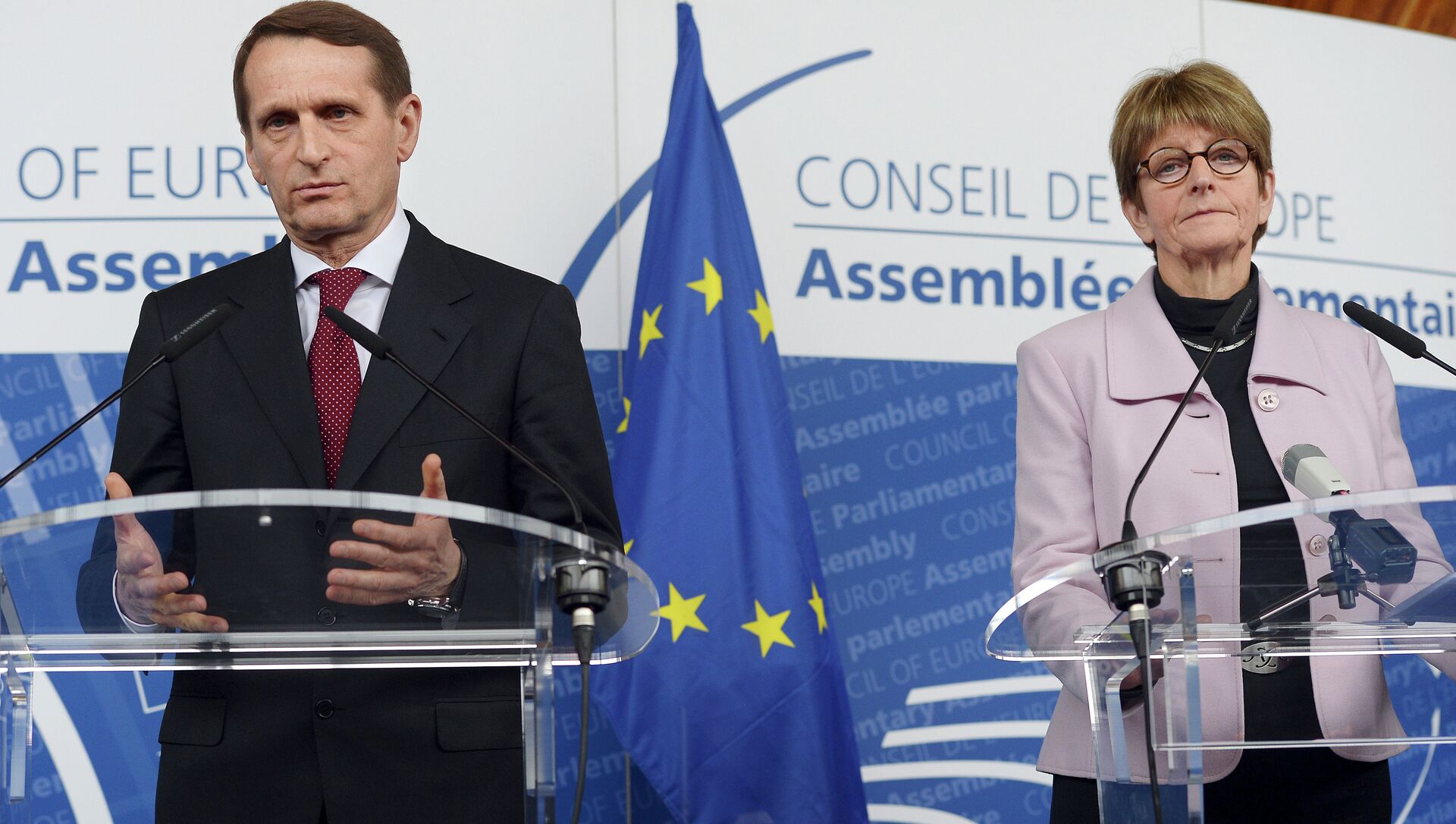
S.Naryshkin: by blocking participation of Russia for 9 months PACE has been an instrument of pressure for its opponents
— Государственная Дума (@dumagovru) January 27, 2015
The decision to extend Russia's ban on voting and the right to be represented at major bodies at the Assembly contradicts recommendations made by the author of a report released by PACE's Monitoring Committee, with Austrian delegate Stefan Shennach refusing calls to knock back Russia's involvement completely, but supporting a decision to suspend some of the Russian delegation's powers and privileges.
The report, which set the basis of Wednesday's debate on the matter, states:
"No solution to the conflict in Ukraine will be possible without the full participation and commensurate political will of the Russian Federation. The Parliamentary Assembly therefore needs to maintain a constructive dialogue with the Russian delegation on this issue as well as on the honouring of its obligations and commitments to the Council of Europe."
Silly act, silly people
However, critics of the proposals believe that pushing Russia further into isolation will be unhelpful in trying to find a solution to the Ukraine conflict.
American geopolitical analyst and author William Engdahl has slammed the latest developments, describing them as a "silly act by silly people," while Robert Oulds, director of the UK-based think tank The Bruges Group, told Sputnik UK that the idea of enforcing more diplomatic sanctions on Russia is "completely wrongheaded and counterproductive."
"When it comes to the specific issue of sanctions and attempts to politically isolate Russia, it is completely counterproductive. Sanctions only entrench divisions and make conflicts worse. Sanctions do not work — full stop, and that can be proven by case study after case study where sanctions have been applied against nations," Mr. Oulds said.
"There have been repeated attempts to humiliate Russia and push back its sphere of influence, with the EU and NATO expanding eastward into disputed territories."
Meanwhile, William Engdahl told Sputnik that he hasn't seen any justification for why Russia should have its rights suspended, saying that the "West wants an excuse to tighten sanctions on Russia."
"The accusations coming out of Kiev from Poroshenko were that Putin's forces were behind the latest military activity in eastern Ukraine and the Donbas, Donetsk and so forth with the airport — there's absolutely no evidence of that. In fact the evidence points to just the opposite."
Mr. Engdahl cited reports that several hundred elite mercenaries from US security firm Academi (formerly known as Blackwater) were in Ukraine helping with government crackdowns on protestors.
"You have hired mercenary killers from companies like Blackwater, caught on tape with heavy English-speaking accents saying ‘Get out of my face buddy,' and that's not a native Ukrainian speaking to his Ukrainians in English. So I think we have the West — NATO caught with their hand in a very bloody cookie jar in east Ukraine."