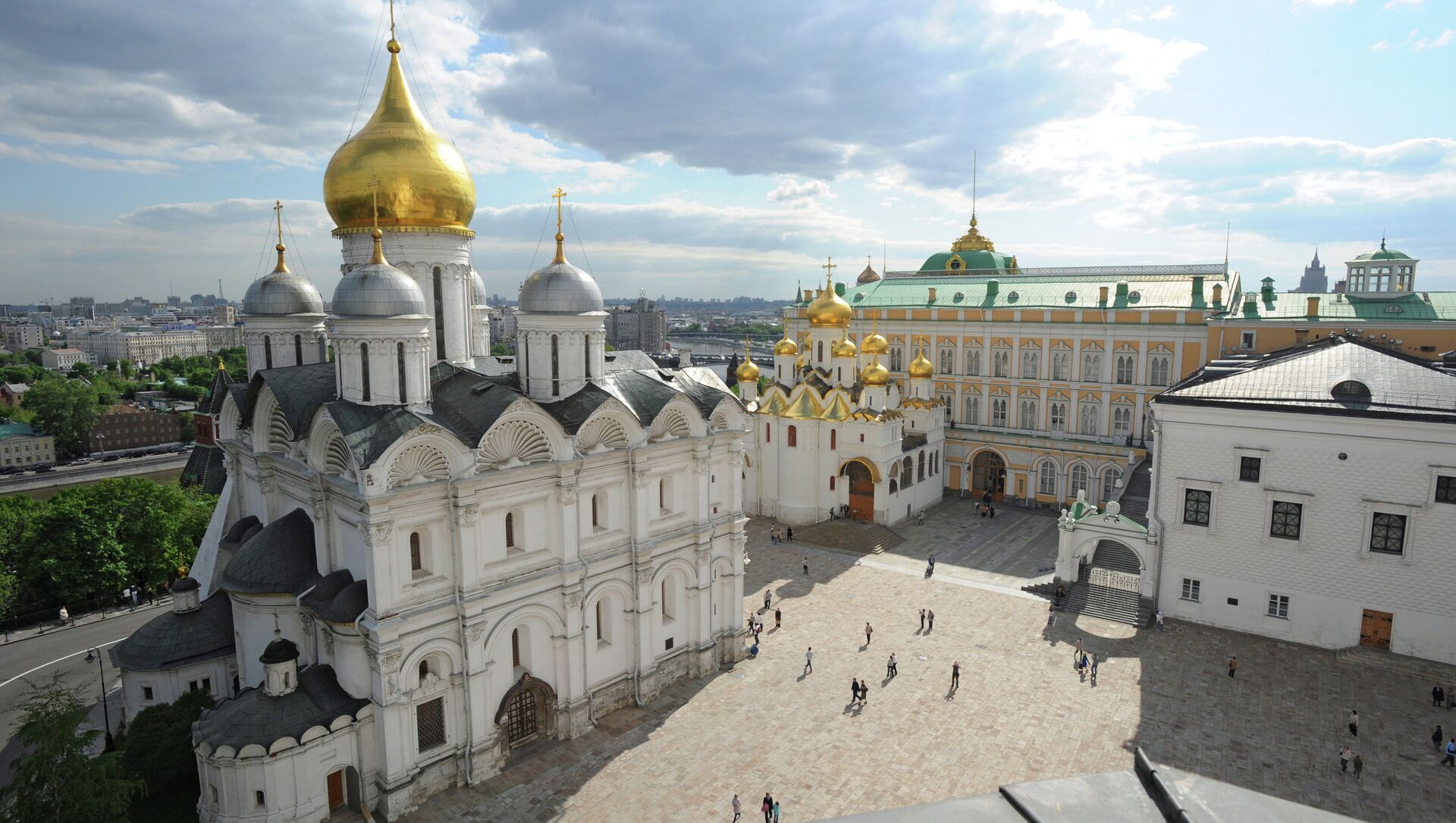
On March 10, 1806, Emperor Alexander I ordered to turn the Moscow Kremlin into a museum, as the country’s capital was in Saint Petersburg. The museum complex comprises the Armoury Chamber, the Assumption, Annunciation and Archangel’s Cathedrals, the Church of Laying of Our Lady's Holy Robe, the Ivan the Great Bell-Tower Complex and the XVIIth-century Patriarch's Palace.
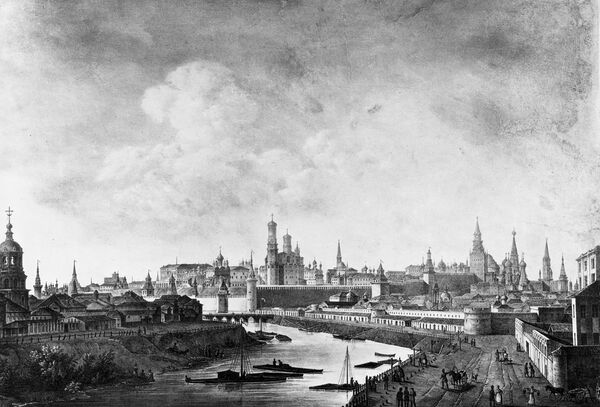
The first annalistic record of Moscow traces back to 1147. Originally, the Kremlin was a wooden fortress. As time went on, its oak walls were replaced with white limestone. The Kremlin was given its modern outlook after rebuilding at the end of the 15th century.
Above: Kremlin View by Godfrois Engelmann. Lithograph, early 19th century. Museum of History and Reconstruction of Moscow.
Above: Kremlin View by Godfrois Engelmann. Lithograph, early 19th century. Museum of History and Reconstruction of Moscow.
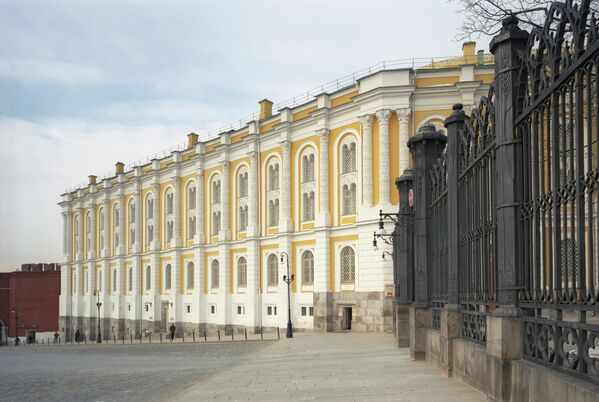
Following Emperor Alexander’s decree, the Kremlin’s workshops, royal depositories and storages were unified into the Armoury Chamber museum.
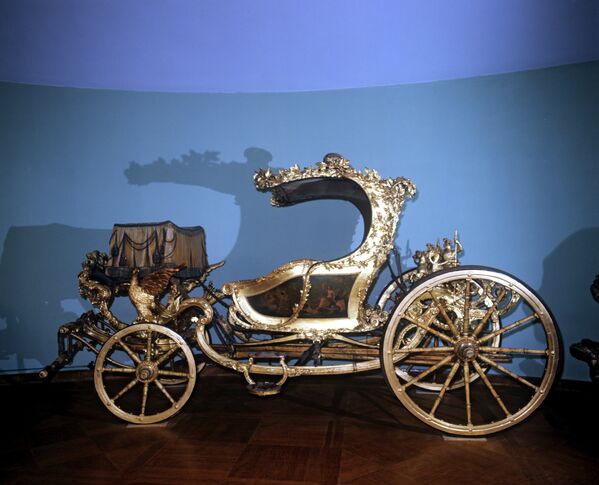
The Armoury Chamber has a rich collection of ancient treasures, some of them crafted in the Kremlin’s workshops and others presented by foreign ambassadors. The museum displays royal regalia, carriages, ceremonial horse harness and weapons, silver and gold treasures.
Above: A London carriage (side view), 18th century. The Armory Chamber of the Moscow Kremlin.
Above: A London carriage (side view), 18th century. The Armory Chamber of the Moscow Kremlin.
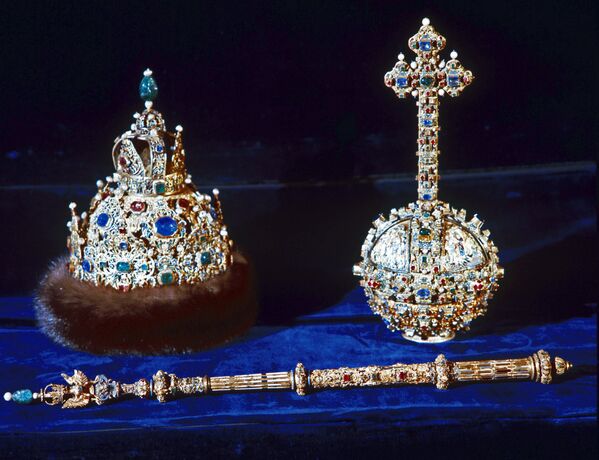
Above: The imperial regalia of Russian Tsar Mikhail Romanov: The Hat of Vladimir Monomakh, scepter and orb featuring gold, precious stones and pearls on display at the Moscow Kremlin's Armory.
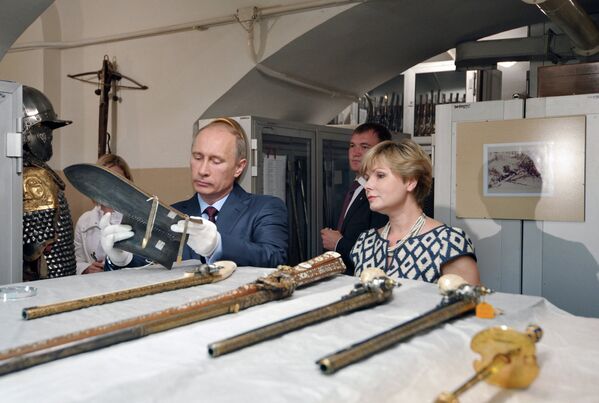
The Moscow Kremlin Museum Complex is currently managed by Yelena Gagarina, Soviet cosmonaut Yuri Gagarin’s daughter.
Above: President Vladimir Putin (foreground left) visits the Moscow Kremlin's Armory with Yelena Gagarina (right), director of the Moscow Kremlin museum complex, June 29, 2012.
Above: President Vladimir Putin (foreground left) visits the Moscow Kremlin's Armory with Yelena Gagarina (right), director of the Moscow Kremlin museum complex, June 29, 2012.
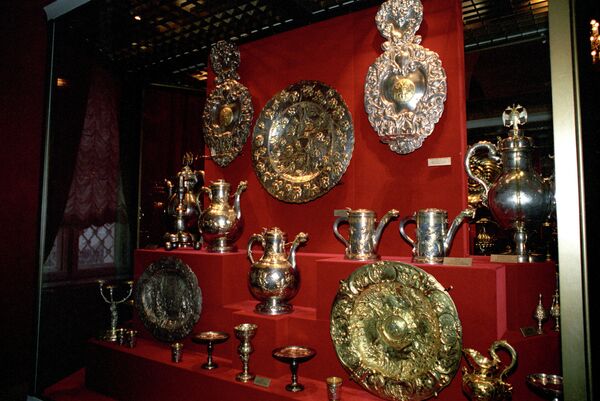
The museum exhibits around 4,000 objects crafted by Russian, European and Eastern masters in 4-20th centuries.
Above: Poland's Ambassadorial gifts, Armoury Chamber.
Above: Poland's Ambassadorial gifts, Armoury Chamber.
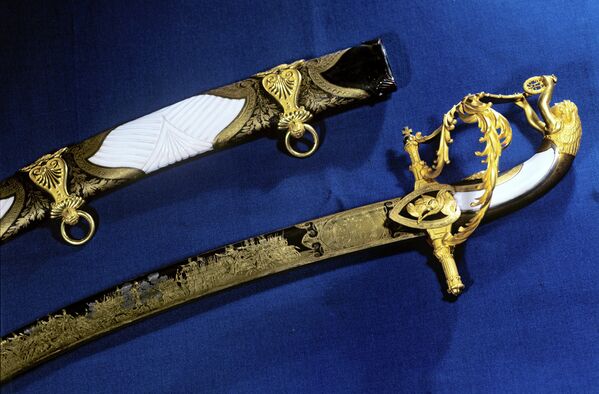
The Kremlin Armoury was established as the royal arsenal in 1508. It produced and stored weapons and treasures. The best gunsmiths, painters and jewelers worked there.
Above: Saber and sheath by master armorer Ivan Bushuyev of Zlatoust in the Urals, 1st third of the 19th century, at the Kremlin Armory.
Above: Saber and sheath by master armorer Ivan Bushuyev of Zlatoust in the Urals, 1st third of the 19th century, at the Kremlin Armory.
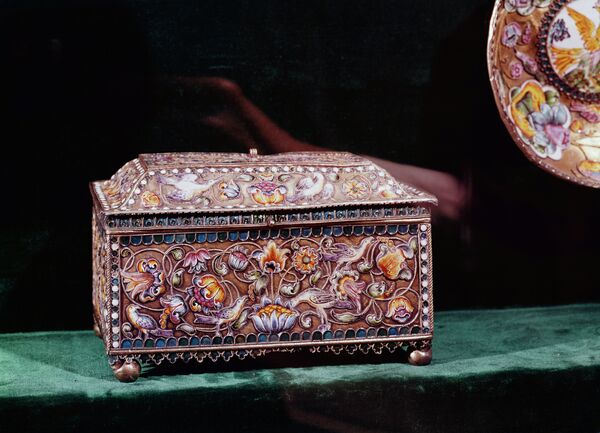
After the October Revolution, the Armoury’s collection was augmented with treasures belonging to the Patriarch sacristy.
Above: A 16th century casket. Enamel. The Armory Chamber of the Moscow Kremlin.
Above: A 16th century casket. Enamel. The Armory Chamber of the Moscow Kremlin.
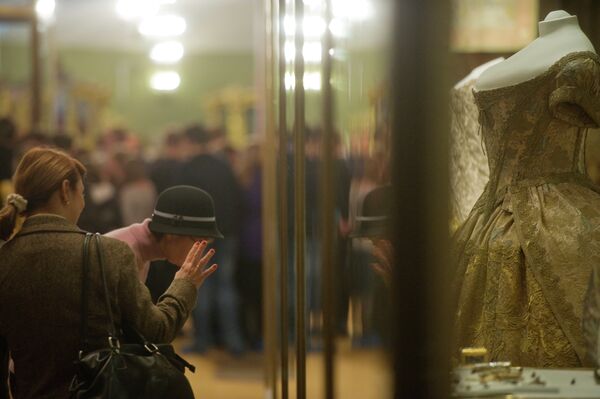
The Armoury Chamber also boasts of a unique collection of gems and jewelry from Russia and Europe – the Russian Diamond Fund.
Above: School children during a tour of the Kremlin Armoury Chamber in Moscow.
Above: School children during a tour of the Kremlin Armoury Chamber in Moscow.
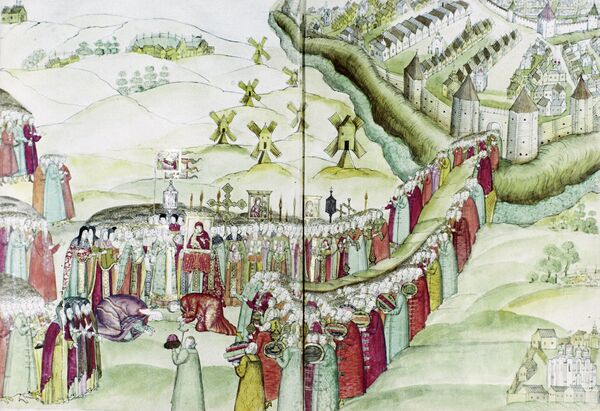
Its current building was constructed by imperial architect Konstantin Ton in 1844-1851.
Above: Reproduced miniature from the book "The Election and Coronation of Czar and Grand Prince Mikhail Fyodorovich" (1672-1673) from the collection of the Armory Chamber, the Moscow Kremlin.
Above: Reproduced miniature from the book "The Election and Coronation of Czar and Grand Prince Mikhail Fyodorovich" (1672-1673) from the collection of the Armory Chamber, the Moscow Kremlin.
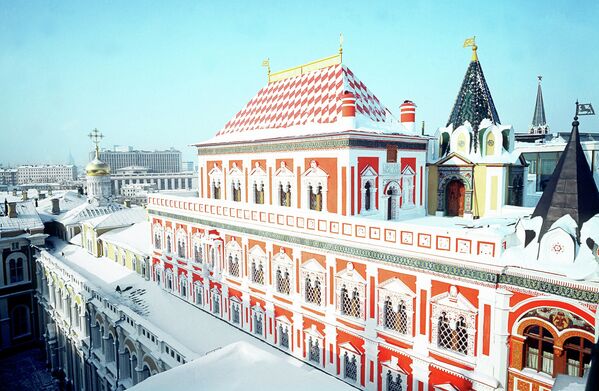
The Terem Palace is a historical monument built in the mid-17th century that was the Tsars’ home. It is currently inaccessible for visitors, since its serves as a part of the presidential residence.
Above: The Terem Palace in the Moscow Kremlin was built in 1635-1636 under the supervision of stone masons Antip Konstantinov and Larion Ushakov.
Above: The Terem Palace in the Moscow Kremlin was built in 1635-1636 under the supervision of stone masons Antip Konstantinov and Larion Ushakov.
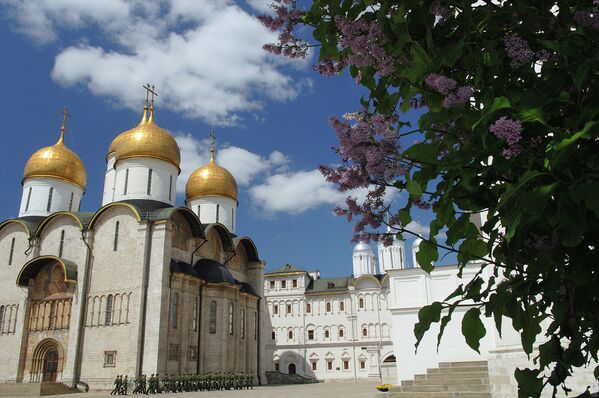
The Assumption Cathedral served as the place where the Tsars’ inaugurations and Emperors’ coronations happened. It was constructed in its present look in 1475-1479.
Above: The Moscow Kremlin's Cathedral square from the direction of the Archangel Michael Cathedral. The Assumption Cathedral of the Moscow Kremlin.
Above: The Moscow Kremlin's Cathedral square from the direction of the Archangel Michael Cathedral. The Assumption Cathedral of the Moscow Kremlin.
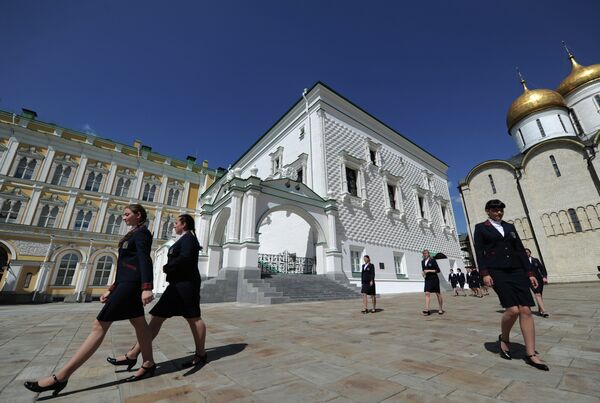
Also, the Assumption Cathedral is the place where Metropolitans and Patriarchs of the Russian Orthodox Church are buried.
Above: Students graduating from class on the grounds of the Moscow Kremlin. Right - Assumption Cathedral.
Above: Students graduating from class on the grounds of the Moscow Kremlin. Right - Assumption Cathedral.
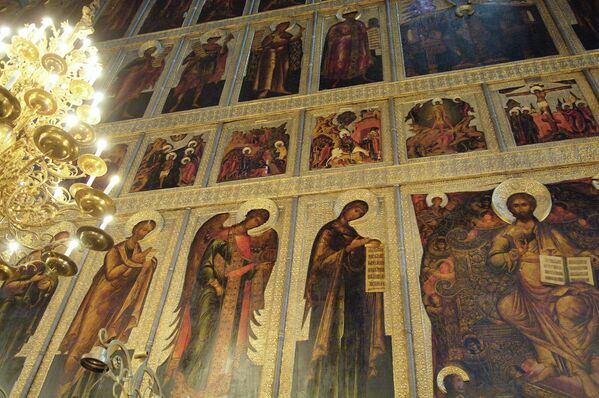
The cathedral’s wall-paintings and icons have international artistic value.
Above: The iconostasis of the Assumption Cathedral of the Moscow Kremlin.
Above: The iconostasis of the Assumption Cathedral of the Moscow Kremlin.
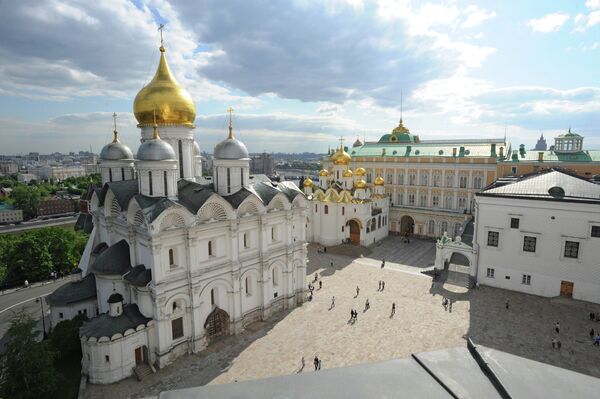
The Archangel’s Cathedral was established by the first Great Moscow Prince Ivan Kalita in 1333 to praise Archangel Michael, a guardian of Russian warriors.
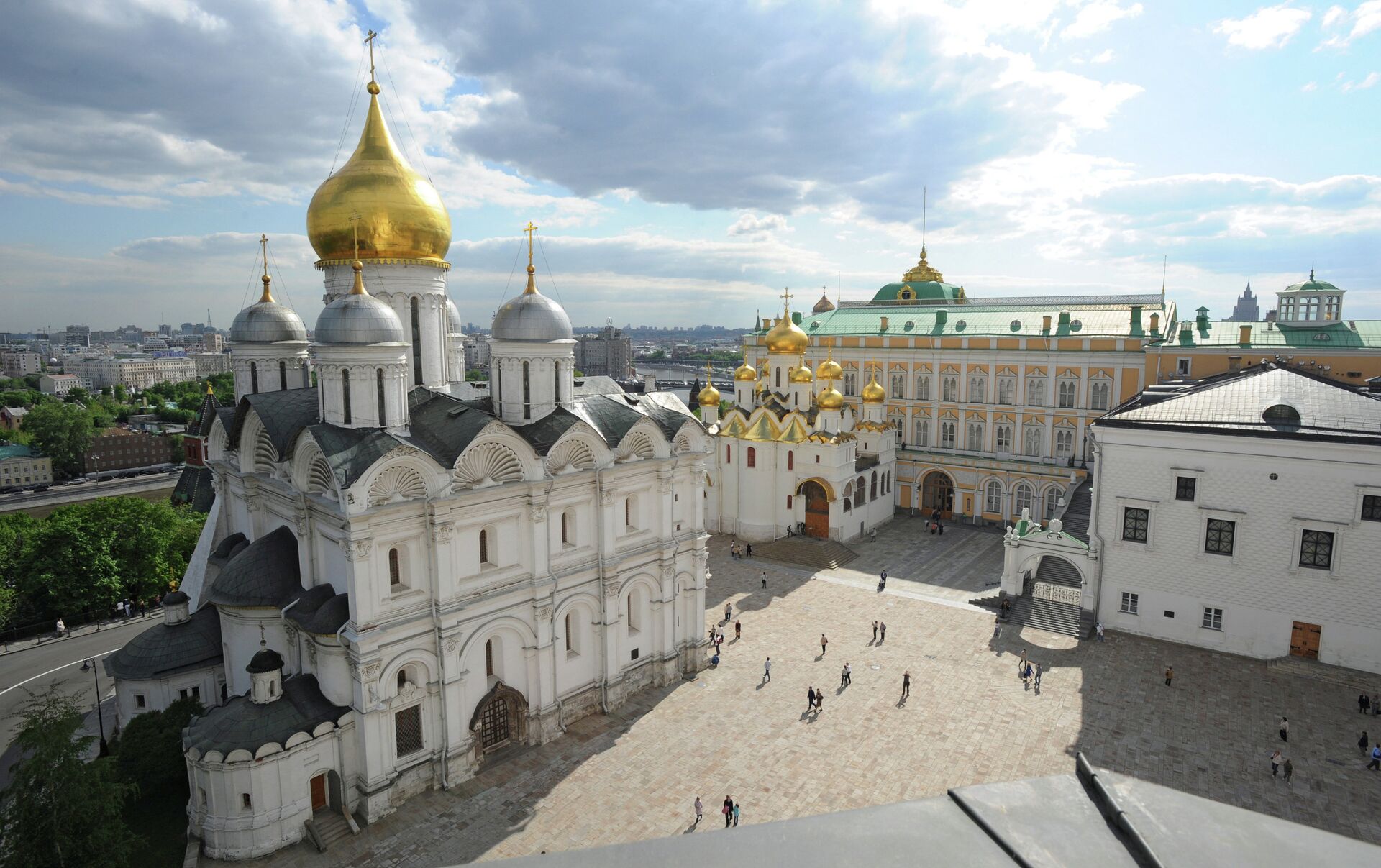
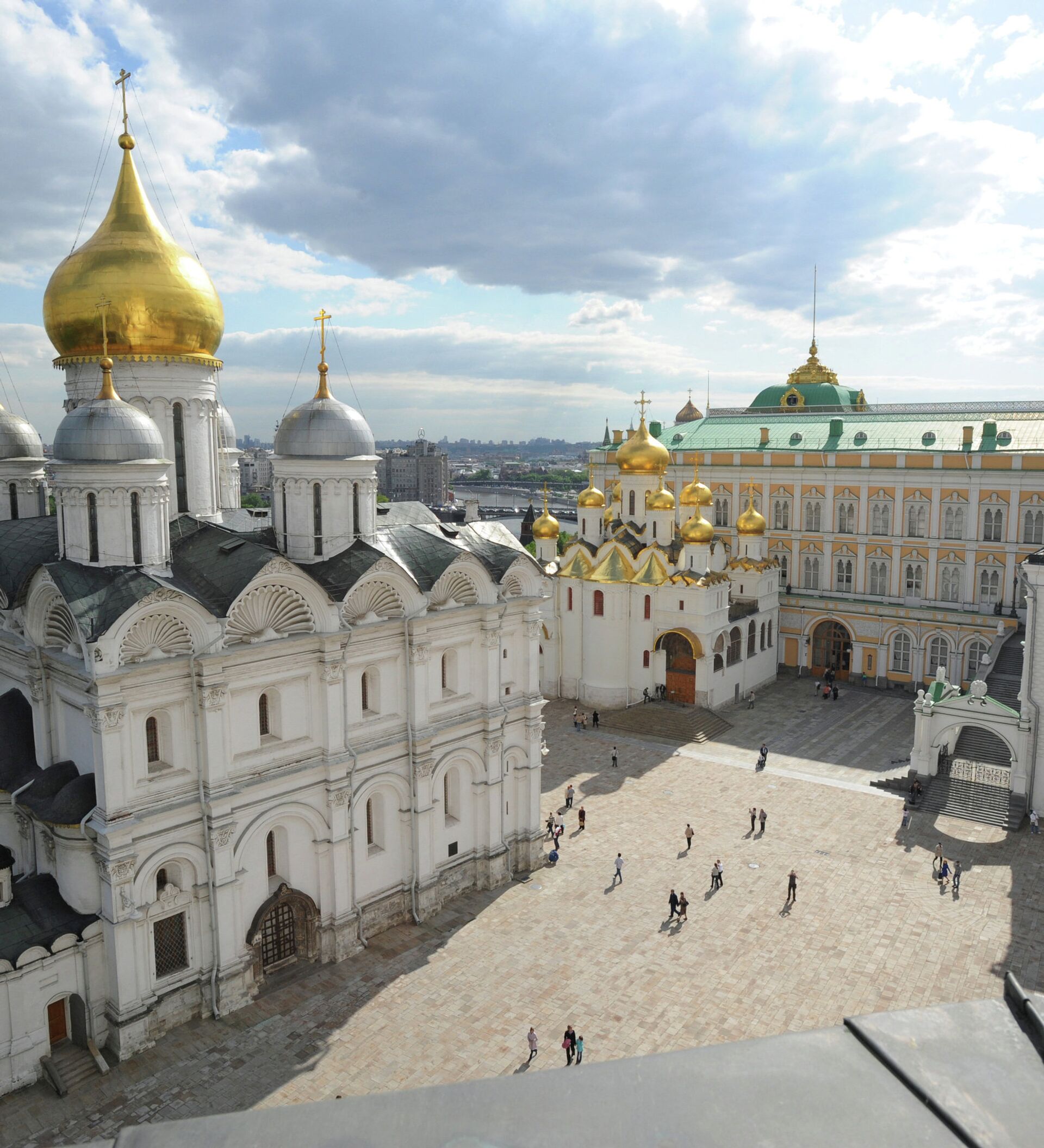
Above: The Archangel Cathedral of the Moscow Kremlin, as viewed from the Ivan the Great Bell Tower, which has opened to the public after restoration.
Above: The Archangel Cathedral of the Moscow Kremlin, as viewed from the Ivan the Great Bell Tower, which has opened to the public after restoration.
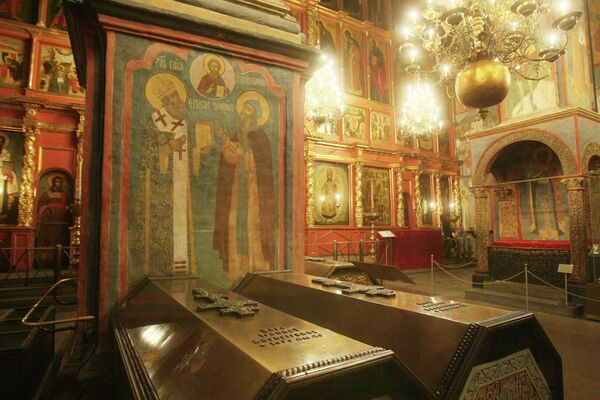
The cathedral served as the Necropolis for Moscow Princes and Tsars up to the XVIII century. The tombs of the Ryurikovich and Romanov dynasties are located at the cathedral.
Above: The Moscow Kremlin's Archangel Cathedral.
Above: The Moscow Kremlin's Archangel Cathedral.
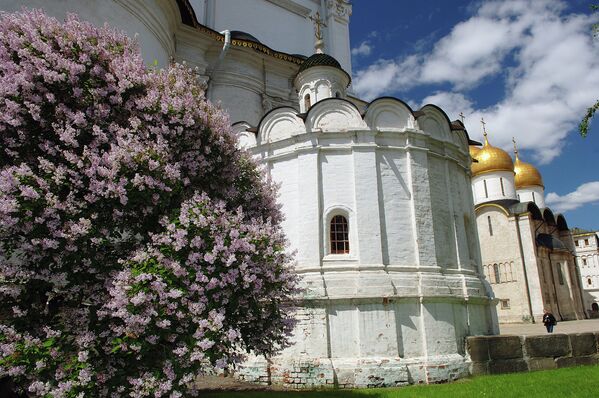
The cathedral is built of bricks and decorated with white stone. It embodies elements of the Italian Renaissance architecture.
Above: Uar Martyr side-chapel, attached to the Archangel Michael
Cathedral's northern apses from the east in the middle of the 16th century, is a milestone in the history of the Moscow Kremlin and Moscow.
Above: Uar Martyr side-chapel, attached to the Archangel Michael
Cathedral's northern apses from the east in the middle of the 16th century, is a milestone in the history of the Moscow Kremlin and Moscow.
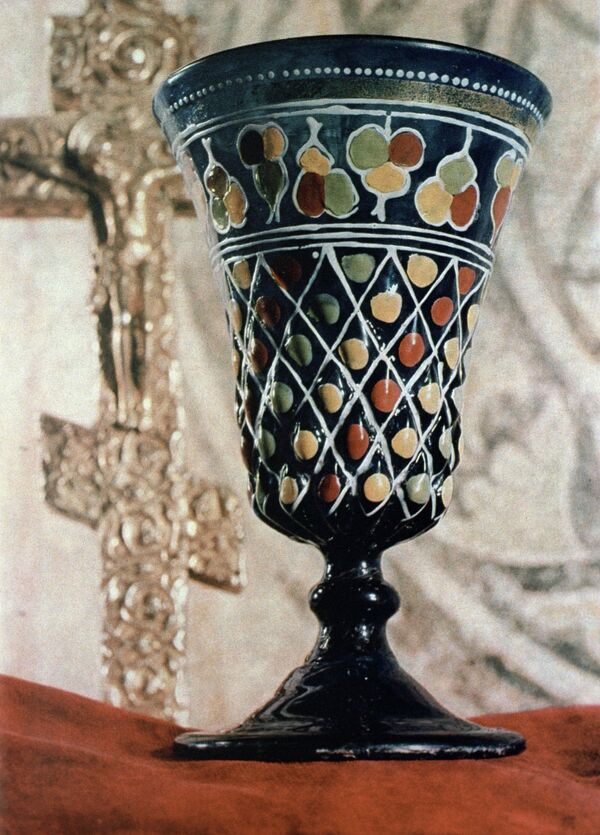
Above: Glass cup of Tsar Ivan the Terrible. The 16th century. The Archangel Cathedral of the Moscow Kremlin.
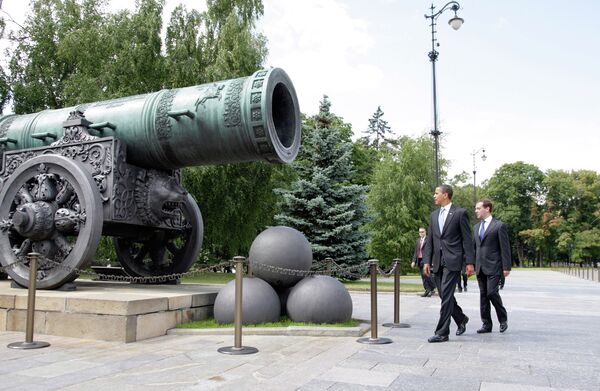
The Tsar Cannon, one of the symbols of Russia along with the Tsar Bell, was cast by Andrey Chokhov in 1586. The cannon was entered into the Guinness Book of Records as the largest bombard by caliber – 890 mm. It was generally believed that the cannon was created as pure demonstration of Russia’s might; however, studies show that the cannon was regarded as a regular weapon and fired at least once.
Above: July 7, 2009. President Dmitry Medvedev, right, and US President Barack Obama on a walk in the Kremlin.
Above: July 7, 2009. President Dmitry Medvedev, right, and US President Barack Obama on a walk in the Kremlin.
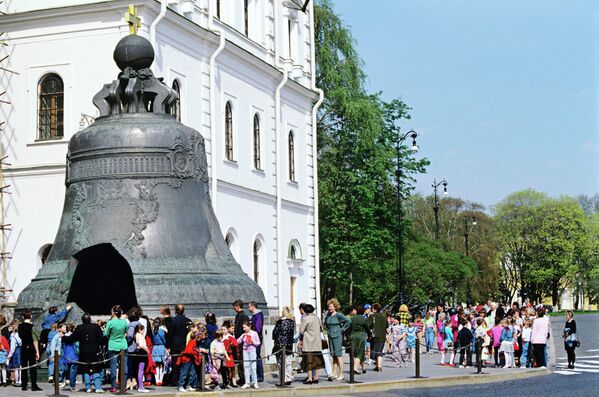
The Tsar Bell was cast in 1735 at the order of Empress Anna Ioannovna. It is more than one six meters high and weighs over 200 tons. It is the largest bell in the world.
Above: Tsar Bell on the Kremlin's Cathedral Square.
Above: Tsar Bell on the Kremlin's Cathedral Square.
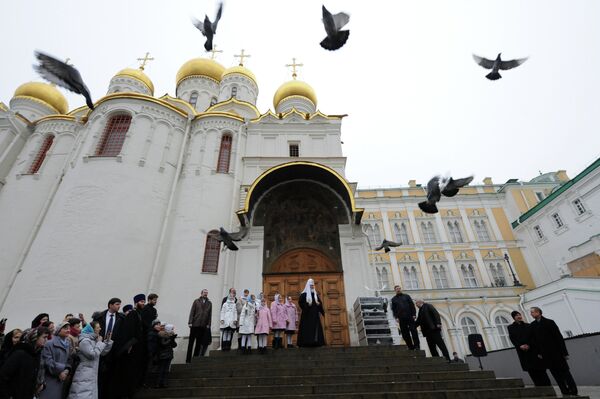
The Anunciation Cathedral was built in 1484-1489 and served as home church for the Moscow Great Princes and Tsars. Since April 7, 1993, the Patriarch has held ceremonies at the Holy Day of Annunciation to Virgin in the cathedral.
Above: Patriarch Kirill of Moscow and all Russia, center, releasing white doves in the honor of the Annunciation Day after the Divine Liturgy in the Annunciation Cathedral of Moscow Kremlin.
Above: Patriarch Kirill of Moscow and all Russia, center, releasing white doves in the honor of the Annunciation Day after the Divine Liturgy in the Annunciation Cathedral of Moscow Kremlin.
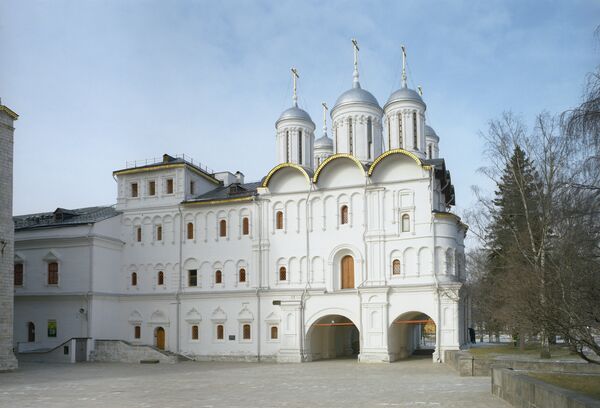
The Patriarch’s Palace, constructed in 1653-1655, survived a number of fires. It is home to rare jewelry, ceremonial hunting equipment and ancient furniture created by Russian, European and Eastern masters.
Above: The Moscow Kremlin, the main public-political, spiritual-religious and historical-artistic facility in the Russian capital, and its Patriarch's Chambers and Twelve Apostles Church.
Above: The Moscow Kremlin, the main public-political, spiritual-religious and historical-artistic facility in the Russian capital, and its Patriarch's Chambers and Twelve Apostles Church.
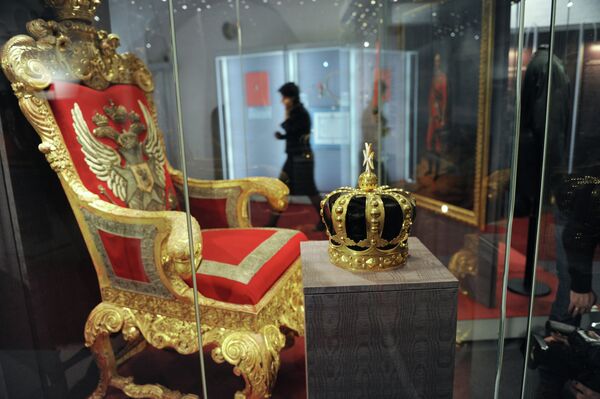
Above: Exhibition "Sovereign cavaliers. Foreign orders held by Russian emperors" being underway at the One-Pillar Chamber of the Moscow Kremlin's Patriarch Palace. Right: Crown of the Grand Master of the Order of John of Jerusalem (Malta).
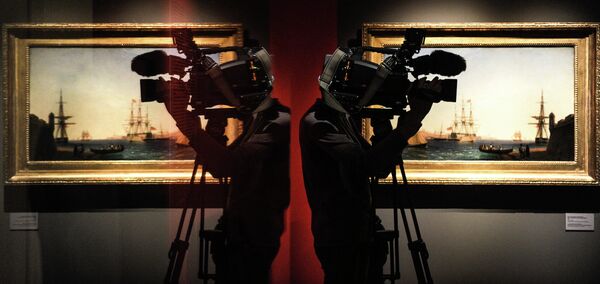
Above: The painting "Port La Valetta on the Malta Island" by Ivan Aivazovsky (1844) at the exhibition "Malthusian Order Treasures. Nine Centuries of Serving Faith and Mercy", the Cross Chamber of the Patriarchal Palace in the Kremlin Museums.
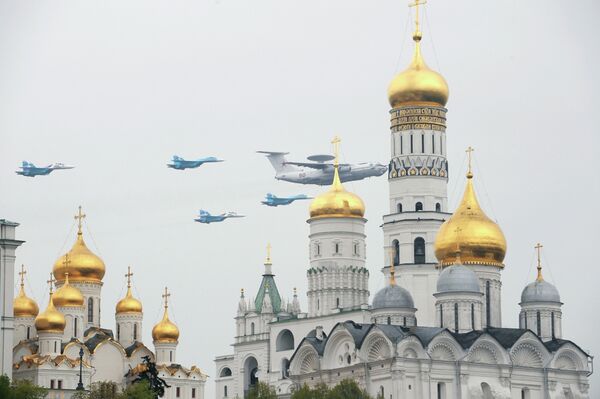
Above: An Avax scout plane and Su-27 Flanker fighters during the dress rehearsal for the May 9 Victory Parade on Moscow's Red Square.