https://sputnikglobe.com/20150320/1019760841.html
Awe-Inspiring, Bladelike Toothy Crocodile Stalked US Prior to Dinos
Awe-Inspiring, Bladelike Toothy Crocodile Stalked US Prior to Dinos
Sputnik International
A newly-released study reveals that a huge, terrifying beast, likely an ancestor of the modern-day crocodile, used to inhabit the territory of what is now... 20.03.2015, Sputnik International
2015-03-20T06:44+0000
2015-03-20T06:44+0000
2022-08-06T10:07+0000
https://cdn1.img.sputnikglobe.com/img/101976/04/1019760452_0:155:3500:2135_1920x0_80_0_0_78b9da39ef5ba27c15148f52069e096d.jpg
north carolina
Sputnik International
feedback@sputniknews.com
+74956456601
MIA „Rossiya Segodnya“
2015
Sputnik International
feedback@sputniknews.com
+74956456601
MIA „Rossiya Segodnya“
News
en_EN
Sputnik International
feedback@sputniknews.com
+74956456601
MIA „Rossiya Segodnya“
Sputnik International
feedback@sputniknews.com
+74956456601
MIA „Rossiya Segodnya“
life, newsfeed, society, north carolina, us
life, newsfeed, society, north carolina, us
Awe-Inspiring, Bladelike Toothy Crocodile Stalked US Prior to Dinos
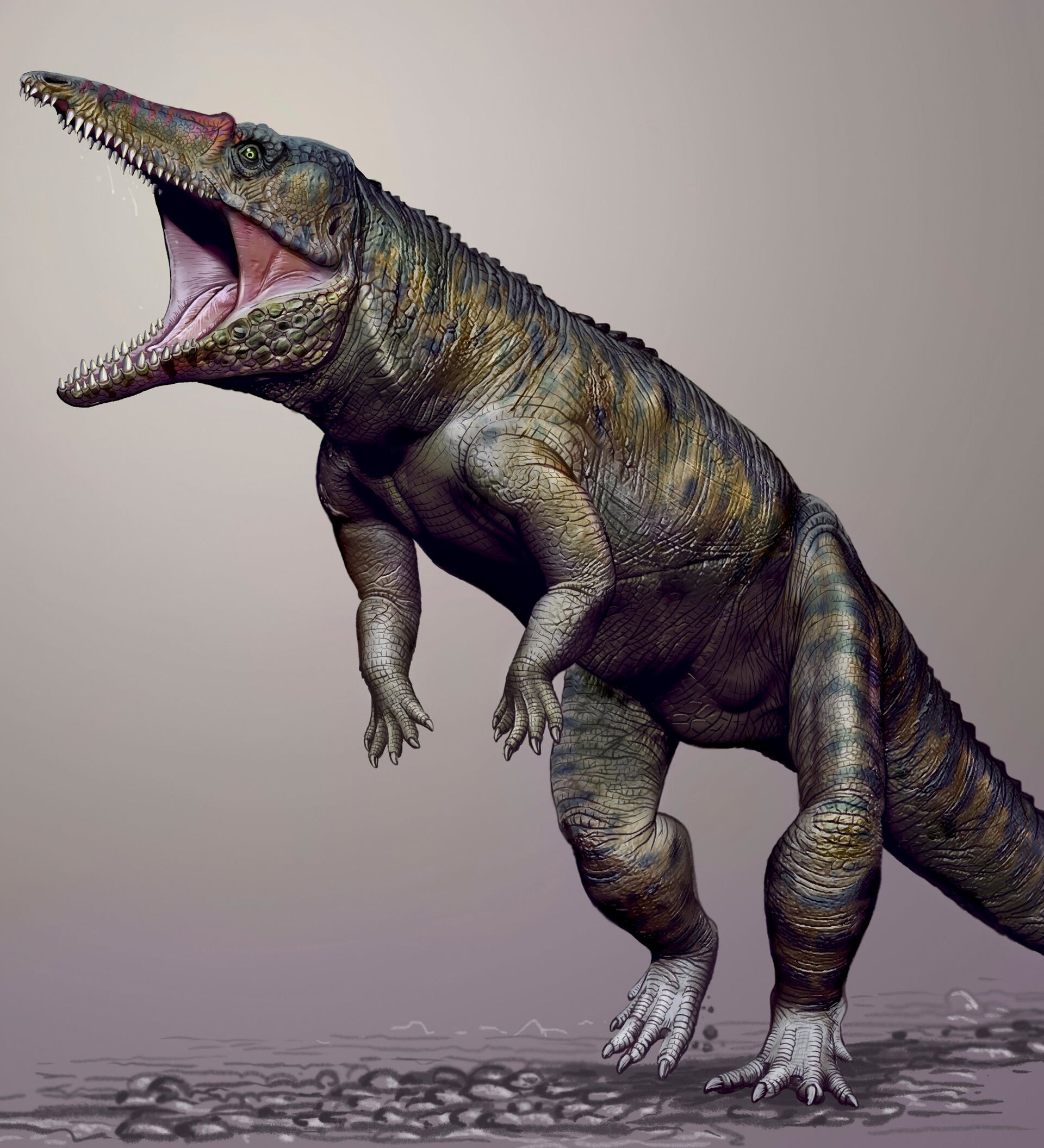
06:44 GMT 20.03.2015 (Updated: 10:07 GMT 06.08.2022) A newly-released study reveals that a huge, terrifying beast, likely an ancestor of the modern-day crocodile, used to inhabit the territory of what is now North Carolina some 230 million years ago; scientists estimate it was there even before the dinosaurs arrived.
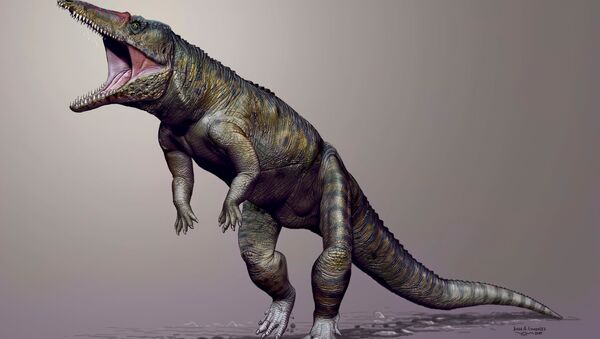
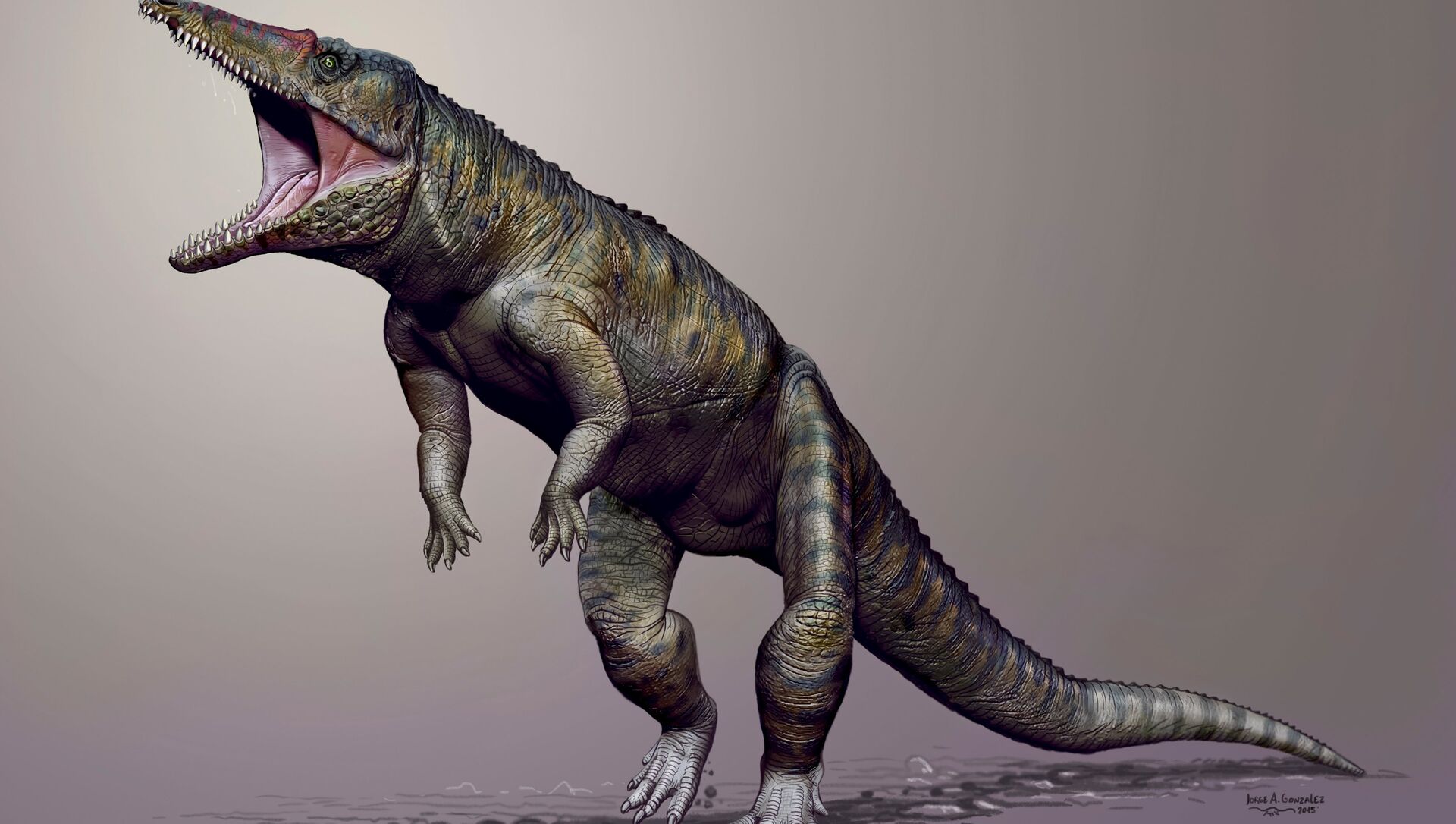
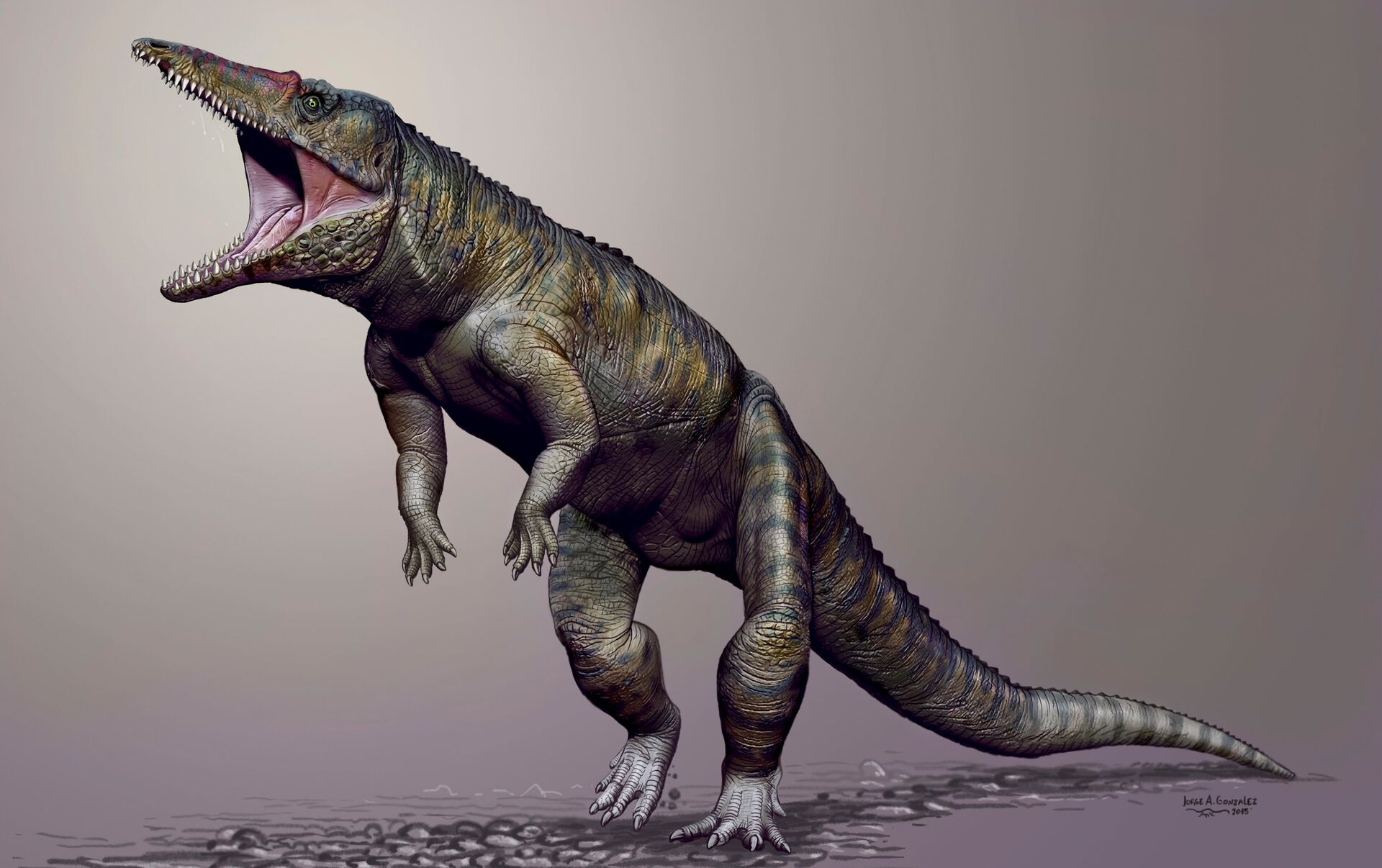
An awe-inspiring creature over 2.7 meters in length which likely walked on its hind legs used to inhabit the a territory of what is now North Carolina some 230 million years ago, prior to the appearance of dinosaurs in the area.
The study released by NC State University and the NC Museum of Natural Sciences in the latest issue of the journal Scientific Reports has named the beast Carnufex carolinensis, Latin for “Carolina Butcher”.
The name is supposedly derived from its long skull, which resembles a knife, and its bladelike teeth, which the crocodile used for slicing flesh off the bones of its prey, according to the study's lead author Lindsay Zanno.
“Butcher seemed a very appropriate way to get that into the minds of people," Live Science website quotes Zanno as saying.
The scary crocodile ancestor apparently stalked armored reptiles and our early mammalian relatives.
The researchers created a detailed 3-D model of the beast’s skull using a high-resolution surface scanner to digitize each unearthed fossil from what was left of the animal's head.
Having compared the creature’s skull and his forelimbs, the scientists ascertained that the “butcher” might have walked on his two legs.