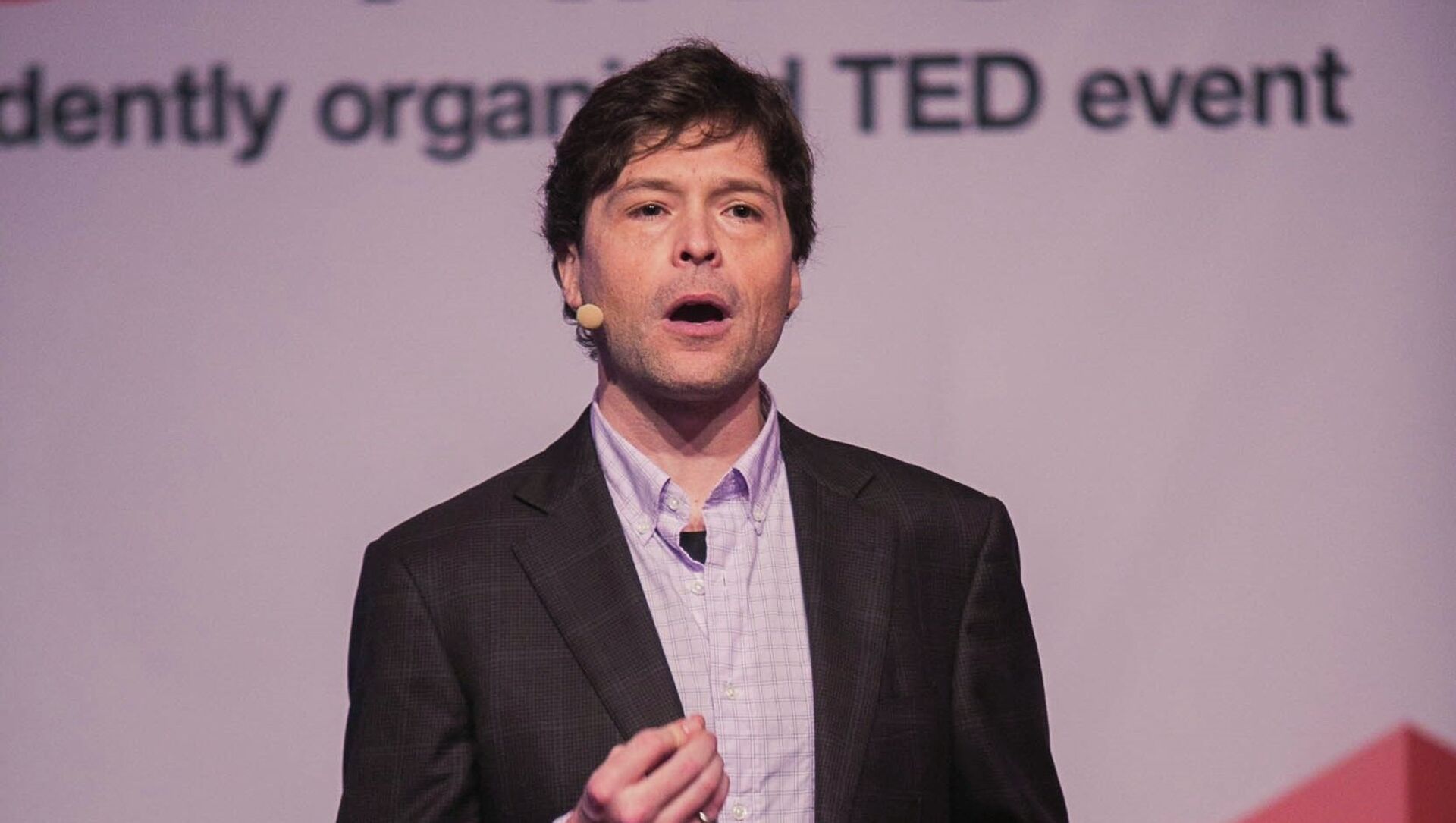
"For these and other reasons, Kohlmann's critics describe him as a huckster," Trevor Aaronson, of the Intercept, writes in a report that raises serious doubts about Kohlman's so-called expertise and partiality as a witness for the government.
The US government has paid Kohlmann and his company at least $1.4 million for testifying in court, assisting with FBI investigations and consulting with federal agencies, the Intercept reported.
His purported area of expertise is his ability to monitor the so-called dark web and track the Islamic State, al Qaeda and their sympathizers.
Kohlmann has a theory – to which he has testified in court – involving a series of indicators that he says determine if someone is likely a homegrown terrorist. That theory, however, has never been tested against a selected control group.
In fact, much of Kohlmann's research is not peer-reviewed. He has admitted in court that his indicators are not supported by any statistical analysis that would prove their accuracy, the Intercept reported.
Marc Sageman, a forensic psychiatrist and former CIA officer who has testified to discredit Kohlmann's claims, described his testimony and reports as "so biased, one-sided and contextually inaccurate that they do not provide a fair and balanced context for the specific evidence to be presented at a legal hearing," according to the Intercept.
The government also protects its classified materials about Kohlmann.
New York defense attorney Joshua Dratel, who has security clearances, was given access to the materials about Kohlmann during a trial in which he was an expert witness for the government.
When asked by the Intercept if he thinks the information about Kohlmann should be classified, Dratel said:
"I think it's unjustifiably classified now. I think the rationale for its classification is more connected to litigation, to protecting Kohlmann as a witness."
Dratel later wrote to lawyers representing suspects arrested in a counterterrorism sting in Southern California, telling them he believes the classified materials about Kohlmann are extraordinarily material to cross-examination.
Jeffrey Aaron, one of the defense attorneys in that case, told the Intercept:
"We felt that he didn't seem like a legitimate academic expert to us. He seemed like an advocate, and it seemed to us that he was a witness who would always find a way to support the government's case.
"We suspect that the material under top-secret protection probably dealt with him cooperating with the FBI or being a quasi-government agent. And honestly, we thought that was very disturbing."
The judge in that case, however, refused to give defense lawyers access to the classified materials, which she said "relate to work on other investigations" performed by Kohlmann for the FBI.