Cuba, which together with UNGA has repeatedly demanded an end to the embargo, may become one step closer to seeing economic restrictions lifted as the White House has shifted its foreign policy, contradicting a Congressional decision not to repeal the embargo.
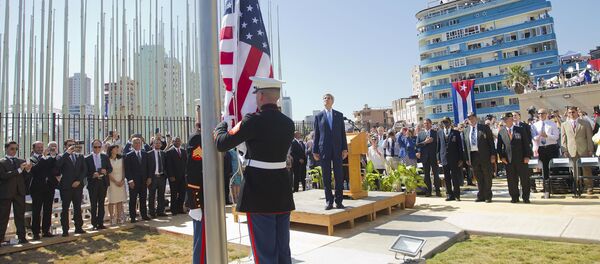
Apart from the embargo, the two countries have managed to restore diplomatic relations. The Obama administration began normalizing relations between the two countries in December 2014. In July, the United States resumed diplomatic relations with Cuba as the two countries reopened embassies in each other's capitals after five decades of conflict.
"Obviously, we have to obey the law," State Department spokesman John Kirby told reporters Monday. "It doesn't mean you can't take a position that you want the law changed."
Four officials agreed to speak on condition of anonymity; they stated that the decision on how to vote in October has not been approved yet, so all the speculations are preliminary as long as the resolution isn't final.
White House spokesman Josh Earnest also refused to comment or give and projections on the issue.
The rumors fuel Republicans, who slammed the US President, insisting that he's "putting international popularity ahead of national security and the foreign policy interests of the United States.", said the Cuban-American senator from Florida and Republican presidential hopeful Marco Rubio.
In 2014 the US lost a significant number of UNGA votes by overwhelming margins; its only loyal supporter was Israel, which backs US decisions every time.
Authorities from the US are reluctant to weigh in but still tend to believe the official position on the embargo hasn't changed. They, however, underscore the administration's readiness to take into account the Cuban point of view while discussing this sensitive issue. The resolution's revision will put American diplomats in a position they have never been in before: considering abstaining a reality.
The most recent Obama-Castro phone call preceded the latest U.S. easing of sanctions, prompted also by Pope Francis, who arrived in Cuba on Saturday for a canonical visitation that will last until Tuesday, when he is leaving for the US.
The two presidents talked about the "steps that the United States and Cuba can take, together and individually, to advance bilateral cooperation," the White House stated. The Cuban government said Castro "emphasized the need to expand their scope and abrogate, once and for all, the blockade policy for the benefit of both peoples."
At the forthcoming UNGA meeting, Cuba is expected to follow a tradition which has lasted 23 years: it will introduce a resolution to demand the end of the US embargo.
An abstention could be considered as a strong message that Obama intends to put an end to the economic embargo against Cuba, as more than 50 years foreign policy to bring democracy to the island failed, posing a geopolitical threat to the US, the only democracy surrounded by Latin American countries.
The United States and Cuba will hold their next bilateral commission in November in Washington.
On August 14, Cuban Foreign Minister Bruno Rodriguez Parrilla announced the creation of the Bilateral Commission, which will be held next in November in Washington, to address a host of outstanding issues between the two countries.