- Sputnik International
Multimedia
When a picture is worth a thousand words. See what's happening in the world from a more visual perspective with Sputnik's photo galleries, infographics and other multimedia content.

How Deep Is Your Boat: Is It Down the Ocean?

Subscribe
The Colombian authorities confirmed on Sunday they had retrieved the sought-after bounty aboard the sunken San Jose galleon that went down off the Colombian coast more than 300 years ago.

The Colombian authorities confirmed on Sunday they had retrieved the sought-after bounty aboard the sunken San Jose galleon that went down off the Colombian coast more than 300 years ago. Estimates of the total cost of the recovered loot vary but most put the treasure’s value at around US$3 billion.

The depths of the world’s seas and oceans hide many sunken ships, not all as rich in treasures as the Spanish galleon, however historically and culturally equally significant. Some of the most famous shipwrecks in the world are presented in this gallery.
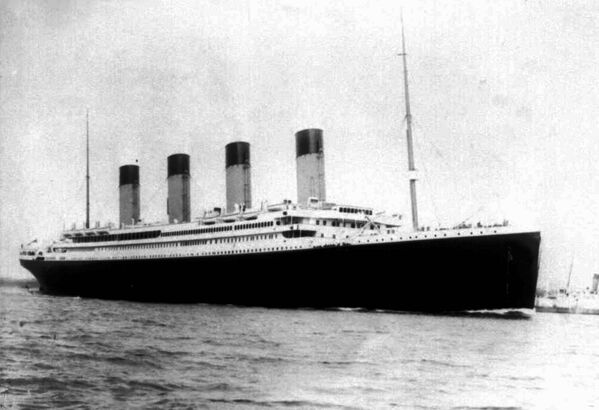
© AP PhotoUndated file photo of the doomed liner the S.S. Titanic. Salvage operators hope to raise a large chunk of the British liner, which sunk on it's maiden voyage 84 years ago, when it struck an iceberg in the north Atlantic. More than 1500 people died in the icy waters of the Atlantic when Titanic sank.
Undated file photo of the doomed liner the S.S. Titanic. Salvage operators hope to raise a large chunk of the British liner, which sunk on it's maiden voyage 84 years ago, when it struck an iceberg in the north Atlantic. More than 1500 people died in the icy waters of the Atlantic when Titanic sank. - Sputnik International
1/5
Undated file photo of the doomed liner the S.S. Titanic. Salvage operators hope to raise a large chunk of the British liner, which sunk on it's maiden voyage 84 years ago, when it struck an iceberg in the north Atlantic. More than 1500 people died in the icy waters of the Atlantic when Titanic sank.
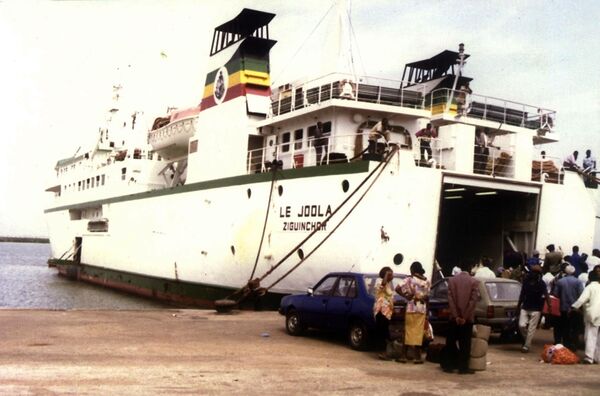
© AFP 2023Senegalese ferry MS Joola capsized in a storm off the West African coast on September 26, 2002. It was revealed that 1, 034 passengers had been on board, ven though some sources say that the number was close to 2000. Only 64 are known to have survived. The exact number of casualties from the disaster is unknown because many people did not have tickets.
Senegalese ferry MS Joola capsized in a storm off the West African coast on September 26, 2002. It was revealed that 1, 034 passengers had been on board, ven though some sources say that the number was close to 2000. Only 64 are known to have survived. The exact number of casualties from the disaster is unknown because many people did not have tickets. - Sputnik International
2/5
Senegalese ferry MS Joola capsized in a storm off the West African coast on September 26, 2002. It was revealed that 1, 034 passengers had been on board, ven though some sources say that the number was close to 2000. Only 64 are known to have survived. The exact number of casualties from the disaster is unknown because many people did not have tickets.
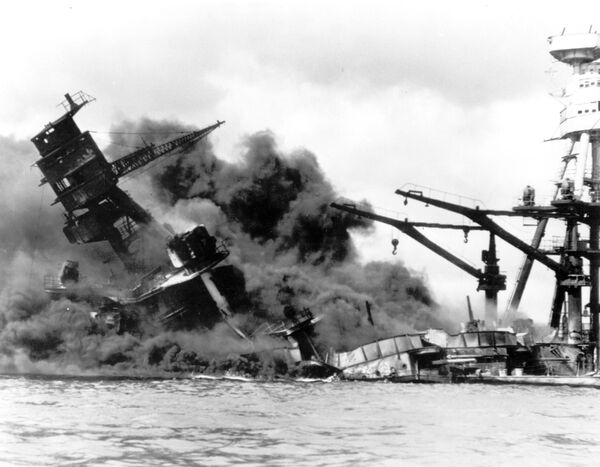
© AP PhotoIn this photo, the battleship USS Arizona belches smoke as it topples over into the sea during a Japanese surprise attack on Pearl Harbor, Hawaii, December 7, 1941. The ship sank with more than 80 percent of its 1,500-man crew, including Rear Admiral Isaac C. Kidd . The attack, which left 2,343 Americans dead and 916 missing, broke the backbone of the US Pacific Fleet and forced America out of a policy of isolationism. President Franklin D. Roosevelt announced that it was “a date which will live in infamy” and Congress declared war on Japan the morning after. This was the first attack on American territory since 1812.
In this photo, the battleship USS Arizona belches smoke as it topples over into the sea during a Japanese surprise attack on Pearl Harbor, Hawaii, December 7, 1941. The ship sank with more than 80 percent of its 1,500-man crew, including Rear Admiral Isaac C. Kidd . The attack, which left 2,343 Americans dead and 916 missing, broke the backbone of the US Pacific Fleet and forced America out of a policy of isolationism. President Franklin D. Roosevelt announced that it was “a date which will live in infamy” and Congress declared war on Japan the morning after. This was the first attack on American territory since 1812. - Sputnik International
3/5
In this photo, the battleship USS Arizona belches smoke as it topples over into the sea during a Japanese surprise attack on Pearl Harbor, Hawaii, December 7, 1941. The ship sank with more than 80 percent of its 1,500-man crew, including Rear Admiral Isaac C. Kidd . The attack, which left 2,343 Americans dead and 916 missing, broke the backbone of the US Pacific Fleet and forced America out of a policy of isolationism. President Franklin D. Roosevelt announced that it was “a date which will live in infamy” and Congress declared war on Japan the morning after. This was the first attack on American territory since 1812.
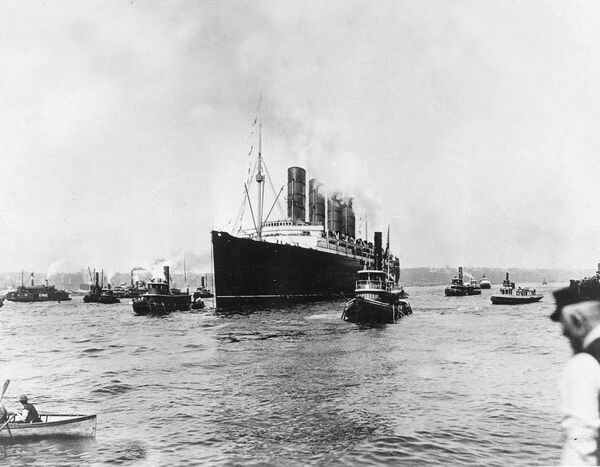
© AP PhotoThis is a general view of the British cargo and passenger ship Lusitania as it sets out for England on its last voyage from New York City on May 1, 1915. The British ocean liner was torpedoed by a German U-boat off the southern coast of Ireland on May 7, 1915 and sank in 18 minutes, killing 1,150 people.
This is a general view of the British cargo and passenger ship Lusitania as it sets out for England on its last voyage from New York City on May 1, 1915. The British ocean liner was torpedoed by a German U-boat off the southern coast of Ireland on May 7, 1915 and sank in 18 minutes, killing 1,150 people. - Sputnik International
4/5
This is a general view of the British cargo and passenger ship Lusitania as it sets out for England on its last voyage from New York City on May 1, 1915. The British ocean liner was torpedoed by a German U-boat off the southern coast of Ireland on May 7, 1915 and sank in 18 minutes, killing 1,150 people.
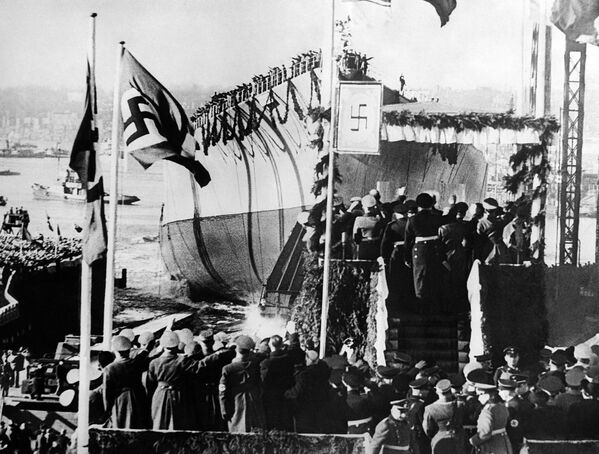
© AP PhotoThe Bismarck, Germany’s largest battleship and the largest fighting ship ever built by the Reich, was launched at Hamburg. Before the launching took place Adolf Hitler made a twelve-minute speech in which he declared that Bismarck laid the foundations of the Nazi state for he began the triumph over Psychological, racial and regional prejudices. A direct hit blasted the 5,000-ton Bismarck shortly before it sank in the Atlantic 400 miles West of Brest, France, following a 1,750 mile chase from Bergen, Norway, by air and sea units of the British Navy. The Bismarck's remains were discovered by Dr Robert Ballard, the man who discovered the Titanic, in 1989.

The Bismarck, Germany’s largest battleship and the largest fighting ship ever built by the Reich, was launched at Hamburg. Before the launching took place Adolf Hitler made a twelve-minute speech in which he declared that Bismarck laid the foundations of the Nazi state for he began the triumph over Psychological, racial and regional prejudices. A direct hit blasted the 5,000-ton Bismarck shortly before it sank in the Atlantic 400 miles West of Brest, France, following a 1,750 mile chase from Bergen, Norway, by air and sea units of the British Navy. The Bismarck's remains were discovered by Dr Robert Ballard, the man who discovered the Titanic, in 1989. - Sputnik International

5/5
The Bismarck, Germany’s largest battleship and the largest fighting ship ever built by the Reich, was launched at Hamburg. Before the launching took place Adolf Hitler made a twelve-minute speech in which he declared that Bismarck laid the foundations of the Nazi state for he began the triumph over Psychological, racial and regional prejudices. A direct hit blasted the 5,000-ton Bismarck shortly before it sank in the Atlantic 400 miles West of Brest, France, following a 1,750 mile chase from Bergen, Norway, by air and sea units of the British Navy. The Bismarck's remains were discovered by Dr Robert Ballard, the man who discovered the Titanic, in 1989.

Newsfeed
0
To participate in the discussion
log in or register
loader
Chats
Заголовок открываемого материала