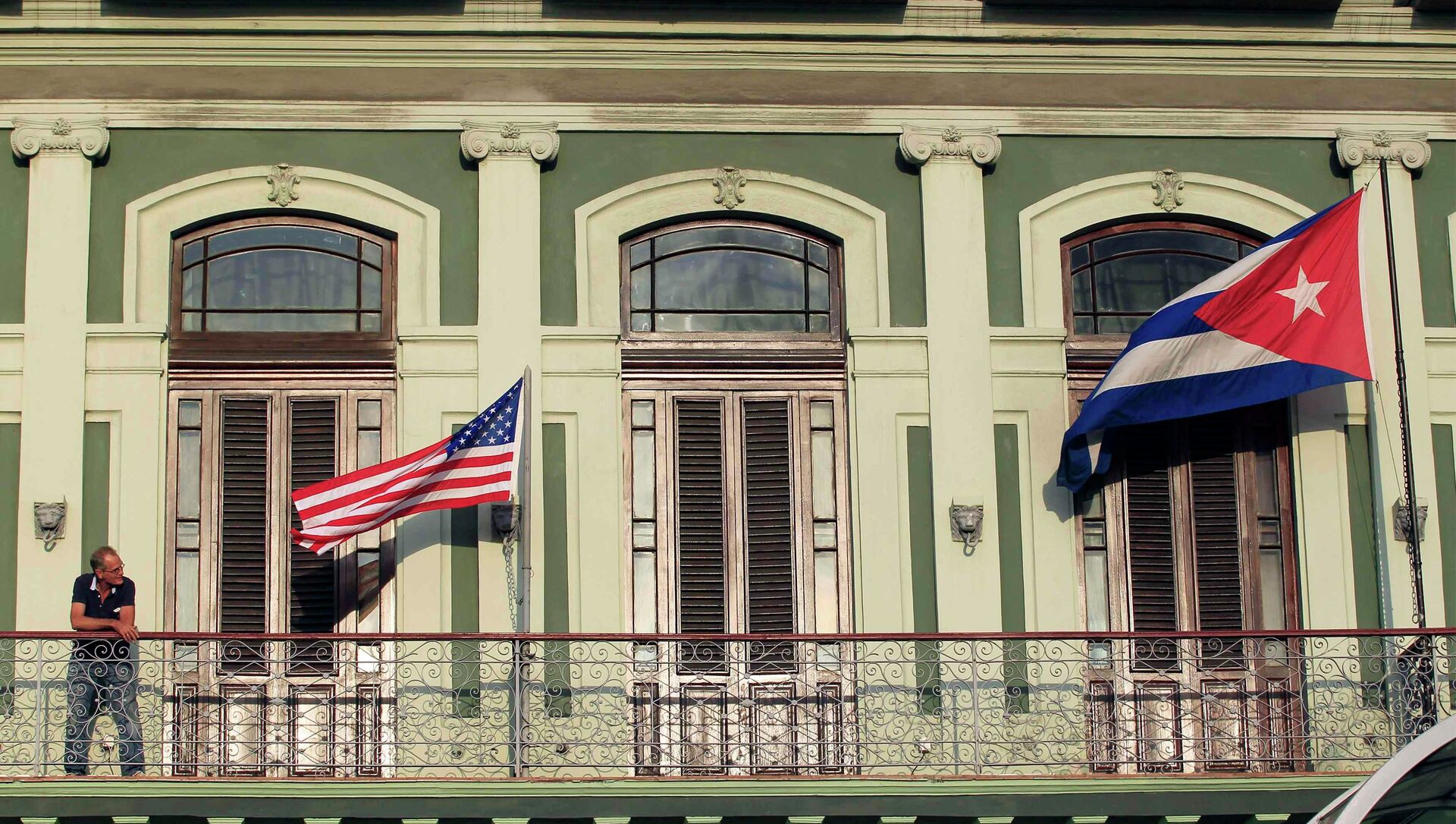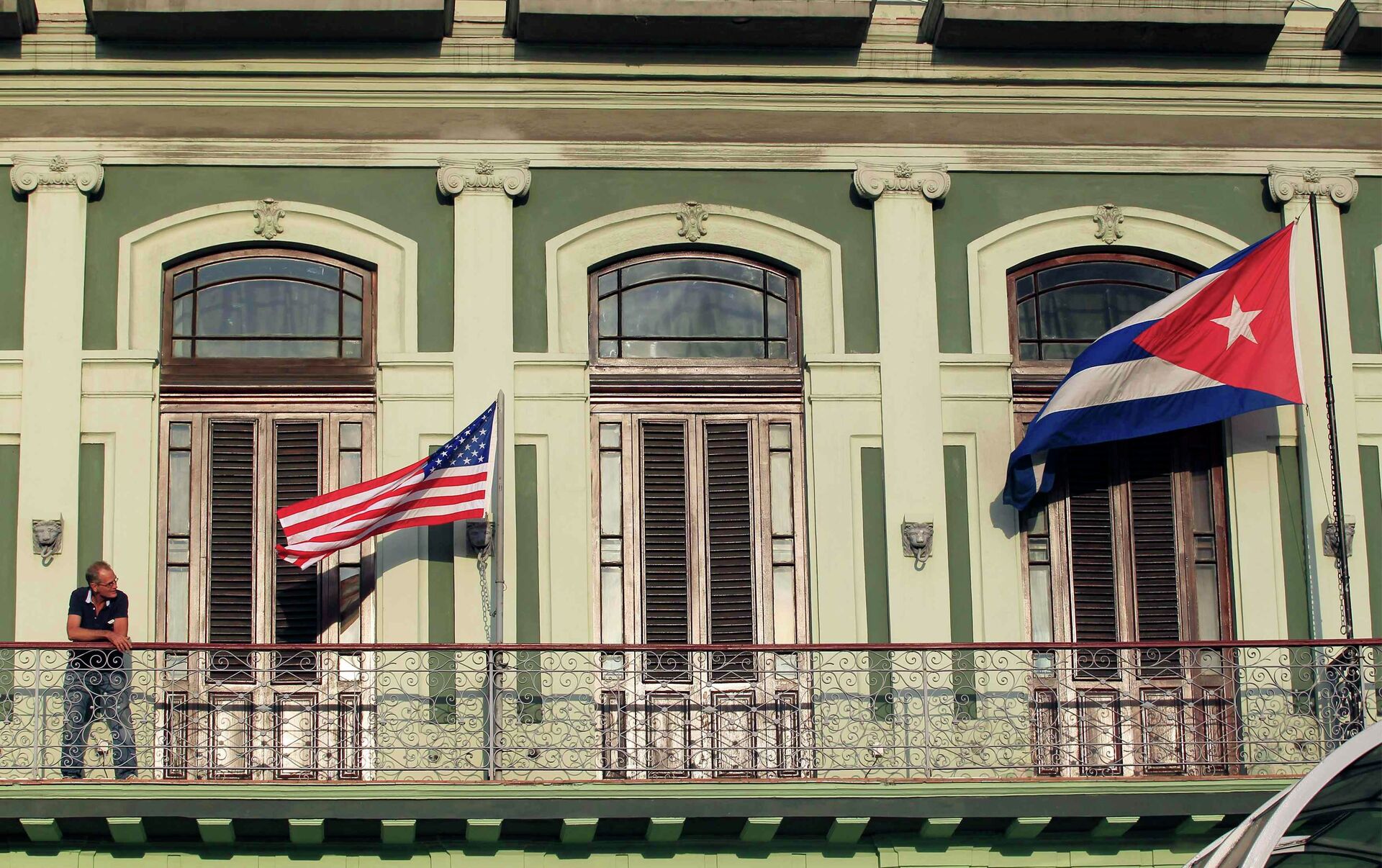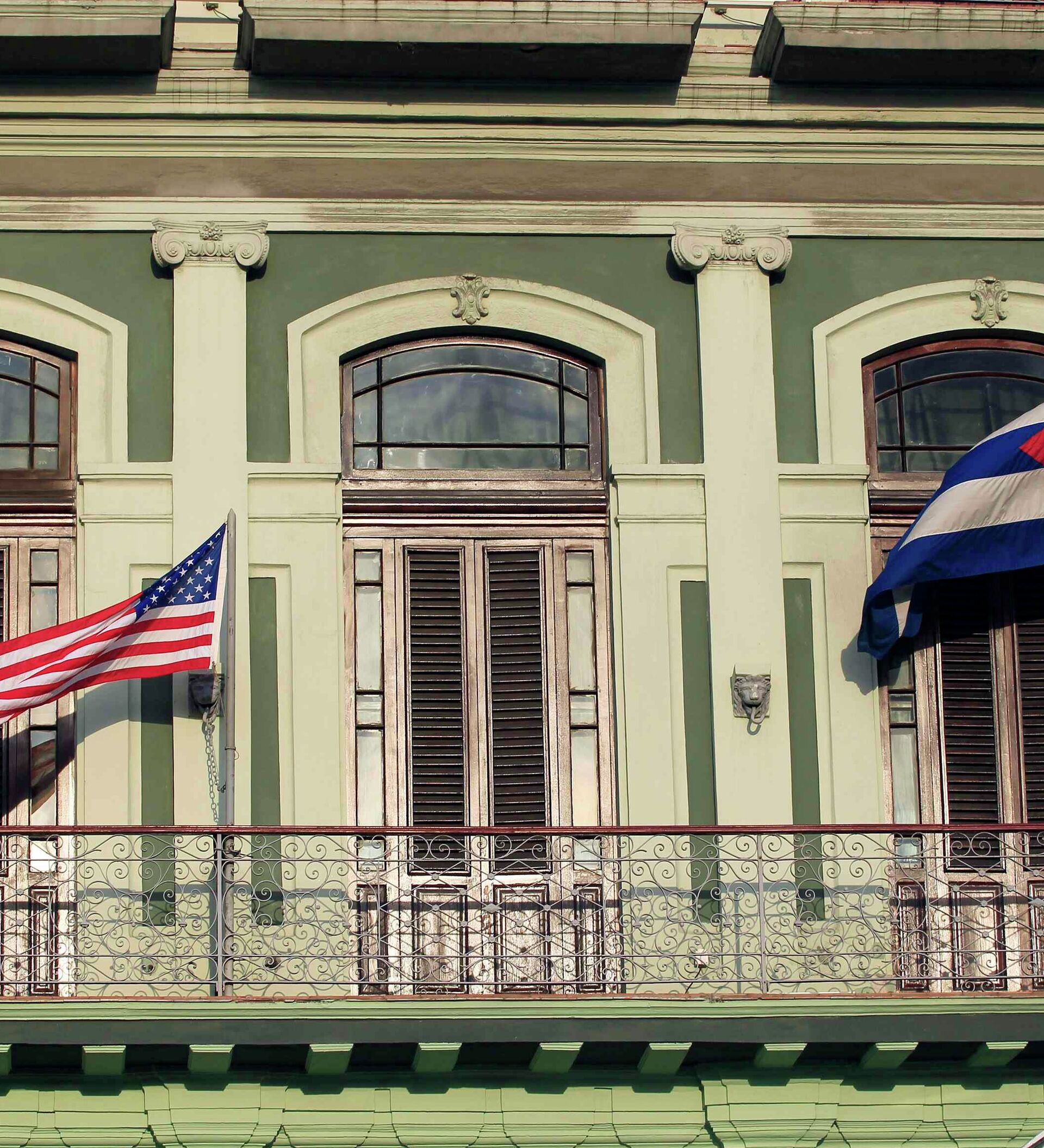

On July 20, the US Department of State raised the official Cuban flag in Washington, DC after the Cuban embassy held an official reopening ceremony.
On August 14, the Stars and Stripes was raised over the US Embassy in Havana by Secretary of State John Kerry, the first top US diplomat to visit Cuba in 60 years.
"The time has come for us [the United States and Cuba] to move in a more promising direction," Kerry said during the flag-raising ceremony. "The time is now to reach out to one another as two peoples who are no longer enemies or rivals, but neighbors."
The Obama administration reduced travel and trade regulations with Cuba: it restored a direct postal service, law enforcement cooperation between Washington and Havana and approved some banking relationships in the course of the year.
Despite the reduction in tensions, the United States continues to maintain a trade embargo on Cuba mandated by Congress, though President Barack Obama is trying to persuade both chambers of Congress to lift it.
The thaw with Havana began after Obama announced in December 2014 that his administration would pursue a path toward normalizing relations with the Caribbean island, despite opposition by some Cuban-Americans and conservative Republicans.
Loosening of travel restrictions
In September, the Obama administration announced it was relaxing regulations with Cuba, making it easier for US citizens to travel and conduct business there.
Other changes included allowing cargo, passenger and some recreational vessels to travel directly to Cuba in connection with a broader range of authorized activities.
Washington also authorized launching joint projects with Cuban entities to establish certain telecommunications and internet services in the country. Moreover, it will permit US citizens to establish offices, ships and warehouses on the island.
A civil aviation agreement to allow direct scheduled flights between the two countries is expected to be concluded before the end of 2015, US Senator Jeff Flake told Sputnik earlier this month.
On July 3, the New York City-based airline JetBlue launched direct charter flights between New York's John F. Kennedy International Airport and Havana's Jose Marti International Airport, becoming the first US carrier to resume direct flights between the United States and Cuba.
The number of travelers between the United States and Cuba has significantly increased since Washington announced in December 2014 it would normalize relations with Havana, US Deputy Assistant Secretary for South America and Cuba Alex Lee told Sputnik in December.
However, the United States continues to prohibit tourist travel to Cuba, which has been part of its policy toward the island nation over the past half century, although it recently loosened travel restrictions for some groups of people following the decision to normalize relations.
US citizens are allowed to travel to Cuba for 12 specific purposes that are listed in the Treasury Department’s Cuban Assets Control Regulations. They include journalistic, educational, religious, professional and humanitarian activities, in addition to family visits and "support for the Cuban people."
Deputy Assistant Secretary Lee told Sputnik that Congress must remove the existing embargo the United States still maintains on Cuba to "fully allow Americans to go back and forth without trying to see if they belong in one of those 12 categories."
Doing business
In September, the departments of the Treasury and Commerce announced new measures that allowed US commercial interests to establish a physical presence in Cuba.
The Treasury allowed US companies to open offices, warehouses, retail outlets, new bureaus and other establishments for authorized activities.
US Deputy Assistant Secretary Lee stated in December that the US government was encouraging American businesses to visit Cuba to explore opportunities on the island.
Also in December, Deputy Assistant Secretary of Commerce for Export Administration Matthew Borman told Sputnik that US companies are very interested to work in Cuba.
Borman explained that US agricultural, telecommunications and medical sectors as well as small businesses have been exporting to Cuba: he said the Commerce Department issued export licenses worth $2 billion in 2015.
However, Borman cautioned that US companies are facing obstacles doing business in Cuba, including a regulation to hire individuals through the Cuban government as well as Havana’s simultaneous use of a convertible and domestic currency.
Nevertheless, veteran US financier Jim Rogers told Sputnik in September that now is the right time to invest in Cuba.
"The rest of the world has already been investing in Cuba. And now, Americans can go and invest. If you are going to do it, you better do it right now," Rogers said.
Despite the progress, the United States continues to maintain its congressionally mandated embargo on Cuba.
Longest standing trade embargo in us history
In 2015, the US Congress remained reluctant to accede to Cuban demands to fully lift what is one of the longest-standing trade embargoes in US history.
While the Obama administration has advocated for lifting all restrictions on Cuba, the Republican-controlled Congress ultimately holds the final say in doing away with the embargo.
The United States imposed the embargo on Cuba in 1961 during the Cold War due to antagonism between Washington and the communist government in Havana. Now Congress would have to pass new legislation in order to lift the more-than-54 year ban.
On October 27, 191 of the 193 total UN member nations voted to lift the US economic blockade of Cuba, with only the United States and Israel opposing the motion.
Establishment of direct postal services
The re-establishment of a direct mail service is the latest deal in a new chapter of US-Cuba relations.
On December 11, delegations agreed to re-establish direct postal service between the two countries through the implementation of a Pilot Plan for the transportation of mail which will become effective within the next few weeks.
Direct mail flights would be conducted several times a week rather than having to go through a third country to conduct postal services, according to the State Department.
Deputy Assistant Secretary Lee told Sputnik in December that the agreement on direct mail "would be a major quality of life improvement for communities of Cubans on both sides of the Florida straits."
Upgrade in human trafficking report
The United States upgraded Cuba in its annual human trafficking report due to the country’s progress in combating and prosecuting sex trafficking, the State Department said.
Cuba was moved from the lowest Tier 3 for countries that do not comply with minimum standards to combat human trafficking and make no attempt to improve them, to the Tier 2 Watch List.
Tier 2 lists countries that still do not comply with minimum standards in combatting human trafficking, but are making progress to achieve them.
The United States has long been critical of Cuba’s record on human rights, including government limitations on freedom of expression.
Numerous members of the US Congress have voiced concerns over alleged human abuses in Cuba, but the Obama administration has argued that normalization of relations would allow better monitoring and opportunities to address such issues with the Cuban government.
Banking financing
In 2015, the Stonegate Bank became the first US financial institution to set up a correspondent banking relationship with a Cuban bank.
On May 20, Stonegate opened an account for the Cuban government, contributing to the thaw in US-Cuba relations.
In November, Stonegate announced that its customers would be able to use its debit MasterCard while in Cuba.
The Treasury and Commerce Departments announced in September that US banks were authorized to open accounts for Cuban nationals while they are out of the country.
Stonegate CEO Dave Seleski pointed out to Sputnik in December that the institution continues to face embargo-related obstacles while trying to operate in Cuba.
US Deputy Assistant Secretary Lee also told Sputnik that Washington was set on trying to streamline financial transactions with Cuba to the degree permitted by law.
Law enforcement data exchange
US and Cuban law enforcement agencies started exchanging data through the International Criminal Police Organization (Interpol) as part of the normalization process.
Deputy Assistant Secretary Lee told Sputnik in December that the United States has already addressed some issues raised by Havana through the new information exchange channel, as well as sent questions to the Cuban counterparts.
On August 14, Cuban Foreign Minister Bruno Rodriguez Parrilla announced the creation of a Bilateral Commission to address outstanding issues between the two countries, including regulatory issues, telecommunications, claims, environmental protection, human rights, migration and law enforcement.
However, despite normalizing relations, the United States and Cuba have a long and distrustful history to overcome.
The Cuban government would like the United States to lift the longstanding trade embargo, provide damages for the costs inflicted by it and transfer the territory on which the US military base at Guantanamo Bay is located back to Havana, while the issue of confiscated property remains contentious.