Kristian Rouz — The British economy is showing signs of acceleration in spite of the lingering oil market turbulence and recent volatility in the financial sector. In January, the volume of retail sales in the UK hit a two-year high, which, given that approximately 79% of the economy is driven by domestic consumption, is a clear indication of overall improvement. Meanwhile, the fiscal situation in also favorable for the Conservative cabinet, as last month the government recorded its best budget surplus since 2008. All that said, the Bank of England's (BoE) urge to liftoff base borrowing costs might indeed happen sooner than in consensus-expected March 2017, as both fiscal and overall economic conditions allow for a move to normalize monetary policies as well.
Another reason, the ONS explained, was a massive reduction in prices after the Christmas holiday season, with Britons subsequently hunting for deals on consumer goods. In December, UK retail sales decreased slightly, yet the following month's increase more than made up for the disappointing holiday season.
"British consumers are a key driver of the economy at a time when external demand has been weak, and fortunately big-ticket items such as furniture and electrical [appliances] appear to have been on plenty of January shopping lists," Dennis de Jong of the trading firm UFX said.
UK inflation is still near-zero, yet it has been posting gains recently, also fueling hopes for further economic acceleration. From 0.1% in November through 0.2% the following month to 0.3% in January, the gradual acceleration of the UK inflation rate, along with falling unemployment, provide clues to the broader economic landscape.
Even though the two prominent pillars of the UK economy, the oil industry and Canary Wharf, have both been battered lately with cheap crude and financial volatility resulting in loss of capital, consumer demand is still the principal driving force behind economic expansion.
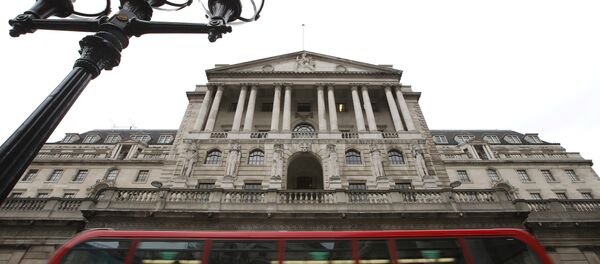
In turn, all that means the BoE might seriously consider a hike in the base interest rate as soon as in late March. As the economy accelerates and fiscal policy goals seem within reach, a rate hike from the currently ultra-low 0.5%, seems vital to support capital influx, particularly because the US Federal Reserve raised its rates to 0.25%-0.5% in December.
"Amid the recent heightened concerns over the UK economy, this is a major boost to first quarter GDP growth prospects," Howard Archer of IHS Global Insight said.
For now, however, the news is expected to reflect positively on sterling's FX rate to the dollar. This is currently at $1.43, and likely to go up to as high as $1.50, closer to its normal trading range.