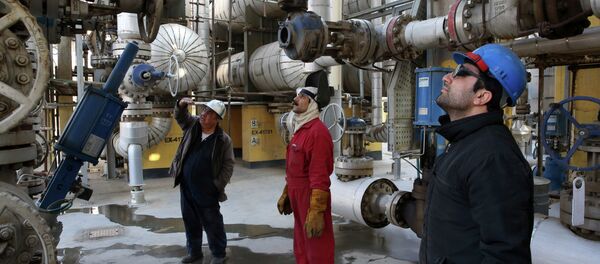
Zanganeh claims that in the new fiscal year, which started on March 20, financial injections into the country's oil sector should come from private companies and foreign investors.
Earlier, Tehran made it clear that it will cooperate with a number of oil-exporting countries which hope to freeze oil production at their January 2016 levels only after oil output in Iran reaches at least 4 million barrels per day.
Currently, the oil production in the country stands at around 3.1 million barrels per day, according to Organization of Petroleum Exporting Countries (OPEC) data.
The issue is expected to be high on the agenda during an OPEC meeting scheduled for April 17 in Doha, Qatar.
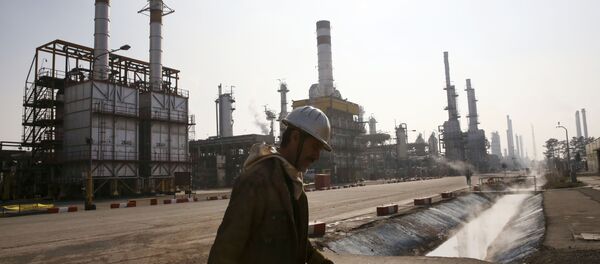
Global oil prices plunged from 115 dollars to less than 30 dollars per barrel between June 2014 and January 2016, hitting their lowest levels since 2003 amid an ongoing oversupply in the global oil market.
Meanwhile, Saudi Arabia said that Riyadh is ready to freeze its oil output as proposed in a Doha deal among oil producers, even if Tehran does not follow suit, an OPEC delegate was quoted by media reports as saying last week.