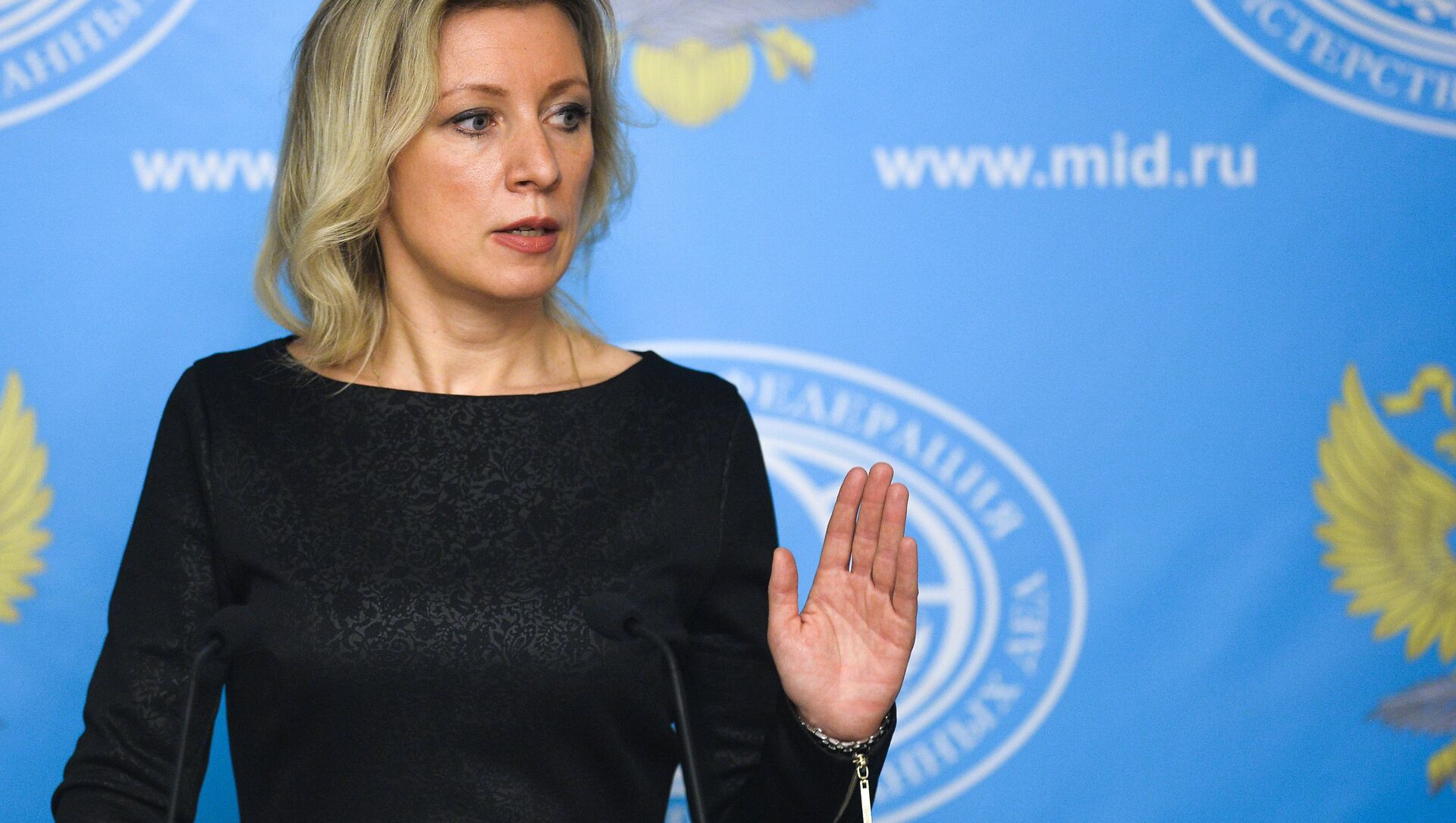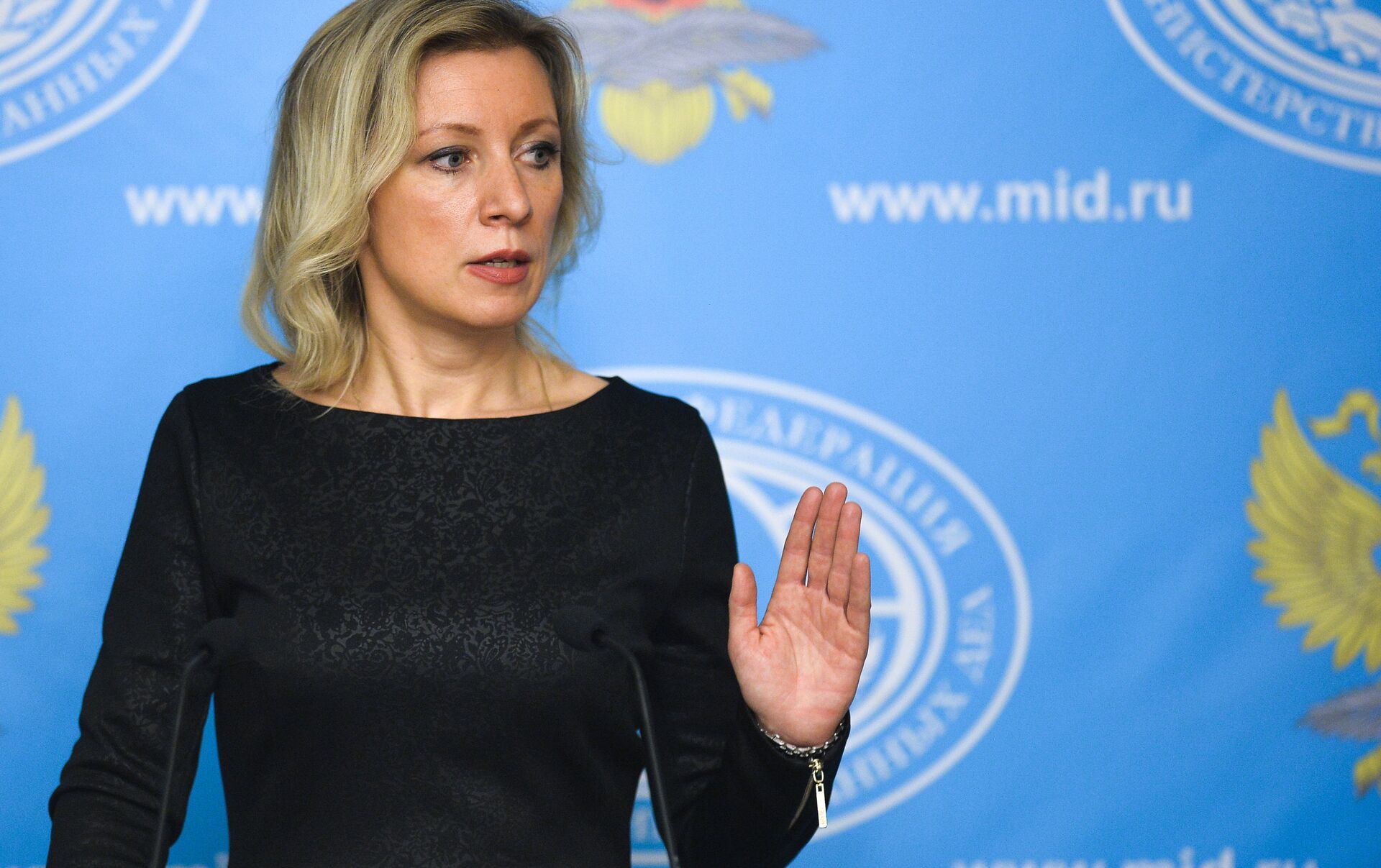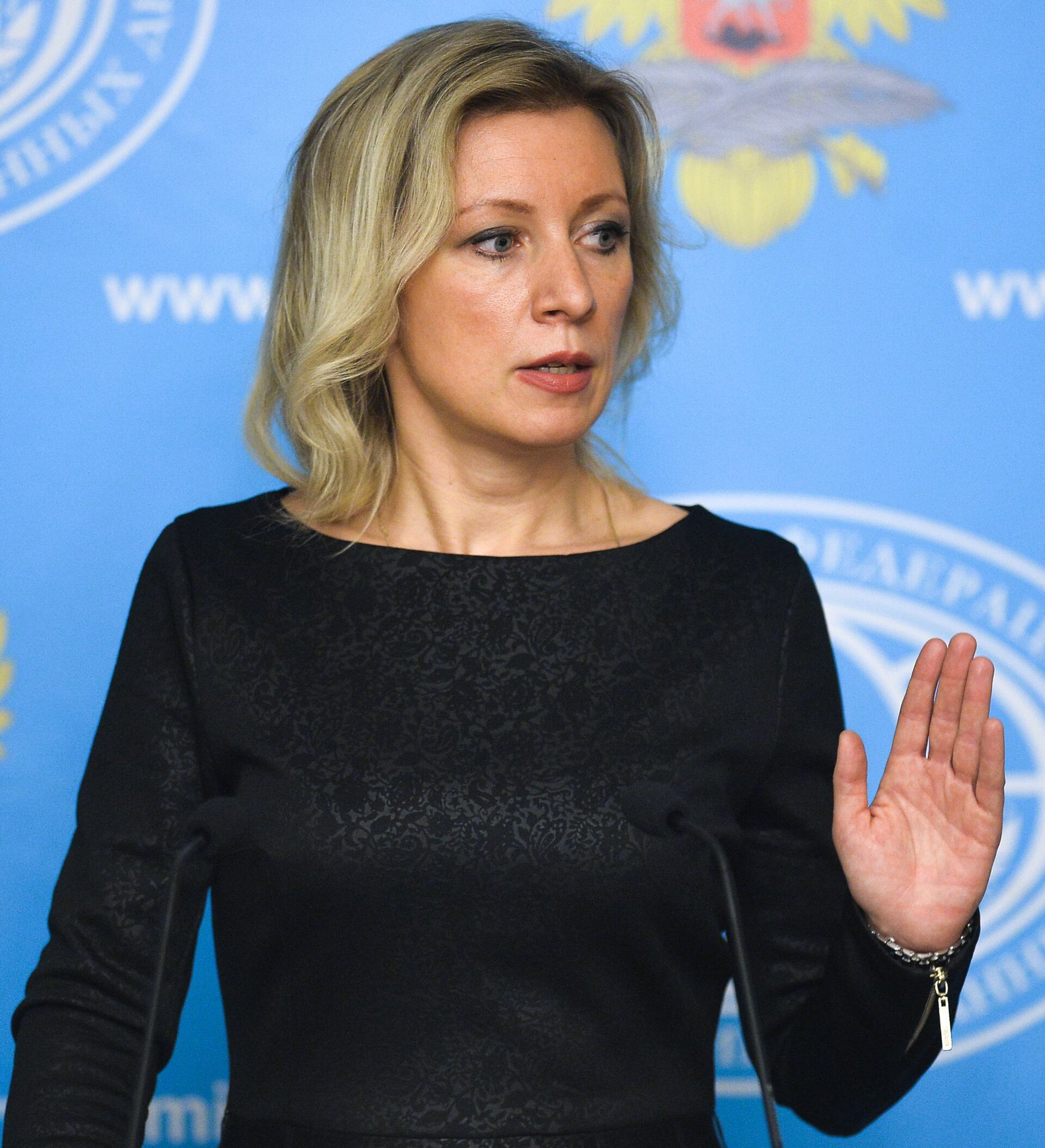
On April 26, Russian FM Sergei Lavrov will hold negotiations with the OPCW head.
On April 28-29, Sergei Lavrov will visit China. He will take part in the 5th part of foreign ministers' meeting.
On Nagorno-Karabakh conflict
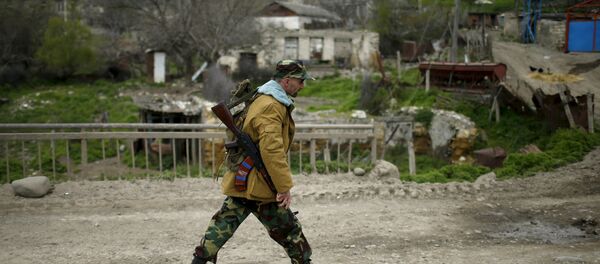
Russia supporting the ceasefire in the region.
The violence in the region escalated on April 2. Baku and Yerevan have accused each other of provoking hostilities.
The Nagorno-Karabakh conflict began in 1988, when the autonomous region sought to secede from the Azerbaijan Soviet Socialist Republic. The region proclaimed independence when the Soviet Union collapsed in 1991.
On Syria
"We inform you on regular basis about situation in Syria. Unfortunately, tensions in the northern regions of Syria rise," Zakharova said.
"Russia and US carry out contacts on the militarey levels. We reaffirm our commitment to the US-Russia bilateral agreements and the agreed resolution of the USNC 2268. We expect the same approach from all counterparts," she added.
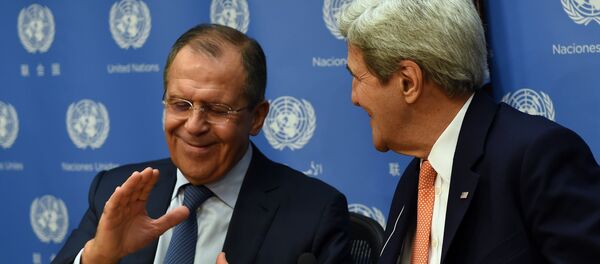
"Jihadists pretend to be not terrorists, but they continue following the principles of terrorism. "
About Turkish support of terrorists in Syria
This support aims to disrupt political process in Syri, Zakharova said.
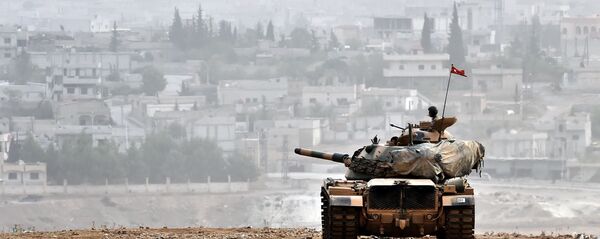
"But we believe people will see these documents some day."
Turkish authorities are playing a destructive role in Syria, Russian Foreign Ministry spokeswoman Maria Zakharova said Thursday.
"Of course, an absolutely destructive role is played by Turkish authorities, who are just fueling the fire…with strange actions on the Syrian-Turkish border," Zakharova told reporters.
On situation on Turkish-Syrian border
Russia is waiting for an official reaction from Ankara and the international community on media reports suggesting Turkish border guards shoot at Syrian refugees, Foreign Ministry spokeswoman Maria Zakharova said.
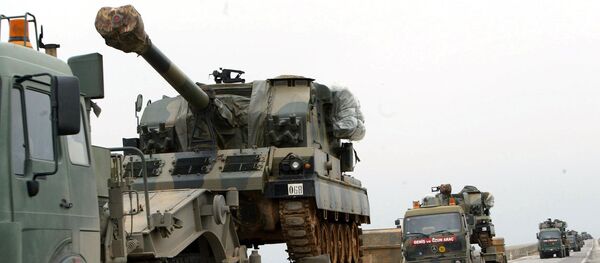
“We are waiting for a corresponding reaction from Ankara regarding the information revealed by journalists, as well as from the international community,” Zakharova told journalists during briefing.
In this regard Turkey-EU migrant deal rises some question. It seems like Turkish authorities have its own method to deal with refugee influx. no people — no problem. But what's about human rights.
On situation in Ukraine
We pay attention to the reports published by Reporters Without Borders. They express concerns about press freedom and level of protection of journalists in Ukraine.
Russian journalists were killed in Ukraine. Notorious jounalist Oles Buzina was killed. The level of protection of journalists raise some questions.
On situation with Russian soldiers' grave sites abroad
Moscow concerns Berlin decision to allow rock-festival in Treptow park, where thousands of Russian soldiers buried.
On situation with Tural Kerimov
Ankara's decision to ban Sputnik news agency's bureau chief from entering Turkey is a part of its policy to silence the media, Russian Foreign Ministry spokeswoman Maria Zakharova said.
"Of course, such actions are in line with the general trend of suppressing freedom of speech in Turkey," Zakharova told reporters.
"What is happening now in Turkey affects not only the Russian Federation. We continue to watch with concern how the media freedom situation in Turkey is deteriorating," she said.

Turkish Deputy Prime Minister Numan Kurtulmus later claimed the decision to ban Kerimov from entering the country was made by Turkey’s security services.
The website of Sputnik's Turkish bureau was blocked last Thursday by the Turkish telecommunications regulator. Turkey's Golbasi District court backed the decision.
Turkey's crackdown on journalists and restrictions on freedom of speech have previously been criticized by the international community, including the United Nations, the United States, the European Union, Russia and the organization Reporters Without Borders (RSF). Turkey ranks 151th out of 180 countries in the RSF 2016 press freedom index.
In January 2015 Turkey passed legislation allowing the prime minister and other ministers to block any type of online outlet, without needing a court order. The ministers can get the Turkish Telecommunications Department and providers to block sites or delete content within 4 hours after receiving a notice of "national security, protection of social order, or for the prevention of crime."
On Latvian claims of damage to economy from 'Soviet occupation'
Russia does not accept the Latvian statements about the alleged damage to Latvian economy from the so-called Soviet occupation as there are no legal grounds for such claims, Russian Foreign Ministry spokeswoman Maria Zakharova said Thursday.
On Monday, a Latvian commission tasked with calculating damages in 1940-1991 said that the country had lost a total of 185 billion euros ($209 billion) in the 50-year period it now terms "Soviet occupation." Earlier on Thursday, Latvian authorities raised the sum of the alleged damage to 300 billion euros.
"We do not accept statements about the occupation of the Baltic states by the Soviet Union, nor the associated with them absurd and absolutely groundless – with neither legal nor a historical basis – [statements] that make up the essence of the claims against Russia, including on the material [damage]," Zakharova said at a press briefing.
The spokeswoman added that this applies to the recent statement by the Latvian commission, in which it revealed the sum of the alleged damage.
Latvian, Lithuanian and Estonian justice ministers signed a memorandum of understanding in November to coordinate actions in seeking reparations from Russia for damages during the so-called Soviet occupation.
Russia, the Soviet Union’s successor state, disputes the Baltic republics’ classification of the Soviet period as "occupation" and maintains that their inclusion in the Union of Soviet Socialist Republics (USSR) adhered to international norms of the time.
The Russian Foreign Ministry argues that the term "occupation" does not apply because there has been no military action between the USSR and the Baltics, while troops have been deployment based on mutual agreements and with the explicit consent of national leadership. Moscow further maintains that national authorities continued to operate in Latvia, Lithuania and Estonia, with the exception of German occupation during World War II.