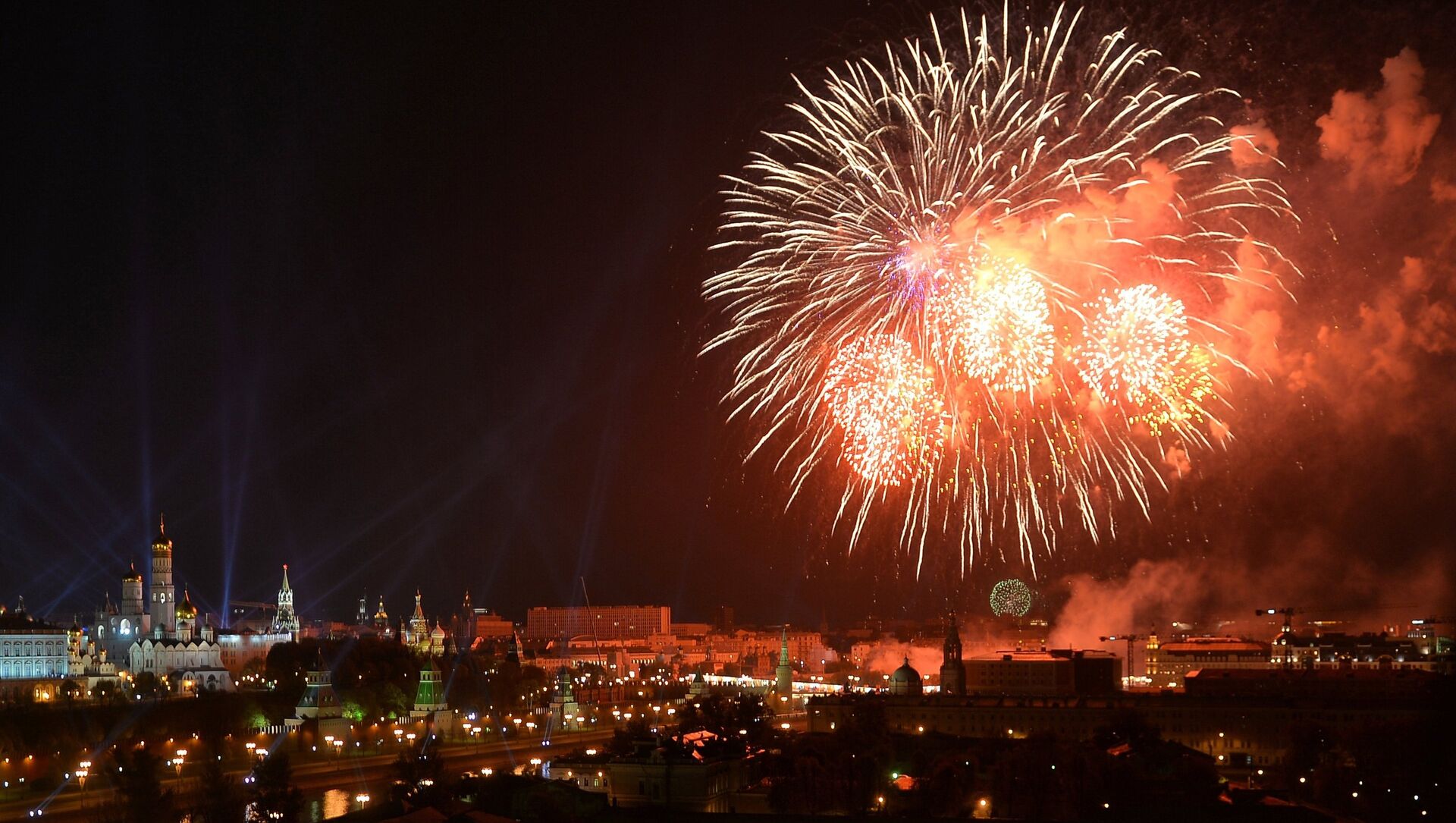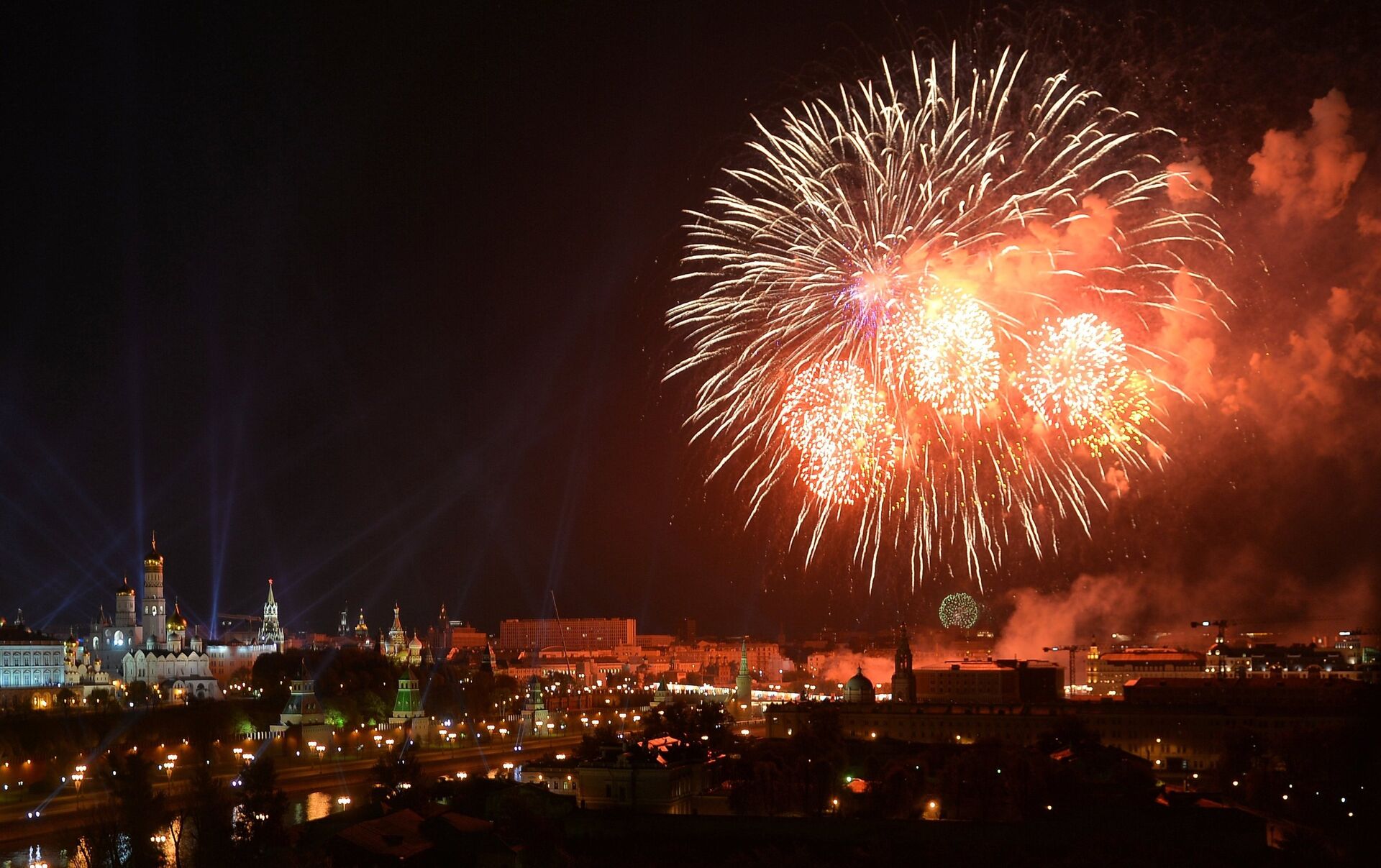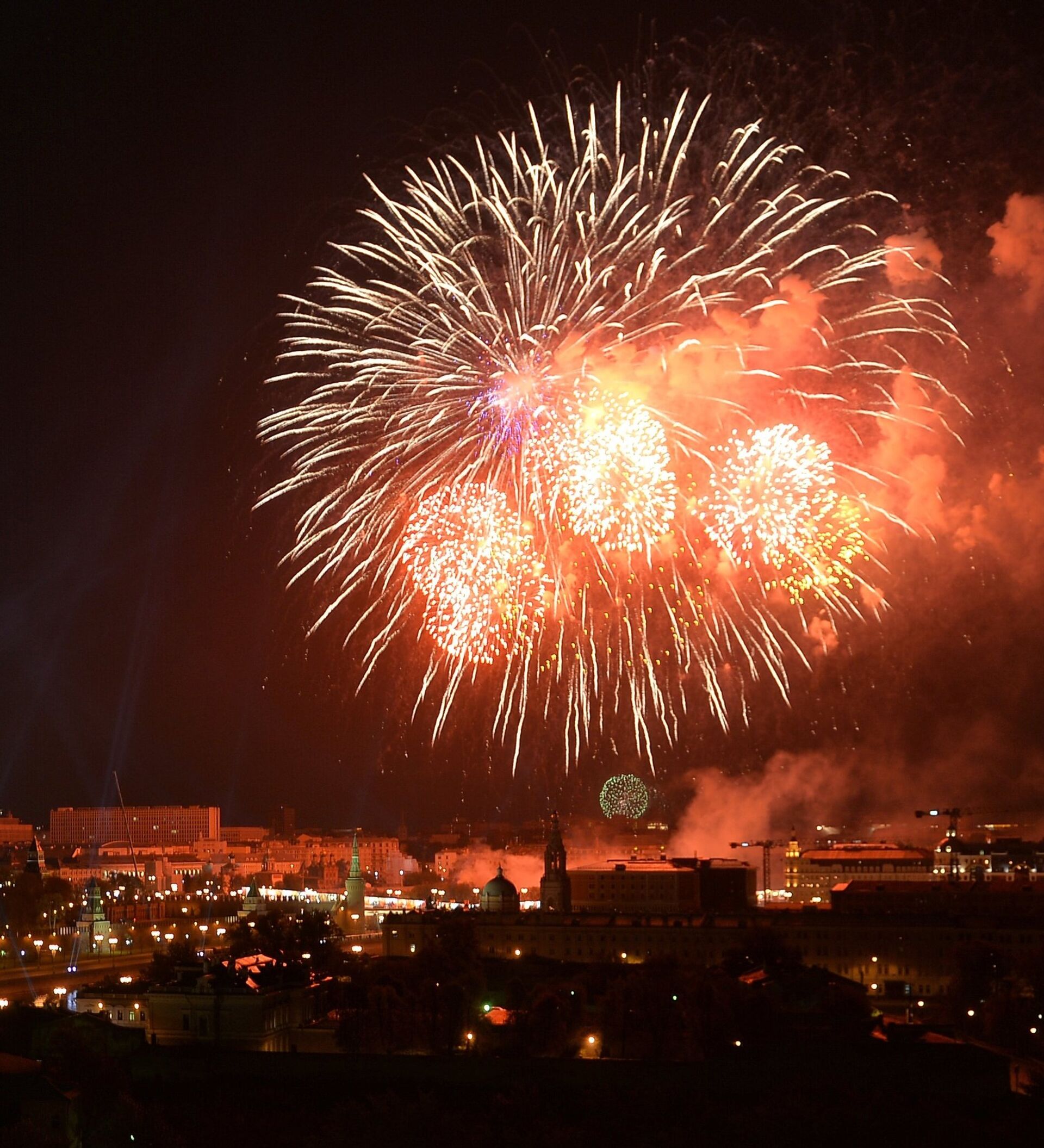
Most of the fireworks used during major events, like the May 9 Victory Day festivities, are manufactured at the Scientific Research Institute of Applied Chemistry by Techmash Concern, a Rostec subsidiary. The Rostec International Fireworks Festival is scheduled to be held in Moscow on July 23 and 24, and the company decided to offer a glimpse into how some of their pyrotechnic devices are created.
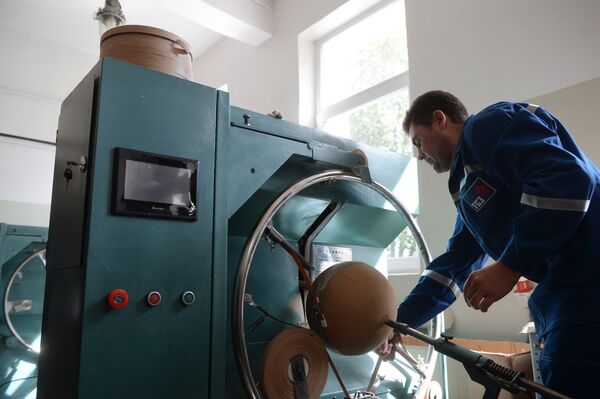
A firework’s creation begins at the drawing board. A blueprint drafted by designers must account for every detail, no matter how minor, from the visual effect during the explosion to the font size used while printing a label.
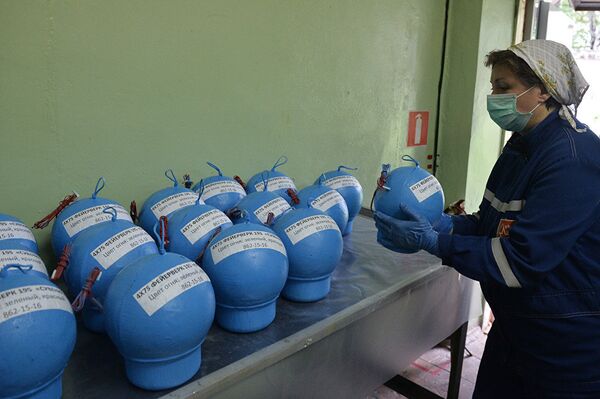
The assembly process itself starts at scales, as explosive material and other elements are carefully being weighed, measured and then packed into a semi-sphere.
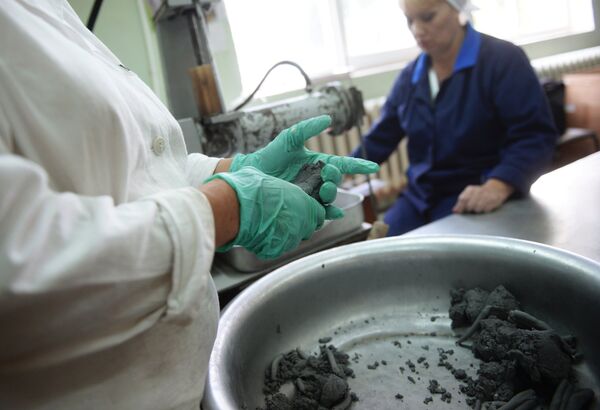
The color of a firework’s explosion is determined by special 'tablets' produced from a special powder. For example, 'tablets' made with barium salts produce green colors, strontium salts produce red ones, copper salts yield the color blue, and sodium salts color the explosion yellow.
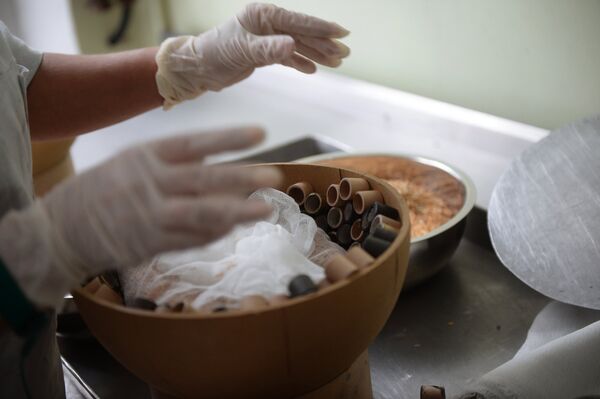
The 'tablets' and the explosive material (black gunpowder) are then carefully packed into two semi-spheres made of cardboard. The semi-spheres are then linked together with an adhesive tape, encased in two more layers of semi-spheres and smeared with adhesive resin.
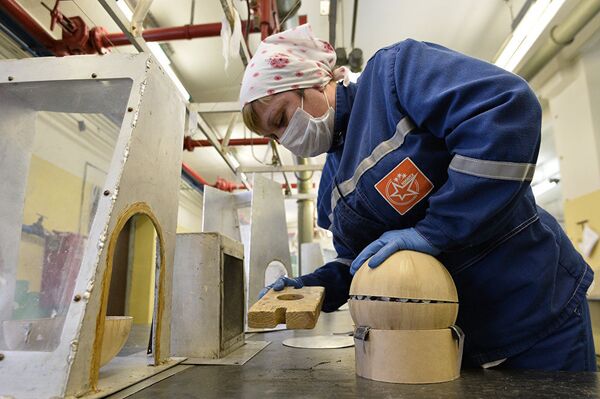
The employees working in the assembly area must take considerable precautions. They usually avoid wearing clothes made of wool, silk or synthetic fabrics in order to prevent the accumulation of static electricity which could cause a disaster in an area filled with pyrotechnic material.
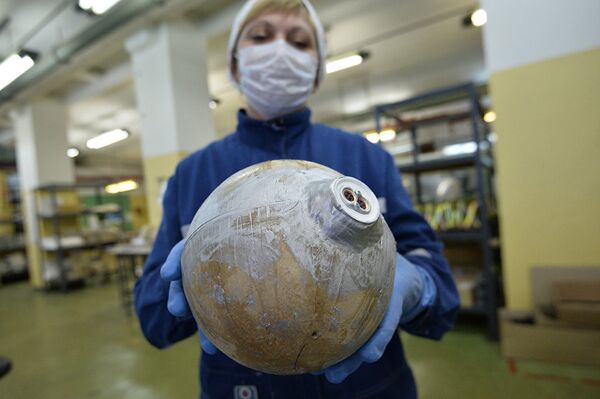
The high-altitude fireworks are then fitted with delay mechanisms which ensure that the charge won’t detonate immediately upon launch.
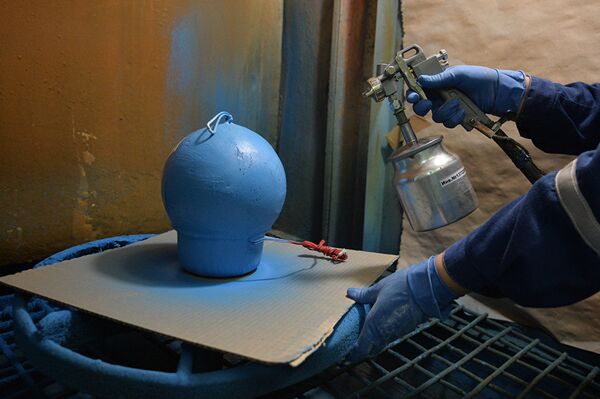
After being installed on a launching charge, a firework gets painted and labeled. The entire production cycle takes approximately 72 hours.
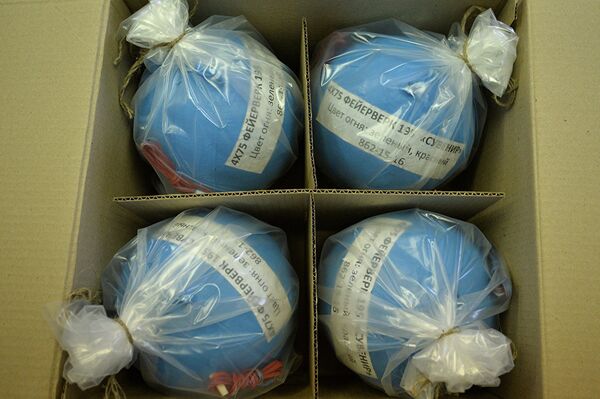
And it’s done! The fireworks are packed and ready to be shipped to the person or organization who commissioned them.