1. Election in Mecklenburg-Vorpommern and Berlin, September 4 and 18.
Over the last few months Germany has been facing a rise in right-wing political forces and the recent terrorist attacks in the country might strengthen their positions even more.
The right-wing populist party AfD (Alternative for Germany) has a good chance of winning the regional elections and drastically changing the political landscape in Germany, given the growing dissatisfaction with the policy of German Chancellor Angela Merkel toward migrants.
According to Bloomberg, the AfD could gain serious support in both federal states. In March, during the elections in Saxony-Anhalt, the party already gained 24% of votes.
2. Parliamentary elections in Croatia, September 11.
Croatians will go to the polls for the second time in less than a year. In November 2015, the elections led to the formation of a fragile coalition that collapsed in June.
According to recent surveys, the Social Democrats have the best chance of winning the election. The new government is expected to reduce the budget deficit and bring the country out of recession.
3. Regional elections in the Basque country, Spain, September 25.
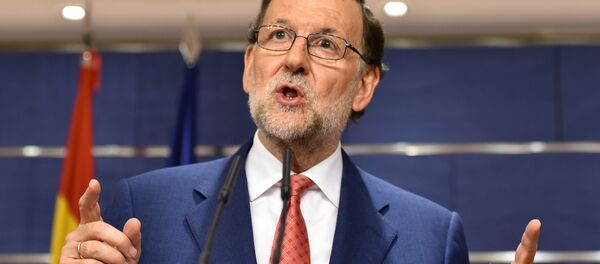
The Spanish government will be under increased pressure taking into account the existence of the other "mischievous" autonomy of Catalonia and separatist sentiment among its population.
4. Referendum in Italy, October.
This referendum will actually decide on the fate career of Italian Prime Minister Matteo Renzi. The Italians will have to vote in favor or against the reform plan of his Democratic Party.
The main point of the program of reforms is to deprive the upper house of parliament of the right to dismiss the government and reduce the number of senators by two thirds.
A recent survey conducted by Euromedia showed that 35% of Italians are opposed to the government's plans, 29% support them, and 18% are still undecided on their choice.
5. Presidential elections in Austria, October 2.
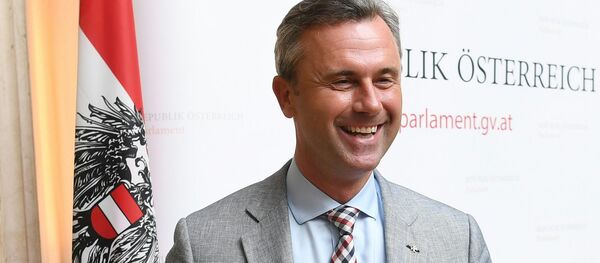
Thus, the far-right party will have another chance to put one of its members in the highest post in the country.
Alexander Van der Bellen, a Green-backed independent, narrowly defeated Hofer in the presidential run-off in May after finishing second in the first round. But the result was voided in July over irregularities in counting postal votes.
According to polls, FPO is far ahead of the main Austrian political parties in terms of popularity, but experts still believe it's too soon to tell: the fight for the presidency apparently is going to be very tough.
6. Referendum in Hungary, October 2.
Prime Minister Viktor Orban gives Hungarians an opportunity to vote on the issue of whether the EU has the right to force Hungary to accept a quota on the number of migrants without the consent of the Hungarian Parliament.
Orban himself opposes Brussels' plans to resettle refugees among European countries, including Hungary. The vast majority of Hungarians also oppose the idea of accepting migrants in the country.
Nevertheless, the referendum may potentially pose a danger to Orbán. If the turnout is lower than 50%, the results of the referendum will be announced as invalid and his position in the country will be weakened.
7. Regional elections in the Czech Republic, October.
The elections will be a serious challenge for the Czech Prime Minister Bohuslav Sobotka and his Social Democratic Party. A defeat or unconvincing victory of the Social Democrats will lead to an aggravation of the internal struggle within the party aimed at offsetting Sobotka and replacing him with a Eurosceptic politician.
8. Parliamentary elections in Lithuania, October 9.
According to various estimates, the populist party "Lithuanian Peasant and Greens Union" might gain a lot of votes during the election.
The polls show that social democrats are currently ahead of their rivals. However, the gap between them and the populists is small. Another serious competitor for the Social Democratic Party is likely to be the opposition alliance "Homeland Union — Lithuanian Christian Democrats."
9. Parliamentary elections in Romania, November or early December.
The upcoming elections will put the EU to the test and show whether the European countries will be able to overcome their economic and political difficulties. Given the fact that the EU has to deal with terrorism, the migration crisis and other problems simultaneously, maintaining unity and strength will be quite a difficult task for its members.