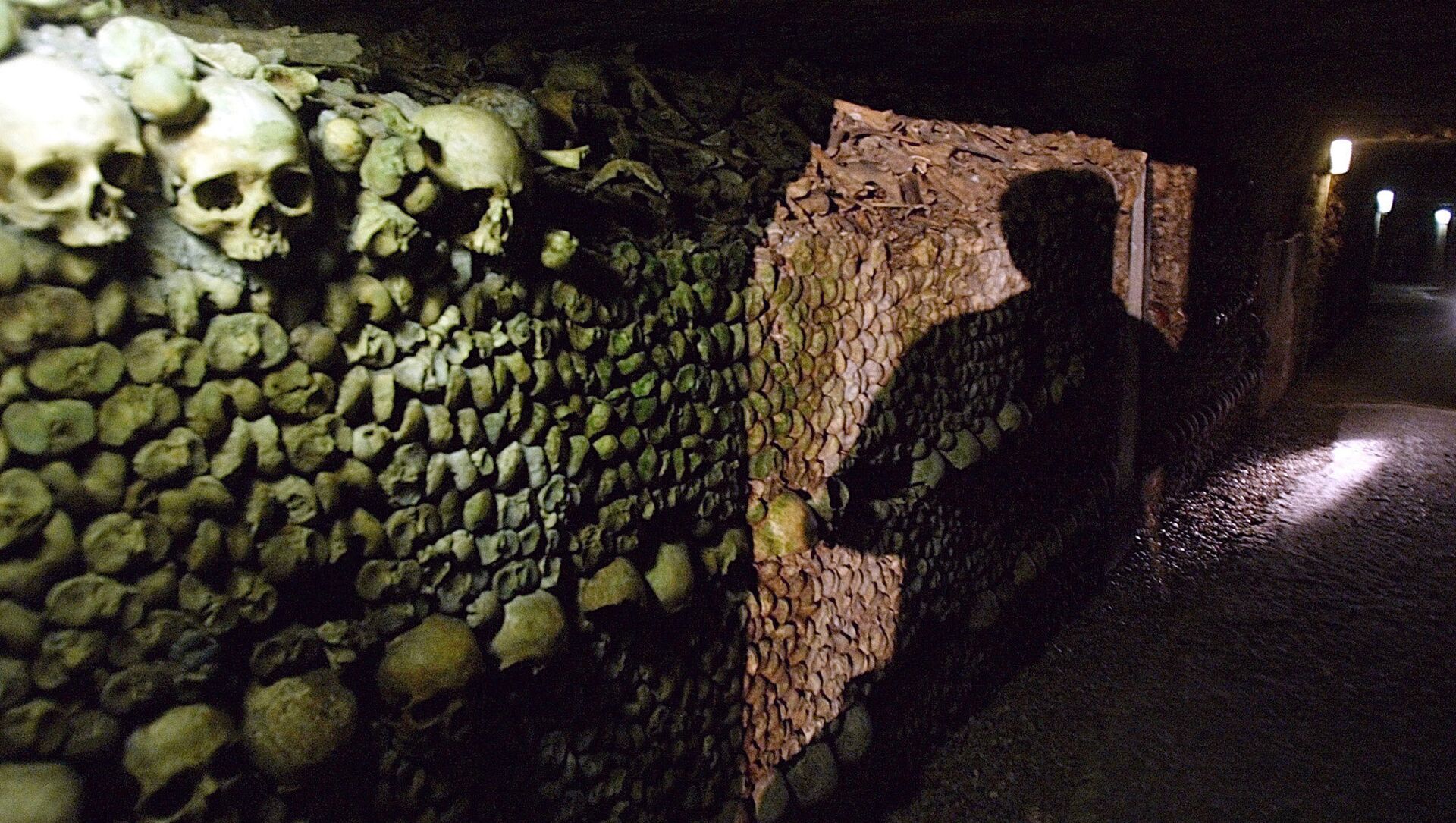
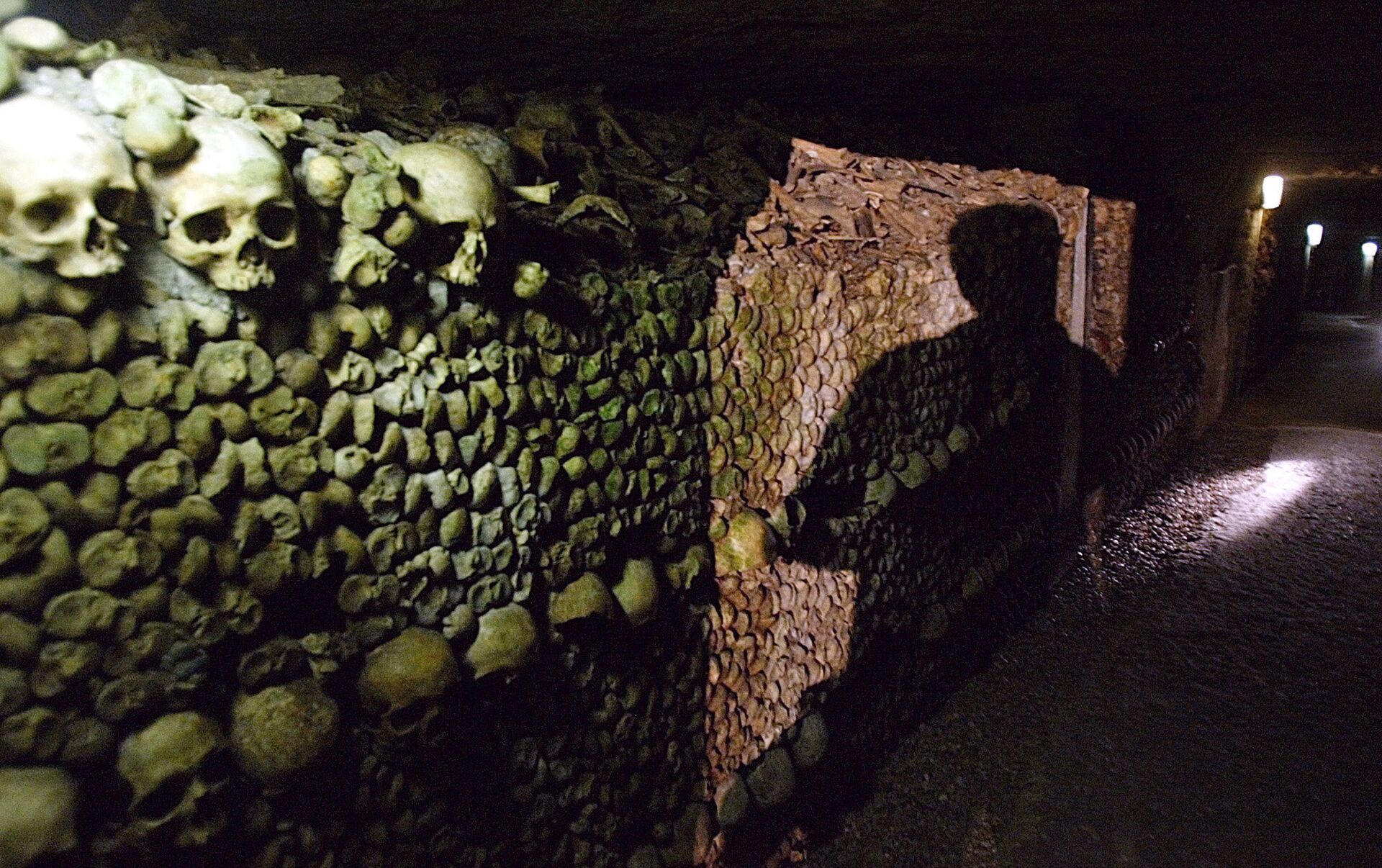
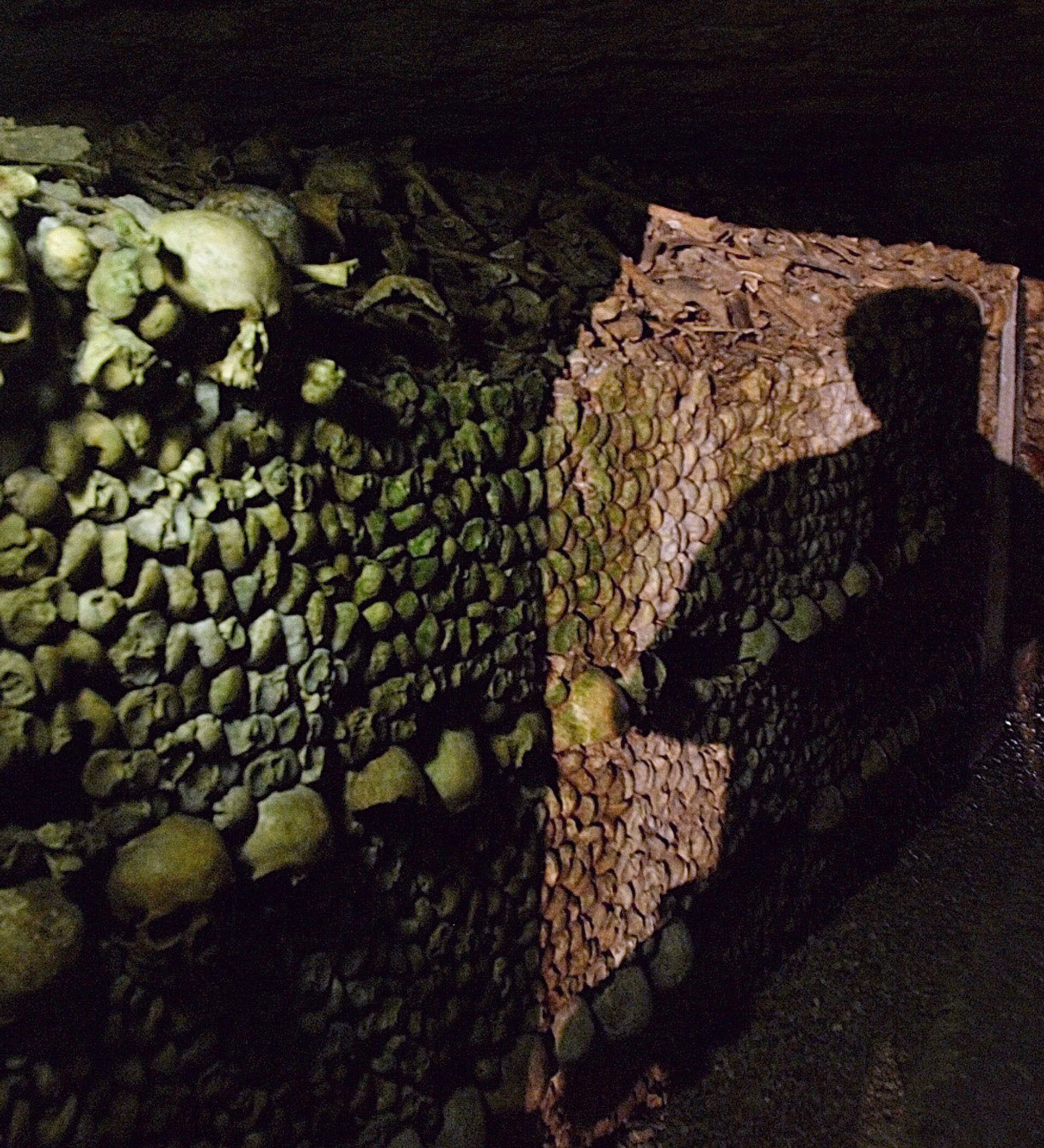
The capital of France, known also as the City of Lights, serves as home to one of the most famous underground complexes in the world — the Paris Catacombs.
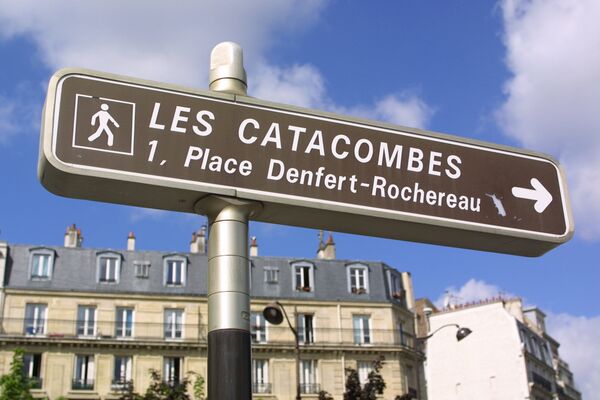
The catacombs are a part of a much larger ancient network of tunnels known as the Mines of Paris.
2/8
© AP Photo / Francois Mori
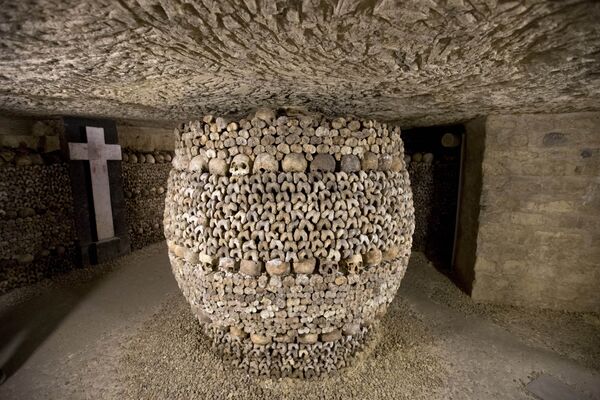
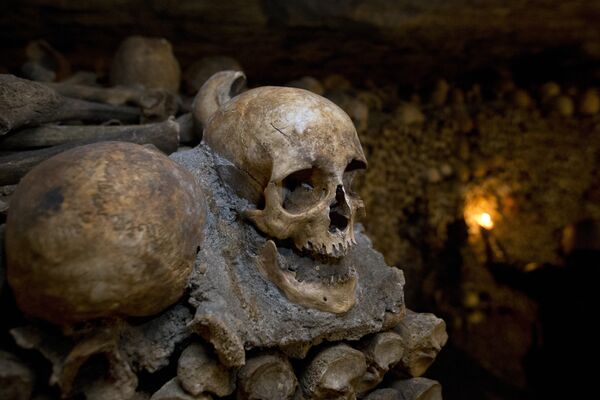
In this photo taken Tuesday, Oct. 14, 2014, skulls and bones are stacked at the Catacombs in Paris, France
3/8
© AP Photo / Michel Euler
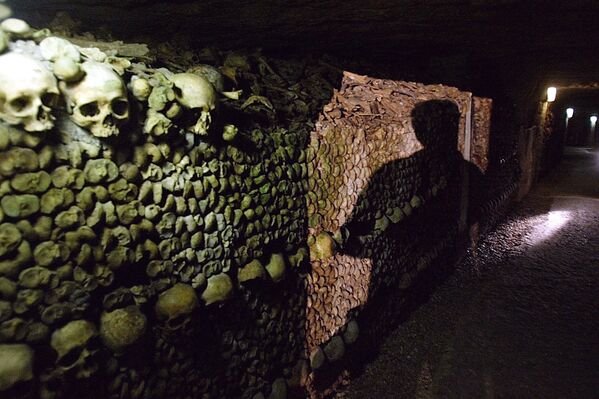
A man's shadow is seen against one of the walls of the Paris Catacombs.
4/8
© AP Photo / Francois Mori
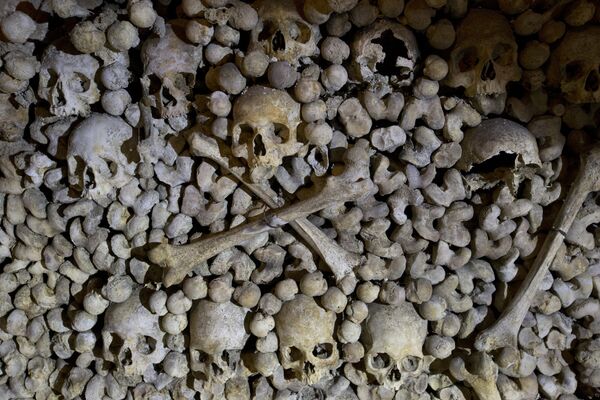
The catacombs serve as a resting place for the remains of hundreds of thousands of the city's inhabitants.
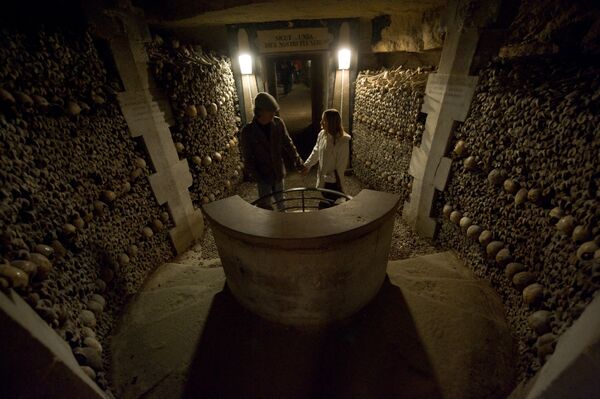
People visit the section of Paris Catacombs that is open to the public.
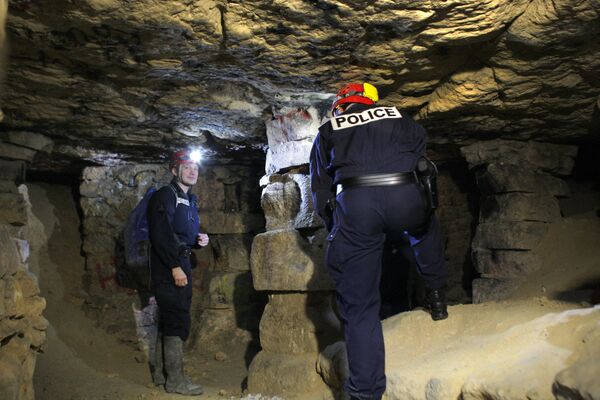
Members of French special police squad "Brigade d'intervention de la compagnie sportive" walk in the Dragon room of the catacombs of Paris. August 20, 2009.
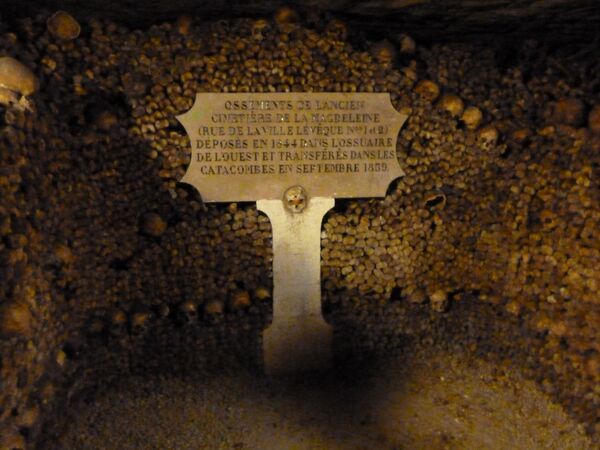
The Catacombs of Paris.
8/8
© AP Photo / Francois Mori
Skulls and bones are stacked at the Catacombs in Paris, France. October 14, 2014.