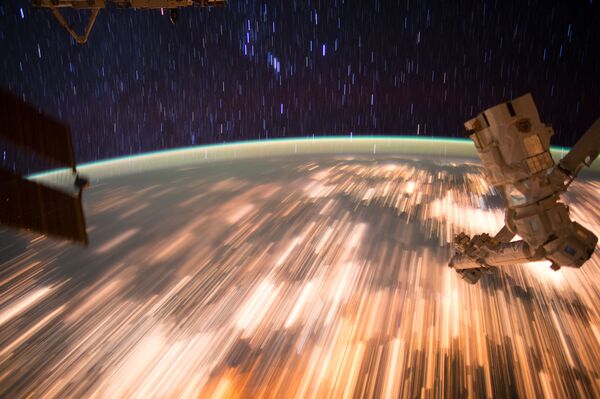
This photo of the Earth was taken from the International Space Station using a long exposure. The ISS orbits the Earth every 90 minutes on average, so the astronauts can see 16 sunrises and sunsets each day.
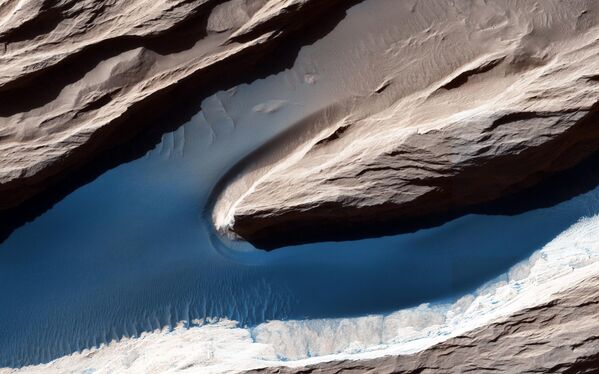
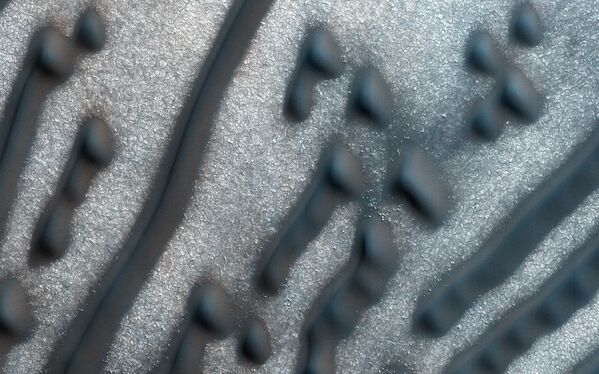
Strong winds sweep across Mars' surface. The wind has carved features called "yardangs," one of many in this scene, and deposited sand on the floor of shallow channels between them where ripples and dunes can be seen.
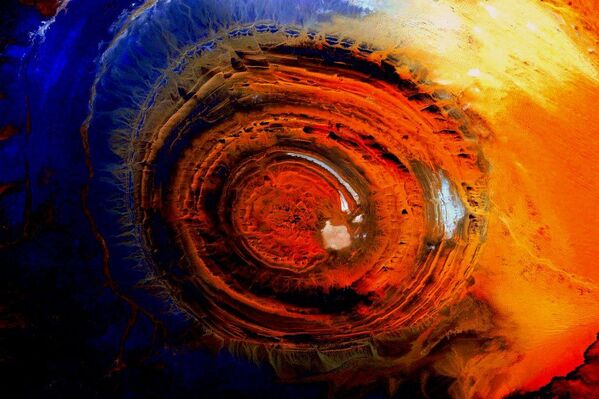
“5K times around Earth can seem like Groundhog Day but still a privilege,” US astronaut Scott Kelly tweeted along with this photo.
4/32
© Sputnik / Roscosmos/Yuri Malenchenko
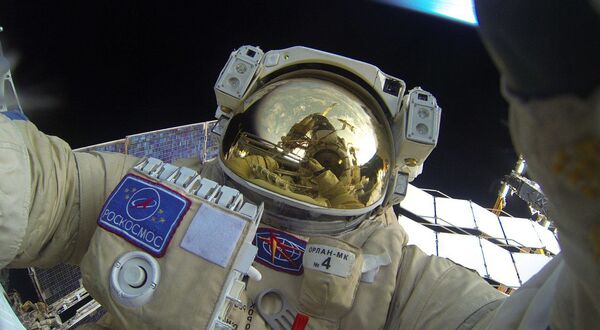
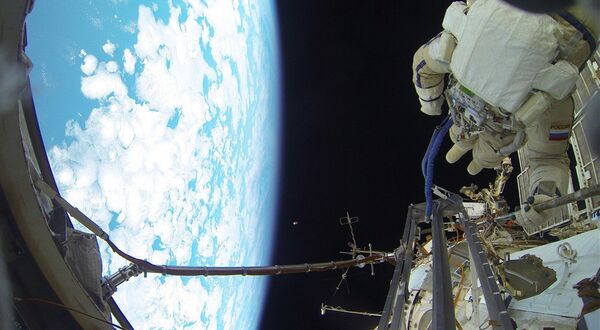
Russian astronaut Yuri Malenchenko’s selfie during a spacewalk.
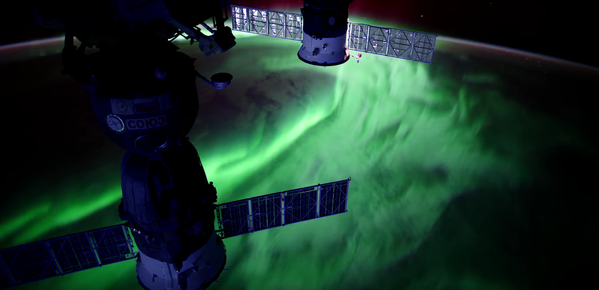
A stunning aurora captured from the International Space Station. Auroras are space weather phenomena that occur when electrically charged electrons and protons collide with neutral atoms in the upper atmosphere. The dancing lights of the aurora provide a spectacular show for those on the ground, but also capture the imaginations of scientists who study the aurora and the complex processes that create them.
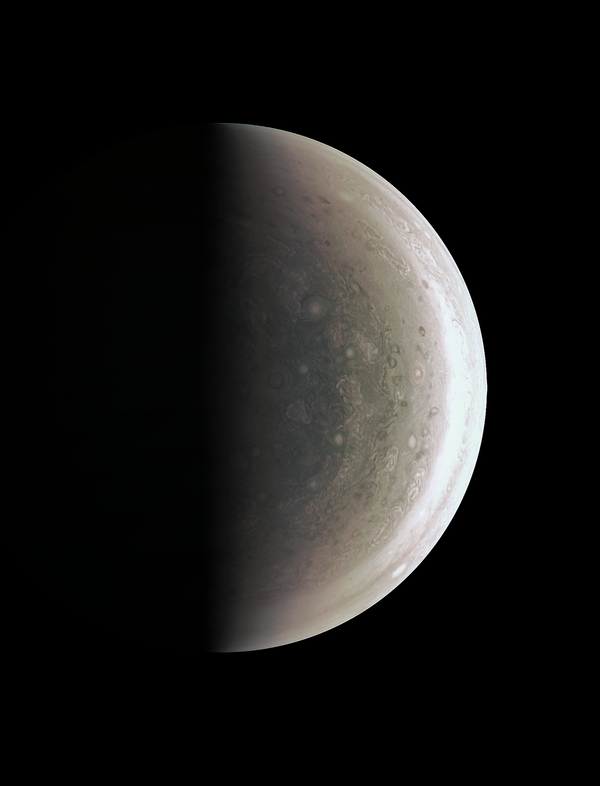
This photo of the southern pole of Jupiter was captured by the probe “Juno” which entered Jupiter’s orbit in August 27 and reached the nearest point to the planet’s surface at a distance of 4.2 thousand kilometers.
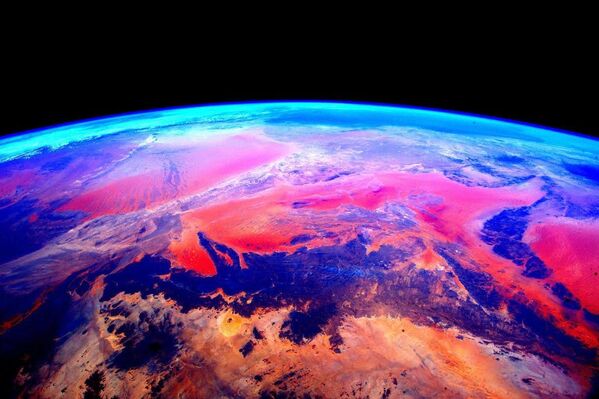
“Day 321. Beautiful Earth. Beautiful Africa,” Scott Kelly wrote in his Facebook comment to this photo.
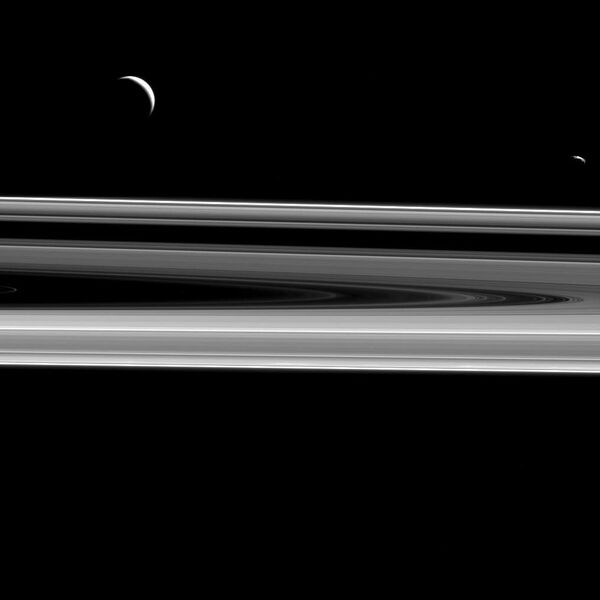
Janus and Enceladus over Saturn's rings. Photos of Saturn’s central rings made by the probe "Cassini" show that the impressive "fat" look of the rings is a kind of optical illusion. In fact, they contain three times less matter than scientists thought.
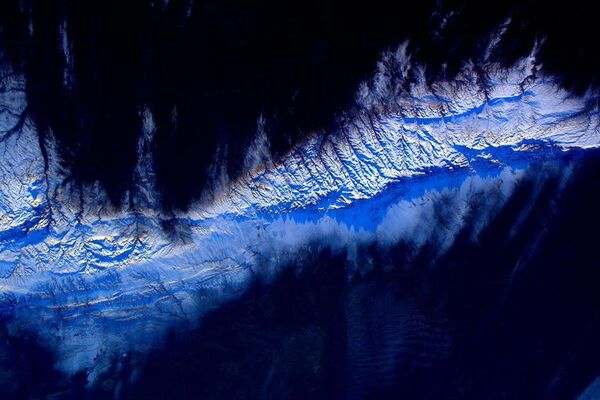
“Snow-capped mountains in a blue dusk almost make me feel the cold air. Almost,” Scot Kelly wrote in Twitter to comment on this photo made when the ISS flew over southern Kazakhstan.
10/32
© Photo : Roscosmos/Sergey Volkov
Russian astronauts make a spacewalk.
11/32
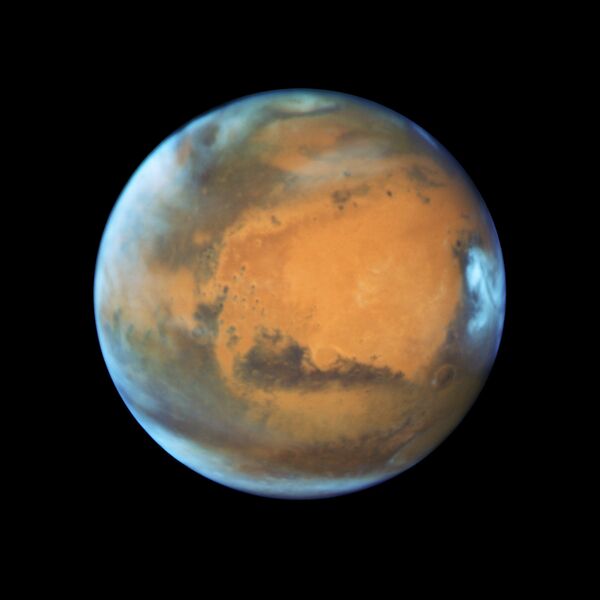
In May, the Orbital Observatory "Hubble" received new detailed pictures of Mars. In this photo you can see the valley of Sirte, which is a giant shield volcano several hundred kilometers long, the Arabian plain where traces of a giant tsunami that once raged in the Martian oceans were found recently, as well as the giant 1770-kilometer crater Hellas Planitia which was formed by an asteroid collision 3.5 billion years ago.
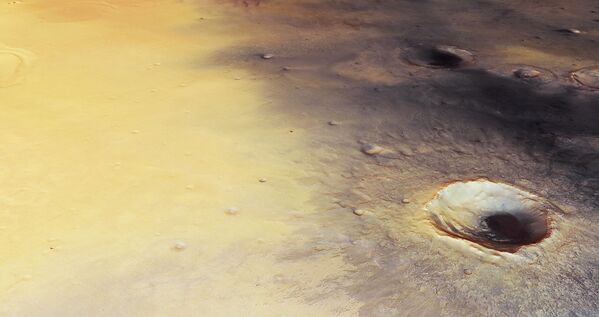
This view of Meridiani Planum on Mars was generated from the high-resolution stereo camera on ESA’s Mars Express.
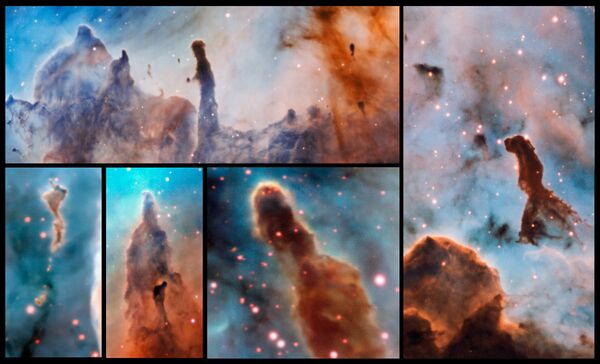
This composite image shows several pillars within the Carina Nebula which were observed and studied with the MUSE instrument, mounted on ESO’s Very Large Telescope. The massive stars within the star formation region slowly destroy the pillars of dust and gas from which they are born.
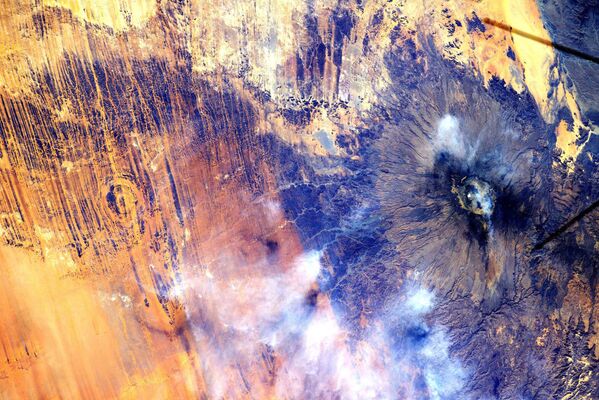
This photo of Africa was made by Russian astronaut Sergey Volkov from the International Space Station.
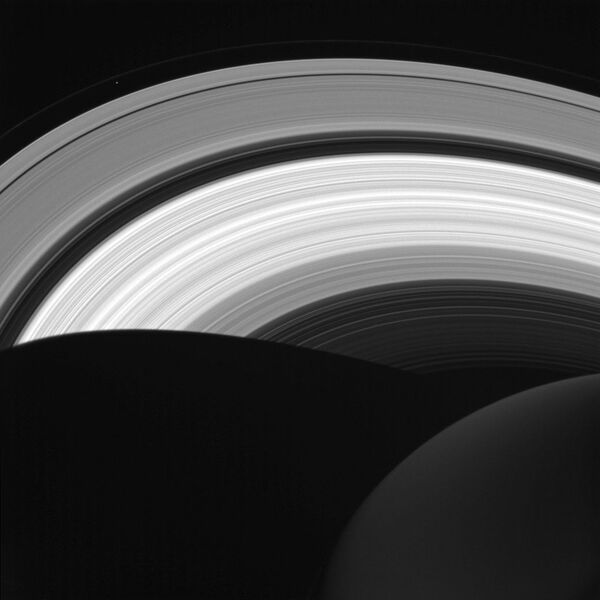
NASA’s Cassini spacecraft looks down at the rings of Saturn from above the planet's night side. The darkened globe of Saturn is seen here at lower right, along with the shadow it casts across the rings. The image shows that even on the planet's night side, the rings remain in sunlight, apart from a portion that lies within Saturn's shadow. The rings also reflect sunlight back onto the night side of the planet, making it appear brighter than it would otherwise appear.
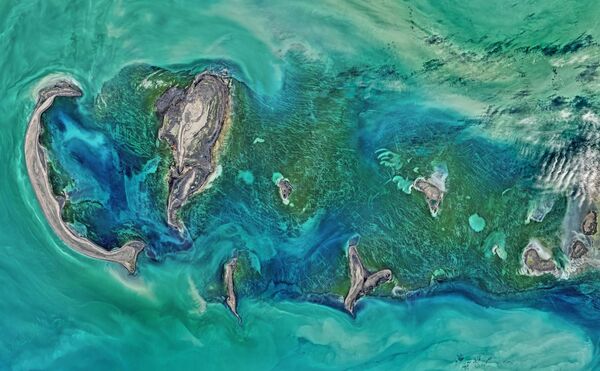
The Operational Land Imager (OLI) on NASA's Landsat 8 satellite acquired this large natural-color image showing a view of the Caspian Sea around the Tyuleniy Archipelago on April 16, 2016. Ocean scientist Norman Kuring of NASA’s Goddard Space Flight Center found a puzzling feature in the image – lines crisscrossing the North Caspian Sea.
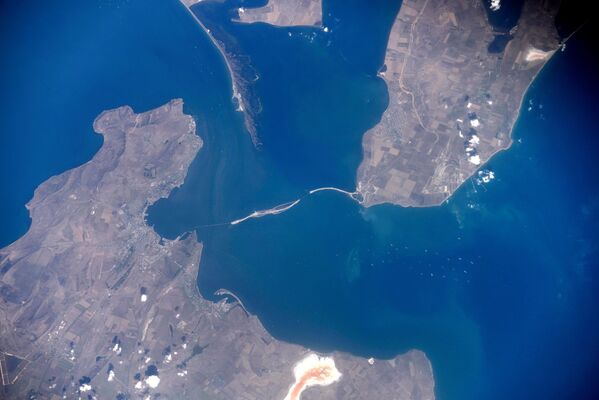
17/32
© Photo : Roscosmos/Oleg Skripochka
A satellite image of the construction site of the bridge across the Kerch Strait made by astronaut Oleg Skripochka. The bridge will link Kerch and Taman peninsulas through the island of Tuzla. The total length of the bridge will be about 19 km.
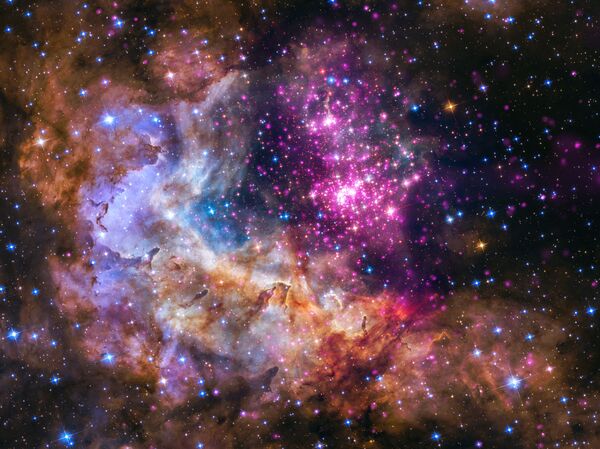
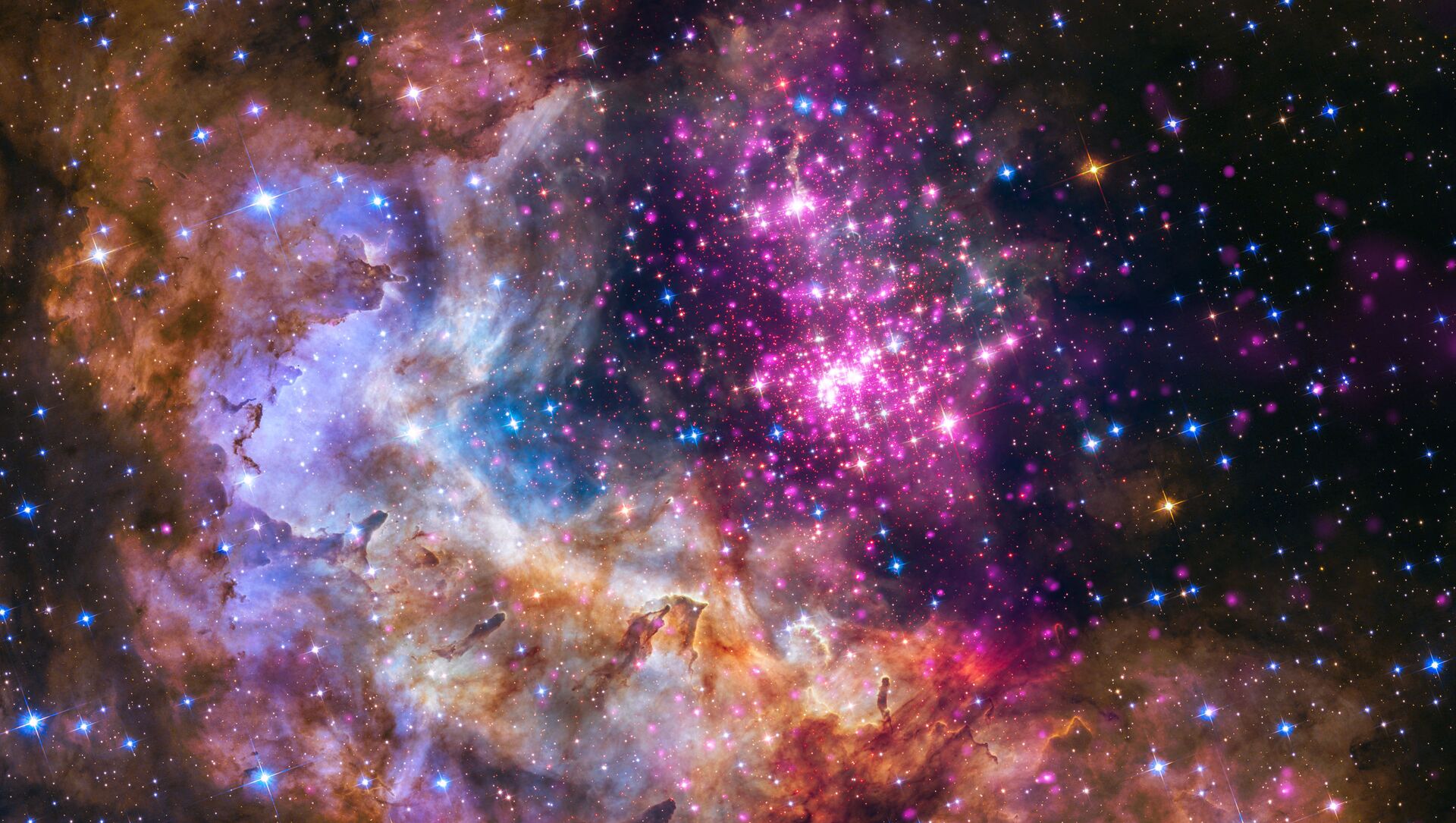
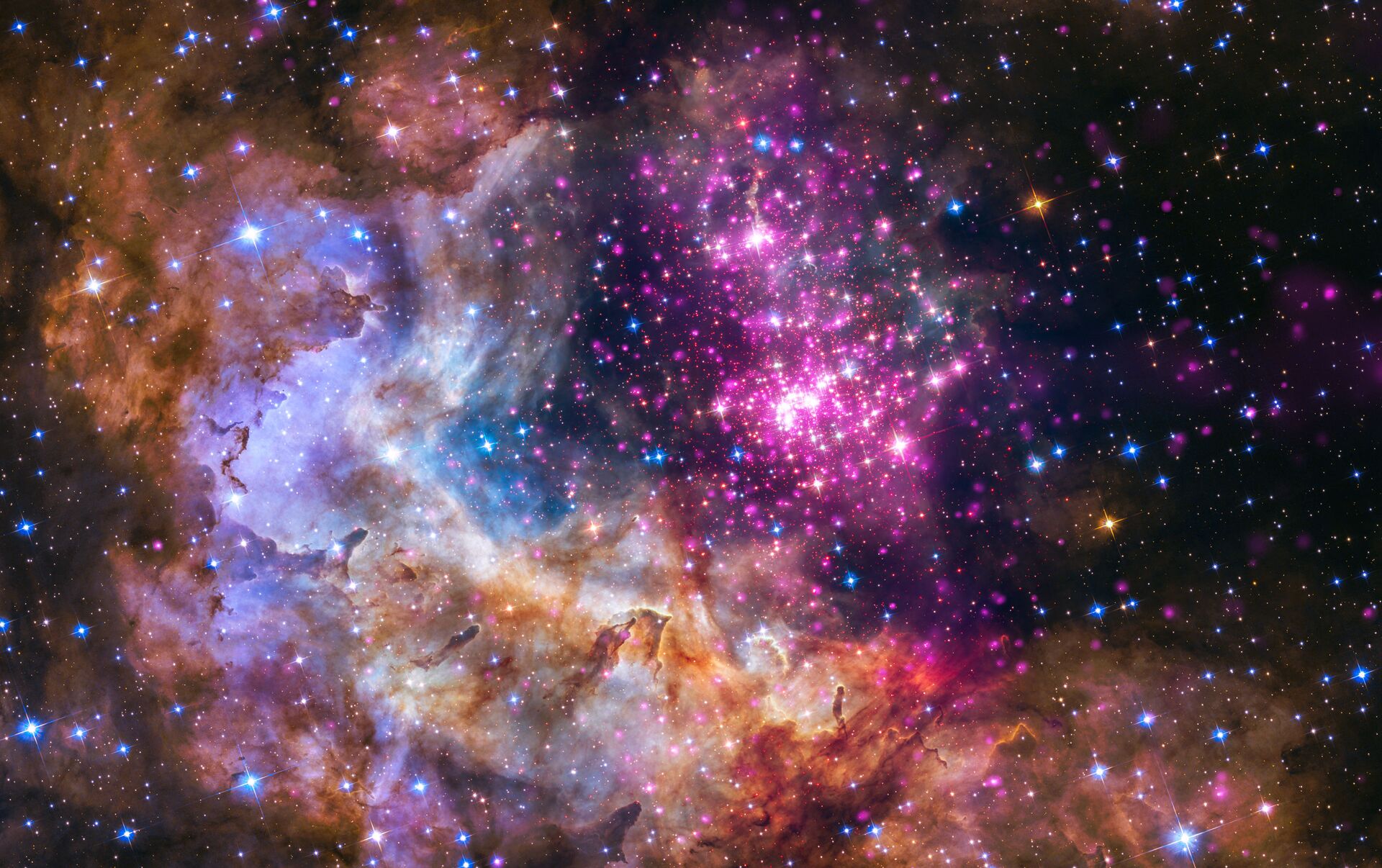
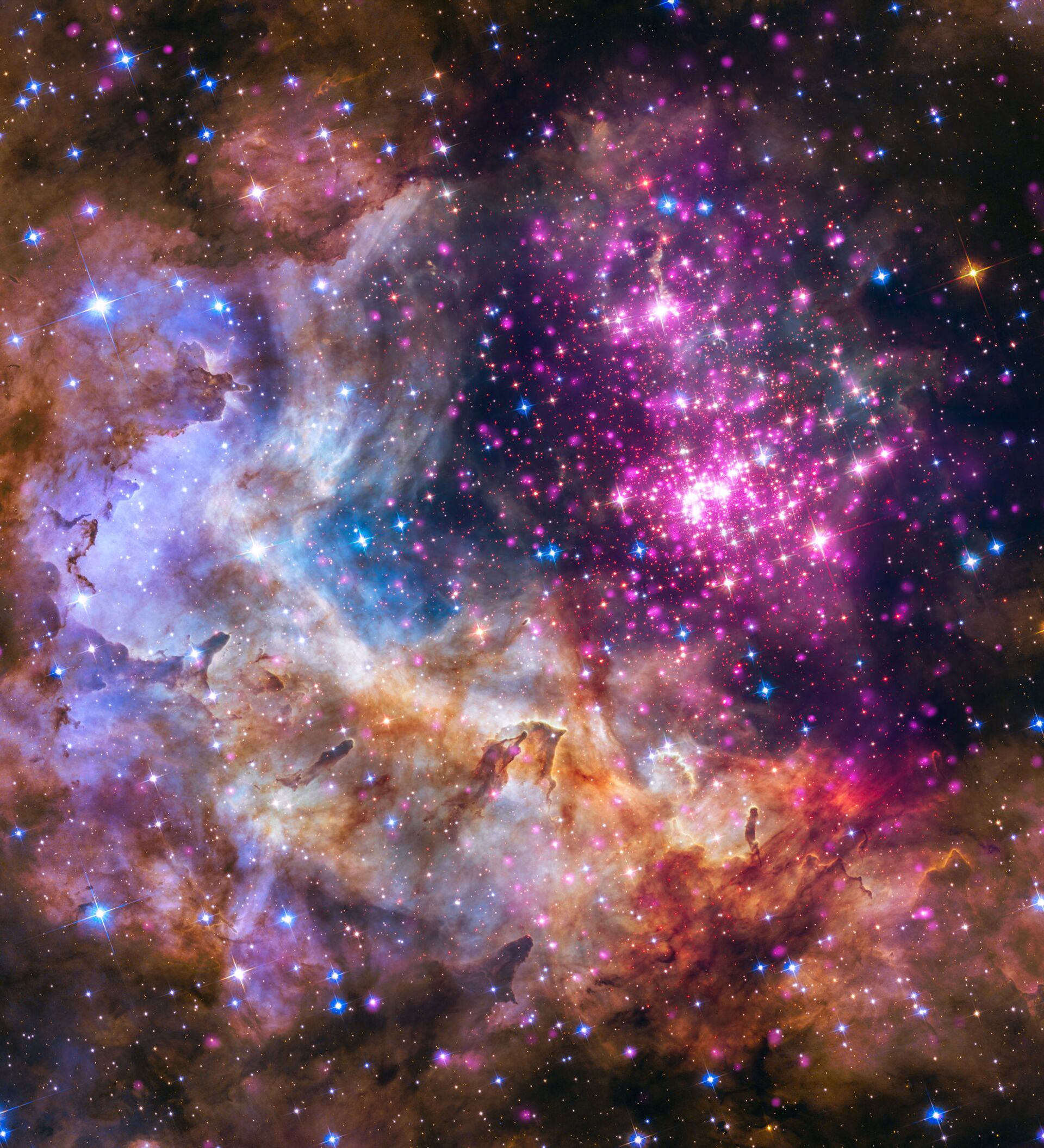
A cluster of young stars – about one to two million years old – located about 20,000 light years from Earth. Data from visible light from the Hubble Space Telescope (green and blue) reveals thick clouds where the stars are forming. High-energy radiation in the form of X-rays, however, can penetrate this cosmic haze, and are detected by Chandra (purple).
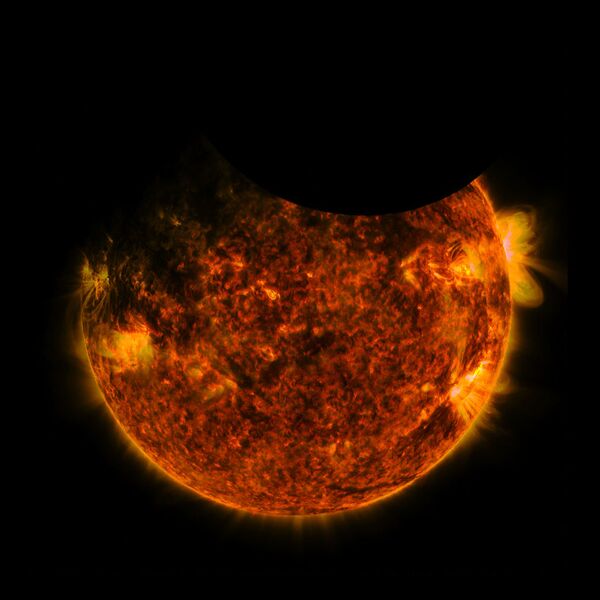
The Earth and the Moon passing in front of the Sun. You can tell the Earth and the Moon’s shadows apart by their edges: Earth’s is fuzzy, while the Moon’s is sharp and distinct. This is because the Earth’s atmosphere absorbs some of the Sun’s light, creating an ill-defined edge. On the other hand, the Moon has no atmosphere, producing a crisp horizon.
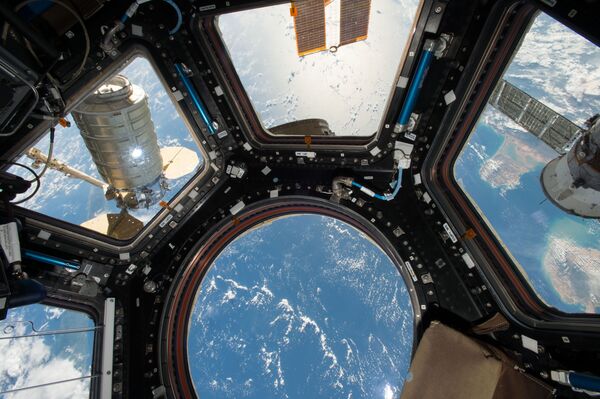
Orbital ATK's Cygnus cargo craft is seen from the Cupola module windows aboard the International Space Station on Oct. 23, 2016.
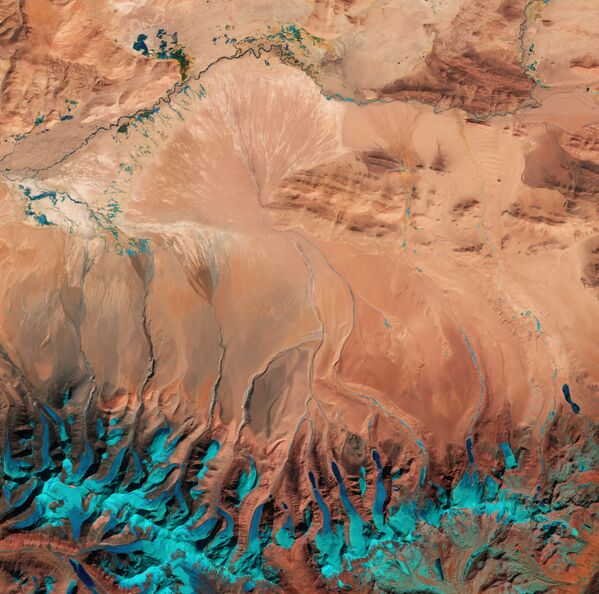
The southern-central edge of the Tibetan Plateau near the border with western Nepal and the Indian state of Sikkim is pictured in this Sentinel-2A image from February 1, 2016. The Tibetan Plateau was created by continental collision some 55 million years ago when the north-moving Indian Plate collided with the Eurasian Plate, causing the land to crumple and rise.
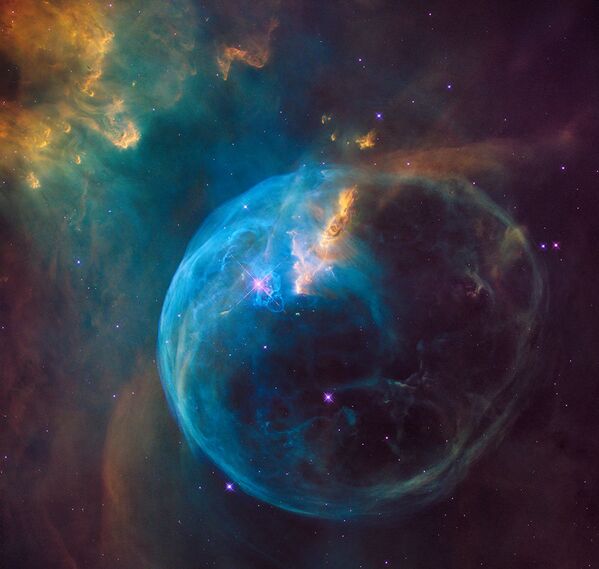
A zoomed in portion of a Hubble Space Telescope photograph of an enormous, balloon-like bubble being blown into space by a super-hot, massive star. Astronomers trained the iconic telescope on this colorful feature, called the Bubble Nebula, or NGC 7635.
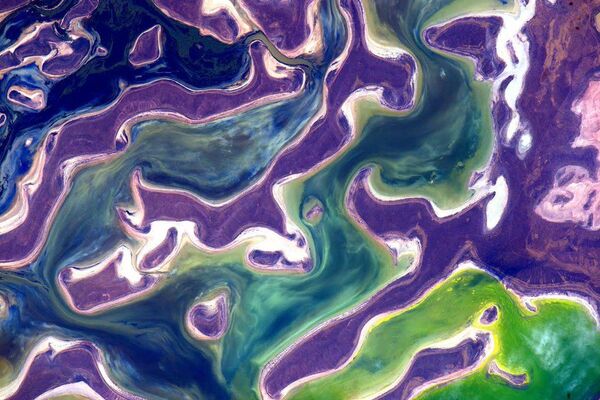
“#EarthArt Our planet seems to have a sense of humor at times,” Scot Kelly write when twitted this picture of Lake Tengiz in Kazakhstan.
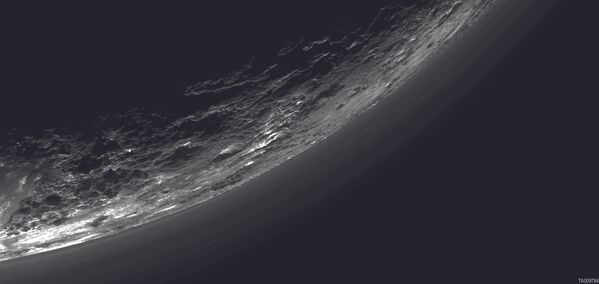
This image of haze layers above Pluto’s limb was taken by the Ralph/Multispectral Visible Imaging Camera (MVIC) on NASA’s New Horizons spacecraft. About 20 haze layers are seen.
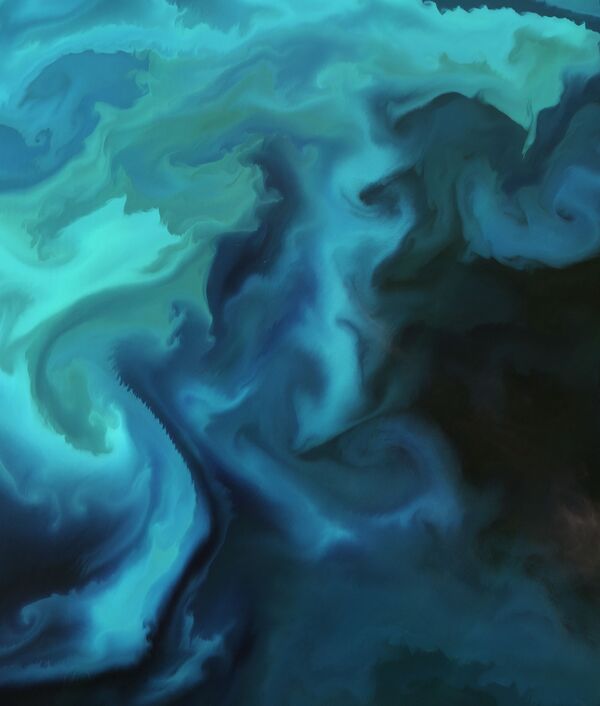
Although it may appear as a watercolor painting, this image is a natural-color capture of a plankton bloom in the Barents Sea by the Sentinel-2A satellite. Plankton, the most abundant type of life found in the ocean, are microscopic marine plants that drift on or near the surface of the sea.
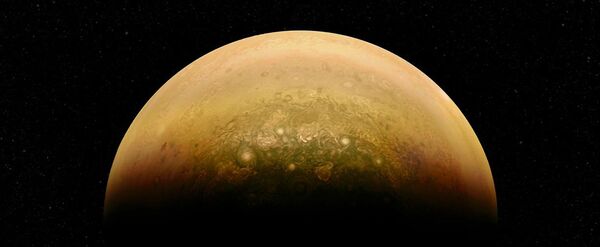
This image of the sunlit part of Jupiter and its swirling atmosphere was created by a citizen scientist (Alex Mai) using data from Juno's JunoCam instrument.
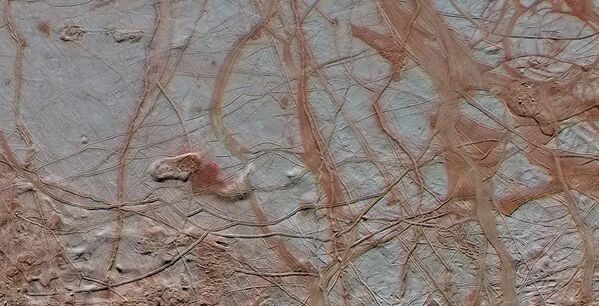
This enhanced-color view from NASA's Galileo spacecraft shows an intricate pattern of linear fractures on the icy surface of Jupiter's moon Europa.
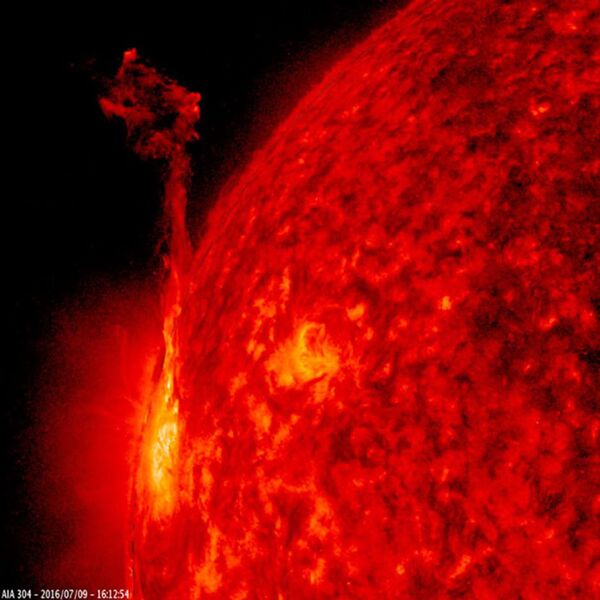
One active region at the edge of the Sun pushed out about ten thrusts of plasma.
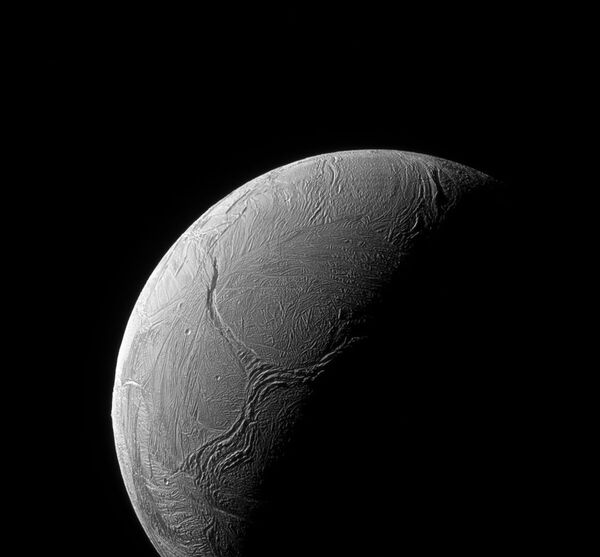
A sinuous feature snakes northward from the moon of Saturn Enceladus' south pole like a giant tentacle.
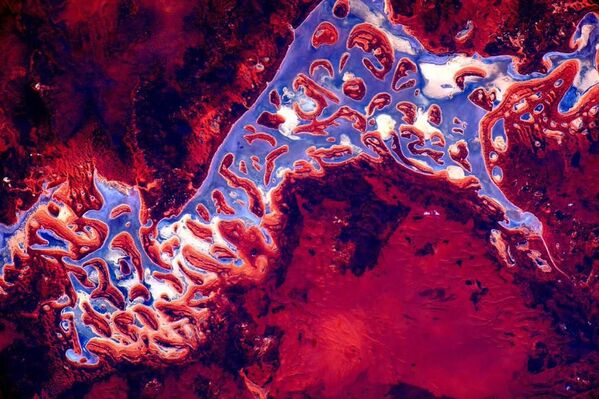
“#ColorsofEarth Red and purple Terra Australis,” Scott Kelly wrote about this picture of Australia made from the ISS.
New Mars Rover beams back images showing its descent.
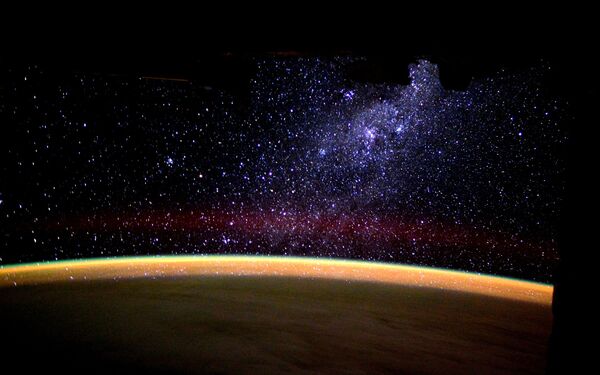
ESA astronaut Tim Peake posted this stunning image on his social media channels commenting: "Watching the Milky Way rising over the horizon".